 By admin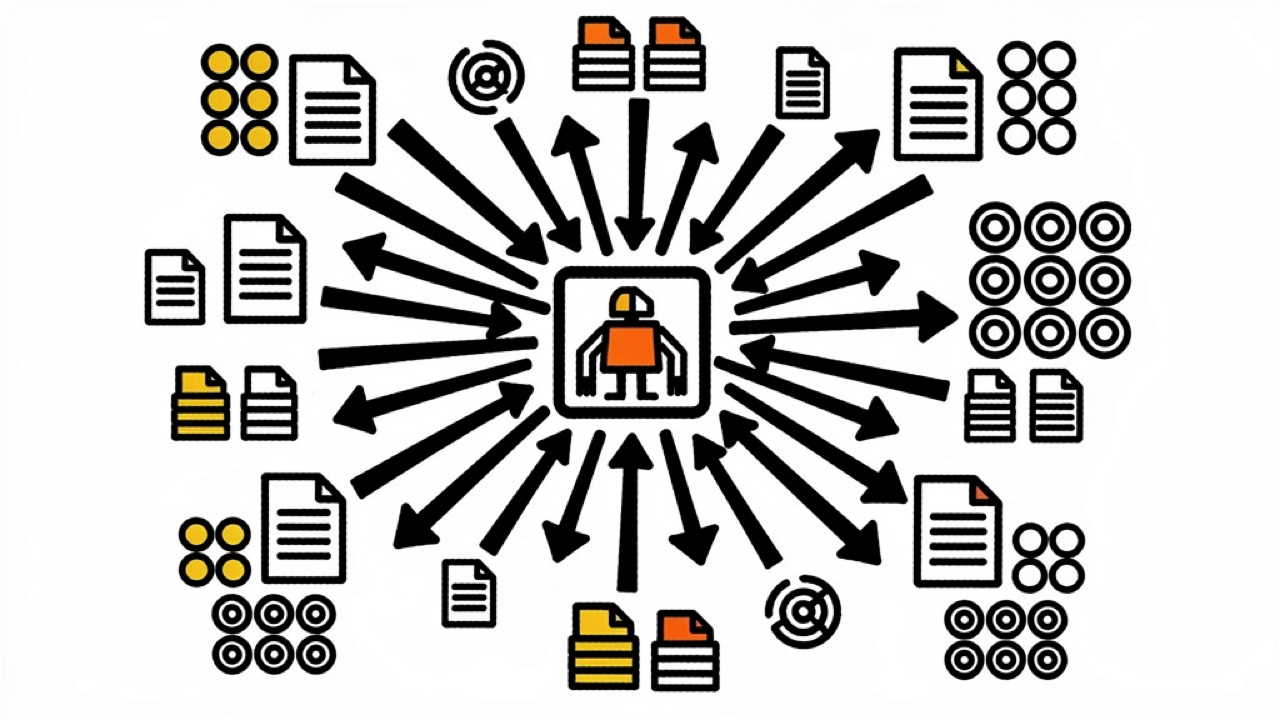
In the rapidly evolving landscape of artificial intelligence, a pivotal question has emerged for organizations grappling with the implications of agentic AI: what is the true role of vector databases? For a period, a compelling narrative gained significant traction among enterprise architects. As large language models (LLMs) achieved unprecedented context window sizes, reaching millions of tokens, the consensus began to shift. The argument posited that purpose-built vector search was merely a temporary solution, a stopgap measure rather than foundational infrastructure. In this emerging paradigm, agentic memory was projected to seamlessly absorb the complexities of the retrieval problem, relegating vector databases to a relic of the Retrieval Augmented Generation (RAG) era.
However, the unfolding reality in production environments paints a starkly different picture. The evidence is mounting that the retrieval problem has not diminished with the advent of agents; instead, it has scaled dramatically and become considerably more challenging.
This is underscored by the recent significant funding secured by Qdrant, a prominent open-source vector search company based in Berlin. The company announced a substantial $50 million Series B funding round, a mere two years after raising $28 million in its Series A. This timing is not coincidental. Concurrently, Qdrant is rolling out version 1.17 of its platform, a release that directly addresses the escalating demands placed upon retrieval infrastructure by agentic AI. Together, these developments articulate a clear and increasingly undeniable argument: the retrieval challenge has not been solved by the arrival of agents; it has been amplified and intensified.
Andre Zayarni, CEO and co-founder of Qdrant, articulated this shift in perspective during an interview with VentureBeat. He highlighted the fundamental difference in query volume between human users and autonomous agents. "Humans make a few queries every few minutes," Zayarni explained. "Agents make hundreds or even thousands of queries per second, just gathering information to be able to make decisions." This exponential increase in query frequency and complexity fundamentally alters the infrastructure requirements, pushing beyond the capabilities for which earlier RAG-era deployments were originally designed.
Why Agents Require a Dedicated Retrieval Layer Beyond Memory’s Scope
Agentic AI systems operate by processing and acting upon information that extends far beyond their initial training data. This includes proprietary enterprise data, real-time information streams, and vast repositories of documents that are in a constant state of flux. While LLM context windows are adept at managing session state and providing immediate situational awareness, they are not inherently designed for high-recall search across extensive and dynamic datasets. They cannot guarantee retrieval quality as data evolves, nor can they sustainably handle the immense query volumes generated by autonomous decision-making processes.
Zayarni elaborated on this point, stating, "The majority of AI memory frameworks out there are using some kind of vector storage." This observation reveals a critical dependency: even the tools marketed as alternatives to traditional memory are, in practice, relying on underlying retrieval infrastructure. When this retrieval layer is not purpose-built to handle the specific demands of agentic workloads, several failure modes become apparent.
At document scale, a missed retrieval result transcends a mere latency issue; it directly impacts the quality of decisions made by the agent. This impact is compounded with every subsequent retrieval pass within a single agent turn. Under heavy write loads, relevance can degrade as newly ingested data resides in unoptimized segments before indexing is complete. This makes searches over the freshest, most critical information slower and less accurate precisely when its currency is paramount. Furthermore, in distributed infrastructure, a single underperforming replica can introduce latency across all parallel tool calls within an agent’s turn. While a human user might perceive this as a minor inconvenience, an autonomous agent cannot afford such delays, as they can derail complex decision-making processes.
The recent Qdrant 1.17 release directly addresses these critical failure points. Its relevance feedback query mechanism enhances recall by dynamically adjusting similarity scoring on subsequent retrieval passes, utilizing lightweight model-generated signals without requiring a full retraining of the embedding model. This ensures that the agent’s understanding and decision-making improve iteratively. The introduction of a delayed fan-out feature provides a crucial safeguard against latency spikes. When the primary replica exceeds a configurable latency threshold, the system automatically queries a secondary replica, ensuring uninterrupted processing. To tackle the complexities of distributed systems, a new cluster-wide telemetry API has been implemented, replacing the cumbersome node-by-node troubleshooting with a unified, comprehensive view across the entire cluster. This allows for proactive identification and resolution of performance bottlenecks.
Qdrant Reimagines Its Identity: Beyond "Vector Database"
The integration of vector capabilities has become widespread across the database landscape, with major players ranging from hyperscalers to traditional relational systems now offering vectors as a data type. This shift has fundamentally altered the competitive arena, making vector support a baseline expectation rather than a distinguishing feature. What remains specialized and critical, however, is retrieval quality at production scale, particularly for demanding AI applications.
It is this crucial distinction that has led Zayarni to advocate for a redefinition of Qdrant’s identity. He no longer wishes for it to be solely labeled a "vector database." "We’re building an information retrieval layer for the AI age," he asserted. "Databases are for storing user data. If the quality of search results matters, you need a search engine." This reframing highlights Qdrant’s focus on the performance and accuracy of retrieving information, rather than simply its storage.
For organizations embarking on their AI journeys, Zayarni’s advice is pragmatic: "Use whatever vector support is already in your stack." The migration to purpose-built retrieval infrastructure, he suggests, typically occurs when the limitations of general-purpose solutions become apparent due to scaling challenges. "We see companies come to us every day saying they started with Postgres and thought it was good enough – and it’s not." This observation is a testament to the fact that while general-purpose databases can offer initial vector capabilities, they often fall short when faced with the high-throughput, high-accuracy demands of production-grade agentic AI.
Qdrant’s underlying architecture, meticulously crafted in Rust, provides significant advantages in terms of memory efficiency and low-level performance control, capabilities that are often harder to achieve with higher-level programming languages at a comparable cost. Furthermore, its open-source foundation serves as a powerful compounding advantage. The active community feedback and widespread developer adoption empower a company of Qdrant’s scale to effectively compete with vendors possessing far greater engineering resources. "Without it, we wouldn’t be where we are right now at all," Zayarni emphasized, underscoring the vital role of the open-source ecosystem in its success.
Real-World Evidence: Two Production Teams Confront the Limits of General-Purpose Databases
The experiences of companies building production AI systems on Qdrant reinforce the argument that agents necessitate a dedicated retrieval layer, and that conversational or contextual memory alone is an insufficient substitute.
GlassDollar, a firm that assists enterprises such as Siemens and Mahle in evaluating startups, exemplifies this. Search is the very core of its product offering. Users articulate their needs in natural language, and the system returns a meticulously ranked shortlist of companies from a vast corpus numbering in the millions. The company’s architecture employs query expansion on every request, a process where a single prompt is intelligently decomposed into multiple parallel queries. Each of these queries retrieves candidates from distinct analytical angles before the results are consolidated and re-ranked. This operational pattern is intrinsically agentic retrieval, not a simple RAG pattern, and it demands specialized search infrastructure to sustain its performance at scale.
GlassDollar’s journey involved a migration from Elasticsearch as its indexed document count approached 10 million. Following the transition to Qdrant, the company achieved a remarkable reduction in infrastructure costs by approximately 40%. Moreover, it was able to eliminate a keyword-based compensation layer that had been maintained to mitigate Elasticsearch’s relevance shortcomings. Crucially, user engagement saw a threefold increase. Kamen Kanev, GlassDollar’s head of product, articulated the company’s unwavering focus: "We measure success by recall. If the best companies aren’t in the results, nothing else matters. The user loses trust." This statement underscores the direct correlation between retrieval quality and business outcomes.
For GlassDollar, agentic memory and extended context windows are demonstrably insufficient to absorb the sheer volume and complexity of its operational workload. "That’s an infrastructure problem, not a conversation state management task," Kanev clarified. "It’s not something you solve by extending a context window." This highlights the fundamental difference between managing the immediate context of a conversation and executing robust, large-scale information retrieval.
Another prominent user of Qdrant is &AI, a company developing specialized infrastructure for patent litigation. Its AI agent, codenamed Andy, performs semantic searches across hundreds of millions of documents, spanning decades and multiple legal jurisdictions. The critical constraint in patent law is that attorneys will not act upon AI-generated legal text; consequently, every result surfaced by Andy must be rigorously grounded in an actual, verifiable document. Herbie Turner, &AI’s founder and CTO, explained their architectural philosophy: "Our whole architecture is designed to minimize hallucination risk by making retrieval the core primitive, not generation." This strategic emphasis on retrieval as the foundational element ensures the reliability and trustworthiness of the AI’s output.
For &AI, the agent layer and the retrieval layer are intentionally distinct by design. "Andy, our patent agent, is built on top of Qdrant," Turner stated. "The agent is the interface. The vector database is the ground truth." This clear separation of concerns ensures that the agent can focus on complex reasoning and interaction, while the underlying retrieval system reliably provides the factual basis for its actions.
Three Critical Signals Indicating a Need to Evolve Beyond Current Setups
For organizations currently utilizing general-purpose databases with vector capabilities, identifying the opportune moment to transition to a more specialized solution is crucial. The practical starting point remains consistent: leverage the existing vector support within your current technology stack. The fundamental evaluation question is not whether to implement vector search, but rather when your current setup ceases to be adequate. Three key signals typically indicate this tipping point:
Firstly, when the quality of retrieval is directly and demonstrably tied to critical business outcomes. In scenarios where missing a relevant document or returning an inaccurate result has tangible financial or strategic consequences, the need for optimized retrieval becomes paramount.
Secondly, when query patterns evolve beyond simple, single-step searches. This includes complex operations such as query expansion, multi-stage re-ranking of results, or the parallel execution of multiple tool calls within a single agent turn. These intricate query behaviors place significant strain on general-purpose systems.
Thirdly, when data volumes escalate into the tens of millions of documents or more. As datasets grow, the performance and scalability limitations of generic solutions become increasingly apparent, impacting both speed and accuracy.
At this juncture, the evaluation criteria must shift to operational considerations. How much granular visibility does your current setup provide into the activities occurring across a distributed cluster? What is the performance headroom available when agent query volumes inevitably increase? These are questions that a purpose-built retrieval layer is designed to answer effectively.
Kamen Kanev of GlassDollar eloquently summarized the current discourse: "There’s a lot of noise right now about what replaces the retrieval layer. But for anyone building a product where retrieval quality is the product, where missing a result has real business consequences, you need dedicated search infrastructure." This sentiment encapsulates the core message: for applications where the accuracy and completeness of information retrieval are paramount to success, investing in specialized search infrastructure is not merely an option, but a necessity for the agentic AI era. The transition from a RAG-era artifact to foundational infrastructure is no longer a hypothetical debate, but a clear and present requirement for organizations seeking to harness the full potential of intelligent agents.