
 By Rifan Muazin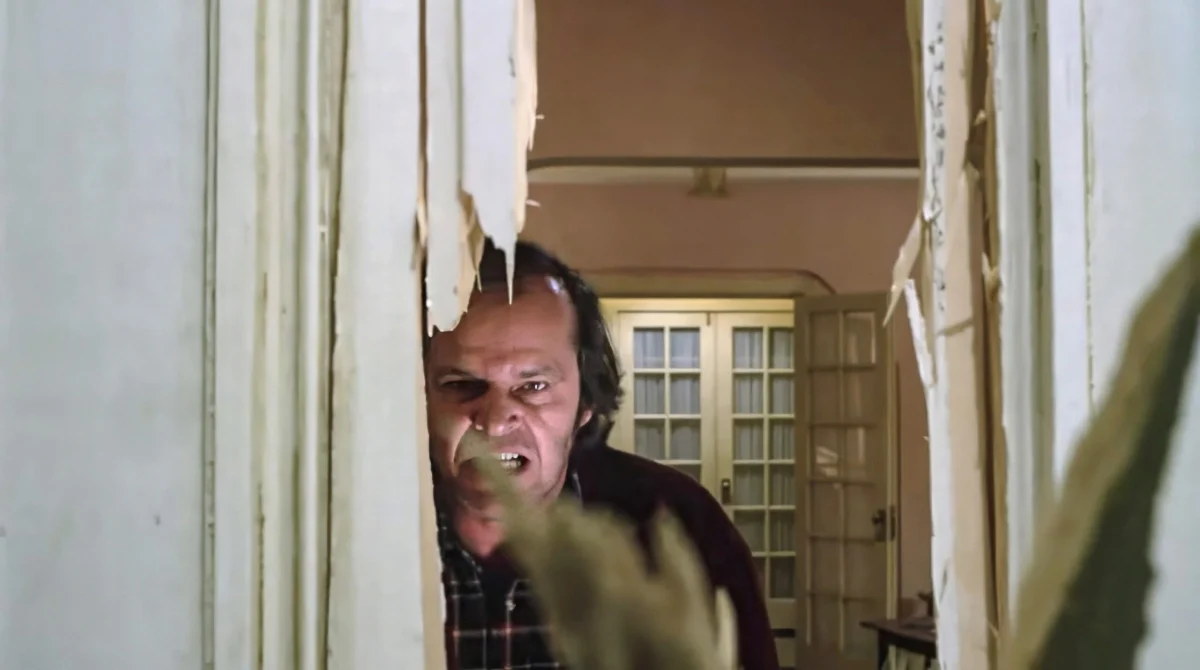
When Stanley Kubrick passed away in March 1999, just days after delivering the final cut of Eyes Wide Shut to Warner Bros., the film world lost its most enigmatic and meticulous architect. It was perhaps a fittingly mysterious conclusion to a career defined by an almost superhuman level of control. Kubrick did not live to see the public’s reaction to his final exploration of the human psyche, but his departure signaled a transition: the man was gone, but the "Kubrickian" myth was only beginning to solidify. Today, his name is a shorthand for cinematic perfectionism, invoked by everyone from casual film fans to high-profile directors like Christopher Nolan and Paul Thomas Anderson. Yet, as many critics note, while Nolan may share Kubrick’s interest in grand scales and technical precision, the two occupy different thematic universes; Nolan seeks to solve puzzles, whereas Kubrick was content to let the audience drown in the mystery.
The elusive nature of Kubrick’s work stems from his refusal to repeat himself. Across thirteen features, he jumped from noir to historical epic, from sci-fi to horror, and from war satire to erotic thriller. He was a filmmaker of contrasts—a New Yorker who lived as a recluse in the English countryside, a director who demanded a hundred takes for a single line of dialogue, and a storyteller whose "emotional chilliness" was often a mask for a deep, agonizing concern for the frailty of the human condition. To rank his filmography is to rank a series of mountain peaks; even the lowest points offer a view that most directors never reach.

13. Fear and Desire (1952)
Stanley Kubrick’s debut feature is the only entry in his filmography that the director himself actively tried to suppress. For years, he referred to this 62-minute experimental war film as a "bumbling amateur film exercise," going so far as to try to buy up all existing prints to prevent them from being screened. However, following a restoration by the Library of Congress and its eventual release on home video, Fear and Desire has been revealed as a fascinating, if flawed, blueprint for the themes that would dominate his later work.
The film follows a group of soldiers stranded behind enemy lines in an unidentified war. It is less a literal combat movie and more a dreamlike allegory, featuring heavy voiceovers and psychological tension. While the acting is often stilted and the budget constraints are obvious, the cinematography—handled by Kubrick himself—shows a burgeoning master of light and shadow. It functions as a proto-version of Paths of Glory or Full Metal Jacket, proving that even at twenty-four, Kubrick was already obsessed with the dehumanizing nature of conflict.
12. Spartacus (1960)
Spartacus is a magnificent anomaly in Kubrick’s career. It remains the only film where he did not have total creative control, having been brought on by star and producer Kirk Douglas to replace the original director, Anthony Mann. Despite this, the film is a triumph of the "sword-and-sandal" genre, winning four Academy Awards and famously helping to break the Hollywood Blacklist by publicly crediting screenwriter Dalton Trumbo.

The film’s scale is immense, featuring thousands of extras and a legendary score by Alex North. Yet, one can sense Kubrick’s frustration with the traditional Hollywood structure. While the "I am Spartacus" sequence is one of the most iconic moments in cinema history, Kubrick felt the film lacked the intellectual rigor he craved. Nevertheless, it served as his graduation into the world of big-budget filmmaking, proving he could manage a massive production without losing his eye for composition.
11. Barry Lyndon (1975)
Once dismissed by critics as a "coffee-table movie" because of its slow pace and painterly aesthetic, Barry Lyndon has undergone a massive critical reappraisal in the 21st century. Martin Scorsese has cited it as one of the greatest films ever made, and its influence can be seen in the meticulous period dramas of today. Adapted from William Thackeray’s novel, the film follows the rise and fall of an Irish opportunist (Ryan O’Neal) in the 18th century.
What sets Barry Lyndon apart is its technical audacity. To capture the authentic look of the era, Kubrick used special f/0.7 lenses originally developed by Zeiss for NASA to take photos of the dark side of the moon. This allowed him to film scenes entirely by candlelight, creating a visual texture that looks like a Gainsborough painting come to life. The film is a pitiless study of social climbing and the inevitability of fate, delivered with a dry, ironic wit that makes its three-hour runtime feel like a haunting, immersive experience.

10. Killer’s Kiss (1955)
Before he was the "Master of the Universe," Kubrick was a street-smart New Yorker filming on the fly. Killer’s Kiss is a lean, mean film noir that showcases the director’s roots as a photographer for Look magazine. The plot is standard genre fare—a washed-up boxer gets involved with a woman and her dangerous mobster boss—but the execution is anything but standard.
The film features a surreal mannequin factory fight and breathtaking location shots of a 1950s New York that no longer exists. Kubrick wore many hats on this production, serving as director, cinematographer, and editor. While the narrative is thin, the visual energy is palpable. It is a "calling card" film that proved Kubrick could create high-end art out of B-movie materials.
9. Full Metal Jacket (1987)
Released in the wake of Platoon and Apocalypse Now, Kubrick’s take on the Vietnam War felt different—colder, more clinical, and deeply interested in the process of turning a human being into a weapon. The film is famously bifurcated: the first half focuses on the brutalizing effects of basic training at Parris Island, dominated by R. Lee Ermey’s terrifyingly improvised performance as Gunnery Sergeant Hartman. The second half moves to the ruins of Hue during the Tet Offensive.

While some critics argue the two halves don’t mesh perfectly, the film’s exploration of the "duality of man" remains potent. Kubrick’s decision to film the Vietnam jungle in an abandoned gasworks in London gives the movie an uncanny, theatrical quality that highlights the absurdity of the war. It is a film about the loss of identity, ending with a haunting rendition of the "Mickey Mouse March" that suggests the soldiers have been reduced to children in a nightmare.
8. Eyes Wide Shut (1999)
For decades, rumors swirled about Kubrick’s "secret" project starring then-power couple Tom Cruise and Nicole Kidman. When Eyes Wide Shut finally arrived, audiences were baffled by its dreamlike pacing and its focus on marital jealousy rather than the "erotic thriller" the marketing suggested. Time, however, has been incredibly kind to this film.
Set in a soundstage-reconstructed New York during Christmas, the film follows Dr. Bill Harford on a nocturnal odyssey of sexual temptation and existential dread. It is a masterpiece of atmosphere, exploring the "spaces between" our conscious thoughts and our darkest desires. The "masked orgy" sequence is one of the most unsettling scenes in cinema, but the film’s true power lies in its final scene—a frank, grounded conversation between a husband and wife that serves as a perfect coda to Kubrick’s career.

7. Lolita (1962)
How do you adapt Vladimir Nabokov’s "unfilmable" novel under the strictures of the 1960s Hays Code? Kubrick’s solution was to lean into the black comedy. By aging the character of Lolita up slightly and expanding the role of Clare Quilty (a brilliant, chameleonic Peter Sellers), Kubrick turned a story of predatory obsession into a tragicomic farce.
James Mason delivers a career-best performance as Humbert Humbert, capturing the character’s pathetic desperation and intellectual vanity. While Kubrick later lamented that he couldn’t make the film as explicit as the book, the restraint actually adds a layer of psychological tension. It is a film about the delusions we tell ourselves, and it marked the beginning of Kubrick’s long-term fascination with the breakdown of the traditional male ego.
6. A Clockwork Orange (1971)
A Clockwork Orange remains one of the most controversial films ever made. Upon its release, it was blamed for "copycat" crimes in the UK, leading Kubrick himself to withdraw the film from British distribution for nearly thirty years. Starring Malcolm McDowell as the charismatic, "ultra-violent" Alex DeLarge, the film is a neon-soaked nightmare about free will and state control.

The film’s visual style—pop-art furniture, classical music set to brutal violence, and the invented "Nadsat" slang—created a cultural shorthand that still resonates today. Kubrick forces the audience into an uncomfortable position: we are repulsed by Alex’s actions, yet we are even more horrified when the state "cures" him by stripping away his humanity. It is a provocative, loud, and deeply cynical masterpiece that asks if a man who chooses to be bad is better than a man who is forced to be good.
5. Paths of Glory (1957)
Many consider Paths of Glory to be the greatest anti-war film ever made. Based on a true story from World War I, it stars Kirk Douglas as Colonel Dax, an officer who must defend three of his men against charges of cowardice after a failed, impossible mission.
The film is famous for its breathtaking tracking shots through the trenches, which place the viewer in the middle of the mud and chaos. However, the true "war" takes place in the opulent chateaus where the generals sip wine and treat soldiers like pawns on a chessboard. The film’s final scene—a German girl singing to a room full of rowdy French soldiers—is one of the few moments in Kubrick’s filmography of pure, unadulterated emotion. It is a searing indictment of military bureaucracy and a timeless defense of the individual.

4. The Shining (1980)
When The Shining was released, it was nominated for Razzie Awards. Stephen King famously hated it, claiming Kubrick didn’t understand the heart of his novel. Yet, decades later, the film is considered the gold standard of psychological horror. Kubrick stripped away the "sentimental" aspects of King’s story, replacing them with a sense of looming, architectural dread.
Jack Nicholson’s performance as Jack Torrance is a descent into madness that feels inevitable from the first frame. The film’s use of the newly invented Steadicam allowed the camera to glide through the hallways of the Overlook Hotel, making the setting itself feel like a living, breathing entity. Whether it’s a critique of the American genocide of Native Americans, a metaphor for the Holocaust, or simply a story about a man who hates his family, The Shining remains a bottomless well of interpretation.
3. The Killing (1956)
If you want to see the exact moment Stanley Kubrick became a master, watch The Killing. This non-linear heist movie was decades ahead of its time, influencing everything from Reservoir Dogs to Pulp Fiction. It follows a group of small-time crooks attempting to rob a racetrack, with the narrative jumping back and forth in time to show how each character’s specific flaw contributes to the ultimate disaster.

Sterling Hayden is iconic as the heist’s mastermind, but the film is stolen by the supporting cast of losers and dreamers. The dialogue, co-written by hardboiled novelist Jim Thompson, is sharp as a razor. The film’s ending—a suitcase of money caught in a propeller blast—is the ultimate Kubrickian irony: no matter how perfect the plan, human error and "bad luck" will always win.
2. Dr. Strangelove or: How I Learned to Stop Worrying and Love the Bomb (1964)
Kubrick originally intended to make a serious thriller about nuclear war. However, as he researched the logic of "Mutual Assured Destruction," he realized that the concept was so absurd it could only be told as a comedy. The result is arguably the greatest satire in the history of cinema.
Peter Sellers plays three roles—the mild-mannered President Muffley, the stiff-upper-lip Captain Mandrake, and the titular ex-Nazi scientist—but the film is an ensemble triumph. From George C. Scott’s facial contortions to Slim Pickens riding a nuclear bomb like a rodeo bull, the film captures the madness of the Cold War with terrifying accuracy. It is a movie that finds the ultimate "joke" in the end of the world, and sixty years later, its warnings about "doomsday machines" and eccentric leaders feel more relevant than ever.

1. 2001: A Space Odyssey (1968)
There are movies, and then there is 2001: A Space Odyssey. It is the closest cinema has ever come to a religious experience. Working with science fiction legend Arthur C. Clarke, Kubrick created a film that spans from the dawn of man to the birth of a new stage of human evolution.
The film is a technical marvel that has aged better than almost any other movie in history; its practical effects still look more "real" than modern CGI. But the film’s true power is its silence. With very little dialogue, Kubrick uses images and classical music to tell a story about our place in the universe. From the "match cut" that jumps four million years in a second to the terrifyingly calm voice of HAL 9000, 2001 is a sensory overload that refuses to provide easy answers. It is a film that demands to be seen on the largest screen possible—a monument to the possibilities of the human imagination and the definitive statement from cinema’s greatest visionary.