
 By Titik Puspa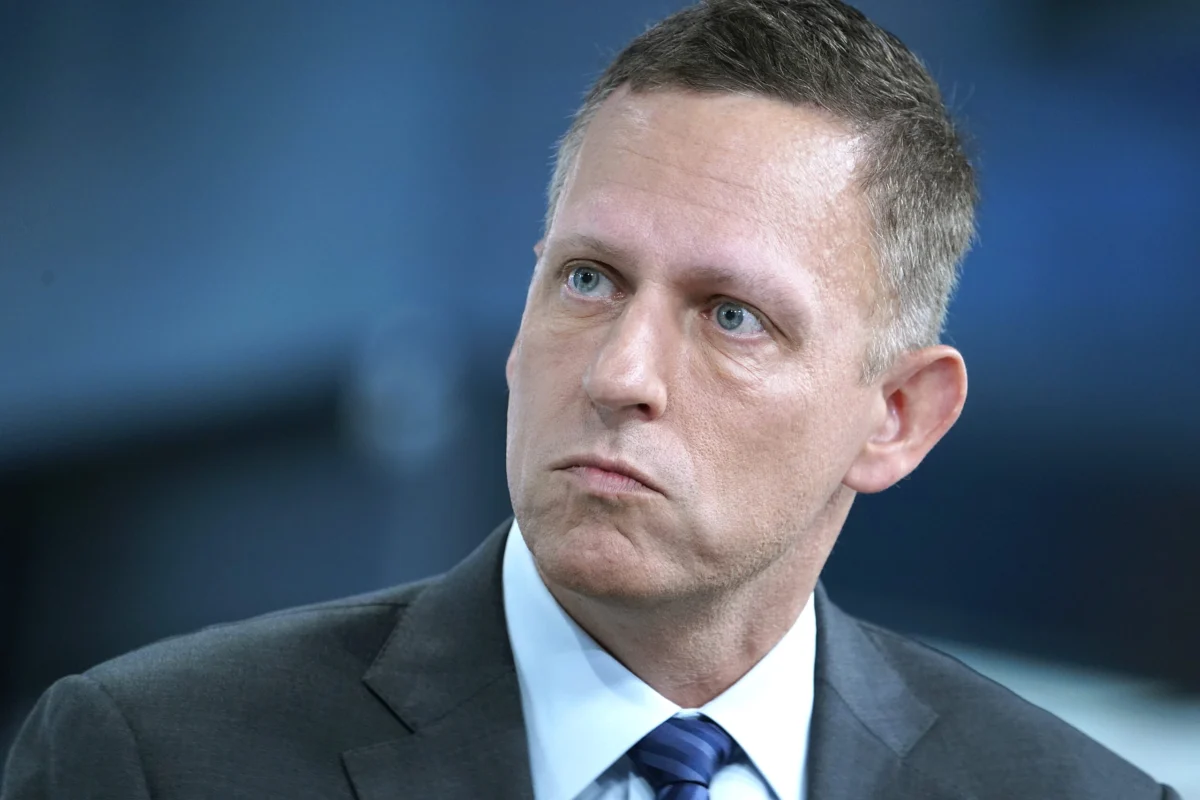
In 2010, titans of industry Warren Buffett and Bill Gates unveiled what appeared to be a disarmingly simple yet profoundly ambitious initiative: the Giving Pledge. This public commitment, open to the world’s wealthiest individuals, urged signatories to dedicate more than half of their fortunes to philanthropic causes, either during their lifetimes or upon their death. The timing felt prescient. The burgeoning tech industry was generating billionaires at an unprecedented rate, and the societal implications of these colossal fortunes were only beginning to be fully understood. "We’re talking trillions over time," Buffett famously told Charlie Rose that year, a prediction that, in retrospect, proved remarkably accurate. The trillions materialized, but the corresponding scale of giving has, for many, lagged significantly behind.
The stark reality of wealth concentration is no longer a revelation to those who observe economic trends. Today, the top 1% of American households command an astonishing amount of wealth, roughly equivalent to that of the bottom 90% combined – a level of disparity not seen since the Federal Reserve began meticulously tracking wealth distribution in 1989. On a global scale, the financial ascent of billionaires has been nothing short of meteoric; since 2020, their collective wealth has surged by an astounding 81%, reaching a staggering $18.3 trillion. This colossal accumulation of wealth stands in stark contrast to the persistent global hunger crisis, where one in four individuals worldwide struggles with consistent access to adequate food.
It is within this backdrop of extreme wealth accumulation and pervasive need that a select group of extraordinarily affluent individuals are now grappling with the weight of a voluntary, albeit unenforceable, promise: to bequeath the majority of their fortunes. The Giving Pledge, once a beacon of philanthropic aspiration, now appears to be facing a quiet but discernible erosion of commitment. Recent reports, notably from The New York Times, paint a picture of declining engagement. In its inaugural five years, the Pledge attracted 113 families. This number dwindled to 72 in the subsequent five-year period, further decreased to 43, and in the entirety of 2024, only a mere four new families joined. Prominent figures such as Sam Altman, Mark Zuckerberg and Priscilla Chan, and Elon Musk, individuals who wield immense influence on the global stage, are signatories. Yet, the enthusiasm for the Pledge seems to be waning. Peter Thiel, a prominent venture capitalist and early supporter of the tech industry’s libertarian ethos, articulated this sentiment to The Times, suggesting the club has "really run out of energy." He further pondered if the "branding is outright negative" but acknowledged that it "feels way less important for people to join."
The discourse surrounding "doing good" within Silicon Valley has been undergoing a subtle yet significant shift for years. The popular HBO series "Silicon Valley," which concluded its run, was renowned for its sharp satire of the tech industry. The show relentlessly lampooned characters who perpetually claimed to be "making the world a better place" while simultaneously prioritizing inflated valuations. This cultural critique, it is reported, even influenced actual corporate behavior. Clay Tarver, a writer for the series, shared with The New Yorker that the show’s persistent mockery of the phrase led to internal directives at major tech companies: "I’ve been told that, at some of the big companies, the P.R. departments have ordered their employees to stop saying ‘We’re making the world a better place,’ specifically because we have made fun of that phrase so mercilessly."
While the satirical portrayal of such pronouncements was often humorous, the underlying idealism that fueled these sentiments was, at least in part, genuine. However, the vacuum left by this waning idealism has been filled by something far less palatable. Veteran tech investor Roger McNamee, in the same New Yorker piece, recounted a conversation with Mike Judge, the creator of "Silicon Valley." When asked about his underlying intent, Judge reportedly offered a profound observation: "I think Silicon Valley is immersed in a titanic battle between the hippie value system of the Steve Jobs generation and the Ayn Randian libertarian values of the Peter Thiel generation."
McNamee’s own assessment was even more direct, devoid of diplomatic niceties. "Some of us actually, as naive as it sounds, came here to make the world a better place. And we did not succeed. We made some things better, we made some things worse, and in the meantime the libertarians took over, and they do not give a damn about right or wrong. They are here to make money." This shift in ideology, where the pursuit of profit seemingly eclipses broader societal concerns, has had far-reaching consequences. A decade later, the libertarians McNamee described have extended their influence far beyond the confines of Silicon Valley, with some now occupying positions of considerable power within government.
A fundamental divergence of opinion exists regarding the very definition of "giving back." For the increasingly influential libertarian faction within the tech world, the entire framework of traditional philanthropy is viewed with skepticism. Their perspective posits that the creation of companies, the generation of employment, and the relentless drive for innovation are the primary contributions of these individuals. Consequently, the pressure to engage in philanthropic endeavors is perceived, at best, as a mere social convention and, at worst, as a form of coercion disguised as moral virtue.
Few individuals embody this prevailing sentiment as vividly as Peter Thiel. Notably, Thiel himself has never signed the Giving Pledge and harbors a well-documented disdain for Bill Gates, having reportedly referred to him as an "awful, awful person." Thiel has openly acknowledged privately encouraging approximately a dozen Pledge signatories to reconsider their commitments. He has also reportedly nudged those already wavering towards making their exits official. "Most of the ones I’ve talked to have at least expressed regret about signing it," Thiel stated, further characterizing the Giving Pledge as an "Epstein-adjacent, fake Boomer club."
Thiel’s influence extends to urging figures like Elon Musk to reconsider his Pledge obligations, arguing that Musk’s considerable wealth would otherwise "go to left-wing nonprofits that will be chosen by" Gates. In a symbolic act of support for this ideological shift, Thiel reportedly sent a congratulatory note to Coinbase CEO Brian Armstrong when Armstrong quietly removed his letter from the Pledge website in mid-2024, without any public explanation.
However, Thiel also shared a more nuanced observation with The Times that warrants deeper consideration: those who remain on the Pledge’s public roster feel "sort of blackmailed." This sentiment suggests a perceived pressure of public opinion, making it difficult for individuals to formally renounce a non-binding commitment to donate substantial sums of money. This claim, however, presents a challenge when juxtaposed with the public behavior of some of the very individuals Thiel has in mind. Elon Musk, for instance, has demonstrated a remarkable indifference to managing public perception; indeed, a majority of Americans now hold an unfavorable view of him. Similarly, Mark Zuckerberg endured nearly a decade of intense regulatory scrutiny and public backlash, emerging from the ordeal seemingly more resolute in his convictions, not less.
Concurrently, a starkly different narrative is unfolding at the grassroots level. GoFundMe, a prominent crowdfunding platform, reported a significant 17% surge in fundraisers for essential necessities last year. Categories such as "work," "home," "food," "bill," and "care" emerged as the most frequently used keywords in campaign descriptions. The impact of a 43-day federal government shutdown, which disrupted food stamp distribution, was particularly acute, leading to a sixfold increase in related fundraising campaigns. The company’s CEO articulated the growing challenges faced by everyday citizens: "Life is getting more expensive and folks are struggling, so they are reaching out to friends and family to see if they can help them through." Whether these emergent trends are directly linked to decisions made in the quiet boardrooms of philanthropic organizations is a subject of ongoing debate. Nevertheless, their parallel occurrence, and particularly their timing, is difficult to dismiss.
It is crucial to distinguish the fate of the Giving Pledge from the broader landscape of philanthropy. A segment of the wealthiest individuals in the tech sector continues to engage in charitable giving; however, they are increasingly doing so on their own terms, through their own established vehicles, and in pursuit of their own carefully defined objectives. At the commencement of 2026, the Chan Zuckerberg Initiative (CZI) underwent a significant restructuring, implementing approximately 70 job cuts, representing 8% of its workforce. This move signaled a strategic pivot away from its prior focus on education and social justice causes towards its Biohub network, a consortium of non-profit, biology-centric research institutes operating across multiple cities. Mark Zuckerberg articulated this shift in focus: "Biohub is going to be the main focus of our philanthropy going forward," he stated last November. These CZI reductions, on paper at least, appear less like a retreat from philanthropy and more like a recalibration of its approach. After all, the Zuckerbergs have, through their Pledge commitment, vowed to donate 99% of their lifetime wealth.
Not all prominent philanthropists are redefining the terms of engagement. Bill Gates announced last year his intention to donate virtually all of his remaining wealth through the Bill & Melinda Gates Foundation over the next two decades. This commitment amounts to over $200 billion, with the foundation scheduled to cease operations permanently on December 31, 2045. Echoing the sentiment of Andrew Carnegie, who famously stated, "the man who dies thus rich dies disgraced," Gates expressed his determination not to die wealthy.
This dynamic of concentrated wealth confronting broader societal needs is not unprecedented. The last era marked by comparable levels of wealth concentration – the original Gilded Age, spanning the 1890s through the early 1900s – saw its correction not through the magnanimity of philanthropists, but through robust policy interventions. These included trust-busting legislation, the introduction of federal income and estate taxes, and ultimately, the transformative programs of the New Deal. These changes were propelled by overwhelming political pressure, a force that seems considerably diminished in today’s institutional landscape, characterized by a less functional Congress, a compromised free press, and a less empowered regulatory state.
What remains undeniable is the sheer velocity of wealth accumulation in the current era. Fortunes are being amassed in years, not generations, precisely at a time when the societal safety net is being systematically dismantled. According to Oxfam’s 2026 global inequality report, the wealth generated by the world’s billionaires in 2025 alone was sufficient to provide every individual on Earth with $250, while still leaving the billionaires themselves over $500 billion wealthier.
The Giving Pledge, as Warren Buffett himself acknowledged from its inception, was always intended as a "moral pledge" – devoid of enforcement, consequences, or external accountability beyond personal conscience. That it once held significant sway speaks volumes about the era that birthed it. The fact that Peter Thiel now frames continued adherence to the Pledge as a form of coercion, and that The New York Times dedicated substantial coverage to this argument, speaks volumes about the prevailing zeitgeist of our current moment. The aspirational ideals of collective responsibility and shared prosperity are increasingly being challenged by a philosophy that prioritizes individual accumulation and transactional engagement, leaving the future of large-scale philanthropy in a state of profound uncertainty.