
 By Lina Irawan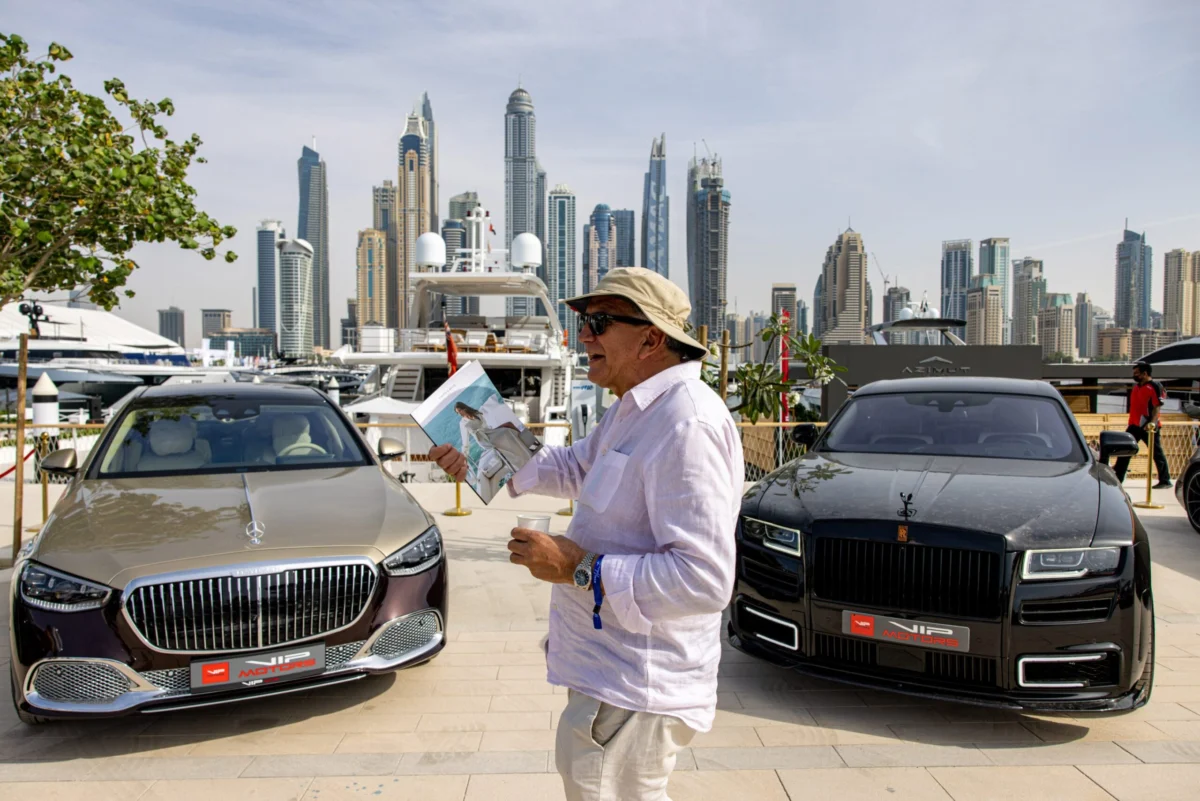
"Clearly, we look close and every day on the situation," remarked Daniel Grieder, CEO of Hugo Boss, during a recent earnings call. His sentiment encapsulates the collective apprehension gripping the industry. He elaborated on the tangible consequences, noting, "It has a direct impact on store opening and store performance because there’s not many tourists or less tourists shopping. That’s clear. That has an effect on the shopping centers and so forth and for all the brands." This observation highlights the immediate and visible impact on foot traffic and consumer spending, particularly from the international clientele that often drives sales in the region’s premier luxury destinations.
The immediate forecast is stark. A recent Bernstein Research report projected a precipitous 50% decline in luxury sales in the Middle East for the current month. This dramatic downturn is primarily attributed to a sharp reduction in tourism and overall consumer traffic, a direct fallout of the perceived and actual risks associated with regional conflict. The luxury sector, inherently sensitive to economic confidence and discretionary spending, finds itself in a precarious position as geopolitical uncertainty takes precedence.
Despite these alarming projections, many luxury leaders are exercising caution in their long-term assessments. Grieder, for instance, emphasized that it remains "too early to say what the overall impact of the conflict will be," adding that Hugo Boss had not yet observed any significant fallout at the time of his remarks. This sentiment of watchful waiting has been echoed by executives at other prominent luxury houses, including Prada and Salvatore Ferragamo, who have communicated similar views to their investors. Their reluctance to declare a full-blown crisis reflects the inherent volatility of geopolitical events and the hope that the situation might yet stabilize, mitigating the worst-case scenarios.
The Middle East constitutes approximately 6% of the global luxury market, a seemingly modest figure that belies its strategic importance. Crucially, it stands out as one of the fastest-growing geographies within the luxury sphere, boasting organic sales growth rates of 6% to 8%. This impressive performance contrasts sharply with a broader global luxury sector that has, in many other regions, experienced stagnation or much slower expansion. The allure of the Middle East has long been its burgeoning wealth, a youthful demographic, and a cultural affinity for high-end goods, making it an indispensable growth engine for many international brands.
Luca Solca, a senior analyst of luxury goods at Bernstein, underscored the critical variable of duration. "If the war was to end relatively shortly, this would not be a huge issue for the global luxury goods in the states," he told Fortune. However, he warned of a more ominous scenario: "If the war was to continue, then I think if oil and gas prices were staying high, then I think there would be a higher probability of a recession." This analysis points to a dual threat: the immediate disruption caused by conflict and the wider macroeconomic fallout, particularly elevated energy prices, which can trigger global economic slowdowns and dampen luxury demand worldwide.
The Expanding Luxury Market in the Middle East: A Deep Dive into Its Appeal
Luxury brands have painstakingly cultivated deep and profitable roots across the Middle East, leveraging the region’s strategic location and burgeoning affluence. Key hubs like Dubai, Doha, and Abu Dhabi have transformed into global luxury epicenters, particularly their state-of-the-art international airports, which serve as crucial transit points and lucrative retail arenas for discerning travelers. Iconic brands such as Dior and Gucci derive a substantial portion of their regional sales – an estimated 20% each, excluding beauty and multi-brand store contributions – from this dynamic market, illustrating its profound importance to their global revenue streams.
The phenomenal growth of the high-end market in the Middle East is intrinsically linked to the unprecedented accumulation of wealth within the region. An Oxfam report from 2023 illuminated this trend, revealing that from 2019 to 2022, the ultra-wealthy in the Middle East and North Africa (MENA) region saw their collective fortunes double. The most affluent 106,080 individuals, representing a mere 0.05% of the total population, experienced an astonishing 75% surge in their wealth, escalating from $1.6 trillion to a staggering $3 trillion during this relatively short span. This concentration of immense wealth creates an extraordinarily fertile ground for luxury consumption, as these high-net-worth individuals (HNWIs) possess both the means and the inclination to invest in premium goods and experiences.
Beyond mere financial capacity, the region’s unique demographic and cultural characteristics further fuel the luxury sector. A young, digitally savvy population, coupled with a strong emphasis on social status and gifting, drives consistent demand for high-quality, exclusive products. Government initiatives, such as Saudi Arabia’s Vision 2030, the UAE’s continuous investment in tourism infrastructure, and Qatar’s hosting of global events, have also played a pivotal role in positioning these nations as magnets for luxury tourism and retail. New mega-projects like NEOM and The Red Sea Project are not just urban developments; they are designed to be luxury destinations in themselves, attracting a global elite eager for unique, high-end experiences.
Tom Narayan, an analyst at RBC Capital, further elaborated on the distinctive consumer behavior observed in the Middle East, particularly within the luxury automotive segment. He highlighted that wealthier buyers in the region exhibit a strong propensity to "splurge on the more expensive, top-of-the-line models, such as luxury supercars," making them an exceptionally lucrative customer base for high-end brands. This preference for bespoke customization and premium variants contributes significantly to the profitability of sales in the region. "It’s certainly the high-margin region," Narayan affirmed, "meaning the cars they sell in the Middle East are more profitable versus the cars they sell outside that region." This translates into healthier bottom lines for brands, making the Middle East not just a volume driver but a crucial profit center.
When Luxury Brands Should Begin to Worry: Signs and Scenarios
The initial cautious optimism among some luxury executives is giving way to more concrete concerns as the conflict involving Iran shows signs of persistence. Some brands are already adjusting their strategies, shifting focus, or even curtailing operations in the region. Ferrari and Maserati, for instance, have temporarily halted shipments to the Middle East, as confirmed by the companies earlier this week. While the Middle East accounted for a relatively small 4.6% of Ferrari’s global shipments in 2025, this decision underscores a proactive risk management approach. Narayan suggests that these luxury automakers possess the agility to reallocate inventories and compensate for lost deliveries in other robust markets, notably Europe, minimizing the immediate financial impact. However, such actions serve as potent indicators of the escalating challenges.
The broader and more significant consequences of a prolonged conflict loom large. Bernstein Research’s analysis paints a grim picture for an extended period of instability. An ongoing conflict would inevitably throttle international travel to the region, a critical concern given that tourism is responsible for a substantial 30% of luxury sales in the Middle East. Beyond direct travel disruptions, several interconnected factors could combine to depress sales further:
- Elevated Oil and Gas Prices: A protracted conflict in a major oil-producing region invariably leads to spikes in global energy prices. Higher fuel costs make international travel more expensive, deterring tourists. Domestically, they can act as a de facto tax on consumers, reducing disposable income for luxury purchases.
- Increased Risk of Recession: As Luca Solca articulated, persistently high oil prices significantly increase the probability of a global economic recession. Luxury goods are discretionary purchases, and a widespread economic downturn would inevitably lead to a contraction in demand across all markets, including the Middle East.
- Heightened Geopolitical Instability and Security Concerns: The perception of an unstable or unsafe region, whether due to direct conflict, increased security threats, or general political uncertainty, deters both tourists and business travelers. This "fear factor" directly impacts consumer confidence and purchasing behavior.
- Supply Chain Disruptions: A conflict in a crucial global shipping lane (like the Strait of Hormuz) or impacts on air cargo routes can disrupt the intricate global supply chains that luxury brands rely on. Delays, increased shipping costs, and difficulty in sourcing materials can impact product availability and profitability.
- Currency Fluctuations and Capital Flight: Geopolitical instability can lead to currency depreciation in affected nations and potentially trigger capital flight, as investors seek safer havens. This erodes purchasing power and reduces the pool of available wealth for luxury spending.
While former President Donald Trump had reportedly signaled the conflict could last "about a month," with readiness "to go far longer," the economic ramifications often outlive the active hostilities. Some analysts are already predicting that elevated oil prices could persist through 2027, making travel prohibitively expensive for a sustained period and exerting continuous economic pressure on consumers worldwide.
"Higher energy prices could potentially make global recession more likely," Solca reiterated, emphasizing the domino effect. "If that materialized, then, of course, we would have a ricochet on discretionary sectors, and luxury is one of those. So we cannot take a global recession lightly." This overarching concern underscores the interconnectedness of global economies and the particular vulnerability of the luxury market to widespread economic downturns. For brands that have invested heavily in the Middle East, a prolonged period of instability could necessitate significant strategic re-evaluations, including diversifying market exposure, recalibrating regional investment plans, and intensifying focus on localized engagement to retain their ultra-wealthy clientele amidst the storm. The current situation demands not just vigilance, but also robust contingency planning and a deep understanding of the complex interplay between geopolitics, economics, and consumer psychology.