
 By Rifan Muazin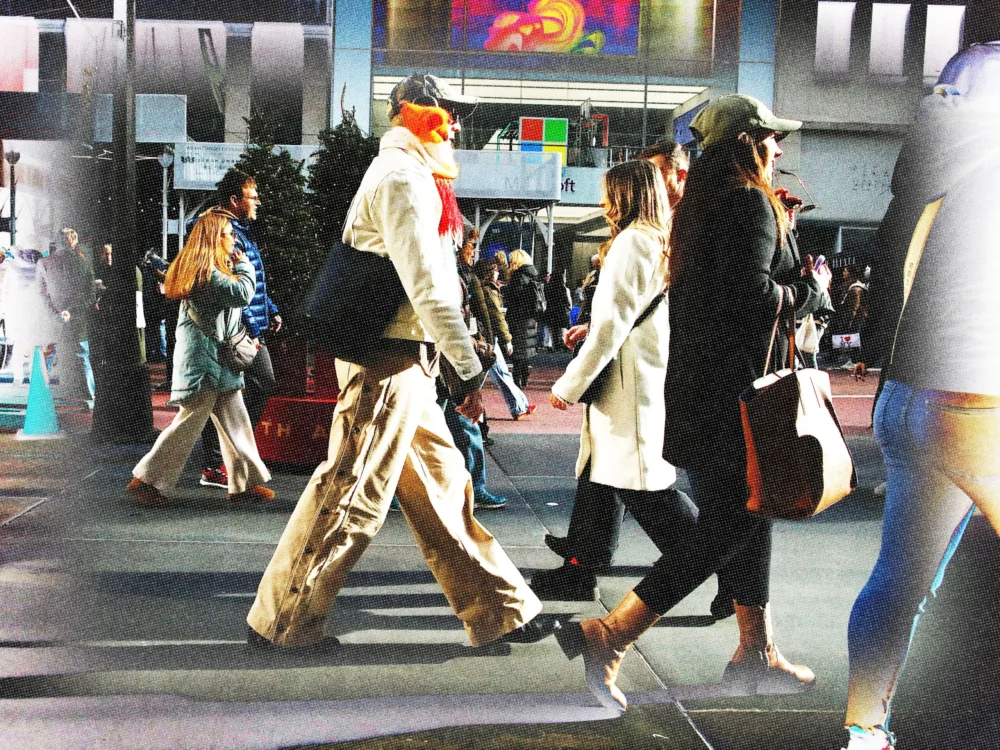
For many city dwellers and suburban explorers alike, the act of walking has become a lost art, frequently marred by a lack of spatial awareness and a fundamental misunderstanding of pedestrian physics. If you spend any significant amount of time walking around in public, one thing you will inevitably notice is that it seems to be a lot of people’s first day at "walking school." There is a pervasive lack of sidewalk literacy that manifests in various frustrating ways: individuals who insist on marching directly down the middle of the pavement, leaving no room for overtaking; the subset of walkers who live to abruptly stop without any warning, causing an immediate human traffic jam; and the "serpentine" walkers who veer back and forth inexplicably, rather than maintaining a straight line. To become a master of the stroll, one must agree to never be that person. When you take to the sidewalks, the goal is to exude an air of confidence, know-how, and perhaps most importantly, functional comfort. Walking is not just a mode of transportation; it is one of life’s greatest and last remaining free pleasures—a powerful form of self-care that requires a specific set of skills to execute correctly.
The foundation of a successful walking practice begins with the "Eyes Up" philosophy. In the modern era, the greatest threat to the quality of a walk is the smartphone. To be a "good" walker—and some might argue, a considerate member of society—you must stay off your phone. The primary objective of a walk is often to escape the digital tether. Even a brief 15-minute jaunt around the block serves as a vital physiological break for your eyes, which are otherwise bombarded by high-energy visible (HEV) blue light and a relentless stream of useless notifications. Data from the National Safety Council has shown a marked increase in "distracted walking" injuries over the last decade, ranging from tripped curbs to serious collisions. Beyond safety, the real bliss of walking is found in extended sessions—the hour-plus journeys—where one fully engages with the surrounding world.
Psychologically, these long, cleansing walks act as a "shower for the brain." Much like the "incubation" phase of creativity described by psychologists, where the mind works on a problem subconsciously while the body is occupied with a repetitive task, walking fosters profound breakthroughs. Historical figures from Aristotle—whose "Peripatetic" school of philosophy was named for his habit of walking while lecturing—to Friedrich Nietzsche and Steve Jobs, utilized walking as a primary tool for cognition. Nietzsche famously claimed that "all truly great thoughts are conceived while walking." When you remove the distraction of a screen, you enter a "walking-induced flow state." However, this state is fragile. The greatest interruption to this mental clarity is the "sidewalk dullard" who stands in the center of the path, neck craned downward, screening their life rather than living it. If a true emergency warrants a phone check, the etiquette is simple: pull over. Just as a responsible driver pulls onto the shoulder, a walker must find a "niche" out of the flow of traffic to respond to a text or check directions.
When it comes to the aesthetics of the walk, the prevailing wisdom is to prioritize function over fashion. While there are certainly social environments where the "see and be seen" rule applies—such as the trendy dog run or the stylish commute to the office—a walk dedicated to mental and physical maintenance requires a different wardrobe. This is the realm of "Sandler-core," an aesthetic popularized by actor Adam Sandler that favors oversized, comfortable, and often mismatched athletic wear. The ideal walking kit often consists of a well-worn giveaway t-shirt, shin-length basketball shorts, and sneakers that have been broken in to the point of anatomical perfection.
In colder climates, the strategy shifts to layering with "battered" favorites: hoodies, zip-ups, and beanies that can withstand the elements without causing the wearer to fret over a bit of rain or mud. The rise of "gorpcore"—a fashion trend focused on functional outdoor gear—has made this style more socially acceptable, but the true walker cares little for trends. They care about avoiding the "vibe killers" of the trail: socks that are too thin, leading to blisters, or underwear that causes chafing during mile three. For sunny weather, a baseball cap is the quintessential accessory. It serves the dual purpose of shielding the face from UV rays and providing a sense of anonymity, allowing the walker to "cosplay" as a celebrity evading the paparazzi.
The choice of audio accompaniment is another critical decision for the modern walker. While earbuds like AirPods are ubiquitous, they are prone to wiggling and require constant adjustment, which can disrupt the rhythm of a brisk pace. Many seasoned walkers prefer over-the-ear "can" headphones, which offer superior stability and sound quality. However, safety remains paramount; if noise-canceling technology makes you too unaware of your surroundings, switching to "transparency mode" or going "pioneer mode"—listening only to the ambient sounds of the environment—is often the superior choice for maintaining situational awareness in urban settings.
Logistics also play a vital role in the quality of the experience. To feel truly liberated, one must be unencumbered. A heavy backpack leads to the dreaded "back sweat," while a tote bag requires constant shoulder readjustment. The solution lies in strategic storage. High-performance walking shorts with zip pockets or a well-placed crossbody bag (often referred to as a "fanny pack" when worn around the waist) allow for the "minimalist trinity"—phone, wallet, and keys—to be carried without banging against the thigh with every step.
Location selection is the next pillar of the master walker’s manifesto. Experienced walkers, much like realtors, know that location is everything. The ideal route is a "Goldilocks" zone: not so crowded that it requires constant dodging (avoiding high-tourist corridors), but not so desolate that it feels unsafe or eerie. In a city, the quality of the sidewalk is the primary metric. One should seek out residential streets that parallel busy commercial avenues; these often provide the same architectural beauty and greenery with half the foot traffic and noise pollution. For those venturing into nature, terrain footing is the priority. A forest path is idyllic until it becomes an overgrown, muddy dead-end. The "sweet spot" is often the maintained offshoots of public parks—paved enough to prevent injury, but secluded enough to offer a sense of escape.
Pace is the final technical element to master. Legendary basketball coach John Wooden’s mantra, "Be quick, but don’t hurry," is perfectly applicable here. Walking is, at its core, a form of cardiovascular exercise. According to the Mayo Clinic, brisk walking can help maintain a healthy weight, prevent various conditions including heart disease and high blood pressure, and strengthen bones and muscles. A light perspiration is a sign of a job well done, but the goal is not to arrive at your destination drenched in sweat. Furthermore, pace dictates social harmony. If you are a naturally slower walker, the "highway rule" applies: stay to the right (or left, depending on your country) to allow the faster "hares" to pass without friction.
Finally, we must address the "prize" of the walk. Part of the joy of participating in the physical world is the ability to indulge in small rewards. Whether it is an overpriced iced coffee, a artisanal pastry, or the controversial "walking smoke," these rewards provide a dopamine boost that reinforces the habit of movement. While the health impacts of smoking are well-documented, some walkers view a cigarette or a joint as a ritualistic reward for reaching a certain mileage, claiming it enhances the sensory experience of the environment. Regardless of your supplement of choice, the golden rule of the walk remains: do not litter. The ethical walker leaves the path as they found it, ensuring that the "last free pleasure" remains pristine for the next person embarking on their own journey of self-care. By combining spatial awareness, proper gear, and a mindful approach to the environment, anyone can move from being a "sidewalk amateur" to a master of the modern stroll.