
 By Rifan Muazin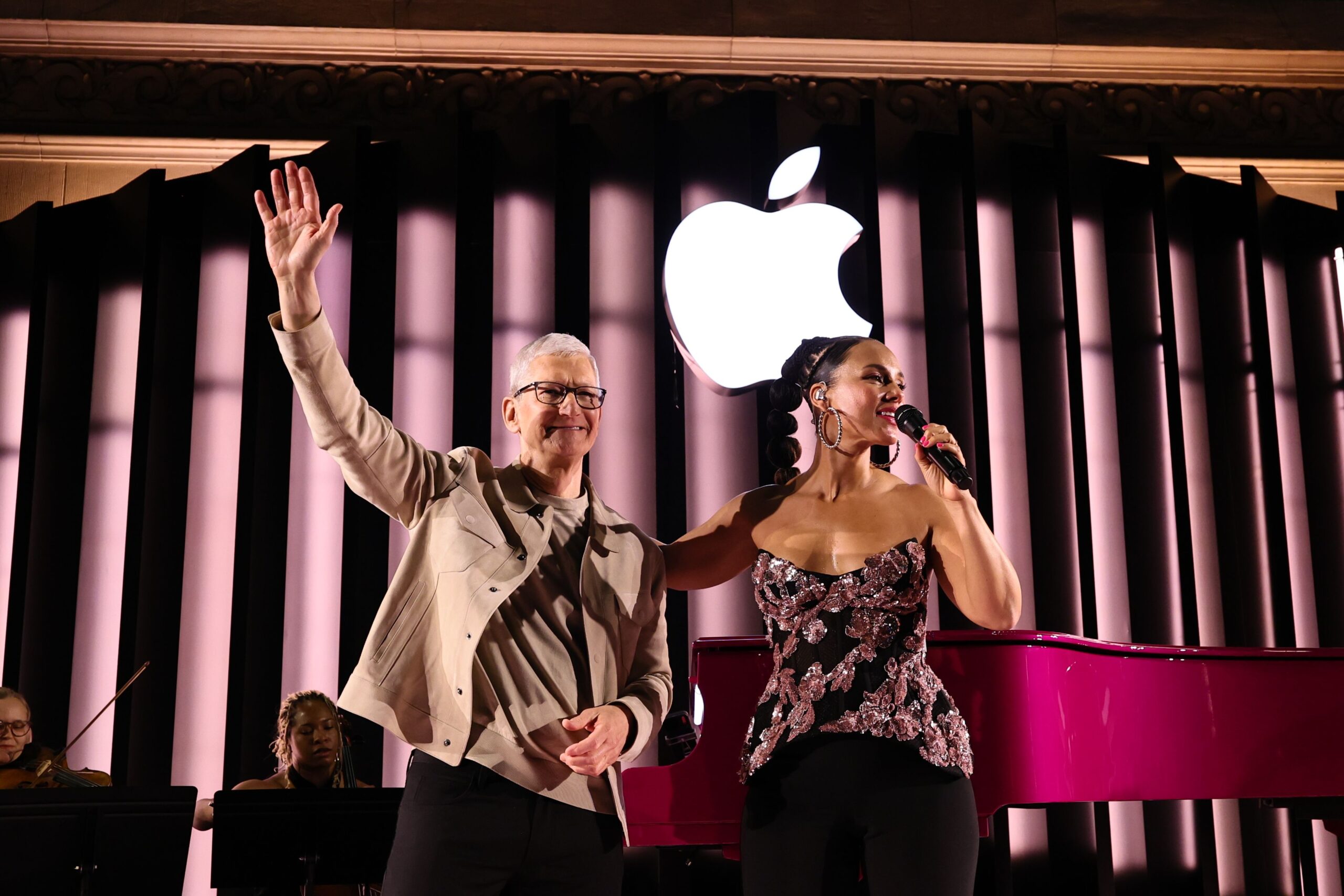
“I would still rock an iPod in my travel bag if I was going away,” Zane Lowe says, his voice cutting through the ambient hum of New York’s Grand Central Terminal. It is a Friday afternoon, and the air inside the historic transit hub is thick with a specific kind of electricity—the kind generated when the world’s most valuable tech company decides to throw a birthday party. Lowe, the flagship host of Apple Music 1 and a man whose career has been defined by the curation of sound, is standing amidst a dense thicket of humanity. They are all here for an Apple event celebrating the company’s 50th anniversary, waiting for Alicia Keys to take a makeshift stage in front of the iconic Grand Central Apple Store for a surprise performance.
The scene is a study in modern contradiction. We are surrounded by a shimmering sea of iPhones, held aloft by an army of influencers, media professionals, and those ambiguously self-described “creatives” who populate the front rows of every major cultural happening. They are all hunting for the perfect clip, the vertical video that will garner likes on platforms that didn’t exist when the devices they are celebrating were first conceived. Many in the crowd look remarkably young—certainly not old enough to have stood in line for the original iPhone in 2007, let alone to have witnessed the 1984 launch of the Macintosh. And yet, when the conversation turns to the iPod, the nostalgia is palpable and surprisingly universal.
“I still like the idea of having a dedicated music device in my life,” Lowe continues, leaning in. When asked which model holds his heart, his answer is immediate and purist. “I like the big one. The Nano is cool and stuff, but I like the original.”
This sentiment—a longing for a device that does only one thing, but does it with tactile perfection—was the quiet theme of the afternoon. It has been twenty-five years since the halfway point of Apple’s existence, when a black-turtlenecked Steve Jobs stood on a stage and changed the trajectory of the music industry. On October 23, 2001, Jobs introduced the iPod. It was not the first MP3 player; the South Korean firm SaeHan Information Systems had debuted the MPMan F10 four years earlier, and the Diamond Rio had already made waves among early adopters. But Jobs, a master of refining existing categories into objects of desire, focused on the user experience. With the marketing promise of “1,000 songs in your pocket,” the iPod didn’t just play music; it curated a lifestyle.
The device’s history is a roadmap of Apple’s dominance. The original scroll wheel gave way to the touch-sensitive click wheel, a piece of haptic engineering that remains one of the most satisfying interfaces in tech history. Then came the variations: the Mini with its anodized aluminum; the Nano, which grew thinner and more colorful with every iteration; the Shuffle, a screenless clip-on that turned music consumption into a game of chance; and finally, the Touch, which served as a gateway drug for the smartphone era. The iPod had no true competitor until Apple itself created one. The 2007 debut of the iPhone—the “uber-device” that combined a phone, an internet communicator, and an iPod—effectively signed the death warrant for the dedicated music player. Sales began a slow, inevitable decline until Apple finally discontinued the iPod Touch in 2022, officially ending the MP3-player age.
However, as the Grand Central event proved, the "death" of the iPod may have been premature in a psychological sense. For Gen Z, a generation born into the exhausting "infinite scroll" of social media, the iPod has become a symbol of a simpler, more optimistic technological era. They view the early 2000s as a time when Silicon Valley felt more like a Wild West for geeks than a consolidated breeding ground for data-harvesting techno-despots. On TikTok and Instagram, teenagers are proudly flaunting their “analog bags”—curated collections of older tech that prioritize intentionality over connectivity. These bags often contain digital cameras (digicams) with CCD sensors, paper notebooks, and, most importantly, iPods.
There is a distinct charm in the "analog" experience of digital tech. It offers an escape from the notifications, the pings, and the algorithmic pressure to be constantly available. There is a specific joy in laying out the contents of your life on a cafe table rather than a home screen. When your music is on a separate device, your leisure time isn’t tethered to your phone’s battery life or its ability to distract you with a work email. At the Grand Central event, content creator Taylor Reed and his sibling Dylan shared their memories of the iPod Nano. Their eyes lit up as they described their first devices—Taylor’s was blue, Dylan’s was red, and mine was a vibrant purple. “I love how small it is. You can put it anywhere in your pocket. It’s not cumbersome in your bag,” Taylor remarked, touching on the ergonomics that modern, oversized smartphones have largely abandoned.
The atmosphere before the Alicia Keys performance felt like a high-fashion homecoming. Many of the VIPs gathered at The Campbell, a storied New York City watering hole hidden in a corner of the terminal. With its leaded-glass windows, hand-painted timber ceilings, and dark velvet seating, the bar’s 13th-century Florentine aesthetic stands in stark contrast to the organic minimalism of the Apple Store’s Genius Bar. As media staffers and influencers sipped cocktails, the conversation revolved around "petit-tech"—the idea that smaller, more focused gadgets are the new luxury.
While we were eventually ushered to the stage before the arrival of heavy hitters like comedian Druski, filmmaker Josh Safdie, and Harlem’s legendary couturier Dapper Dan, the sentiment remained the same. Most people in attendance owned at least two or three Apple devices, but they spoke of them with a sense of utility rather than the wonder reserved for the iPod.
“The novelty of an iPhone was that everything’s in one place,” said Brooks Welch, a DJ and music curator whose work depends on digital organization. “But now we’re like, ‘That was too much. We’re overstimulated.’” Welch spoke wistfully about the haptics of the iPod Nano’s click wheel—the subtle mechanical "tick" that provided physical feedback to a digital action. Creative consultant Diana Tsui echoed this, suggesting a revival of the smallest model. “Bring back the Shuffle! Because I see all the girls use them as hair clips, and I think that’s so cute.”
This "Podaissance" is being fueled by more than just irony; it is a reaction to the homogenization of modern hardware. For years, Apple’s product lineup has leaned into a monochrome palette of "Space Gray," "Midnight," and "Starlight." However, the recent release of the Macbook Neo—Apple’s candy-colored contribution to the budget PC market—has reignited a passion for the vivid aesthetics of the late 90s and early 2000s. The Neo’s translucent plastics and bold hues are a direct nod to the Bondi Blue iMac G3, the machine that saved Apple from bankruptcy in 1998. It signals a potential return to form for a company that once understood that tech should be fun, not just functional.
Whether this cultural yearning will actually prompt Apple to produce a new dedicated music player remains a subject of intense speculation. Industry analysts suggest that a "Music-Only" device could be marketed as a "wellness" product—a way to disconnect from the "attention economy" while still enjoying the high-fidelity audio of Apple Music’s lossless catalog. In an era where "digital detoxing" is a billion-dollar industry, a device that prevents you from checking your Instagram while listening to an album might be the ultimate status symbol.
As the lights dimmed in Grand Central and Alicia Keys began her set, the sea of iPhones rose again, capturing the moment for the cloud. But even in the middle of this high-tech celebration, the ghost of the iPod lingered. The event was a reminder that while Apple has spent fifty years building the future, its most enduring legacy might be the way it allowed us to carry our personal histories in our pockets.
In the VIP section, Dapper Dan looked as sharp as ever in a pristine white three-piece suit, a man who has seen every trend come and go in the streets of Harlem. He had recently misplaced his iPhone 17 Pro, a reminder that even the most advanced tech is subject to the whims of human error. When asked which legacy Apple device he would most like to see brought back to life, he didn’t hesitate. He didn’t mention the click wheel or the Bondi Blue plastic. He simply smiled and said, “The one I lost!”
It was a grounded conclusion to an afternoon of high-concept nostalgia. Whether it’s the original "brick" iPod that Zane Lowe still carries or the latest iPhone, the value of these devices has always been less about the silicon inside and more about the memories they hold. As Apple enters its sixth decade, the "Podaissance" suggests that the next great innovation might not be a new way to connect, but a more beautiful way to unplug.