
 By admin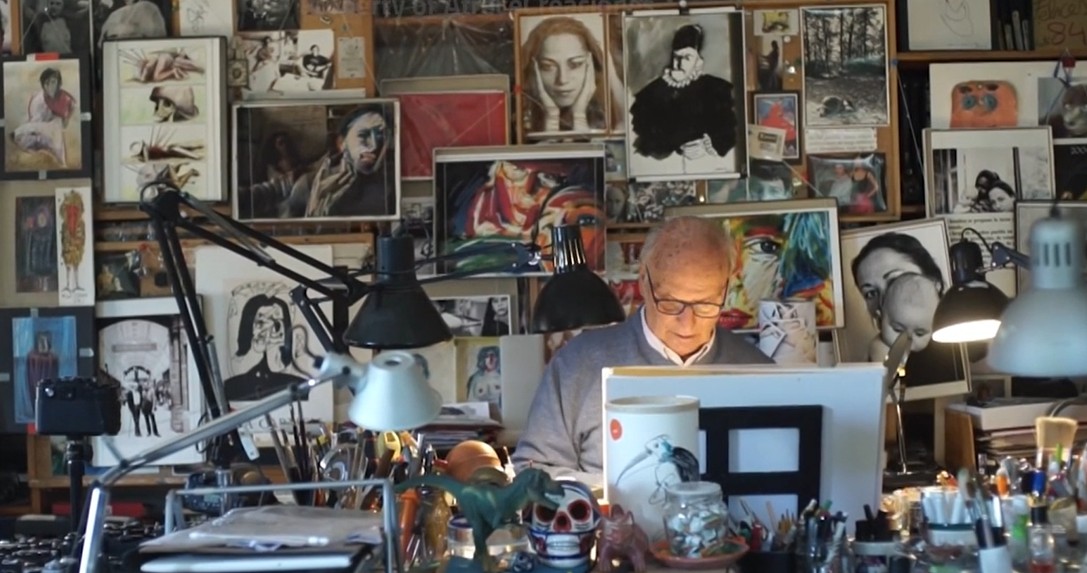
Saura, a towering figure in Spanish cinema, moved to a secluded, expansive stone house in the wooded mountains of Collado Mediano, just outside Madrid, in the late 1980s. For the subsequent four decades, this haven became his creative epicenter. While he continued to produce seminal films, his passion for visual arts blossomed. He dedicated himself to photography, amassed an impressive collection of cameras, and channeled his creative energy into sketching and painting. This period of intense artistic exploration, away from the demands of film sets, is vividly captured in "The Kid in the Photo," revealing a man whose artistic curiosity knew no bounds.
Central to Saura’s worldview, and a recurring theme in the documentary, is his profound concern for memory and his observation of Spain’s "widespread tendency to forget things." This sentiment, articulated in the film’s latter stages, underscores the urgency and necessity of Anna Saura’s endeavor. The documentary acts as a powerful counterpoint to this national amnesia, striving to preserve not only the memory of Carlos Saura but also his entire legacy and essence. It weaves together playful, informal interviews with his daughter, interspersed with poignant archive footage. These glimpses capture Saura in various intimate settings: working diligently at his mountain home, exploring picturesque Spanish villages, or immersed in rehearsals in Mexico for his final film, "The King of All the World."
The film’s evocative title, "The Kid in the Photo," immediately draws attention to a foundational element of Saura’s identity: his childhood. The documentary opens with a photograph of Saura at approximately four years old, a moment frozen in time that reveals a child with wide, almost preternaturally alert eyes. This early image serves as a portal into a past indelibly marked by seismic events. Saura himself recounts in the film, "From when I was four to seven, when the Civil War ended, I remember almost every day." One such indelible memory, recounted with chilling clarity, is his first day of school in Barcelona, a day shattered by the bombing raids of Franco’s air force. The visceral fear of that moment, the certainty that a bomb would strike the school, is a trauma that Saura carried with him throughout his life. He reveals how this deeply personal experience found its way into his cinematic work, stating, "The bombing scene in ‘Cousin Angélica’ is a transposition of my first day at school in Barcelona." This profound connection between his formative experiences and his artistic output is a cornerstone of Anna Saura’s narrative.
"The Kid in the Photo. Carlos Saura" is structured to allow the director to articulate his life and work in his own words. The film’s underlying thesis, subtly hinted at by its title, suggests that Saura was, in essence, a "Civil War child" for nearly his entire ninety years. His mental makeup, his dominant emotions, and his insatiable curiosity were all shaped by the profound impact of that conflict and its aftermath. This enduring influence manifested in a deep-seated horror of violence, a theme powerfully explored in his 1966 film, "The Hunt" ("La Caza"). The documentary revisits this seminal work, which depicts three men, veterans of the Spanish Civil War, on a rabbit hunt in a desolate valley still bearing the scars of the conflict. Fueled by jealousy and an authoritarian disdain, their hunt devolves into a brutal reenactment of the war’s barbarism, culminating in their mutual destruction.
Saura’s conviction that the past irrevocably shapes the present is a recurring motif. "The present is a consequence of what happened yesterday and the day before yesterday. It seems to me that nothing should be forgotten," he states in the documentary. His lifelong commitment to photography, which began in his youth with his father’s camera and later with the acquisition of a Leica M3, served as his primary tool for documenting and grappling with this historical continuum. The film showcases his poignant photographs from the 1950s, capturing the stark realities of postwar Spain. These images are often infused with a palpable sense of despair, hunger, and horror, evoking the somber spirit of Goya, another Aragonese artist deeply affected by the traumas of his time. One particularly striking photograph features a stark white concrete community mausoleum, its crypts eerily empty, like missing teeth, suggesting the desolation and poverty of the era, with coffins even being looted for their contents. The presence of two small coffins, discarded in the foreground on a pile of wood, one seemingly belonging to a child, amplifies the profound sense of loss and hardship depicted.
Beyond the shadows of war and societal hardship, the documentary also illuminates how Saura’s childhood fostered a deep and abiding love for the arts. An end credit title aptly notes, "His work, which includes more than 50 films, bears testimony of his passion for arts in all their forms." This artistic sensibility was nurtured by his parents. Saura fondly recalls his mother’s constant piano practice from early mornings, a dedication that instilled in him a "deep love for music which I still have." This early exposure to the arts, coupled with the profound impact of his experiences, forged the unique artistic vision that would define his career.

Anna Saura masterfully navigates the complex layers of her father’s identity. She grapples with the question of what facet of Carlos Saura resonates most profoundly: his international acclaim as Spain’s most prominent filmmaker who dared to challenge the Franco regime, or his numerous accolades, such as the Cannes Grand Jury Prize for "Raise Ravens" and the Berlin Golden Bear for "Deprisa, Deprisa." While these significant achievements are indeed featured, the documentary delves deeper, exploring the meaning behind these films and Saura’s lifelong empathy for those on the margins of society, his profound exploration of confused childhood, and his enduring themes.
However, what Anna Saura captures most effectively, and what serves as a delightful counterpoint to the gravity of his life’s work, is her father’s humanistic spirit and his disarming sense of humor. The film opens and closes with Saura attempting to deliver an on-camera message apologizing for missing a premiere of "King of All the Worlds." In these moments, he fluffs his lines, then breaks into a broad, infectious smile. This playful banter and frequent chuckle, often belying the sternness of his public persona, reveal a man who possessed a great sense of humor, a trait that struck those fortunate enough to know him well.
Comprised primarily of original, previously unseen footage, save for select television interview excerpts, "The Kid in the Photo" meticulously traces Saura’s evolution as a filmmaker. It illustrates his shifts in register, from the Italian neo-realist influence of "The Delinquents" to the more profound psychological introspection evident in "The Hunt." Saura’s own reflections on his approach to filmmaking are particularly insightful. He states, "I totally agreed [with Luis Buñuel] that a realistic, social cinema representing Spain ‘could be done using more imagination, not fantasy but imagination based more than on memory itself but rather how we manipulate it.’" This philosophy underscores his belief in the power of subjective experience and imaginative reconstruction in portraying reality.
The defining tenor of the documentary, however, is its intimate portrait of Carlos Saura at work, even in his late eighties. For Saura, creation was not a chore but a source of profound joy and fulfillment. His infectious enthusiasm for life and work shines through as he exclaims, "The first thing I say is: ‘I’m 88 years old and how marvellous I’m alive.’ And when the sun rises it’s marvellous, it’s a great invention and I say: ‘How lucky to be alive.’" He articulates a simple yet profound definition of work, stating, "Work for me isn’t work. The Chinese say that work is when you have to suffer. In this sense I don’t work." This perspective encapsulates his lifelong dedication to his artistic pursuits, which he approached with unwavering passion and a spirit of perpetual discovery.
Saura’s creative output never ceased. Even during his final illness, he continued to engage with his artistic passions, taking photographs of his caregivers at the hospital. In his last days, when physical limitations made painting, drawing, or writing challenging, his wit remained sharp. He shared a humorous observation with Anna Saura about a recent painting: "The painting we did the other day I liked a lot… But it looked like it was drawn by a schizophrenic. That’s why I liked it." This characteristic blend of artistic appreciation and dark humor encapsulates his enduring spirit. Carlos Saura passed away shortly thereafter, on February 10, 2023, just one day before he was scheduled to receive an Honorary Goya for his lifetime of cinematic achievement, a poignant testament to his profound impact on Spanish culture.
Antonio Saura, CEO of Latido Films and Carlos Saura’s son, expressed his profound admiration for his sister Anna’s work. He stated, "As one of my father’s sons, I am particularly touched by this incredible immersion by my sister into my father’s work. Also, to discover in Anna an incredible talent as a filmmaker, and her look into my father’s life and death reminded me of the great work of Rebecca Miller about Arthur Miller." He further elaborated on the film’s commercial potential, noting, "We see a great potential among the distributors of my father’s movies in France, U.S., UK and Italy for example, and definitively a great festival run."
In an interview with Variety prior to the film’s world premiere at the Málaga Festival, Anna Saura shed further light on her motivations and the creative process behind "The Kid in the Photo." She acknowledged her role as a custodian of her father’s legacy, referencing her earlier exhibition, "Carlos Saura and Dance," and confirmed the documentary’s core aim: "You’re absolutely right. My main goal with this documentary was to portray the person, Carlos being Carlos, beyond his great figure as a filmmaker. For me, it was very important to show what Carlos was like and how the passion he had for what he did was what gave him life and what keeps him alive. It’s very important to me that his legacy remains alive, that new generations can get to know him and can approach his films, his photographs, and his drawings."

The deliberate choice of the title, "The Kid in the Photo. Carlos Saura," is central to Anna Saura’s vision. She explained, "The Spanish Civil War was undoubtedly what marked my father’s life the most, because he experienced it when he was very young, and the postwar period shaped his childhood, his adolescence, and his first years as a director. The title plays with that idea, with that child who is in the war." She elaborated on her father’s self-reflection within the film: "In fact, in the documentary he appears reading his memoirs and saying, ‘That child in the photograph is four years old…’ referring to himself. But the title also refers to the fact that Carlos was always like a child, because until his very last days he had the curiosity that children have about everything. He always carried his camera with him and was always taking photographs, even when he could barely breathe."
The genesis of the film stemmed from a collaborative process that evolved organically over time. Anna Saura recounted, "During the trips we used to make to festivals or events, we would always record the journey like a kind of diary and he would edit it. So when mobile phones started to have good cameras, I began recording some clips of him with my phone during those trips." The transition to a feature film project occurred around 2019, with Anna Saura’s desire to conduct a long interview focusing on aspects of his life beyond his professional projects. "Although he did many interviews to promote his projects, it was rare for people to ask him about things from his life – his childhood, his creative processes, and so on."
The intention to create a full-length film solidified after her father’s passing in 2023. "I actually did that interview without a clear objective. Until he passed away in 2023, I kept filming small everyday moments, but never with a specific intention. It was about a year and a half ago, when I received development funding from the Community of Madrid, that I decided to seriously start making a film. After reviewing the material I had, I realized there were beautiful and unique moments, and I thought it could become a lovely film. During the process, of course, a lot of material had to be left out, which is always a bit painful, but I’m very happy with the result because I think it’s a honest portrait of him."
The film’s authenticity is further amplified by its reliance on previously unseen footage. Anna Saura confirmed, "Yes, except for the archival material from television, all the footage that appears in the film is previously unseen." She highlighted a particularly revealing moment: "That self-confession about ‘El Dorado’ was something we found in his archive, and I think it is very human and very sincere. It also shows an unknown side of Carlos, since he didn’t talk much about his feelings or his thoughts. The rest of the material was filmed by me over the years. I was fortunate to have unique and exclusive access, and to be able to capture some very special moments."
The deliberate inclusion of Saura’s sense of humor was a key artistic choice. Anna Saura explained, "Despite being a reserved person, my father had a great sense of humor when he felt at ease, and for me, that was something very important to show. Many people thought he was a very serious and a somewhat grumpy man, but I believe what he really had was shyness. Even in the most difficult moments, he always maintained his sense of humor. It was important for me to show who he really was, since very few people knew what he was truly like behind the ‘persona.’" This dedication to revealing the authentic Carlos Saura, beyond his public image, is what makes "The Kid in the Photo" such a compelling and ultimately moving cinematic achievement.