
 By Rifan Muazin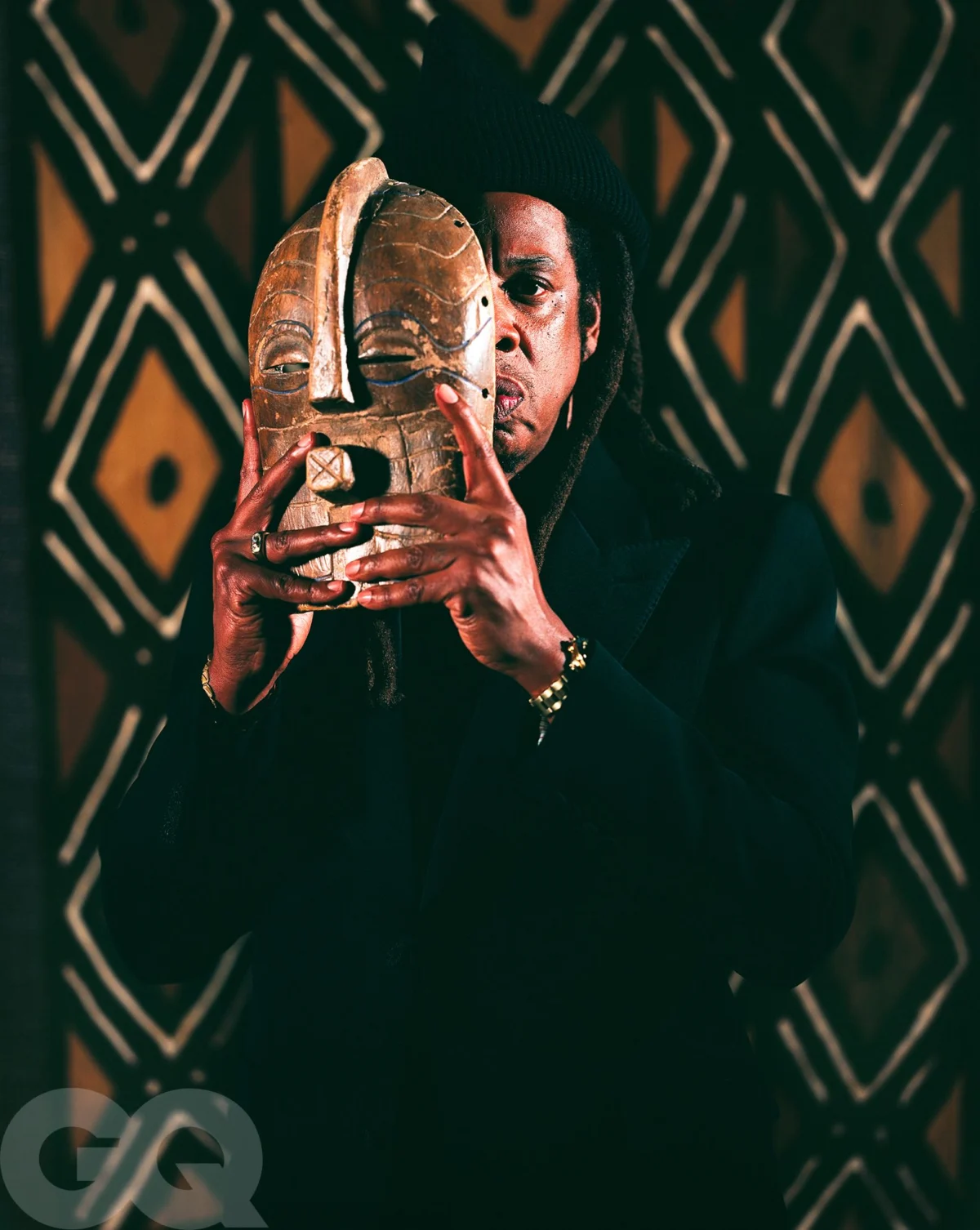
In 2002, during a now-legendary freestyle on New York’s Hot 97, Shawn "Jay-Z" Carter delivered a couplet that would serve as the mission statement for the next quarter-century of his life: “Even in my absence, my presence is felt. That gotta tell you I’m the king, dog, if nothing else.” Twenty-four years later, as the artist and mogul approaches the 30th anniversary of his debut masterpiece, Reasonable Doubt, those words have transitioned from a boastful claim to a structural reality of global pop culture. Even when he is not releasing music, Jay-Z remains the sun around which the hip-hop solar system orbits. Whether through the business maneuvers of Roc Nation, the curation of the Super Bowl halftime show, or his expanding portfolio of luxury spirits, the man once known as "Jigga" has evolved into a singular figure: the rap elder statesman who successfully navigated the transition from the "pits and snakes" of the 1990s street life to the ivory towers of global billionaires.

However, the journey to 2026 has not been a simple victory lap. Despite his immense wealth and cultural insulation, the last two years have tested the mental and emotional fortitude of the 56-year-old icon. In late 2024, Jay-Z faced a civil lawsuit from an anonymous woman alleging a decades-old sexual assault. While the suit was voluntarily dismissed with prejudice just months later—a legal conclusion that suggests a final and permanent end to the claims—the fallout left Jay-Z in a state of rare, "uncontrollable" anger. For a man who built a career on a foundation of unflappable "cool," the accusation struck at the core of his personal code. In his view, the "rules" of the street he grew up in—which dictated that women and children were off-limits—were being violated by a modern legal and social media landscape that prioritizes instant sensation over verified truth. He characterizes 2025 as a year spent on "defense," a period of heartbreak and internal reflection that has now given way to a 2026 strategy he defines simply as "all offense."

Central to this offensive is a clarification of his business legacy, particularly the complex math behind his high-profile divestments. In recent years, Jay-Z has been a master of the "exit," selling majority stakes in his brands to consolidate massive liquidity. He recently clarified the specifics of his D’Ussé cognac deal with Bacardi, a transaction that had been plagued by erroneous reporting. According to Carter, he took $750 million in cash for just 25 percent of his stake, implying his remaining half was valued at $1.5 billion, placing the total enterprise value at a staggering $3 billion. This level of financial acumen is what separates Jay-Z from his peers. He isn’t just an artist with a brand; he is a strategist who understands the valuation of luxury assets. His partnerships with LVMH (for Armand de Brignac) and Bacardi have turned him into a billionaire three times over, yet he remains adamant that his success is a blueprint for disenfranchised communities rather than a departure from them.

This tension between wealth and cultural authenticity is a recurring theme in Jay-Z’s modern discourse. He has often faced criticism for his "capitalist" leanings, most notably in his partnership with the NFL. Critics argued that by "joining" the league to curate the Super Bowl halftime show and advise on social justice initiatives (Inspire Change), he was sanitizing a system that had historically marginalized Black voices like Colin Kaepernick. Jay-Z, however, views this through the lens of realism rather than idealism. He argues that since Black people do not currently control the primary levers of global distribution and media, partnerships with established giants are a necessity for effecting change. The results, he notes, speak for themselves: seven Super Bowls later, the halftime show has moved from classic rock nostalgia to a dominant celebration of Black music, featuring icons like Dr. Dre, Rihanna, and most recently, Kendrick Lamar.

The 2025 Super Bowl, headlined by Kendrick Lamar, served as a flashpoint for hip-hop’s internal divisions. As the first solo rap headliner of the modern era, Lamar’s performance was a triumph for the genre, but it was also overshadowed by his historic 2024 beef with Drake. Jay-Z, who famously engaged in one of the most high-profile battles in history with Nas in the early 2000s, offers a surprisingly somber perspective on the current state of rap combat. While he acknowledges that "battling" is one of the four pillars of hip-hop—alongside breakdancing, graffiti, and DJing—he believes the pillar has become toxic in the age of social media and "stan" culture. In his view, the Kendrick-Drake conflict crossed lines that weren’t crossed in his era, involving families and children in a way that feels like a "tear down" of lives rather than a sparring of wits. He expresses a sense of regret over his own past battles, particularly noting that he truly likes Nas and respects his character, suggesting that the "oxygen" consumed by these feuds may no longer be worth the cost to the culture’s growth.

This sense of growth and "editing" is what defines Jay-Z’s current life. He speaks of the necessity of removing the word "allowed" from the Black vocabulary, asserting that no one has the authority to grant permission to a community that exists with inherent sovereignty. This philosophical shift is mirrored in his personal life, where fatherhood has become his primary source of meaning. The evolution of his eldest daughter, Blue Ivy, has been a public spectacle, but for Jay-Z, the most poignant moments happen off-camera. He describes the emotional weight of seeing Blue wear a jersey with his name on it to school, a silent testament of love that he values more than any Grammy or business deal. Watching her "fight" for her place on the Cowboy Carter tour stage with her mother, Beyoncé, was a proud moment for a father who wanted his children to understand that nothing is simply given, even to the heirs of the world’s biggest stars.

Artistically, Jay-Z remains in a state of "fulfilled" stasis. It has been nine years since the release of 4:44, an album that stripped away the "Superman" persona of his earlier work to reveal the vulnerable, traumatized man beneath the bravado. He admits that he finds it difficult to listen to 4:44 today because of its raw honesty, yet he recognizes it as the most important chapter of his career. While fans clamor for a new solo project, Jay-Z is unwilling to manufacture music for the sake of the market. He reveals that he has "fiery" and "angry" scratch ideas recorded during the height of his legal frustrations in 2025, but he has hesitated to release them. He questions whether the world needs more negativity and whether a "harsh" offering would do more harm than good. For Jay-Z, the hallmark of a great album is authenticity; if he cannot find a way to translate his current "zen" or his "offense" into something timeless, he is content to remain silent.

Roc Nation, the company he founded in 2008, continues to serve as his primary vehicle for sharing the "codes" of success. He has transitioned the company from a traditional record label to a distribution and management model, reflecting the modern artist’s need for independence. He points to J. Cole as a prime example of his "hands-off" mentorship. While early narratives suggested a rift between the two, Jay-Z clarifies that he simply gave Cole the tools and the space to find his own journey, even when that meant Cole rejecting the "hit-making" machinery of producers like Stargate. This respect for the artist’s individual expression is a cornerstone of the "Roc spirit" that Jay-Z has fostered since the mid-90s.

As Jay-Z looks toward the next decade, his ambitions remain vertical. He famously told a story about Russian billionaire Mikhail Prokhorov, who revealed there was always a "higher floor" in a luxury hotel that Jay-Z didn’t know existed. Today, Jay-Z’s goal isn’t just to reach the higher floor; it is to own the building. His journey from the Marcy Projects to the boardrooms of LVMH and the NFL is not just a story of individual success, but a case study in the power of curiosity and the refusal to be "allowed." He remains the "king" not because he is the most active rapper on the charts, but because he has mastered the art of being felt even in his absence. In 2026, as he prepares to celebrate 30 years since Reasonable Doubt, Shawn Carter is no longer just playing the game; he is the architect of the stadium. For Jay-Z, the "next level" is a permanent state of being, a continuous ascent fueled by the belief that life doesn’t happen to you—it happens for you.