
 By Rifan Muazin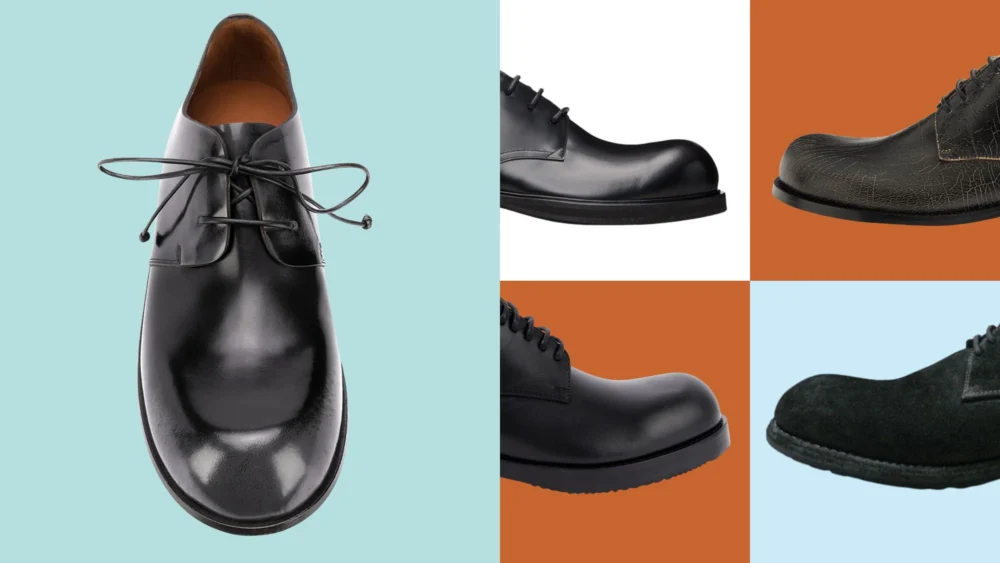
In the hyper-segmented landscape of modern men’s fashion, footwear has long served as the ultimate tribal signifier, a silent handshake that identifies one’s stylistic allegiances before a single word is exchanged. If the performative males—those navigating the intersection of corporate climb and Instagram influence—have claimed the polished loafer as their uniform, and the "Hedi boys," disciples of Hedi Slimane’s razor-thin rock-and-roll aesthetic, remain wedded to their sleek Chelsea boots, a vacuum was left for the true menswear nerds. This demographic, characterized by an obsessive devotion to garment construction and a disdain for the overly mainstream, has found its new totem: the "clownish" derby. These are not the slim, tapered dress shoes of a decade ago; instead, they are marked by exaggerated, round, and bulbous toe boxes that curve upward in a silhouette that is intentionally off-kilter and undeniably bold.
To understand the appeal of the clown derby, one must first understand the subculture that birthed its popularity. You will find this specific style of footwear on the feet of individuals who glide through the world in oversized, textural clothing from artisanal designers like Casey Casey, the San Francisco-based Evan Kinori, and the avant-garde archives of vintage Yohji Yamamoto. This is a cohort that finds beauty in the "imperfect" and the "slow." They are the type of enthusiasts who will, perhaps with a touch of performative exhaustion, explain the multi-step vegetable-tanning process of their leather or the specific loom-state density of their linen trousers as a righteous flex. For this group, fashion is not about looking "sharp" in the traditional sense; it is about the "geometry of the garment" and the "integrity of the material."
The clown derby serves as the perfect punctuation mark for this aesthetic. While a baggy, high-quality button-up shirt and wide-leg trousers offer a sense of understated design genius, the look can occasionally lean too far into the realm of the nondescript. The bulbous derby prevents this by introducing a "freaky full-stop." The shoe’s silhouette is so distinctive that it anchors the entire outfit, providing a visual weight that balances out voluminous proportions. It is a calculated rejection of the "slim-fit" era, signaling a move toward a more sculptural, almost architectural approach to dressing.
Beyond the visual impact, there is a profound element of physical liberation driving this trend. The shift toward wider, roomier footwear is not merely a stylistic whim; it is a practical response to the limitations of traditional luxury footwear. For years, the fashion industry prioritized a narrow, elongated silhouette that often came at the cost of the wearer’s comfort. The clown derby, with its cavernous toe box, offers a radical alternative. As many converts have noted, including those who first experimented with the style via brands like Marsèll, the extra room is transformative. It allows the foot—or "the dogs," in menswear parlance—to move freely about the cabin. This ergonomic benefit mirrors the logic of the recent square-toe trend, providing a miracle for those with wide feet who have long felt excluded from the world of high-fashion "hard shoes."
The Marsèll Muso Derby is perhaps the quintessential example of this movement. Marsèll, an Italian brand known for its artisanal approach and sculptural forms, has mastered the art of making leather look both ancient and futuristic. The Muso, with its thick sole and dramatically rounded front, initially looks extreme—almost like a piece of costume design from Jonathan Anderson’s surrealist Loewe universe. Anderson himself has played a pivotal role in normalizing this "ugly-cool" aesthetic. At Loewe, he has introduced footwear that blurs the line between high art and high-top sneakers, often utilizing exaggerated proportions that challenge the viewer’s perception of what a shoe "should" look like.
As the trend has gained momentum, the "menswear circus" has expanded to include some of the most powerful names in luxury. While the look originated with artisanal brands that prioritize small-batch production, the gravity of the silhouette has pulled in giants like Prada and Maison Margiela. Prada, under the joint creative direction of Miuccia Prada and Raf Simons, has long been a proponent of the "ugly-chic" philosophy. Their recent iterations of the derby have embraced a chunky, reinforced aesthetic that feels both industrial and playful. Maison Margiela, meanwhile, has taken the DNA of its iconic Tabi boot and applied a similar sense of subversion to the derby, experimenting with proportions that satisfy the "nerd" craving for something intellectually stimulating yet wearable.
The versatility of these shoes is another factor contributing to their dominance. Despite their seemingly specialized appearance, they possess an uncanny ability to refine a wide variety of outfits. When paired with straight-leg jeans, the bulbous derby adds a level of intentionality that a standard sneaker cannot provide. When worn with beaten-up work pants or heavy-duty fatigues, the shoes add a layer of "polish" without sacrificing the ruggedness of the look. They act as a bridge between the world of high fashion and the world of functional workwear, a hybridity that defines the current state of menswear.
The rise of the clown derby also reflects a broader cultural shift in how we perceive masculinity and "seriousness" in dress. For decades, the goal of the suit and the dress shoe was to make the man appear as streamlined and efficient as possible. The bulbous shoe rejects this corporate efficiency. It embraces a bit of the ridiculous, a bit of the theatrical. It suggests that the wearer is confident enough to look "clownish" because they are in on the joke. It is a form of sartorial irony that aligns perfectly with the current zeitgeist, where "gatekeeping" and "deep-cut" knowledge are the primary currencies of the fashion world.
Market data supports this shift toward "chunky" and "alternative" footwear. According to retail analysts, the "post-sneaker" world is not a return to the stiff oxfords of the past, but a move toward "hybrid" shoes that offer the comfort of a sneaker with the soul of a boot. Search queries for "chunky derbies" and "round toe leather shoes" have seen a significant uptick over the past 24 months, driven by social media platforms like TikTok and Instagram, where the "Hedi boy" aesthetic is being slowly eclipsed by the "Evan Kinori enthusiast."
For those looking to enter the "menswear circus," the options are more diverse than ever. From the artisanal mastery of brands like Guidi and A Diciannoveventitre (A1923), which offer a more rugged, hand-treated take on the bulbous shape, to the clean, minimalist interpretations by brands like Lemaire, there is a clown derby for every level of commitment. Some may opt for the extreme curvature of a Kiko Kostadinov collaboration, while others may prefer the subtle heft of a Tricker’s commando-sole derby.
In conclusion, the clown derby is more than just a passing fad; it is a manifestation of the menswear community’s ongoing obsession with silhouette, comfort, and the rejection of the "average." It is a shoe for the person who values the manufacturing process as much as the final product, and who isn’t afraid to stand out in a crowd of loafers and Chelsea boots. As the lines between artisanal craft and luxury fashion continue to blur, the bulbous derby stands as a testament to the power of footwear to transform not just an outfit, but an entire personal identity. So, cancel your other footwear plans, grab a ticket, and prepare to embrace the beautiful absurdity of the menswear circus. Your feet, and your wardrobe, will thank you for the extra room to breathe.