
 By Isnaini Azizah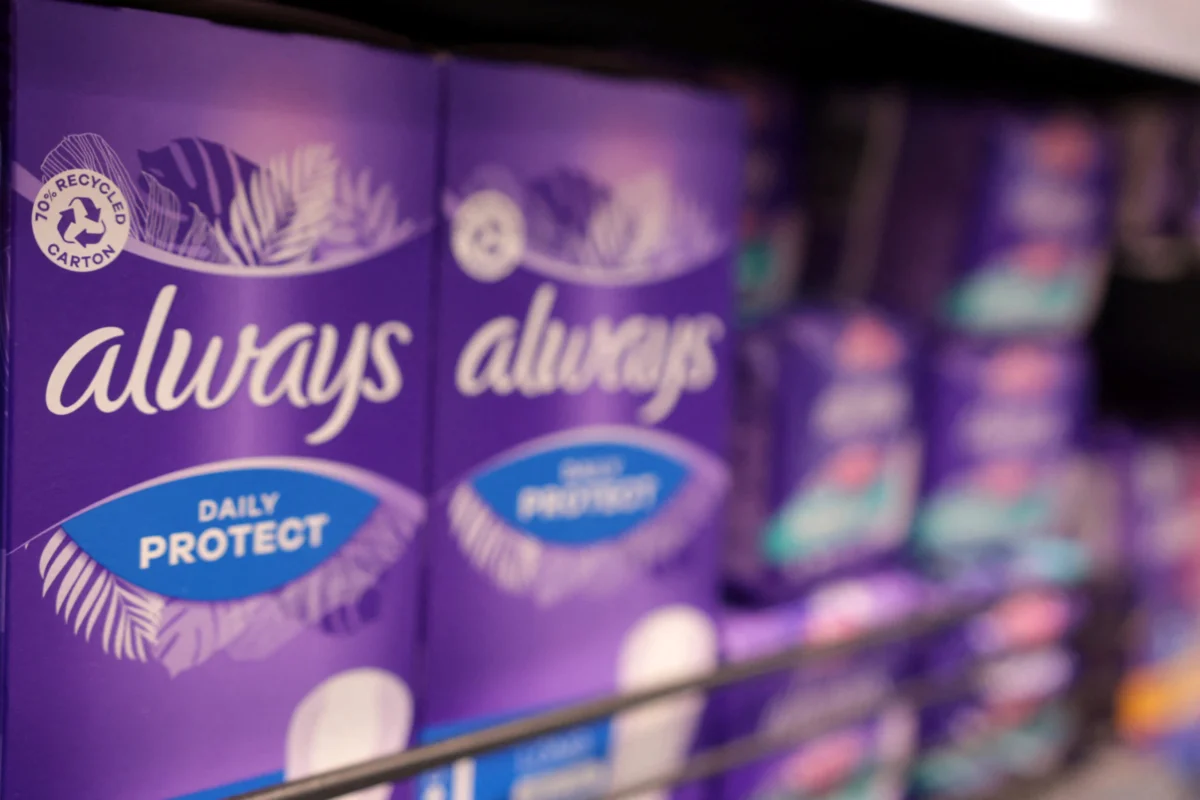
The modern retail landscape is currently defined by a stark and widening chasm between consumer optimism and the reality of the checkout counter. While macroeconomic indicators often paint a picture of stabilizing growth, the microeconomic reality for millions of Americans is far more punishing, particularly within the aisles dedicated to personal hygiene. Over the past several years, a confluence of rising inflation, volatile trade policies, and persistent gender-based taxation has transformed basic biological necessities into luxury-priced commodities. Nowhere is this more evident than in the market for menstrual products, where the price of essential items like tampons and sanitary pads has skyrocketed, forcing a significant portion of the population to make impossible choices between health, hygiene, and household sustenance.
According to recent data from the Chicago-based market research firm Circana, the average price of menstrual products has surged by nearly 40% since 2020. A unit that cost roughly $5.37 four years ago now commands a price of $7.43. This sharp trajectory far outpaces the general rate of inflation, creating a "period poverty" crisis in one of the world’s wealthiest nations. While dollar sales in the category have grown by nearly 30% during this period—a figure that might suggest a thriving market—the underlying data tells a different story. Analysis from NielsenIQ reveals that actual unit sales have decreased by roughly 6% since 2022, falling incrementally each year. This divergence indicates that consumers are not buying more; they are simply paying significantly more for less, or in many cases, being priced out of the market entirely.
The broader context of consumer packaged goods (CPG) shows a 2.7% year-to-date increase in dollar volume, which aligns closely with the latest Consumer Price Index (CPI) report showing a 2.4% annual rise in February. However, personal care products have become an outlier in the inflationary narrative. The latest CPI data indicates that inflation for personal care items in the United States has jumped a staggering 22.1% in February compared to January 2020 levels. For a category defined by biological necessity, these price hikes represent a regressive tax on half the population.
Sarah Broyd, a partner at the consultancy firm Clarkston Consulting, notes that the market has reached a critical breaking point. "I do think that we’re at a point where consumers in general are having to choose whether they can buy food for their family or buy prescriptions," Broyd observed. "Some things that we do typically define as a necessity, people are finding alternatives for or going without." The widening gap between skyrocketing prices and declining sales volume suggests that the "inelastic demand" typically associated with medical and hygiene products is finally snapping. Consumers are no longer just grumbling about prices; they are actively searching for survival strategies, ranging from "trading down" to private-label brands to the more concerning practice of rationing or skipping products altogether.
The drivers behind these price hikes are multifaceted, representing what Broyd describes as a "triple whammy" of economic pressures. First, the raw material costs for menstrual products—which rely heavily on cotton, specialized plastics, and wood pulp—have been subject to global supply chain volatility. Second, the energy costs associated with manufacturing and the logistics of international shipping have remained elevated. Third, and perhaps most controversially, aggressive tariff policies have added a heavy layer of cost to the finished goods.
Government data reveals a dramatic shift in the tax burden on these products. In 2025, the U.S. collected approximately $115 million through tariffs on menstrual products containing cotton, a massive leap from the $42 million collected in 2020. This increase is directly tied to the shifting geopolitical trade landscape. In 2024, the World Bank reported that the U.S. imported the vast majority of its menstrual products from Canada, China, and Mexico. President Donald Trump’s administration imposed varying levels of tariffs on all three nations, effectively taxing the supply chain of feminine hygiene. Because these products are essential, manufacturers have largely passed these costs directly to the consumer.
The corporate giants that dominate the industry have not been shy about acknowledging these pressures. Procter & Gamble (P&G), the parent company of the global market leader Always, announced in July that it was raising prices on 25% of its personal care and household portfolio. The company cited a staggering $1 billion total annual tariff impact as the primary driver for these adjustments. While P&G operates manufacturing facilities in Maine and Utah, its reliance on Canadian facilities and international raw materials leaves it vulnerable to cross-border friction. Similarly, Kimberly-Clark, the manufacturer of Kotex, reported in an April earnings call that it incurred $300 million in gross costs from tariffs, with more than half stemming from duties on Chinese imports.
Beyond federal tariffs and global inflation, consumers are also battling the "pink tax"—the practice of states levying sales tax on menstrual products while exempting other medical necessities. As of 2025, data from Statista shows that states like Tennessee, Mississippi, and Indiana maintain some of the highest sales taxes on period products at 7%. While many advocacy groups have successfully lobbied to have these items reclassified as "medical devices" to earn tax-exempt status, the progress is uneven, leaving residents in high-tax states with an even heavier financial burden.
The human element of this economic shift is perhaps best captured by the experiences of individual consumers. Dafna Diamant, a 30-year-old resident of New York City, has become a vocal critic of the rising costs, describing the experience as a "subscription service to be a woman." Diamant noted that a standard 18-pack of tampons, which used to be a manageable expense, has risen to nearly $25 in some retail environments over the past year. "It’s crazy, and it just feels like as a woman, you have to pay sometimes $50 every couple months," Diamant told CNBC. "And for some people, it takes a toll on the income. You have to pay every month to be fertile."
Diamant’s frustration highlights a growing trend of "brand abandonment." Even loyal customers of legacy brands like Always or Kotex are being forced to shop at discount retailers like CVS or Walgreens for store-brand alternatives, yet even these "value" options are seeing sticker prices that shock the average shopper. This shift in consumer behavior is forcing a reckoning within the industry. Broyd suggests that large corporations may begin selling off their feminine care segments to focus on higher-margin businesses, as seen in November when Edgewell Personal Care sold its feminine care division to a Swedish firm for $340 million.
In the vacuum left by traditional single-use products, a new market for reusables has flourished. Driven by both economic necessity and a growing distrust of the ingredients in traditional tampons, consumers are turning to menstrual cups, discs, and period underwear. This shift was further accelerated by recent academic studies, including research from UC Berkeley, which suggested that some tampons could contain trace amounts of lead or other heavy metals. Although the Food and Drug Administration (FDA) investigated these claims and determined there was no immediate health risk to consumers, the "safety scare" combined with high prices provided a powerful incentive for consumers to look elsewhere.
Saalt, a leading company in the reusable space, has seen a meteoric rise since its launch in 2018. CEO Cherie Hoeger estimates that between 16% and 20% of U.S. consumers have now tried reusable products, with the highest adoption rates among Gen Z. While sustainability was once the primary marketing hook for reusables, affordability has now taken center stage. "Affordability is huge," Hoeger said. "A cup or disc can last 10 years and costs around $30. Consumers can save up to $1,800 over the lifespan of that product." For a generation entering the workforce during a period of record-high housing and food costs, the math of reusables is becoming undeniable.
The rise of niche, startup-style brands is also challenging the "loyalty" model that executives like Kimberly-Clark CEO Michael Hsu have long relied upon. Hsu previously noted that "fem care" was a category defined by long-duration frequency and 40-year relationships with consumers. However, that relationship is predicated on the product remaining accessible. As Hoeger points out, "Affordability is the crux; it’s the root problem. Without affordability for these period products, you have real economic consequences for women."
As the U.S. Congress considers the Pink Tariffs Study Act—a Democratic-led initiative designed to determine if the current tariff system is regressive or gender-biased—the debate over menstrual equity is moving from the grocery aisle to the legislative floor. Until systemic changes are made to how these products are taxed and imported, the "subscription to be a woman" will continue to be one of the most expensive, and unavoidable, costs of living in the modern economy. The data suggests that we are witnessing a permanent shift in the market, where the dominance of single-use legacy brands is being eroded by a combination of government policy, corporate pricing strategies, and a new generation of consumers who simply cannot afford the status quo.