
 By admin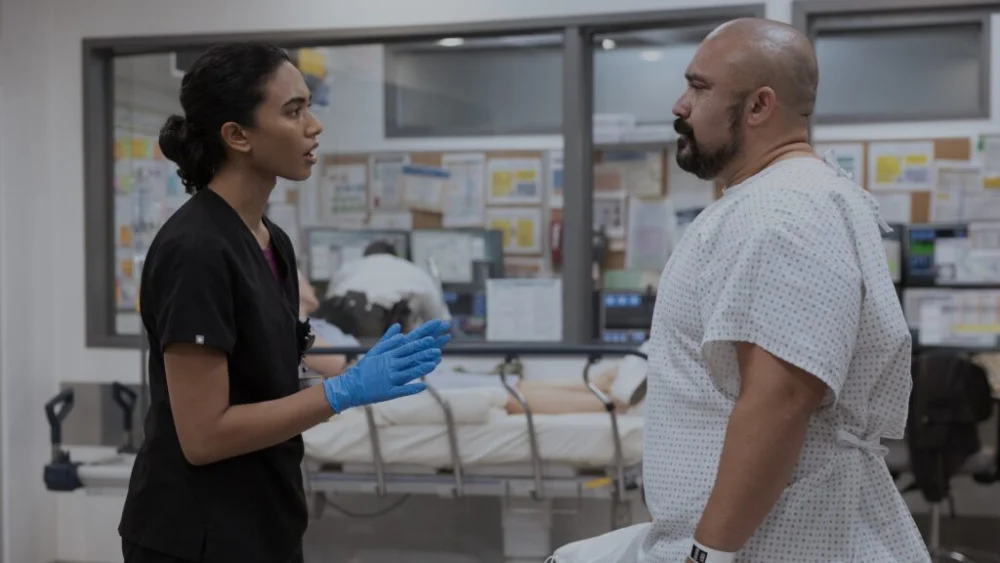
In a recent and harrowing episode of the HBO Max medical drama "The Pitt," a narrative unfolds that mirrors the quiet desperation of millions of households across the United States. The storyline follows Orlando Diaz, a construction worker who is rushed to the emergency department after collapsing on a job site. His diagnosis is diabetic ketoacidosis, a metabolic complication of diabetes that can be fatal if not treated immediately with insulin and intravenous fluids. However, the tragedy of Orlando’s situation is not merely biological; it is profoundly economic. Diaz finds himself trapped in the "Medicaid Gap"—earning too much to qualify for state-sponsored healthcare but far too little to afford the skyrocketing premiums of private insurance. To survive, he has been rationing his insulin, a dangerous practice that led directly to his hospitalization.
The narrative reaches its emotional peak when Orlando regains consciousness and immediately demands to be discharged against medical advice. It is revealed that he is hiding a $100,000 secret from his family: a mountain of existing medical debt that he has no hope of repaying. For Orlando, every hour spent in a hospital bed is not seen as a step toward recovery, but as a financial blow that threatens the survival of his family. This fictional portrayal, penned by creators with deep roots in both medicine and advocacy, serves as a stark indictment of a healthcare system where the cost of care is often as debilitating as the disease itself.
According to data from KFF (formerly the Kaiser Family Foundation), Orlando’s fictional struggle is a daily reality for more than 100 million Americans. This represents roughly 41% of the adult population currently grappling with some form of healthcare-related debt. The scale of the crisis is difficult to overstate. KFF estimates that Americans collectively owe at least $220 billion in medical debt. However, even this staggering figure likely underestimates the true scope of the problem. A 2024 Gallup report indicates that American families borrowed an estimated $74 billion in a single year just to cover basic medical expenses. These figures do not fully capture "hidden" debts—medical bills that have been shifted onto high-interest credit cards, personal loans, or home equity lines of credit as families scramble to keep their accounts out of formal collections.
The crisis of medical debt is a uniquely American phenomenon among wealthy nations. While medical dramas have historically focused on the "heroic" aspects of medicine—the high-stakes surgeries, the rare diagnoses, and the romantic lives of residents—"The Pitt" represents a shift in artistic focus. It is finally catching up with a long-brewing crisis that has transformed the American hospital from a place of healing into a potential site of financial ruin. The show’s executive producer, Joe Sachs, is himself a trained emergency physician, bringing a level of clinical and systemic authenticity to the screen that is often missing from more sensationalized procedurals. Sachs, alongside Allison Sesso, the CEO of the nonprofit Undue Medical Debt, argues that storytelling is a vital tool for humanizing statistics that are often too large for the public to fully comprehend.
Undue Medical Debt, an organization that has become a central player in the fight against this crisis, operates on a unique model. They buy large portfolios of medical debt on the secondary market—where debt is sold to collectors for pennies on the dollar—and then simply abolish it. Since its founding in 2014, the organization has relieved more than $25 billion in debt for over 14 million families. Yet, Sesso and Sachs are the first to admit that their work is a temporary solution to a systemic failure. The existence of a charity dedicated to erasing medical debt is, in itself, a symptom of a broken infrastructure.
The implications of medical debt extend far beyond the balance sheet. Research published in various medical journals, including the National Institutes of Health (NIH) archives, identifies medical debt as the leading cause of personal bankruptcy in the United States. Beyond financial insolvency, the psychological toll is devastating. Individuals burdened by medical bills are three times more likely to suffer from clinical anxiety and depression compared to those without such debt. This creates a vicious cycle: the stress of debt exacerbates physical health issues, which in turn leads to more medical visits and further debt.
Furthermore, medical debt acts as a barrier to future care. Patients who owe money to a hospital or physician’s group are significantly more likely to skip follow-up appointments, ignore symptoms, or discontinue life-saving medications. This "care avoidance" leads to worse health outcomes and, ironically, more expensive emergency interventions down the road. In the case of Orlando Diaz, the fear of debt led him to ration insulin—a decision that nearly cost him his life and resulted in an emergency department visit that was far more expensive than the preventative care he avoided.
The human element of this crisis is best expressed through the voices of those who have lived it. Jennifer, a single mother of four in Missouri, provided testimony to Undue Medical Debt that echoes the plight of the fictional Orlando. Despite having insurance, Jennifer was blindsided by out-of-network fees and "hidden" charges following a serious health event. She described the "relentless stress" of having to choose between paying a hospital bill and providing utilities or food for her children. Her story highlights a critical flaw in the current insurance landscape: the rise of high-deductible health plans (HDHPs). These plans, which have become the standard for many employers, often leave patients with thousands of dollars in out-of-pocket costs before their insurance coverage even begins.
The cultural impact of television in addressing such social issues cannot be ignored. Historically, television has served as a mirror for society’s most uncomfortable truths. In the 1970s, "All in the Family" forced viewers to confront the realities of racism and generational shifts. In the early 2000s, "The Wire" provided a gritty, uncompromising look at the systemic failures of urban policy and policing. More recently, "Will & Grace" is credited with shifting public opinion on LGBTQ+ rights. By bringing the "unsexy" topic of medical billing and debt into the living rooms of millions, "The Pitt" is attempting to do for healthcare reform what its predecessors did for civil rights and social justice.
However, the path to reform is fraught with political and corporate obstacles. At the federal level, there is a lack of consensus on how to address the underlying causes of medical debt. While the "No Surprises Act" was a significant step toward ending the practice of balance billing in emergency situations, it does not address the fundamental issues of high deductibles or the lack of price transparency in healthcare. The Consumer Financial Protection Bureau (CFPB) has recently proposed rules to ban medical debt from credit reports, a move that would protect the credit scores of millions, but even this does not erase the underlying obligation to pay.
The relationship between a doctor and a patient is also a casualty of this system. As Dr. Sachs and his colleagues observe, the therapeutic bond is eroded when a physician must recommend a treatment that they know will bankrupt the patient. In "The Pitt," resident physician Samira Mohan and attending physician Jack Abbot demonstrate an admirable level of compassion, even going so far as to personally pay for a patient’s supplies. But as the authors of the essay note, these individual acts of charity are not a sustainable policy. They are "Band-Aids" on a wound that requires major surgery.
The episode concludes with a poignant moment: Orlando Diaz flees the hospital to return to his second job as a security guard, driven by the need to buy "shoes and school supplies" for his children. His departure "against medical advice" is a rational response to an irrational system. The tragedy lies in the fact that Orlando is a hardworking, productive member of society who is being crushed by the very system meant to keep him healthy enough to work.
As the United States continues to grapple with rising healthcare costs, the closure of rural hospitals, and the increasing complexity of insurance navigation, the call for systemic change grows louder. The advocacy of organizations like Undue Medical Debt, combined with the narrative power of shows like "The Pitt," aims to move medical debt from a private shame to a public priority. The goal, as stated by Sesso and Sachs, is a future where the story of Orlando Diaz is an obsolete relic of the past—a time when a medical diagnosis did not automatically trigger a financial death sentence. Until then, the work of storytelling and debt abolition remains a necessary, if heartbreaking, necessity in the American landscape. The hope is that by illuminating these stories, the public will be moved to demand a system that prioritizes the health of the people over the profits of the industry. Only through a combination of cultural shift and legislative action can the weight of $220 billion in debt be lifted from the shoulders of the American public.