
 By admin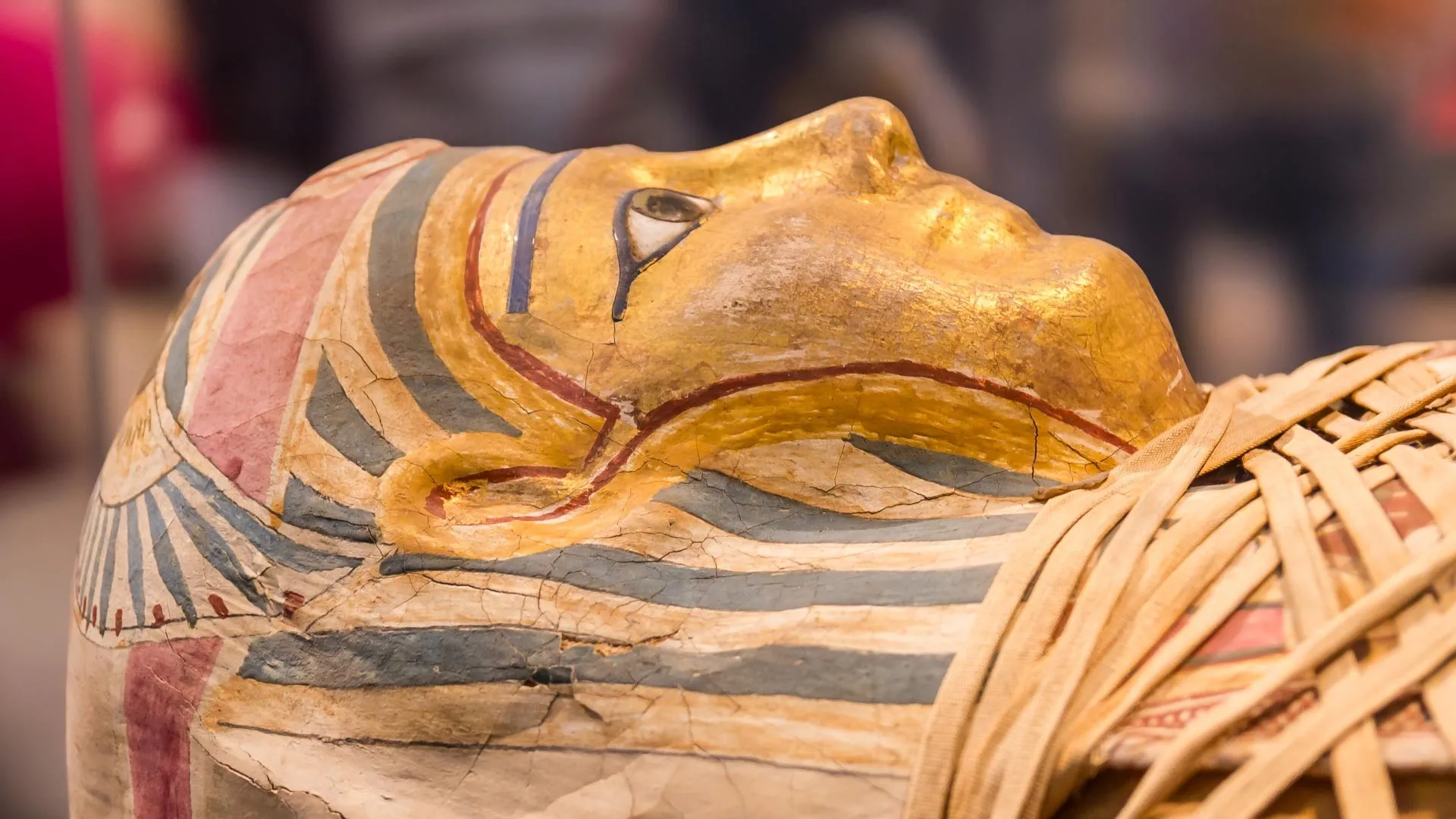
A pioneering study, spearheaded by a team of chemists at the University of Bristol, has fundamentally altered our understanding, demonstrating that the characteristic aroma emanating from mummies is far more than a simple byproduct of aging or decay. Instead, it represents a sophisticated chemical signature—a complex amalgamation of the substances deliberately used during the embalming process, interwoven with the preserved essences of the fabrics and other materials meticulously wrapped around the body. These lingering chemical traces, detectable even after thousands of years, collectively serve as a detailed historical record, revealing precisely how mummification techniques changed, diversified, and became increasingly sophisticated over hundreds of years of ancient Egyptian civilization.
Dr. Wanyue Zhao, a Research Associate in Organic Geochemistry at the University of Bristol and lead author of this seminal study, underscored the profound implications of these discoveries. "The findings mark a significant step forward in improving our understanding of Egyptian history and the fascinating ritual of mummification," Dr. Zhao stated. "Our analysis of the associated scents has uncovered new insights into how the practice developed through the ages and became increasingly sophisticated." This research not only deciphers ancient recipes but also illuminates the economic, cultural, and religious factors that influenced their evolution, painting a richer, more nuanced picture of one of history’s most enduring and enigmatic practices.
Revolutionizing Mummy Analysis: Analyzing the Air Around Ancient Remains
Traditionally, the study of embalming balms and resins has necessitated the extraction and dissolution of material samples, a process that, while informative, inherently risks damaging delicate and irreplaceable artifacts. Recognizing this critical limitation, the Bristol researchers developed and employed an innovative, minimally invasive methodology. To investigate the precise chemical origins of mummy scents, they meticulously examined the air surrounding extremely small mummy fragments—some no larger than a peppercorn. This non-destructive approach marks a significant paradigm shift, allowing for the study of priceless historical samples without compromising their physical integrity, a crucial consideration for museums and archaeological collections worldwide.
The team leveraged a powerful combination of advanced analytical tools, pushing the boundaries of chemical archaeology. Key among these techniques were solid phase microextraction (SPME), gas chromatography (GC), and high-resolution mass spectrometry (HRMS). SPME, a solvent-free extraction method, allowed them to efficiently capture volatile organic compounds (VOCs) present in the air within small, sealed containers surrounding the mummy fragments. Subsequently, gas chromatography separated these complex mixtures into their individual components based on their chemical properties, essentially isolating each distinct "scent molecule." Finally, high-resolution mass spectrometry provided precise identification and quantification of these separated components, allowing the scientists to build a detailed chemical fingerprint of each sample. These sophisticated methods enabled the capture of gases and the subsequent separation of myriad scent components, known as Volatile Organic Compounds (VOCs), facilitating their detailed study even when present in minute quantities.
The comprehensive research, meticulously detailed and published in the prestigious Journal of Archaeological Science, involved an extensive analysis of 35 distinct samples of balms and bandages derived from 19 different mummies. This carefully selected cohort of remains spanned an impressive chronological breadth of more than 2,000 years of Egyptian history, specifically from 3200 BC, representing the Predynastic period, through to 395 AD, encompassing the Roman period in Egypt. This expansive timeline allowed the researchers to track the evolution of mummification practices across various dynastic eras. Across all analyzed samples, the scientists successfully identified an astonishing 81 distinct VOCs. Each of these compounds serves as a vital chemical clue, offering unprecedented insights into the specific materials and embalming recipes employed, and crucially, correlating these findings with the precise time periods in which the mummies were prepared.
Deciphering Ancient Recipes: Chemical Clues Reveal Embalming Ingredients
The ability to identify and categorize these chemical compounds, even when present in extremely small, trace quantities, proved instrumental in allowing researchers to pinpoint the specific substances utilized in the ancient preservation process. The Bristol team systematically grouped the identified compounds into four primary categories, each directly linked to known or inferred embalming ingredients, thereby reconstructing elements of these long-lost recipes.
-
Fats and Oils: These ubiquitous ingredients, likely sourced from both animal fats (such as beef or sheep fat) and plant oils (like castor or sesame oil), were identified by the presence of aromatic compounds and short-chain fatty acids. Their primary role in mummification was multifaceted: they acted as emollients, helping to maintain skin pliability after the dehydrating effects of natron salt, and served as carriers for other aromatic substances. Furthermore, their occlusive properties would have helped seal the body, limiting exposure to oxygen and microbial degradation. In earlier mummification practices, these were often among the most accessible and fundamental components.
-
Beeswax: A highly prized natural product, beeswax yielded distinct mono-carboxylic fatty acids and cinnamic compounds. Its versatility made it invaluable to embalmers. Beeswax was used to seal incision wounds made during evisceration, to plug the nostrils after brain removal, and sometimes even to model facial features or fill sunken areas of the body, restoring a more lifelike appearance. Its natural antimicrobial properties also contributed to preservation, while its sticky consistency made it an excellent adhesive for bandages.
-
Plant Resins: This category, characterized by aromatic compounds and sesquiterpenoids, represents some of the most exotic and expensive ingredients in the embalmer’s toolkit. Resins such as frankincense, myrrh, cedar resin, and pistachio resin were not only potent antimicrobial agents but also imparted highly symbolic and pleasant fragrances. Their origin often lay in distant lands (e.g., Punt for frankincense and myrrh, Lebanon for cedar), indicating extensive trade networks and the high value placed on these materials for both their preservative and ritualistic qualities. The aromatic compounds they released would have been a significant contributor to the distinctive "scent of the mummy."
-
Bitumen: Identified by naphthenic compounds, bitumen—a naturally occurring tar or asphalt—was particularly challenging to detect with previous analytical methods due to its insoluble nature. Its inclusion, especially in later periods, highlights a growing understanding of its powerful preservative qualities. Bitumen provided a robust, waterproof, and antiseptic coating, creating an almost impenetrable barrier against decay. Its dark color also contributed to the characteristic black appearance of many Late Period and Roman mummies, though it could also make the remains brittle over time.
Dr. Zhao further elaborated on the chronological insights gleaned from these chemical patterns. "Our findings showed the chemical patterns varied across historical periods," she explained. "Earlier mummies had simpler profiles dominated by fats and oils, while later mummies displayed more complex mixtures incorporating imported resins and bitumen. Such materials were more costly and required more specialized preparation, as the practice became more advanced." This evolution reflects not only a developing scientific understanding of preservation but also changing socio-economic landscapes. The Old Kingdom (c. 2686–2181 BC) saw simpler methods, often restricted to the elite, while the New Kingdom (c. 1550–1070 BC) and later periods, characterized by imperial expansion and vast trade networks, allowed for the incorporation of exotic and expensive resins from the Near East and Africa. The increasing complexity suggests a growing professionalization of embalmers and a deeper cultural investment in the journey to the afterlife.
Beyond the General Recipe: Different Body Parts Used Different Embalming Recipes
Perhaps one of the most intriguing revelations from the study is that the chemical signatures were not uniform across an entire mummified body; instead, they varied significantly depending on which part of the body was sampled. This nuanced finding suggests an even greater degree of sophistication and deliberate precision in ancient Egyptian embalming practices than previously understood.
"For instance, samples from heads often contained different patterns than those from torsos," Dr. Zhao observed, "suggesting embalmers applied distinct recipes to separate parts of the body to possibly aid preservation. This is an area which needs further analysis and research to better understand what techniques were used and why." This differential treatment could have been driven by several factors. Different body parts possess varying tissue densities, moisture content, and susceptibility to decay. The brain, for example, was often liquefied and drained or removed entirely, while internal organs required specific treatment after evisceration. Embalmers may have tailored their balms to address these specific needs, perhaps using more potent antimicrobial agents on internal cavities or more emollient mixtures on the skin to maintain its integrity.
Furthermore, there might have been symbolic reasons for such differential application. Certain parts of the body held particular religious significance, and specific resins or oils might have been applied to them for ritualistic purposes. The face, being the most recognizable feature, might have received special attention to preserve its likeness. This finding opens up entirely new avenues for research, prompting Egyptologists and chemists to delve deeper into the specific functions and cultural meanings behind these localized embalming recipes. The findings collectively provide a much more detailed and nuanced understanding of known embalming mixtures, offering profound insights into the intricate development of these sophisticated preservation techniques over the long arc of ancient Egyptian history.
A New Paradigm: Studying Mummies Without Damaging Them
The methodological innovation at the heart of this research has far-reaching implications, particularly for the conservation and study of ancient remains housed in museums and research collections worldwide. Study co-author Richard Evershed, Professor of Chemistry at the University of Bristol, highlighted the unprecedented sensitivity of their approach. "Our volatile analysis proved sensitive enough to detect residues at extremely low concentrations," he stated. "For example, bitumen biomarkers were previously difficult to detect with earlier soluble residue methods." The ability to identify such challenging compounds validates the power of volatile analysis and opens doors to detecting a wider array of historical substances.
Professor Evershed emphasized the broader impact: "This approach expands the study of ancient Egyptian funerary practices, presenting a clearer, fuller picture of mummification recipes, material choices, and preservation strategies." By providing a more complete chemical inventory, researchers can better understand the underlying science of ancient embalming and the strategic choices made by ancient practitioners. This method transcends merely identifying ingredients; it allows for the reconstruction of the entire chemical narrative of a mummy, from initial preparation to its present state.
Crucially, the technique offers immense practical value for museums and research collections globally. The ability to sample the air around mummies provides a rapid, non-destructive method for examining fragile remains while meticulously preserving their physical condition. This means that invaluable artifacts, many too delicate for traditional sampling, can now be thoroughly investigated without fear of damage. This innovation allows for broader comparative studies across vast collections, potentially revealing regional variations or chronological trends in embalming that were previously inaccessible.
Study co-author Ian Bull, Professor of Analytical Chemistry at the University of Bristol, articulated the complementary role of this new method. "Physical sampling still plays a role for detailed work," he acknowledged, "yet volatile analysis provides an effective and enlightening first step for studying embalmed remains across collections and time periods." This suggests a hierarchical approach: initial non-destructive volatile analysis can efficiently screen numerous mummies, pinpointing those that warrant more in-depth (and potentially more invasive) physical sampling. This strategic integration of methodologies ensures maximum scientific gain with minimal impact on irreplaceable cultural heritage.
The Enduring Legacy of Scent: Broader Context and Future Directions
The art of mummification was central to ancient Egyptian beliefs about the afterlife. The careful preservation of the body was believed to be essential for the survival of the ‘ka’ (life force) and ‘ba’ (personality) in the journey through the underworld. The evolution of mummification techniques over thousands of years mirrors the development of Egyptian society itself—its scientific knowledge, economic prosperity, and religious complexities. From the simple desiccation in the sands of the Predynastic period to the elaborate, multi-stage processes involving evisceration, natron drying, anointing with costly balms, and intricate wrapping of the New Kingdom and later periods, each stage reflected an increasing mastery over the forces of decay.
This research, by unlocking the chemical secrets held within the very scent of mummies, bridges the gap between ancient ritual and modern science. It allows us to not only identify the physical ingredients but also infer the sensory experience and perhaps even the symbolic significance of these compounds to the ancient Egyptians. The use of aromatic resins, for instance, might have been intended to purify the body, appease the gods, or simply mask the odors of decay, facilitating the mourning process.
Looking forward, this groundbreaking methodology opens numerous avenues for future research. It could be applied to a wider array of ancient human and animal mummies, offering unparalleled insights into their preparation. Researchers might aim to identify specific plant species from their resin biomarkers, trace the precise geographic origins of imported materials through isotopic analysis, or even attempt to synthetically recreate the actual scents of ancient embalming workshops for museum exhibits, providing an immersive educational experience. Furthermore, the non-destructive nature of the technique could have applications beyond Egyptology, extending to the study of other preserved organic archaeological materials worldwide.
Ultimately, the Bristol study underscores the profound truth that even the most subtle, seemingly ephemeral aspects of the past—like a lingering scent—can hold robust scientific data. By meticulously analyzing the invisible molecules that surround ancient remains, scientists are providing a clearer, more intimate understanding of one of humanity’s most fascinating and enduring burial rituals, connecting us to the beliefs and practices of a civilization that mastered the art of defying time.