
 By Rifan Muazin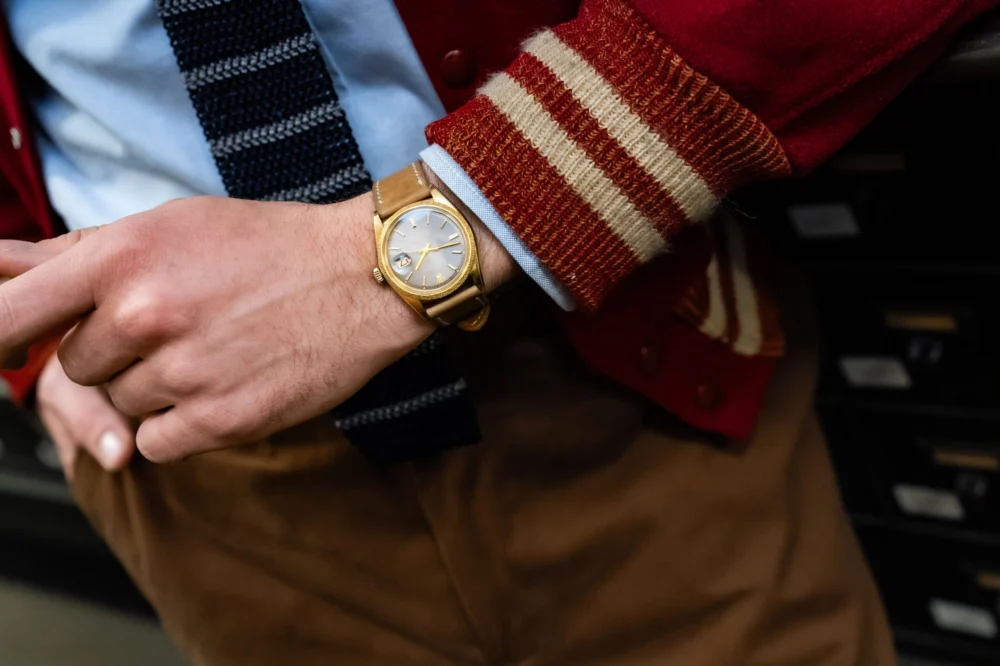
There is a glaring, almost anatomical omission in the modern fashion show, according to Eric Wind: the absence of the wristwatch. As one of the world’s most respected vintage watch dealers and the founder of Wind Vintage, Wind views the runway through a lens that prioritizes the wrist as much as the waistline. Despite his admitted bias toward horology, his observation touches on a broader truth about the "total look" in men’s style. “Obviously, it’s mostly about the clothes, but it feels like the models are just naked when they’re walking out,” Wind observes. He points to the industry’s heavyweights as examples of this missed opportunity. “Even the Ralph Lauren show—there were no watches on the wrist. It’s like, ‘Where are the watches, man?’” To Wind, a suit without a watch is like a sentence without a period; it is technically functional but lacks the necessary punctuation to signify completion.
Fortunately for the horological enthusiasts and sartorial traditionalists who populate the front rows of New York Fashion Week (NYFW), one specific show recently decided to address this void with surgical precision. When Jack Carlson, the president and chief creative officer of J. Press, unveiled his latest collection for the legendary Ivy League outfitter, he did so with a level of historical continuity rarely seen on the modern runway. Every single look that emerged from the wings was paired with a meticulously curated vintage wristwatch, ensuring that the passage of time was as much a part of the show as the garments themselves.
The collaboration between Carlson and Wind is not merely a business transaction between a clothier and a dealer; it is the culmination of a twenty-year friendship that began during their freshman year at Georgetown University. In the two decades since their time on the Hilltop, both men have ascended to the top of their respective fields. Carlson founded and eventually sold Rowing Blazers—a brand that revitalized the "preppy" aesthetic for a younger, more diverse generation—before taking the helm at J. Press. Wind, meanwhile, transitioned from a high-stakes role at Christie’s auction house to founding Wind Vintage, becoming the primary source for the world’s most discerning collectors seeking "tropical" dial Submariners, "Paul Newman" Daytonas, and unpolished treasures.

Their professional partnership has evolved through various iterations, including high-profile collaborations with brands like Tudor, Seiko, and Zodiac for special Rowing Blazers editions. However, their work at J. Press represents a deeper dive into the roots of American style. This partnership entered a new chapter at NYFW last fall, when Carlson paired his debut collection for J. Press with a selection of Wind’s inventory. The success of that initial outing set the stage for their latest endeavor: the Spring/Summer collection launch, which doubled as a celebration of a foundational text in menswear history.
“The show is a tribute to Take Ivy, which is having a real moment right now,” Carlson explains. Published in 1965, Take Ivy is a photographic compendium written by four Japanese menswear enthusiasts—Shosuke Ishizu, Toshiyuki Kurosu, Hajime Hasegawa, and Teruyoshi Hayashida—who traveled to the United States to document the style of the Ivy League elite. At the time, the "Ivy Look" was the height of cool in Japan, but the authors found that the American students were far more casual than they had imagined. The resulting book became a "sartorial bible," capturing the effortless mix of sport coats, chinos, and "Shaggy Dog" sweaters that defined the era.
Carlson’s vision for J. Press is inextricably linked to this history. “I began working on this concept as soon as I knew I was coming to J. Press,” says Carlson, who orchestrated a special edition relaunch of Take Ivy to coincide with the show. “J. Press features prominently in the book, with photos of the New Haven, New York, and Cambridge shops, so it felt like a natural foundation. The Ivy League look may be trending, but for J. Press, it isn’t a trend—it’s our heritage. The brand helped define Ivy style, and I wanted us to lean into that role as a standard-bearer for classic American menswear.”
To bring this vision to life, Wind was tasked with selecting 37 vintage watches that would not only match the clothing but also fit the sociological context of the Take Ivy era. For a watch enthusiast, a runway show without timepieces is a missed connection. “I think for every watch guy, when you watch a runway show, and there are no watches, it’s almost a little hard to watch,” Wind says. “And for fans of watches and vintage watches in particular, there is no show like the J. Press show.”

The selection process was guided by a philosophy of authenticity over flash. During the mid-20th century, the watches worn on the campuses of Yale, Harvard, and Princeton were tools and heirlooms, not status symbols intended to blind the viewer. Underneath the models’ monogrammed cuffs and the textured wool of J. Press’s signature "Sack Suits," attendees caught glimpses of two-tone Rolex Datejusts, weathered Submariners, and robust Heuer chronographs. Every piece used in the show was also made available for purchase through Wind Vintage, bridging the gap between the theatricality of the runway and the reality of the collector’s market.
“For the watches, we focused on pieces that would feel authentic to that Ivy League context—understated, refined, and historically appropriate rather than flashy,” Wind notes. “These are mostly vintage watches that a student, professor, or young professional in that era might realistically have worn. We selected pieces that complement the clothing rather than compete with it. The goal was cohesion: watches as part of the overall look, not accessories that draw attention away from the garments. Many are classic dress watches in modest sizes, with clean dials and leather straps.”
This approach highlights a shift in the broader menswear landscape. While the "hype" culture of the last decade prioritized oversized, diamond-encrusted, or neon-colored timepieces, the current movement toward "Quiet Luxury" and "Neo-Prep" favors the "if you know, you know" (IYKYK) aesthetic. Carlson and Wind are at the forefront of this shift, arguing that style is most effective when it feels lived-in and historically grounded. While modern campuses are now dominated by tech-fleece and smartwatches, the iconic "Ivy" silhouette remains a cornerstone of the American sartorial pantheon. “Ultimately, the show is about presenting Ivy style not as nostalgia but as something living and relevant,” says Carlson. “The clothes, the books, and the watches all work together to tell that story.”
To understand the depth of this collaboration, one must look at the specific horological icons featured in the show. Among the 37 pieces, four standout watches exemplify the "Take Ivy" spirit:

The Abercrombie & Fitch Seafarer ref. 2443
Long before it was a mall-based apparel brand, Abercrombie & Fitch was the world’s premier outfitter for the outdoorsman. This specific reference, the 2443, is a masterpiece of mid-century tool-watch engineering. Designed by a young Jack Heuer—who consulted with his high-school physics teacher to perfect the tide-indicator function—the Seafarer was built for the sportsman who required precise lunar and tidal data. Wind describes this unpolished 1950s example as the quintessential Take Ivy watch, representing a time when technical sophistication was hidden beneath a rugged, utilitarian exterior. Its presence on the runway served as a reminder of the era’s fascination with functional elegance.
The 1965 Rolex Submariner ref. 5513
If the Ivy League look had a standardized timepiece, it would likely be the Rolex Submariner. The reference 5513 is perhaps the most "pure" version of the diver, produced from 1962 through 1989 with a design that remained remarkably consistent. This particular 1965 model features a "glossy" dial, a characteristic highly sought after by collectors for its mirror-like finish and gilt lettering. Often the first "serious" vintage watch for many collectors, the 5513 on a NATO strap or an Oyster bracelet perfectly mirrors the versatility of a J. Press blazer—equally at home in a lecture hall or on a weekend sailing trip.
Rolex Oyster Perpetual Bubbleback ref. 3131 in 14K Yellow Gold
While steel sports watches dominate the modern market, the "Bubbleback" was the original darling of the vintage collecting world. Named for its protruding, rounded caseback—necessary to house Rolex’s early, thick automatic movements—the Bubbleback represents the transition of the wristwatch from a novelty to an essential daily tool. This 14K yellow gold reference 3131 from the 1940s provides a warmer, more formal counterpoint to the steel tool watches in the show. Its modest size and rich history make it the perfect accompaniment to the more tailored elements of the J. Press collection, such as the classic repp tie and navy blazer.
Heuer Carrera 45 Dato ref. 3147S
The Heuer Carrera is often cited as the ultimate racing chronograph, designed by Jack Heuer with a focus on legibility and clean lines. The "Dato" version, featuring a date window at the 9 o’clock or 12 o’clock position (depending on the execution) and a 45-minute counter, is a quirkier, more "insider" choice for the vintage enthusiast. This unpolished silver-dial example brings a sporty, mid-century modern energy to the runway. It represents the "young professional" aspect of the Ivy look—the graduate who has moved from the campus to the track or the cockpit, but who still retains the core principles of American style.

As the models walked the runway, the synergy between Wind’s watches and Carlson’s garments created a narrative of continuity. In an era of disposable fashion and digital distractions, the J. Press Spring/Summer show stood as a testament to the enduring power of quality. By reintroducing the vintage watch to the New York Fashion Week stage, Carlson and Wind have done more than just accessorize a collection; they have reminded the fashion world that true style is timeless, and a well-chosen watch is the heartbeat of that timelessness.