
 By Rifan Muazin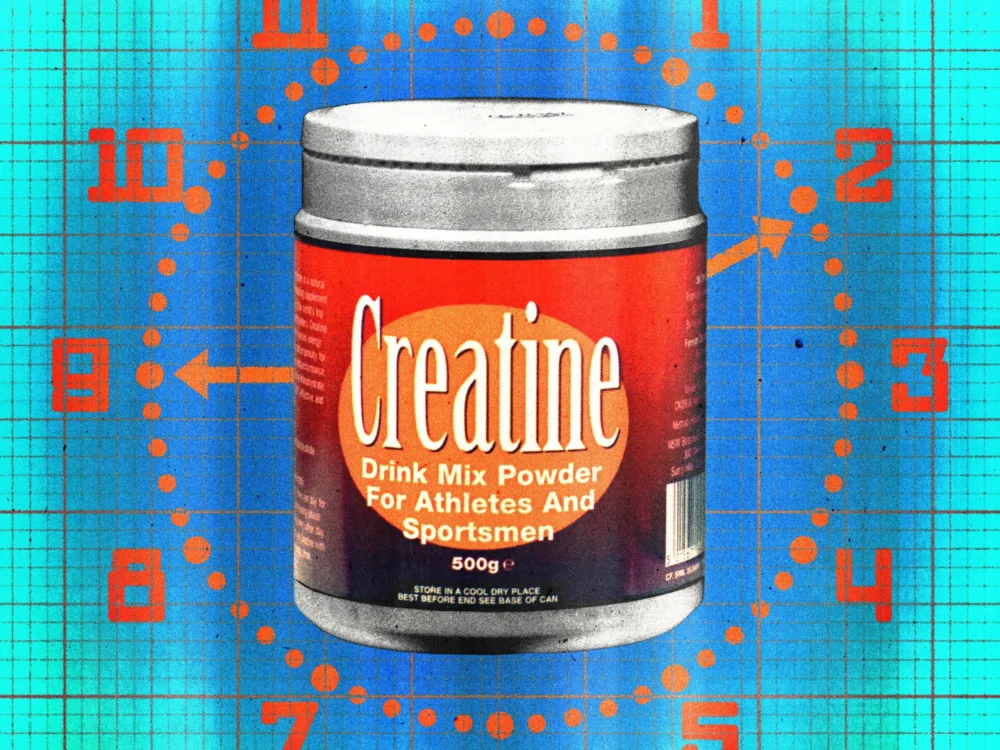
For anyone who has ever stepped foot in a gym with the intention of building lean muscle or increasing explosive power, the word "creatine" is likely a staple of the lexicon. It is perhaps the most rigorously studied and scientifically validated nutritional supplement on the market today. While it was once relegated to the dusty shelves of hardcore bodybuilding shops, creatine monohydrate has transitioned into the mainstream, recognized by medical professionals and sports dietitians alike for its wide-ranging benefits that extend far beyond the weight room. Studies have consistently shown that regular creatine intake is associated with enhanced brain health, improved bone density, and significant support for muscle hypertrophy. However, despite its popularity, a cloud of confusion often surrounds the "how" and "when" of its administration. Given that high-quality supplements represent a financial investment, consumers are increasingly eager to understand the nuances of timing and dosage to ensure they are reaping the maximum possible return on their investment.
To demystify the science of creatine, it is essential to understand what the compound actually is and how it functions within the human biological framework. Creatine is not a steroid or a synthetic stimulant; rather, it is a naturally occurring compound that the body synthesizes in the liver and kidneys. This synthesis involves three specific amino acids: arginine, glycine, and methionine. According to Jordan Mazur, the director of nutrition for the San Francisco 49ers, approximately 95% of the body’s creatine is stored within the skeletal muscles in the form of phosphocreatine. This molecule plays a pivotal role in the production of energy during high-intensity, short-duration activities. While humans can obtain small amounts of creatine through the consumption of red meat and fish, Mazur notes that dietary intake alone is rarely enough to saturate the muscles. Supplementation allows these muscle stores to reach full capacity, essentially providing an "on-demand" energy reserve that can be tapped into during grueling physical exertion.
The mechanical benefit of this saturated state is centered on the production of Adenosine Triphosphate (ATP), which is often described as the "energy currency" of the cell. Joel Ramdial, the program director of nutrition in the Department of Allied Health, Kinesiology, and Sport Sciences at Southeast Missouri State University, explains that phosphocreatine provides the immediate fuel necessary to resynthesize ATP during muscle contractions. Under normal circumstances, the body’s supply of phosphocreatine is quite limited, leading to rapid fatigue during explosive movements like box jumps, heavy deadlifts, or sprinting. By supplementing with creatine, an individual can expand this supply, thereby extending the duration of high-intensity performance. Over a period of weeks and months, this increased work capacity translates into greater mechanical tension on the muscles, leading to superior gains in both strength and bone density.
The scope of creatine’s utility is remarkably broad. While it is a "must-have" for lifters, sprinters, and team-sport athletes looking for lean mass gains, its benefits are not limited to the young or the elite. Jonathan Poyourow, a former dietitian in the U.S. Army and current sports dietitian at Johnson & Wales University, emphasizes that older adults stand to benefit significantly from creatine as a tool to combat sarcopenia—the age-related loss of muscle mass and function. Furthermore, because creatine is primarily found in animal tissues, vegans and vegetarians often have lower baseline levels of the compound. For these individuals, supplementation can result in an even more pronounced "boost" in physical and cognitive performance compared to their meat-eating counterparts.
Beyond the physical architecture of the body, the frontier of creatine research has moved into the realm of neurology. A landmark 2024 scientific paper published in Frontiers in Nutrition highlighted a compelling connection between creatine supplementation and cognitive enhancement. The meta-analysis of several controlled clinical trials suggested that creatine can significantly improve memory and cognitive processing speed. This is likely because the brain, like the muscles, is a highly metabolic organ that requires a constant supply of ATP to function. By supporting the brain’s energy metabolism, creatine acts as a neuroprotective agent, offering potential benefits for those facing sleep deprivation or high-stress cognitive tasks. Additionally, a 2021 study in the journal Nutrients pointed toward creatine’s role in workout recovery. Poyourow explains that the compound helps reduce markers of muscle inflammation and promotes cell hydration, which facilitates the transport of nutrients into the muscle cells and aids in glycogen resynthesis—especially when consumed alongside carbohydrates.
One of the most debated topics in sports nutrition is the "anabolic window" and whether there is an optimal time to ingest creatine to maximize these benefits. If the goal is to fuel a workout, should it be taken before? If the goal is recovery, should it be taken after? The consensus among leading sports dietitians suggests that the "when" is far less critical than the "if." Kelly Pritchett, a professor in nutrition and exercise science at Central Washington University, notes that research examining the timing of creatine has yielded mixed results. Some studies suggest a slight edge for post-workout consumption, while others find no difference at all. A 2022 study published in Frontiers specifically compared pre- and post-workout ingestion and found that both strategies resulted in similar gains in muscle mass and strength.
However, there is a physiological nuance worth considering for those who want to be meticulous. Pritchett points out that peak creatine absorption typically occurs one to two hours after consumption, and the compound remains in the bloodstream for about four hours. For athletes performing explosive, power-based movements, taking creatine roughly 90 minutes before a session might provide a slight acute benefit. Nevertheless, the prevailing wisdom from experts like Mazur and Ramdial is that consistency is the ultimate variable. Because creatine works through accumulation—building up a "saturation level" in the muscles over time—missing doses is more detrimental than getting the timing slightly "wrong." This means taking it every single day, including rest days, to keep the muscle stores topped off.
To further optimize the efficacy of the supplement, Mazur suggests paying attention to what you consume alongside it. Taking creatine with a serving of 30 to 50 grams of carbohydrates can trigger an insulin spike. Insulin acts as a sort of "key" that opens up the muscle cells, potentially increasing creatine uptake by 10 to 20%. For those looking for every possible advantage, dissolving the powder in a warm liquid and adding a small pinch of sodium can improve solubility and absorption, though Mazur clarifies that the combination of carbs and protein remains the most effective "difference maker."
When it comes to the actual dosage, the standard recommendation has long been 5 grams per day. This dose is generally sufficient to maintain muscle saturation for the average person. However, the concept of a "loading phase" remains a popular topic of discussion. This involves taking a high dose—roughly 20 grams per day, split into four doses—for five to seven days to rapidly saturate the muscles, followed by a maintenance dose of 5 grams. While Dr. Poyourow acknowledges that this can lead to faster results in the first week, he points to a recent paper in Nutrients showing that a steady, lower dose of 3 to 5 grams daily achieves the exact same level of muscle saturation after about three to four weeks. For most people, skipping the loading phase is preferable, as high doses can sometimes cause gastrointestinal discomfort or bloating.
Safety and quality control are the final, yet perhaps most important, pieces of the puzzle. Because the supplement industry is not strictly regulated by the FDA, the responsibility falls on the consumer to ensure they are ingesting a clean product. Dietitians recommend looking for supplements that carry third-party certifications, such as "NSF Certified for Sport" or "Informed Choice." These labels guarantee that the product has been tested for purity, potency, and the absence of banned substances. This is particularly crucial for competitive athletes who are subject to drug testing. Furthermore, while creatine is remarkably safe for healthy individuals, those with pre-existing kidney conditions or other underlying health issues should consult with a healthcare provider before beginning a regimen.
In summary, the science of creatine is clear: it is a potent, safe, and effective tool for enhancing physical performance, supporting recovery, and even boosting brain power. The "secret" to success with creatine is not found in a complicated timing window or a massive loading protocol, but rather in the simplicity of daily habit. By taking a standard 5-gram dose consistently, ideally paired with a carbohydrate-rich meal or shake, you can ensure your body has the energy reserves necessary to push through the most demanding physical and mental challenges. Whether you are an elite athlete like those on the San Francisco 49ers, an older adult looking to maintain independence, or a vegetarian seeking to balance your nutritional profile, creatine offers a scientifically backed path toward your goals. The good news for the average consumer is that you truly cannot mess it up; as long as it becomes a part of your daily routine, the results will follow.