
 By Rifan Muazin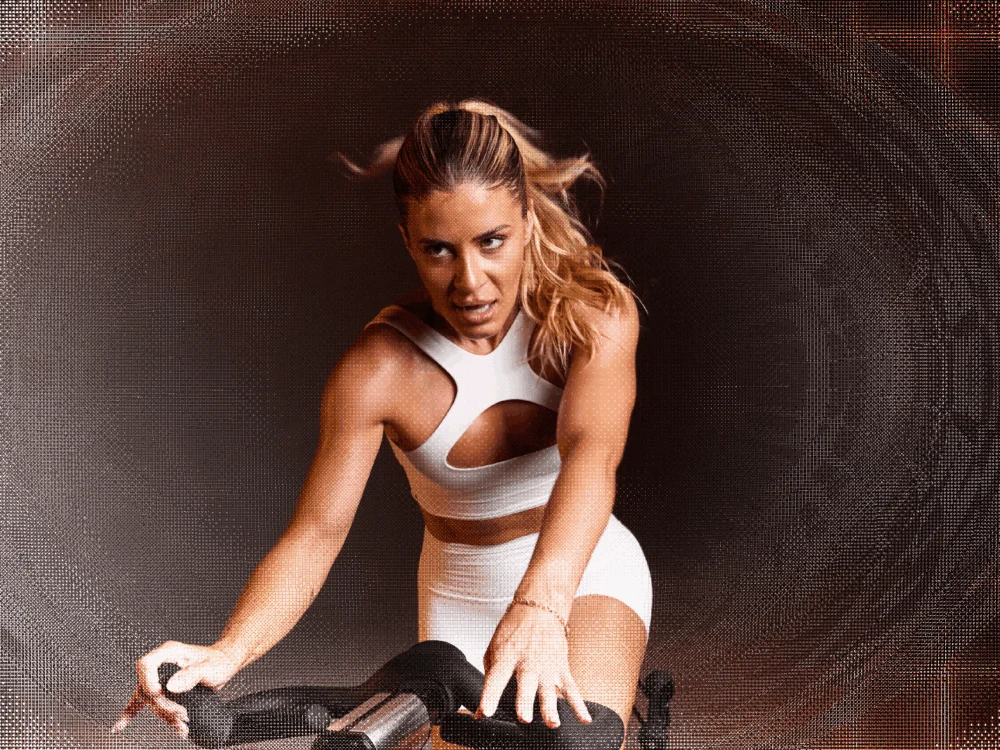
The digital landscape is often defined by the lifecycle of the meme—a fleeting moment of cultural synchronicity that can elevate an individual to icon status or reduce a complex situation to a punchline. For Kendall Toole, a former standout instructor at Peloton, this phenomenon manifested in a clip that has recently dominated social media feeds. In the video, Toole is seen during a live cycling session, her expression shifting from high-energy motivation to a chilling, steely-eyed gaze reminiscent of Linda Hamilton’s Sarah Connor in Terminator 2: Judgment Day. With an icy resolve, she utters the now-immortalized line, "Get ’em banned—we don’t do that here," effectively banishing an unseen agitator with the finality of a judge passing sentence. While the internet initially co-opted the clip for everything from lighthearted TV commentary to calling out social media trolls, the reality behind the "Kubrick Stare" reveals a deeper narrative involving professional integrity, a background in elite film education, and a transition into independent wellness entrepreneurship.
The resurgence of this clip, which is actually over two years old, caught many by surprise, including Toole herself. The context, often lost in the vacuum of viral consumption, was far more serious than a simple reaction to a prank. During a live-streamed Peloton class in 2023, an individual on the leaderboard utilized a username that bypassed filters to display a virulently racist slur. For Toole, who was managing a class of thousands in real-time with no tape delay, the moment required an immediate balance of professional restraint and moral boundary-setting. While some online spectators initially labeled the reaction as "cringe" or "over-the-top," the revelation of the username’s nature shifted the discourse toward praise for her "standing on business." The "Kubrick Stare"—a cinematic technique popularized by director Stanley Kubrick where a character tilts their head down and stares forward through their eyebrows to signal a descent into madness or intense, peak focus—was not an accidental facial contortion. It was the calculated response of a woman trained in the language of film.
Kendall Toole’s journey to becoming a fitness phenomenon was paved with the aspirations of a filmmaker and actor. A graduate of the University of Southern California’s (USC) prestigious School of Cinematic Arts, Toole’s upbringing in Santa Clarita, California, was steeped in the lore of Hollywood. She was a child actor who navigated the grueling world of auditions, pilots, and recasts, once even dressing as the legendary Lauren Bacall for Halloween in the seventh grade—complete with "The Look," Bacall’s signature chin-down, eyes-up pose. This deep-seated love for storytelling didn’t vanish when she transitioned into the fitness world; rather, it became her unique selling point. During her tenure at Peloton, she developed the "Movie Buff" series, where she integrated film scores from composers like Hans Zimmer and referenced cinematic tropes to elevate the mundane experience of stationary cycling into a narrative journey.
The intersection of fitness and entertainment is a space Toole has mastered. Leading a Peloton class is less about traditional personal training and more about performance art, involving eight cameras, live production cues, and the necessity of keeping a global audience engaged through a screen. Toole recognized early on that music licensing and thematic consistency were the keys to this engagement. Her classes often featured elaborate narratives; for one Halloween special, she leaned into the "final girl" trope, eventually revealing herself as the "villain" chasing the riders, punctuated by a "Here’s Kendall" homage to Jack Nicholson in The Shining. This theatricality, while occasionally "camp" by her own admission, provided a communal experience that transcended the physical act of exercise.
However, the corporate structure of a multi-billion-dollar brand like Peloton eventually presented limitations, particularly regarding creative freedom and community connection. In November 2023, Toole made the pivot from corporate employee to founder, launching her own wellness app, NKOClub (Never Knocked Out). This move reflects a broader trend in the creator economy, where high-profile instructors are leveraging their personal brands to build independent platforms. NKOClub aims to offer a more holistic approach to health, incorporating mental wellness and five distinct types of movement. By moving away from a company beholden to stock market fluctuations and investor demands, Toole is betting on the value of a smaller, more intimately connected community. Her new platform also allows for greater creative control over music—utilizing streaming licenses to curate playlists that reflect her specific "cinephile" tastes without the red tape of major corporate licensing hurdles.
Toole’s perspective on the current state of culture is informed by her academic background and her observations of the digital age. She posits that we are on the precipice of a new "Golden Age" of cinema, driven by a societal reaction to crisis and the over-saturation of artificial intelligence. Drawing parallels to the 100-year cycles of history, she suggests that just as the Great Depression birthed a surge in communal art and escapism in the 1930s, the current era of hyper-connectivity and political instability will lead to a "demolition phase" followed by a creative rebirth. For Toole, the arts represent a "beautiful act of rebellion" against systems that no longer serve the human experience. She advocates for a return to communal art forms—like the repertory screenings at Los Angeles’s New Beverly Cinema or the outdoor movie nights at the Hollywood Forever Cemetery—as a way to combat the isolation of the algorithm.
Despite her high-tech career, Toole remains an "analog" enthusiast at heart. While fans on platforms like X (formerly Twitter) and TikTok have begged for her Letterboxd handle, she reveals that she maintains a manual notebook to log her film viewings. This "manual Letterboxd" contains her thoughts and emotional responses to the classics she consumes, ranging from the suspenseful tension of Alfred Hitchcock’s Rear Window and Vertigo to the gritty, stylized violence of Tony Scott’s True Romance. Her "Mount Rushmore" of feel-good films includes the playful wit of Some Like It Hot, the Coen Brothers’ eccentric Raising Arizona, and Quentin Tarantino’s love letter to her hometown, Once Upon a Time in Hollywood. This eclectic taste underscores her belief that storytelling is the most potent tool for human connection.
The "Kubrick Stare" meme may have been the catalyst for her recent viral fame, but it serves as a gateway to a much more complex professional identity. Kendall Toole is a product of the Los Angeles film tradition, a survivor of the Hollywood child-actor circuit, and a visionary in the digital wellness space. Her transition from Peloton to NKOClub is emblematic of a shift in the influencer paradigm—moving from being a face of a brand to being the architect of a community. As she navigates this new chapter, she continues to use her platform to advocate for "protecting being human" in an increasingly automated world. Whether she is analyzing the cinematography of Steven Soderbergh’s Ocean’s Eleven or designing a high-intensity boxing workout, her approach remains rooted in the belief that movement and media are inextricably linked.
In a world where viral moments are often hollow, Toole has managed to fill hers with substance. She has used the spotlight to discuss the importance of standing against hate speech, the necessity of artistic rebellion, and the joy of a well-crafted heist movie. Her story is a reminder that the people we see on our screens—whether they are teaching us to ride a bike or starring in a feature film—are often the sum of deep-seated passions and years of rigorous study. As society moves toward what she hopes is a cultural "reset button," Kendall Toole stands ready, not just as a fitness instructor, but as a storyteller and entrepreneur who understands that the most important "business" to stand on is the preservation of human expression. Through NKOClub and her continued engagement with the film community, she is proving that while you can get ’em banned for bad behavior, you can never ban the drive to create something meaningful.