
 By admin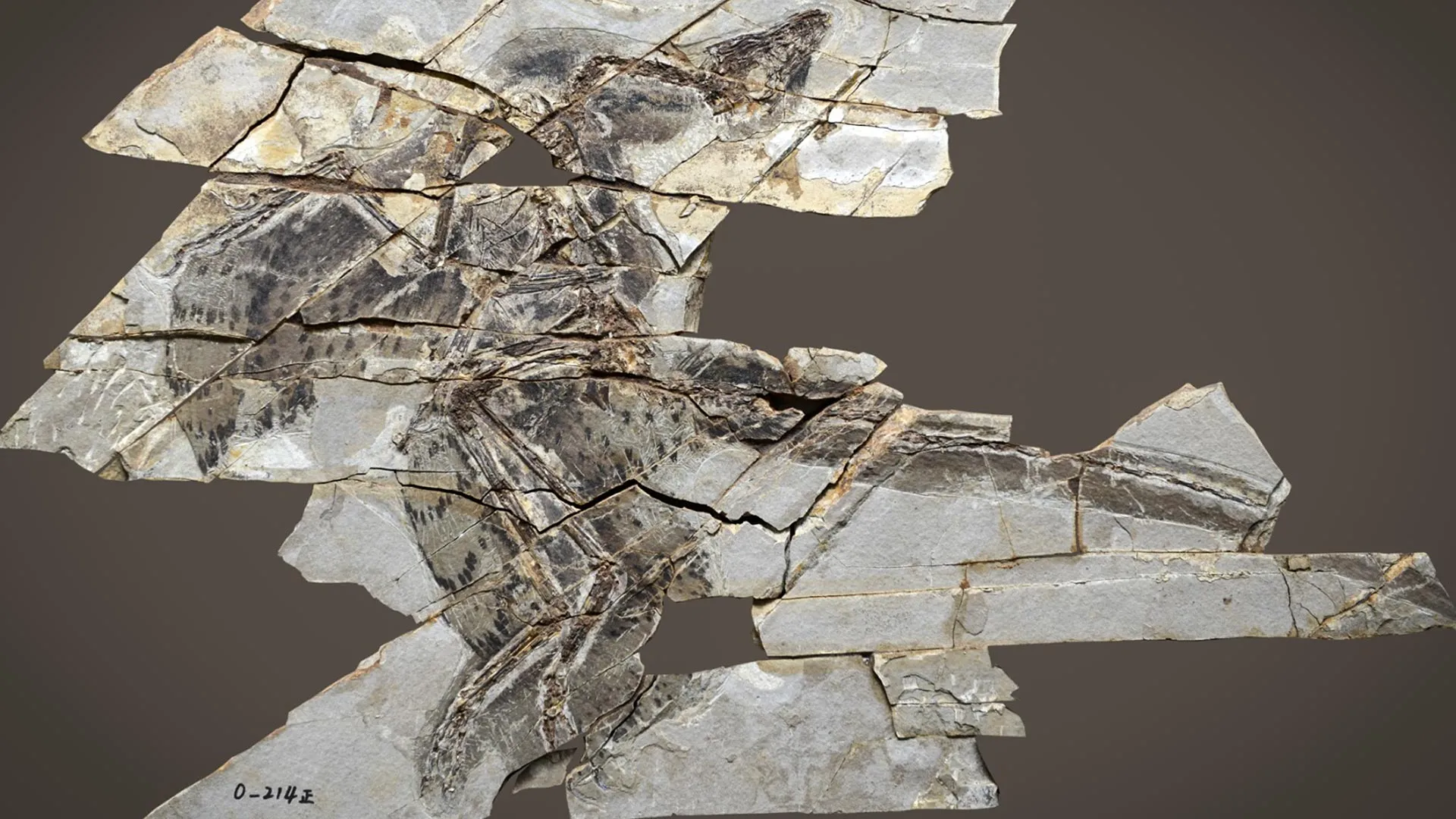
A pioneering new study, spearheaded by Dr. Yosef Kiat from the School of Zoology and the Steinhardt Museum of Natural History at Tel Aviv University, has meticulously analyzed an exceptionally rare collection of dinosaur fossils featuring impeccably preserved feathers. The startling conclusion drawn from this analysis is that these particular feathered dinosaurs, far from being aerial pioneers, had in fact relinquished the capacity for flight. This extraordinary finding provides an unprecedented window into the lives of animals flourishing approximately 160 million years ago during the Jurassic period, and, more significantly, casts profound new light on the tortuous evolutionary path that led to flight in both ancient dinosaurs and their modern avian descendants. The researchers emphasize the expansive implications of their work: "This finding has broad significance, as it suggests that the development of flight throughout the evolution of dinosaurs and birds was far more complex than previously believed. In fact, certain species may have developed basic flight abilities — and then lost them later in their evolution."
The comprehensive research, a collaborative effort involving Dr. Kiat alongside esteemed colleagues from institutions in China and the United States, was published in the prestigious journal Communications Biology, a publication within the Nature Portfolio, underscoring the high scientific impact and rigorous peer review associated with this study. This international collaboration was crucial, combining expertise in ornithology, paleontology, and taphonomy to decipher the subtle clues embedded within these ancient remains.
The Intricate Tapestry of Feather Evolution in Dinosaurs
Dr. Kiat, an accomplished ornithologist whose specialized research focuses on the intricate biology and evolution of feathers, provides essential context for the study. He explains that the lineage leading to dinosaurs diverged from other reptiles approximately 240 million years ago, during the Triassic period. Relatively soon thereafter, on the vast canvas of evolutionary timescales, a remarkable diversification occurred, with numerous dinosaur species developing feathers. These feathers, fundamentally lightweight, protein-based structures primarily composed of keratin, are now recognized to have served a multifaceted array of functions. Initially, they likely provided vital insulation for thermoregulation, aiding in maintaining stable body temperatures in environments that could fluctuate dramatically. Subsequently, they were co-opted for elaborate display purposes, playing a crucial role in sexual selection and species recognition. Only later, through a process of exaptation, did they become instrumental in the development of aerodynamic surfaces essential for flight.
A pivotal evolutionary juncture occurred around 175 million years ago, marking the emergence of a specialized group of feathered dinosaurs known as Pennaraptora. These fascinating animals, characterized by their advanced feather structures, are widely regarded as the direct ancestors of modern birds. Crucially, the Pennaraptora lineage was the sole branch of dinosaurs to navigate and ultimately survive the cataclysmic mass extinction event that brought the Mesozoic era to a dramatic close approximately 66 million years ago. Their resilience ensured the continuation of avian life into the Cenozoic era, culminating in the astounding diversity of birds we observe today.
For a considerable period, scientists generally theorized that feathers evolved within the Pennaraptora primarily as an adaptation for flight. However, the new findings suggest a more nuanced narrative. Environmental pressures and ecological niches may have prompted some species within this lineage to subsequently abandon flight, mirroring the evolutionary trajectories observed in several modern avian groups. Contemporary examples of flightless birds, such as the powerful ostriches of Africa, the agile emus of Australia, the robust rheas of South America, and the aquatic penguins of the Southern Hemisphere, demonstrate that the loss of flight is a recurrent evolutionary theme. This phenomenon, known as secondary flightlessness, often occurs when the energetic demands and survival advantages of flight are outweighed by other factors, such as the absence of ground predators, abundant food resources, or specialized adaptations for terrestrial or aquatic lifestyles. The Anchiornis discovery hints that this evolutionary pathway was already being explored by dinosaurs well before the advent of modern birds.
Rare Fossils: A Kaleidoscope of Preserved Feather Color and Structure
The meticulous investigation at the heart of this study centered on a collection of nine extraordinary fossil specimens originating from eastern China. These fossils belonged to Anchiornis huxleyi, a small, bird-like feathered dinosaur classified within the Pennaraptora group. The region from which these fossils were unearthed, particularly the Jehol Biota, is globally renowned for its unparalleled fossilization conditions. Unlike typical fossilization processes that usually preserve only hard tissues like bones and teeth, the unique geological and environmental circumstances of the Jehol Biota – characterized by fine-grained volcanic ash and anoxic sedimentary layers – allowed for the exceptional preservation of soft tissues, including the delicate structures of feathers and even evidence of original coloration.
These Anchiornis fossils are considered exceptionally rare and scientifically invaluable precisely because they preserved not only the intricate morphology of the feathers but, astonishingly, also remnants of their original pigmentation. This remarkable preservation is attributed to the fossilized melanosomes – microscopic organelles responsible for producing and storing melanin pigments – which retain their shape and arrangement even after millions of years. Through advanced analytical techniques, researchers were able to reconstruct the original color patterns, revealing that each specimen displayed distinct wing feathers that were predominantly white, strikingly accented with a conspicuous black spot located at the tip of each feather.
This unprecedented level of preserved coloration was not merely an aesthetic marvel; it was a critical scientific asset. It enabled Dr. Kiat and his team to conduct an extraordinarily detailed examination of the structure, growth, and arrangement of the feathers in ways that are typically impossible with the vast majority of fossilized remains. The ability to discern specific color patterns allowed them to track individual feathers and their developmental stages, providing the crucial data needed to interpret the dinosaur’s molting patterns.
Molting Patterns: Deciphering Flight Ability from Ancient Clues
Dr. Kiat elaborates on the biological process of feather growth and replacement, a cycle fundamental to understanding the functional implications observed in the fossils. He explains that feathers embark on a rapid growth phase, typically spanning two to three weeks. Upon reaching their full size, these complex structures effectively detach from the vital blood vessels that supplied nutrients during their development, transitioning into inert, nonliving material. Over time, subjected to environmental wear and tear, these feathers inevitably degrade and are subsequently shed and replaced by new feathers in a continuous process known as molting. This seemingly routine biological event, however, holds an "important story," as Dr. Kiat puts it, capable of revealing whether an animal possessed the crucial ability to fly.
The distinction lies in the adaptive strategies employed by flying versus flightless birds. Birds that are critically dependent on flight for survival – whether for hunting, escaping predators, migration, or navigating complex environments – must maintain their aerodynamic integrity even during the vulnerable molting period. Consequently, these birds exhibit a highly orderly and gradual molting process. They typically shed feathers symmetrically, often one feather at a time from each wing, ensuring that the crucial balance and lift-generating surface area are maintained. This meticulous, phased replacement strategy allows them to continue flying, albeit perhaps with slightly reduced efficiency, throughout the molting cycle.
In stark contrast, birds that have lost the ability to fly face no such aerodynamic imperative. Their survival does not hinge on maintaining precise wing symmetry or continuous lift. As a result, their molting patterns are far less structured, often appearing random and irregular. They may shed multiple feathers at once, or in an asymmetrical fashion, without compromising their terrestrial or aquatic locomotion. "Consequently," Dr. Kiat explains, "the molting pattern tells us whether a certain winged creature was capable of flight." It acts as a biological fingerprint, a tell-tale sign of an animal’s aerial capabilities, or lack thereof.
By meticulously scrutinizing the fossilized feathers of Anchiornis, the research team identified a continuous, linear arrangement of the characteristic black spots along the trailing edges of the wing. More critically, they also observed developing feathers whose black spots were distinctly out of alignment with this established pattern, signaling that these feathers were still in various stages of growth and had not yet reached their final, mature position. A comprehensive and detailed analysis of these observations unequivocally revealed that the molting pattern in Anchiornis was fundamentally irregular rather than the orderly, symmetrical process characteristic of flying birds. This irregularity was the linchpin of their findings.
Conclusive Evidence: Anchiornis, a Feathered but Flightless Dinosaur
Based on this compelling evidence, Dr. Kiat definitively concluded, "Based on my familiarity with modern birds, I identified a molting pattern indicating that these dinosaurs were probably flightless." This conclusion represents a truly "rare and especially exciting finding." The extraordinary preservation of feather coloration in the Anchiornis fossils provided an unparalleled opportunity to delve beyond skeletal morphology and identify a crucial functional trait of these ancient creatures. Instead of merely inferring capabilities from bone structure, which can often be ambiguous, the team was able to deduce a behavioral and physiological characteristic directly from the preserved soft tissues. "Not only the body structure preserved in fossils of skeletons and bones," Dr. Kiat emphasizes, but also the dynamic processes of life itself.
He further underscores the profound implications of this seemingly minor detail: "Feather molting seems like a small technical detail — but when examined in fossils, it can change everything we thought about the origins of flight." The discovery that Anchiornis, a feathered dinosaur with well-developed wing structures, was likely incapable of flight adds a critical new dimension to the paleontological understanding of flight evolution. It firmly places Anchiornis onto the growing list of dinosaurs that possessed feathers, and even wing-like appendages, but did not utilize them for powered aerial locomotion. This list serves as a powerful testament to "how complex and diverse wing evolution truly was."
The implications extend far beyond Anchiornis itself. This finding challenges the long-held, somewhat simplistic notion that the evolution of feathers inherently and directly equated to the acquisition of flight. Instead, it suggests a much more convoluted evolutionary pathway, potentially involving multiple independent origins of flight, or perhaps a single origin followed by numerous instances of secondary flightlessness within various lineages. It highlights the concept of evolutionary experimentation, where different dinosaur groups explored various ways to utilize feathers—for display, insulation, gliding, and flight—with some later abandoning the latter as their ecological niches shifted. This research encourages future studies to re-examine other feathered dinosaur fossils, searching for similar molting patterns or other subtle clues that might further illuminate the mosaic nature of avian evolution, continuously refining our understanding of how life took to the skies.