
 By admin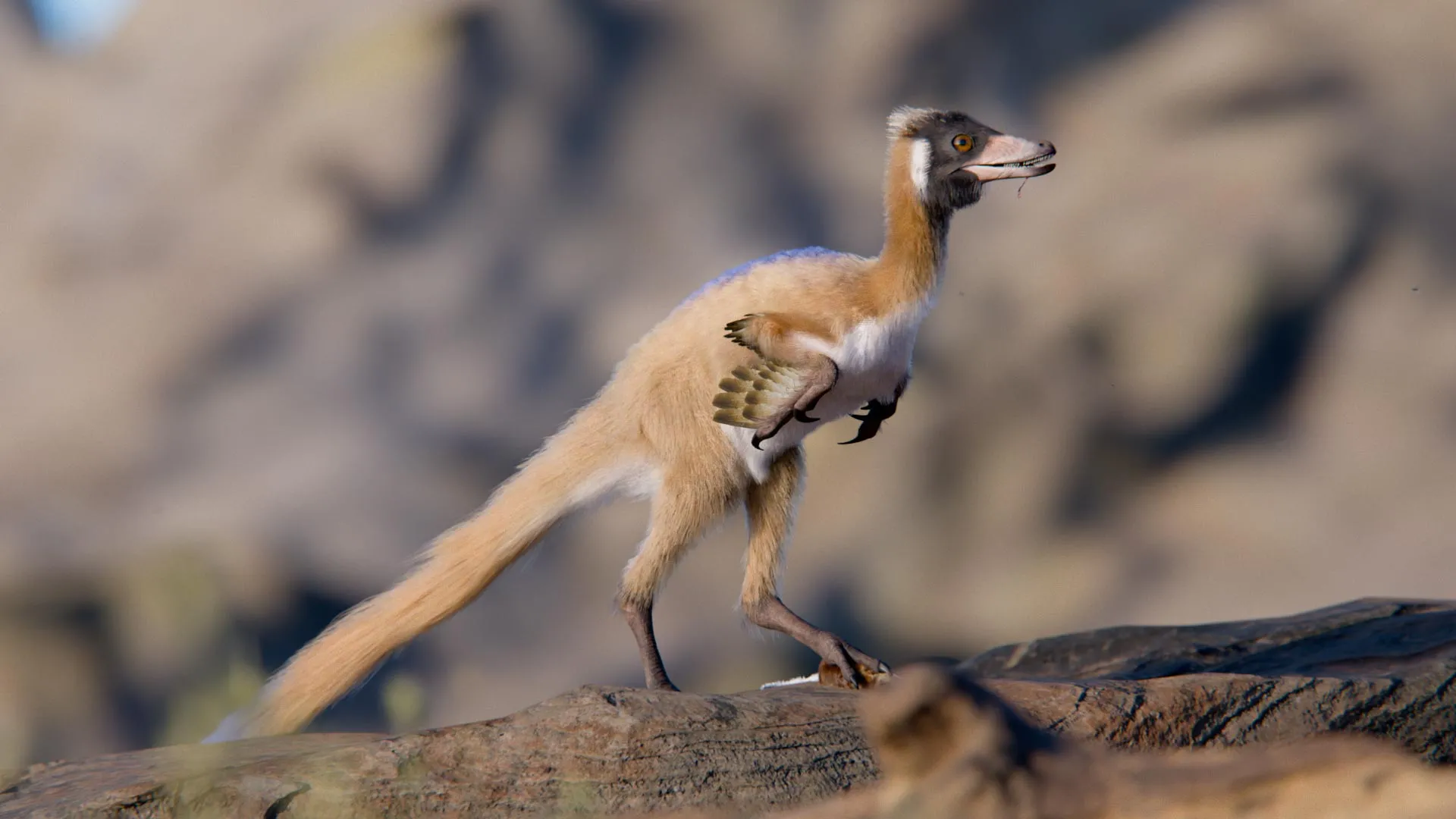
The centerpiece of this revelation is a nearly complete skeleton of Alnashetri cerropoliciensis. Alvarezsaurs have long intrigued paleontologists due to their distinctive and highly specialized anatomy: remarkably short, robust forearms terminating in a single, enlarged thumb claw, and delicate jaws equipped with numerous tiny, peg-like teeth. For decades, the fragmented nature of most alvarezsaur fossils, predominantly unearthed in Asia, presented a significant hurdle to understanding their evolutionary story. South American finds were particularly sparse and incomplete, leaving gaping lacunae in the scientific narrative of these enigmatic creatures. The discovery of Alnashetri in Patagonia fundamentally transforms this understanding, offering what researchers describe as a "paleontological Rosetta Stone."
Alvarezsaurs belong to the larger group of theropod dinosaurs, which includes iconic predators like Tyrannosaurus rex and the ancestors of modern birds. However, alvarezsaurs embarked on a unique evolutionary path, characterized by extreme miniaturization and the development of highly specialized forelimbs. Early discoveries, such as Mononykus from Mongolia in the 1990s, first introduced the scientific community to these bizarre features, sparking immediate questions about their function and evolutionary development. Was the large claw used for digging? For defense? What did these animals eat with their tiny teeth? The prevailing hypothesis, now strengthened by the Alnashetri discovery, suggests an insectivorous diet, specifically myrmecophagy (ant-eating), where the robust claw could have been used to break into insect nests, and the delicate jaws to pick up the prey. However, without a complete evolutionary sequence, the how and when of these adaptations remained elusive.
Patagonia Discovery Provides a Crucial Specimen
The almost complete Alnashetri fossil was meticulously uncovered in 2014 in northern Patagonia, Argentina, within the renowned La Buitrera fossil area. This site, celebrated globally for its exceptionally preserved Cretaceous animals, has yielded a trove of scientific treasures over the years, offering an unparalleled window into ancient Gondwanan ecosystems. While the species Alnashetri cerropoliciensis had been named several years earlier based on fragmentary remains, the new, nearly complete skeleton provided an incomparable clarity regarding the animal’s unusual body structure, offering the first comprehensive anatomical blueprint for an early South American alvarezsaur.
The journey from discovery to scientific publication was a testament to the dedication and patience inherent in paleontological research. Preparing the delicate specimen was a slow and painstaking process, spanning nearly a decade. Researchers meticulously cleaned, stabilized, and assembled the fragile bones, often under microscopes, to prevent any damage to the small and brittle skeleton. This careful preservation was paramount, as every bone, every articulation, held vital clues to the animal’s life and evolutionary history.
"Going from fragmentary skeletons that are hard to interpret, to having a near complete and articulated animal is like finding a paleontological Rosetta Stone," explained Peter Makovicky, lead author of the study and a distinguished professor in the University of Minnesota Department of Earth and Environmental Sciences. He elaborated on the analogy, noting that just as the ancient slab unlocked the mysteries of hieroglyphs, this fossil provides the key to deciphering the evolutionary riddle of alvarezsaurs. "We now have a reference point that allows us to accurately identify more scrappy finds and map out evolutionary transitions in anatomy and body size. It allows us to piece together the puzzle of how these unique features developed and changed over millions of years, offering a much clearer picture of their lineage."
This extraordinary fossil is providing scientists with invaluable insight into how this lineage of dinosaurs evolved, became progressively smaller, and spread across the ancient supercontinents. It offers concrete evidence that challenges previous assumptions about their geographic distribution and the timing of their specialized adaptations.
Insights Into the Evolution of Tiny Dinosaurs
The Alnashetri skeleton reveals several critical differences from its later, more specialized alvarezsaur relatives. Notably, it possessed longer arms and larger teeth, suggesting a less specialized diet and perhaps a broader ecological niche compared to its descendants. This observation is crucial because it demonstrates that some alvarezsaurs had already achieved very small body sizes before developing the hyper-specialized features – like the extremely short forearms and single robust claw – that later species are believed to have used for their "ant-eating" or insectivorous diet. This challenges a simple linear progression of evolution, instead suggesting a more complex interplay between size reduction and functional specialization. It implies that the trend towards miniaturization was an early and distinct evolutionary pathway for this group, paving the way for subsequent dietary and anatomical specializations.
Further microscopic examination of the fossilized bones, a technique known as paleohistology, provided additional crucial data. The analysis revealed that the Alnashetri individual was fully grown and at least four years old at the time of its death. This underscores a significant aspect of alvarezsaur biology: these dinosaurs rank among the smallest known non-avian dinosaurs, and they maintained their diminutive stature throughout their lives. Even the largest members of the group, such as Shuvuuia deserti from Mongolia, only reached about the size of an average human, which is strikingly tiny when compared with the gargantuan dimensions of many other dinosaur groups. Alnashetri itself weighed less than two pounds, making it one of the smallest dinosaurs ever discovered in South America and solidifying the understanding of this group’s unique commitment to miniaturization.
Beyond the individual specimen, the research team undertook a comprehensive review of additional alvarezsaur fossils preserved in museum collections across North America and Europe. This broader comparative analysis yielded even more profound insights: the team found compelling evidence that these animals appeared much earlier in Earth’s history than scientists had previously believed. This earlier emergence, coupled with the discovery of Alnashetri in South America, strongly suggests that their widespread distribution across ancient landmasses likely occurred when the continents were still connected as the supercontinent Pangaea. The subsequent breakup of Pangaea, a geological process that unfolded over millions of years, explains how these animals became scattered across the globe, isolated on different continents, rather than having to undertake improbable migrations across vast oceans. This finding fundamentally reshapes our understanding of alvarezsaur biogeography and provides a compelling case study for how continental drift influenced the diversification and distribution of dinosaur lineages. It implies a deeper, more ancient root for this group, with their initial diversification happening on a unified landmass before being fragmented by geological forces.
Fossil Site Continues To Reveal Ancient Life
The exceptionally well-preserved Alnashetri skeleton came from the La Buitrera fossil area, a site that has consistently produced scientifically important discoveries since its initial exploration. Located in the Rio Negro Province of Argentina, this fossil-rich locale is a veritable paleontological treasure trove, renowned for its diverse assemblage of Cretaceous vertebrates. Previous finds from the site include exquisitely preserved early snakes, providing crucial insights into serpentine evolution, and small saber-toothed mammals, which challenge conventional narratives about mammalian diversification during the Age of Dinosaurs. The consistent yield of such significant and often delicate specimens underscores La Buitrera’s status as a Lagerstätte—a sedimentary deposit that exhibits extraordinary fossil richness and preservation. This allows scientists to reconstruct not just individual species, but entire ancient ecosystems with remarkable fidelity.
"After more than 20 years of work, the La Buitrera fossil area has given us a unique insight into small dinosaurs and other vertebrates like no other site in South America," affirmed Sebastian Apesteguía, a co-lead author and a distinguished researcher at Universidad Maimónides in Buenos Aires, Argentina. His statement highlights the unparalleled significance of the site, not just for alvarezsaurs, but for understanding the broader tapestry of vertebrate life in Cretaceous South America. The ongoing expeditions and meticulous research at La Buitrera continue to push the boundaries of paleontological knowledge.
The story of these unusual dinosaurs is far from complete. Scientists are still actively studying fossils from the same region, and the promise of future discoveries looms large. "We have already found the next chapter of the alvarezsaurid story there, and it is in the lab being prepared right now," added Makovicky, hinting at upcoming revelations that promise to further enrich the evolutionary saga of these fascinating miniature theropods. This continuous stream of discovery underscores the dynamic nature of paleontology and the enduring mysteries that remain to be unearthed.
International Research Team and Support
The remarkable success of this research project is a testament to the power of international scientific collaboration. The multidisciplinary team brought together expertise from various institutions and countries, fostering a rich environment for discovery and analysis. In addition to Peter Makovicky from the University of Minnesota Twin Cities and Sebastian Apesteguía from Universidad Maimónides, the core team included Jonathan S. Mitchell from Coe College in Iowa, contributing crucial comparative anatomical insights; Jorge G. Meso and Ignacio Cerda from Instituto de Investigación, Universidad Nacional de Río Negro and Museo Provincial, providing expertise in local geology and fossil preparation; and Federico A. Gianechini from Instituto Multidisciplinario de Investigaciones Biológicas de San Luis, who contributed to the broader understanding of South American theropods.
Such extensive and impactful research is only possible with substantial financial backing from various organizations dedicated to advancing scientific knowledge. Funding for this groundbreaking research was generously provided by the National Scientific and Technical Research Council (CONICET) of Argentina, a primary driver of scientific and technological development in the country. Further support came from The Field Museum in Chicago, a leading institution in natural history research; National Geographic, renowned for its commitment to exploration and discovery; the University of Minnesota, which championed its faculty’s innovative research; the United States National Science Foundation, a cornerstone of American scientific funding; and the Fulbright U.S. Scholar program, which fosters international academic exchange. This collective support underscores the global recognition of the scientific importance and potential impact of this research on our understanding of dinosaur evolution and ancient Earth ecosystems.