
 By admin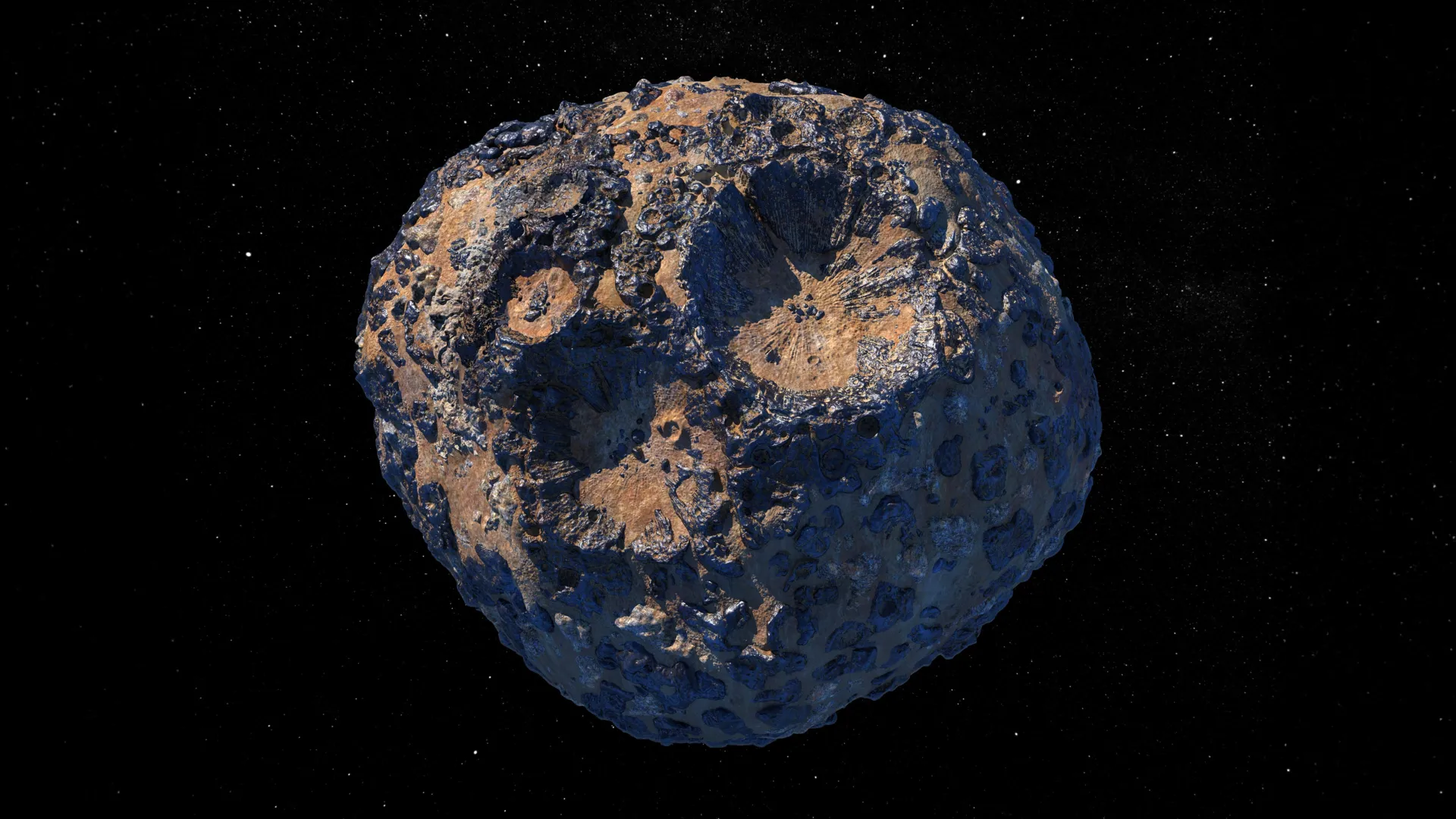
Researchers have put forth several captivating hypotheses regarding Psyche’s genesis. One prominent theory suggests it could be the exposed, metallic core of an early protoplanet, a primordial body that underwent differentiation—forming distinct layers like Earth’s core, mantle, and crust—only to be subsequently stripped of its outer rocky shell by catastrophic collisions in the violent youth of the Solar System. Alternatively, Psyche might have formed as a metal-rich object from the very beginning, accreting predominantly metallic material in a region of the early solar nebula where such elements were concentrated. A third possibility posits that Psyche began as a more heterogeneous mix of rock and metal, its current composition a result of repeated, high-energy impacts with other asteroids that thoroughly blended its constituent materials. Each of these scenarios paints a drastically different picture of Psyche’s past and, by extension, offers unique insights into the diverse pathways through which planets and their building blocks coalesced in the nascent Solar System.
Understanding Psyche’s true nature is not merely an academic exercise; it represents a rare opportunity to peer into the heart of planetary evolution. While we cannot directly access the metallic cores of Earth, Mars, or Venus, Psyche could offer a direct, albeit ancient, analogue. If it is indeed a protoplanetary core, it would provide an unparalleled window into the processes of core formation and differentiation that shaped the terrestrial planets, revealing details about the pressures, temperatures, and magnetic fields present during this critical phase. If it’s a primordial metallic body, it challenges our assumptions about how materials were distributed and aggregated in the early solar nebula. And if it’s a mixed body, it underscores the role of impacts in shaping the final states of planetary precursors.
Simulating Craters to Reveal Psyche’s Interior
To help unravel these complex possibilities, a team of scientists at the University of Arizona’s Lunar and Planetary Laboratory (LPL) embarked on a rigorous computational study. Led by doctoral candidate Namya Baijal, alongside professor Erik Asphaug and postdoctoral researcher Adeene Denton, their work involved creating sophisticated simulations to understand how a prominent, large crater near Psyche’s north pole may have formed. Their groundbreaking findings, recently published in the esteemed journal JGR Planets, are not just theoretical exercises; they provide crucial, testable predictions that will guide researchers in interpreting the wealth of data collected by NASA’s Psyche mission once it reaches its destination. By synergistically combining these detailed simulations with actual observations from the spacecraft, scientists hope to definitively determine what Psyche is made of and how its interior is structured.
Namya Baijal, the lead author of the paper, emphasized the importance of impact features: "Large impact basins or craters excavate deep into the asteroid, which gives clues about what its interior is made of. By simulating the formation of one of its largest craters, we were able to make testable predictions for Psyche’s overall composition when the spacecraft arrives." Craters, in essence, act as natural boreholes, exposing the subsurface layers and providing geological evidence of an asteroid’s internal makeup and history.
While metal-rich asteroids constitute a relatively small fraction—less than 10%—of the overall main asteroid belt population, Psyche’s sheer size makes it an exceptional case. Its uniqueness underscores the necessity of direct spacecraft measurements to fully comprehend the distribution of its metallic components throughout its interior, something ground-based observations can only hint at.
Why Porosity Matters in Asteroid Impacts
A key insight from the Arizona team’s research highlighted a critical, yet often overlooked, factor in asteroid impacts: porosity. "One of our main findings was that the porosity – the amount of empty space inside the asteroid – plays a significant role in how these craters form," Baijal explained. Porosity, which refers to the presence of internal voids, fractures, and empty spaces within a celestial body, is notoriously difficult to incorporate into computational models due to its complex nature. However, the LPL simulations definitively demonstrated its profound impact on the collision process and the resulting morphology of craters.
Asteroids with higher internal porosity tend to absorb impact energy far more effectively than solid, dense bodies. This energy dissipation leads to the formation of craters that are typically deeper and possess steeper walls, while simultaneously scattering less debris across the surface. Conversely, a less porous, more solid body would transfer impact energy more efficiently, potentially resulting in shallower, wider craters and a more extensive ejecta blanket. By meticulously comparing the simulated crater features—such as depth-to-diameter ratios, rim profiles, and ejecta distribution—with the actual observations made by the Psyche spacecraft, scientists will be able to deduce the asteroid’s internal porosity. This, in turn, will offer strong evidence for whether Psyche’s interior is a clearly layered structure with distinct metallic and rocky regions, or if it is a more chaotic, fractured mixture of materials, perhaps resembling a "rubble pile" held together by gravity.
Clues to Planet Formation in the Early Solar System
The research team draws a compelling analogy to illustrate the broader implications of their work, comparing their approach to examining the remains of an abandoned pizza shop. Psyche and other asteroids residing in the main belt are widely considered to be the primordial "leftover building blocks" from the early stages of planet formation. "The cooks have long left, but you can look at what’s left behind — the ovens, scraps of dough, the toppings — and make inferences about how the pizzas were made," offered Erik Asphaug, a professor in LPL and a co-author of the study. This analogy eloquently conveys how studying these ancient remnants can provide invaluable clues about the ingredients and processes that led to the formation of planets. "We can’t get to the cores of Earth or Mars or Venus, but maybe we can get to the core of an early asteroid," Asphaug concluded, underscoring the unique opportunity Psyche presents.
If Psyche indeed proves to be the exposed core of a former planet, violently stripped of its outer layers, it would provide an unprecedented, direct insight into a particularly violent and transformative phase of planetary evolution. This critical stage, characterized by intense bombardment and differentiation, is otherwise impossible to observe directly for the fully formed terrestrial planets in our Solar System. Such a discovery would fundamentally reshape our understanding of how planetary bodies acquire their internal structures and how common large-scale stripping events were in the early Solar System.
"We tested two main interior structures for Psyche," Baijal elaborated, detailing the models explored in their simulations. "One is a layered structure with a metallic core and a thin, rocky mantle, which likely formed if a violent collision stripped away the outer layers. The other is a uniform mixture of metal and silicate, created by a more catastrophic impact that mixed everything together, like some metal-rich meteorites found on Earth." The latter scenario would align with the composition of certain stony-iron meteorites, which are thought to originate from partially differentiated parent bodies that were subsequently shattered and re-accreted into a jumbled mix.
Modeling a Massive Impact on Psyche
To conduct their detailed simulations, the researchers leveraged existing high-resolution shape models of Psyche derived from extensive telescope observations. Using this 3D representation of the asteroid, they computationally recreated the formation of a large, distinctive crater, estimated to be roughly 30 miles (approximately 48 kilometers) wide and three miles (approximately 4.8 kilometers) deep. In their models, the asteroid was subjected to impacts occurring at speeds typical for objects within the asteroid belt, roughly three miles per second (about five kilometers per second). They systematically tested various impactor sizes and meticulously compared the outcomes generated by the two primary internal structure models—the layered metallic core scenario versus the uniformly mixed rock-and-metal scenario—to determine which best matched the observed crater’s dimensions and morphology.
"We found that an impactor about three miles across would create a crater of the right dimensions," Baijal confirmed. Intriguingly, the simulations indicated that "the crater’s formation is consistent with both scenarios of Psyche’s makeup." This finding underscores the complexity of deciphering internal structure solely from surface features and highlights the critical need for the direct measurements that the Psyche mission will provide.
Unlike the solid, differentiated planets, many asteroids are not monolithic bodies. Instead, they often contain extensive internal fracturing and empty spaces, vestiges of countless past collisions. By explicitly incorporating porosity into their simulations, the researchers definitively showed that this often-neglected factor has a major influence not only on crater formation but also on the distribution of ejected debris after an impact event. This detailed treatment of asteroid properties represents a significant leap forward in impact modeling. "By rigorously treating Psyche’s shape, porosity and composition, this work represents a true watershed moment for our capacity to realistically simulate impacts into unique types of asteroids," stated Adeene Denton, a postdoctoral researcher and another co-author of the study, emphasizing the advanced nature of their computational approach.
NASA’s Psyche Mission and What Comes Next
The upcoming NASA Psyche mission is equipped with a suite of sophisticated instruments designed to comprehensively characterize the asteroid. These include a multispectral imager to map surface features and geology, a gamma-ray and neutron spectrometer to determine elemental composition, a magnetometer to detect any remnant magnetic field (a key indicator of a metallic core that once generated a dynamo), and a radio science experiment to precisely measure its gravity field and mass distribution.
The LPL simulations predict not only specific crater shapes but also other subtle features that mission scientists can look for, such as density variations caused by impact compression within the interior, and the specific spread patterns of metal-rich debris across the surface. These predictions will serve as a critical framework for interpreting the raw data. "When the spacecraft arrives at Psyche in a few years, the geochemists, geologists and modelers on the team will all be looking at the same object and trying to interpret what we see," Asphaug remarked. "This work gives us a head start," he added, highlighting the invaluable preparation provided by the detailed simulations.
The Psyche mission is a collaborative endeavor led by Arizona State University, with Lindy Elkins-Tanton of the University of California, Berkeley, serving as the principal investigator. NASA’s Jet Propulsion Laboratory (JPL), a division of Caltech in Pasadena, is responsible for managing mission operations, system engineering, and spacecraft testing. The spacecraft platform itself was built by Maxar Technologies (now part of Intuitive Machines) in Palo Alto, California. Psyche represents the 14th mission selected under NASA’s highly successful Discovery Program, which is managed by the agency’s Marshall Space Flight Center in Huntsville, Alabama. The critical launch services for the mission were handled by NASA’s Launch Services Program at Kennedy Space Center.
As the Psyche spacecraft continues its journey across the vast expanse of the inner Solar System, the scientific community eagerly awaits its arrival. The combination of cutting-edge computational modeling and direct, unprecedented observations promises to finally resolve the two-century-old enigma of Psyche’s formation. This unique metallic world offers a profound opportunity to unlock fundamental truths about the chaotic yet creative processes that sculpted our planetary neighborhood, providing an invaluable glimpse into the violent and transformative infancy of our Solar System.