
 By admin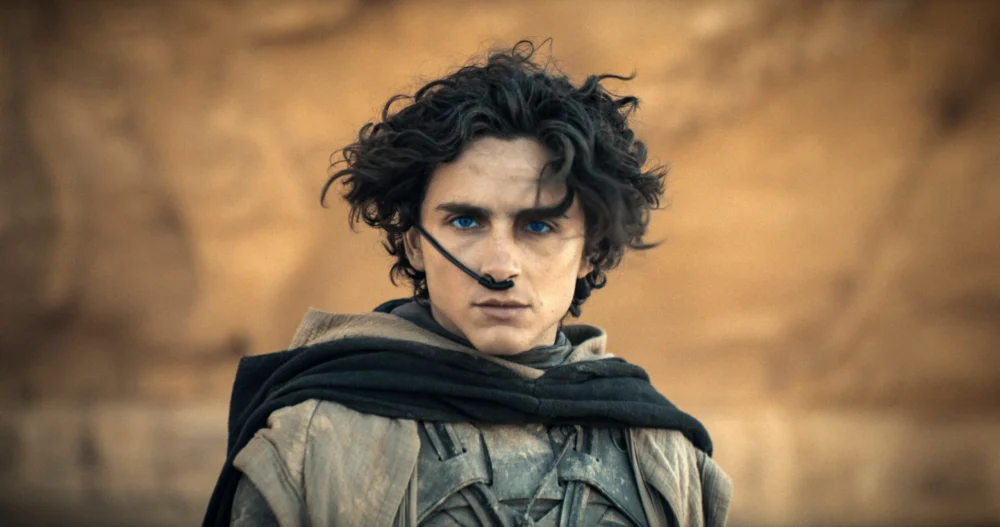
While the highly anticipated "Dune: Part Three" is set to grace theaters this December, Timothée Chalamet, the enigmatic interpreter of Paul Atreides, had remained largely reserved regarding the specifics of the upcoming installment. However, during a candid conversation with veteran actor Matthew McConaughey at a Variety and CNN town hall event held at the University of Texas at Austin, Chalamet unveiled a series of compelling details that have profoundly shaped his portrayal of the prophesied Kwisatz Haderach within Denis Villeneuve’s ambitious science-fiction saga. The discussion, which delved into the nuances of acting and the pressures of blockbuster filmmaking, provided a rare glimpse into Chalamet’s creative process.
Initially, Chalamet alluded to the thematic weight of "Dune: Part Three," drawing parallels to iconic cinematic performances. He remarked, "What I think you see at the end of the second one, and across the third one, is yourself in ‘Interstellar’ and Heath Ledger in ‘The Dark Knight’ and Marlon Brando in ‘Apocalypse Now’ and stuff like that." This bold comparison, immediately recognized for its ambitious scope, prompted a swift, self-aware retraction. With a characteristic chuckle, Chalamet backtracked, stating, "Actually, wait, let me rephrase all of that! Hold up. I cannot put myself in that same boat." He then offered a more measured, yet still evocative, description: "Let’s just say, it’s these big movies where you could sneak in something. A curveball." This moment highlighted Chalamet’s humility and his acute awareness of the immense talent and legacy he was referencing, while still emphasizing the profound impact these cinematic touchstones have had on his understanding of character and performance.
The influence of fellow actors within the "Dune" universe also emerged as a significant factor in Chalamet’s evolving interpretation of Paul Atreides. He specifically cited Oscar Isaac, who portrayed Paul’s father, Duke Leto Atreides, in the first film, as a key source of inspiration. Chalamet explained, "He treated it in a Shakespearean way – to play it heightened and not really care about it being heightened." This observation underscored Isaac’s commitment to a more theatrical and operatic approach, which in turn, empowered Chalamet to embrace a greater degree of artistic freedom. Reflecting on his initial experiences with the first "Dune" film, Chalamet admitted, "I felt kind of thrown by the futurism." His prior roles in more naturalistic dramas like "Beautiful Boy" and "Call Me by Your Name" had not fully prepared him for the grand scale and imaginative world-building of Villeneuve’s epic. He confessed to feeling "intimidated" by the sheer magnitude of the production. However, the experience of filming "Dune: Part Three" marked a significant shift. "But especially on this third one," he asserted, "all the great shit you see on screen is from freedom of movement and freedom of choice. And with Denis, we really had a good rhythm. It’s the eeriest one. It’s a big swing." This evolution signifies a deeper immersion into the character and the world, a testament to his growth as an actor and his collaborative relationship with director Denis Villeneuve.
While Chalamet remained tight-lipped about the intricate plot details of "Dune: Part Three," he did offer fascinating insights into his engagement with the film’s sophisticated science-fiction technology. He elaborated on his experience with the ornithopters, a signature mode of transportation in the "Dune" universe, which he revisited for the third film. "On the first ‘Dune,’ we had an ornithopter sequence that I got a chance to do again in the third, but this time I was way more geared up," he revealed. This preparation involved a more profound understanding of the fictional machinery. "On ‘Dune 3,’ as opposed to the first movie, I came out early and studied the control panel – all sorts of hieroglyphics and things that aren’t tethered to reality. I wanted to know what each button did, and invent a dynamic for myself with it." This meticulous approach to understanding the practicalities of the futuristic technology, even the seemingly abstract elements, demonstrates Chalamet’s commitment to grounding his performance in tangible details, enhancing the authenticity of Paul’s interactions with his environment.
The actor also spoke about the palpable energy and heightened sense of purpose he felt during the filming of "Dune: Part Three," describing it as a period where "the bat was red-hot." This sentiment was fueled by his recent critical successes, particularly his Oscar-nominated performances in "Marty Supreme" and "A Complete Unknown." These roles, which garnered significant critical acclaim and solidified his status as a leading man, seemed to imbue him with a renewed sense of confidence and artistic momentum. "I didn’t want to be complacent about a single moment," Chalamet emphasized. "Everything was sacred, and it was my last time doing a ‘Dune’ film, so I really wanted to treat it as sacred." This profound appreciation for the finality of the "Dune" chapter in his career drove him to a more intense and focused performance. He elaborated, "Because people can get complacent, but I was more intense on the third one. It felt like that was the natural momentum, so I wanted to push against that as hard as I could." This deliberate resistance to complacency and his desire to push boundaries underscore his dedication to delivering a powerful and memorable conclusion to Paul Atreides’ arc.
The town hall event itself, titled "A CNN & Variety Town Hall Event: Timothée Chalamet and Matthew McConaughey," provided a unique platform for these discussions. The full program is scheduled to air on Saturday, February 21st, at 7 p.m. on CNN and will also be available for streaming on the CNN app. This event not only offered audiences a deeper understanding of Chalamet’s artistic journey but also highlighted the enduring power of cinematic storytelling and the collaborative spirit that defines filmmaking. The conversation between Chalamet and McConaughey, two actors who have navigated the complexities of Hollywood with distinct yet equally impactful careers, offered valuable insights into the craft of acting, the pressures of fame, and the pursuit of artistic integrity.
The evolution of Paul Atreides, as guided by Chalamet’s nuanced performance, is a central pillar of the "Dune" narrative. From the hesitant young man thrust into a galactic conflict in "Dune: Part One" to the burgeoning leader grappling with destiny in "Dune: Part Two," Chalamet has consistently portrayed Paul’s internal struggles and external pressures with remarkable depth. "Dune: Part Three," therefore, represents a crucial juncture, not just for the character, but for Chalamet’s interpretation. His comments suggest a Paul who is more self-assured, more deeply entrenched in the harsh realities of Arrakis, and perhaps even more morally complex as he navigates the weight of his prescient visions and the consequences of his choices. The "eeriest" nature of the film, as described by Chalamet, hints at a darker, more introspective, and potentially more unsettling journey for Paul, as he confronts the full scope of his power and the sacrifices it demands.
The inspirations Chalamet draws from, ranging from Shakespearean intensity to the grounded realism of naturalistic dramas, showcase a multifaceted approach to character development. His willingness to learn from seasoned actors like Oscar Isaac and to meticulously engage with the technical aspects of the filmmaking process speaks to a profound dedication to his craft. This commitment is particularly evident in his reflections on the ornithopter controls, where he sought to imbue even the fictional technology with a sense of purpose and personal connection. This level of detail, often unseen by the audience, is what elevates a performance from good to unforgettable, allowing the character to feel authentically integrated into the world.
Furthermore, Chalamet’s self-awareness regarding the potential for complacency in a long-running franchise is a testament to his maturity as an artist. The "red-hot bat" metaphor, coupled with his declaration of treating each moment as "sacred," indicates a profound respect for the "Dune" legacy and a desire to honor it with his most potent work. His decision to "push against" the natural momentum of potentially becoming too comfortable suggests a proactive approach to maintaining artistic vitality and ensuring that his performance remains dynamic and compelling until the very end. This proactive stance is crucial for delivering a satisfying conclusion to a narrative arc that has captivated audiences worldwide.
The "Dune" universe, as envisioned by Frank Herbert and brought to life by Denis Villeneuve, is a tapestry woven with intricate political intrigue, complex philosophical themes, and breathtaking visual spectacle. Chalamet’s role as Paul Atreides is central to navigating this rich landscape, and his recent revelations provide a compelling preview of the depth and intensity that audiences can expect in "Dune: Part Three." The film promises to be a significant culmination, not only of the narrative arc but also of Chalamet’s own artistic journey within this iconic science-fiction epic. The interplay of inspiration, meticulous preparation, and a fervent dedication to artistic integrity suggests that "Dune: Part Three" will be a cinematic event that resonates long after the credits roll. The continuation of the conversation between Chalamet and McConaughey on CNN will undoubtedly offer further insights into the minds of these acclaimed actors, shedding light on the challenges and rewards of their illustrious careers.