
 By Titik Puspa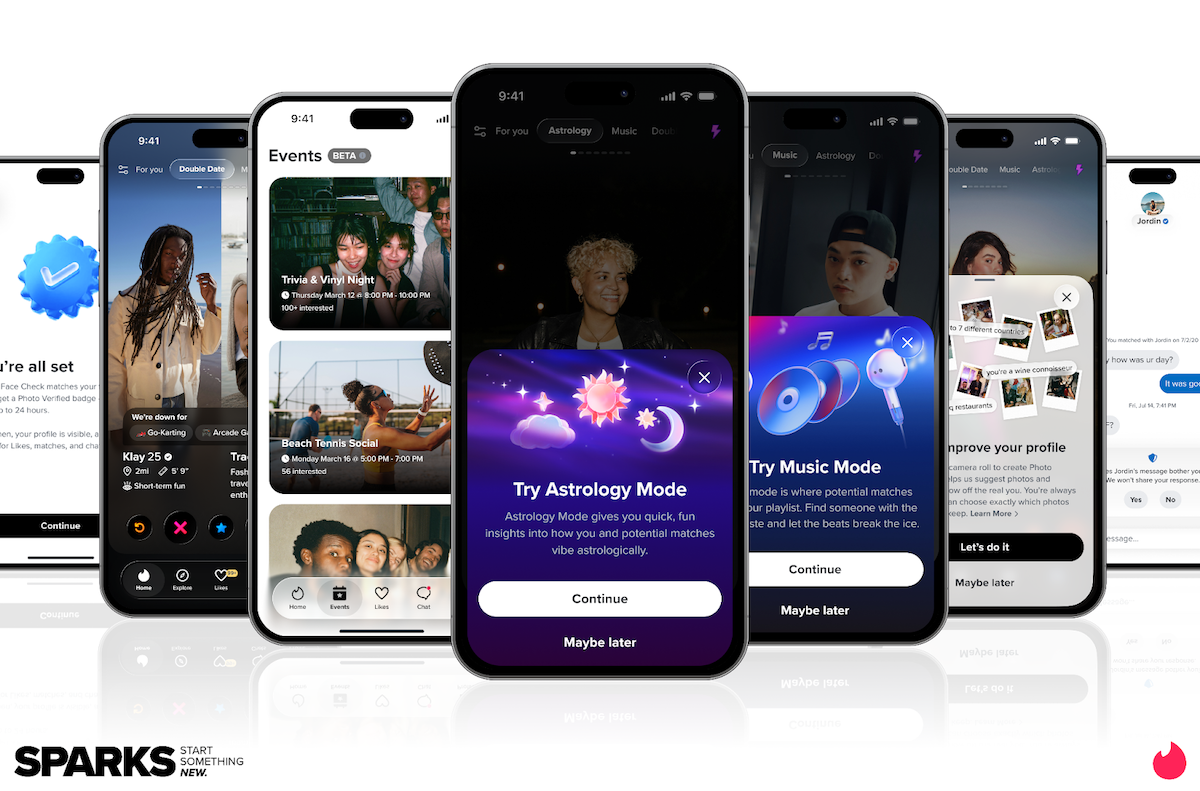
In a bold move to recapture the attention of a dating landscape increasingly drawn to authentic offline experiences and personalized digital interactions, Tinder has unveiled a comprehensive suite of product updates. The dating giant, owned by Match Group, hosted its inaugural product keynote on Thursday, detailing an ambitious strategy designed to reinvigorate its core offering, bolster user safety, and strategically integrate artificial intelligence. This significant push follows Match Group’s substantial $50 million investment in product development, a commitment announced last August, as the parent company seeks to re-engage its vast user base and, crucially, capture the interest of younger Gen Z daters who are showing a marked preference for more nuanced and real-world forms of connection.
At the heart of Tinder’s renewed product vision are innovative features aimed at bridging the gap between the digital swipe and tangible, in-person encounters. Among the most anticipated is the new "Events" tab, slated for a beta launch in Los Angeles in late May or early June. This feature will allow users to discover and participate in curated local events, ranging from vibrant speakeasies and casual bowling nights to energetic raves and creative pottery classes. The underlying philosophy is to position Tinder as a facilitator of social experiences, where meeting potential partners is a natural extension of enjoying existing interests. This strategic pivot directly addresses a growing trend observed among Gen Z, who are increasingly expressing a desire for real-world interactions over the perceived superficiality of endless digital swiping. The dating app market is already witnessing a migration away from purely profile-based matching, with younger demographics actively seeking authentic offline experiences or exploring unconventional avenues to forge connections. Apps like Breeze, 222, Timeleft, and Thursday have already capitalized on this "in-real-life" (IRL) trend, demonstrating a clear market appetite for such innovations.

Hillary Payne, Senior Vice President of Product at Tinder, articulated this vision during an interview with TechCrunch, stating, "We’re really trying to tap into meeting younger users at the places where they’re already hanging out." She elaborated on the concept, explaining, "You can go to an event with your friend and have a good time, or you could meet somebody new. Instead of asking users to choose between their dating life and their social life, we’re trying to blend these things together and create a more social community first experience." This approach aims to dissolve the perceived dichotomy between dating and social engagement, fostering an environment where both can flourish organically. A particularly intriguing aspect of the Events tab is the post-event functionality: profiles of event attendees will become available for users to like and swipe through within the app. This feature evokes the spirit of classic "Missed Connections" ads, providing a second chance for individuals who may have hesitated to approach someone in person or simply missed the opportunity, thereby offering a novel way to reconnect.
Complementing the focus on real-world events, Tinder is also exploring the resurgence of speed dating through a new virtual experience. The company is currently piloting a video speed dating feature in Los Angeles, where users can engage in scheduled, three-minute video chats with potential matches. This initiative is designed as a "vibe check," a quick and efficient method for users to gauge initial chemistry and break the ice before investing time and energy into an in-person meeting. Users will have the option to extend promising conversations beyond the initial three-minute window, and profile photo verification will be a prerequisite for participation, adding a layer of authenticity to the experience. While speed dating has seen periods of popularity, it remains to be seen whether this iteration, particularly in the wake of pandemic-induced video chat fatigue, will achieve sustained success. Tinder’s previous attempt with its "Face-to-Face" video chat feature, launched during the COVID-19 pandemic and later discontinued, serves as a cautionary tale, indicating a potential decline in user appetite for prolonged virtual interactions.
Artificial intelligence emerged as a significant theme throughout the keynote, signaling Tinder’s deep commitment to leveraging this transformative technology across its product. The company is expanding its investment in AI, building upon its "Chemistry" feature, which utilizes AI to gain insights into user preferences through a combination of user-submitted answers and, with explicit permission, analysis of their camera rolls. This feature curates daily matches, aiming to alleviate "swipe fatigue" and provide more relevant connections. Following initial testing in Australia and New Zealand, "Chemistry" is now rolling out to users in the U.S. and Canada. Looking ahead, Tinder envisions "Chemistry" evolving from a singular feature into a foundational element that shapes the entire user experience, driving unprecedented personalization.

Furthermore, Tinder is introducing a new "Learning Mode," designed to accelerate the process of understanding user preferences and delivering more relevant matches from the outset. This enhanced system is engineered to quickly glean insights into what users are seeking, adapting recommendations to better align with individual tastes. Previously, Tinder relied on multiple swiping sessions to gather sufficient data for effective personalization. With "Learning Mode," as Payne highlighted, the app can begin to comprehend a user’s preferences from their very first interaction. "We’re hoping that this is something that makes Tinder really feel like it understands you from the very first time you use it," Payne stated, "or if you’re returning to Tinder after some time away, it feels like it gets me, and I don’t have to spend a lot of time telling Tinder what I’m looking for again." This aims to create a more intuitive and less demanding user journey, fostering a sense of immediate understanding and connection.
Safety remains a paramount concern for Tinder, and the company is reinforcing its commitment through AI-powered enhancements to existing features. The "Does This Bother You?" feature is being upgraded with advanced large language models capable of more effectively detecting harmful messages and automatically blurring disrespectful content. Similarly, the "Are You Sure?" prompts, designed to encourage users to reconsider potentially offensive or harmful interactions, are being refined for greater accuracy in identifying and intervening in problematic exchanges. These advancements underscore Tinder’s dedication to fostering a safer and more respectful environment for its users.
Visually, Tinder is undergoing a sleek redesign to enhance the user interface. This includes the implementation of edge-to-edge profile photos, a subtle blur effect to add depth, and a "Liquid Glass" aesthetic for the "Like" and "Nope" bars, aiming for a more modern and immersive feel. In addition to the Events and speed dating features, new "Modes" are on the horizon. "Music Mode" will allow users to auto-populate their profiles with up to 20 Spotify songs, offering a glimpse into their musical tastes and creating potential conversation starters. "Astrology Mode" will enable users to input their birth details to reveal their Sun, Moon, and Rising signs, facilitating compatibility checks based on astrological principles. These new modes follow the recent launches of "Double Date Mode" and "College Mode," indicating a broader strategy to introduce diverse avenues for user engagement and connection.

The comprehensive slate of announcements signals a pivotal strategic shift for Tinder. While Match Group reported a positive financial performance in Q4 2025, achieving $878 million in revenue, the company has grappled with consecutive quarters of declining paying subscribers. This financial pressure necessitates a renewed focus on user retention and a concerted effort to restore investor confidence. Despite the positive outlook, Match Group acknowledges the evolving preferences of daters and the intensifying competition within the dating app market. The success of these new features in retaining user interest remains to be seen. However, Tinder’s substantial investment in these innovative functionalities—moving beyond its reliance on the traditional swipe mechanism and adapting to what it perceives as the evolving desires of its young user base—underscores a significant commitment to shaping the future of online dating and real-world connections. The company appears poised to redefine how users meet, interact, and form relationships in an increasingly dynamic digital and physical world.