
 By admin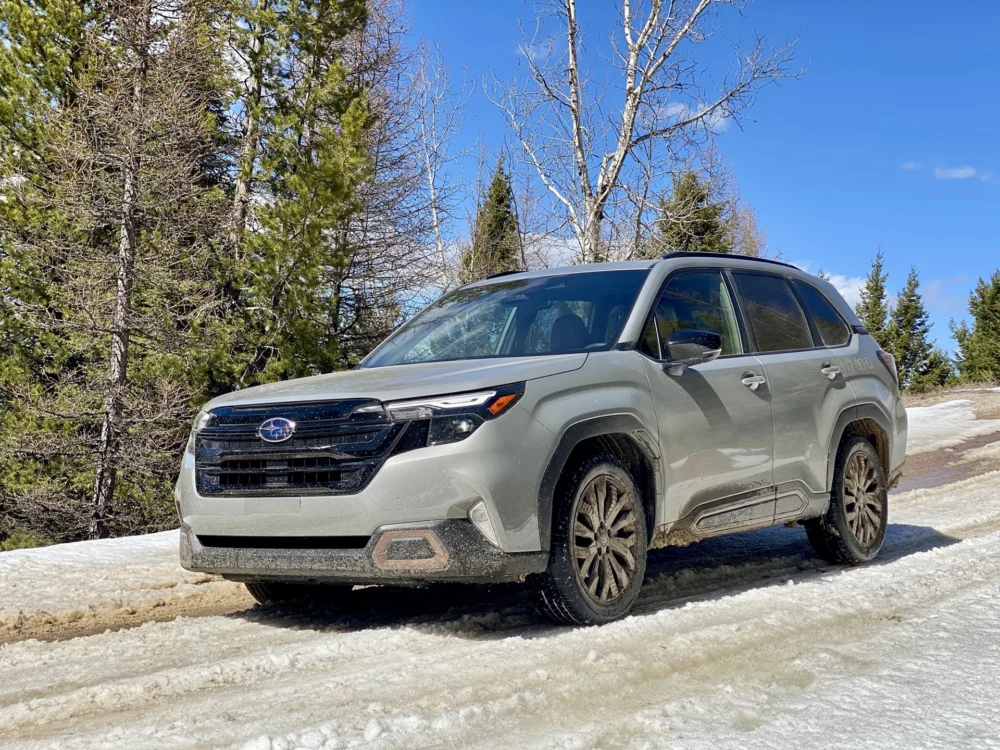
A significant shift in the automotive landscape has been announced by Consumer Reports, as its latest annual report, published Thursday, reveals that Toyota and its luxury marque, Lexus, no longer hold the coveted top spot for brand reliability. For the first time in recent memory, Subaru has ascended to the pinnacle of dependability, marking a historic moment that challenges the long-standing dominance of the Japanese automotive giant, which has historically commanded sales charts with perennial bestsellers like the Toyota RAV4.
Subaru’s climb to the top underscores a strategic approach that prioritizes proven engineering over rapid innovation, a methodology that ironically mirrors what kept Toyota and Lexus at the forefront of reliability rankings for at least the past five years. The relatively small Japanese automaker has distinguished itself by making incremental updates and sharing extensively tested, robust parts across its lineup. This conservative philosophy is particularly evident in redesigned vehicles such as the forthcoming 2025 Subaru Forester, which adopts a cautious evolutionary path rather than a revolutionary one. This measured pace had, at times, drawn criticism towards Toyota in the past for being too slow to innovate, a perception it has actively sought to change in recent years.
The comprehensive annual survey conducted by Consumer Reports is a cornerstone of its highly respected automotive evaluations. It meticulously gathers data from hundreds of thousands of vehicle owners, alongside insights from Consumer Reports’ internal rigorous testing on a vast array of vehicles spanning the 2000 to 2024 model years. The survey delves into 20 potential "pain points" that owners might have experienced over the preceding 12 months. These issues range from critical powertrain components like transmission and electric motor problems to more nuanced concerns such as climate control malfunctions and the increasingly complex in-car electronics. Among these, touchscreen interfaces and sophisticated infotainment systems have long been identified as a significant source of frustration for many new car owners, often contributing disproportionately to lower reliability scores across the industry as manufacturers strive to integrate cutting-edge digital experiences.
Toyota’s recent departure from its traditionally unyielding reliability crown can largely be attributed to a bold and extensive overhaul of its vehicle lineup. Starting with the redesigned 2022 Toyota Tundra pickup truck, the company embarked on an ambitious program to update nearly every model in its vast portfolio, encompassing sedans, crossover SUVs, trucks, and even sports coupes. This modernization push is set to culminate with the highly anticipated 2025 Toyota 4Runner SUV, a vehicle that had remained largely unchanged since its last redesign in 2010. Fifteen years is an eternity in the automotive world, and such a comprehensive modernization necessarily introduces a myriad of new components and technologies.
A significant aspect of these redesigns, particularly for Toyota’s SUV and truck families, involves a strategic shift towards more efficient, smaller displacement turbo and hybrid engines. These new powerplants are progressively replacing the larger, often emissions-endangered V-8 engines that had long been the workhorses of the lineup. While these engineering advancements promise improved fuel economy and reduced emissions, they inherently carry the risk of "new cars usually mean new problems." This axiom appears to have manifested in some of Toyota’s latest offerings.
In stark contrast, Subaru has maintained an almost stubborn adherence to its tried-and-true flat-4 boxer engine architecture across much of its core vehicle range, exemplified by models like the Subaru Crosstrek. This engine design, a hallmark of the brand, has been refined over decades, contributing to its consistent performance and reliability. Furthermore, Subaru has been notably cautious in its embrace of electrification, with the sole exception being the Subaru Solterra electric crossover, which is a product of a collaborative partnership with Toyota. This conservative approach to powertrain innovation has insulated Subaru from many of the teething problems associated with rapidly evolving electric vehicle technologies and complex hybrid systems.

To determine a brand’s overall reliability, Consumer Reports meticulously factors in the reported problems for each specific model within that brand’s lineup. In Subaru’s case, the Solterra stands out as the lone model with a below-average score for predicted reliability, likely due to its shared platform and technology with Toyota’s bZ4X, which also faced early challenges. The "predicted reliability" score itself is an average derived from a model’s performance over the past three years, provided it has not undergone a significant redesign, thereby offering a stable benchmark for comparison.
Toyota’s overall reliability rating was notably impacted by below-average scores for several key new models. The redesigned Tundra pickup truck, the new Tacoma midsize pickup truck, and the bZ4X EV (the sibling to Subaru’s Solterra) all contributed to this decline. The Tundra, in particular, has faced considerable challenges since its 2022 model launch, accumulating ten recalls. These issues culminated in a costly decision by Toyota in July to replace over 100,000 twin-turbo 3.5-liter V-6 engines in 2022-2023 Tundra and Lexus LX models. While Consumer Reports clarifies that recalls themselves do not directly penalize a brand in its reliability ratings, persistent, underlying problems that necessitate such recalls or repeated repairs certainly do. This distinction is crucial: a recall addresses a known issue, but the existence of widespread issues leading to recalls reflects on the initial quality and engineering.
Despite these recent hiccups in its new SUV and truck lineup, Toyota’s foundational strength and historical excellence are still evident. It ranked third overall, with Lexus securing the second position as the most reliable out of the 22 brands that Consumer Reports had sufficient data to rank. It’s important to note that 15 other brands, including luxury marques like Porsche and heavy-duty truck manufacturers like Ram, were not included in the rankings due to insufficient data for a comprehensive assessment.
The broader picture painted by the Consumer Reports data highlights a continued trend: Asian brands, as a collective, fared significantly better in reliability than their domestic and German counterparts. Following closely behind Asian brands, German automakers demonstrated respectable, though not leading, reliability. Among domestic badges, Buick emerged as the highest-ranking American brand, landing squarely in the middle of the overall rankings at 11th place. Buick’s success is often attributed to a strategy that, much like Subaru’s and Toyota’s historical approach, emphasizes conservative and incremental updates to its models. It is also noteworthy that roughly half of Buick’s models are manufactured in Asia, benefiting from the robust quality control and manufacturing processes prevalent in that region.
Other notable movements within the rankings included Mazda, which slipped to sixth place this year due to increased reported problems with its CX-90 plug-in hybrid model. Hyundai also experienced a dip, falling to tenth, owing to ongoing issues reported with its Ioniq 5 electric crossover and transmission problems affecting the Santa Cruz small pickup truck. These instances underscore the challenges associated with introducing new technologies, particularly in the rapidly evolving EV segment and with new powertrain configurations.
At the other end of the spectrum, Rivian found itself rated last for reliability. Owners of the R1T pickup truck reported a range of issues, from cosmetic concerns like paint and trim imperfections to more critical problems related to its advanced EV charging systems. This highlights the steep learning curve and inherent complexities faced by nascent EV manufacturers as they scale production and bring cutting-edge technology to market.
This year’s Consumer Reports reliability rankings serve as a critical barometer for the automotive industry, signaling that while consumers increasingly demand innovative features, advanced powertrains, and sophisticated infotainment systems, the fundamental expectation of reliability remains paramount. Automakers are now navigating a delicate balance: the pressure to innovate and electrify their fleets, satisfy evolving consumer preferences for technology, and meet stringent emissions regulations, all while upholding the core promise of dependability. Subaru’s ascent demonstrates that in this complex environment, a methodical, proven approach can still yield the most reliable vehicles, reminding the industry that sometimes, steady evolution trumps rapid revolution in the pursuit of lasting quality. As Jake Fisher, senior director of Consumer Reports’ Auto Test Center, aptly advises, "While brand rankings can guide you to the showroom, it is critical to look at reliability for specific models before making a purchase decision. Even within high-ranking companies, there can be significant variation in reliability." This year’s report vividly illustrates that dynamic, urging consumers to look beyond brand loyalty and delve into the specifics of each model’s track record.