
 By admin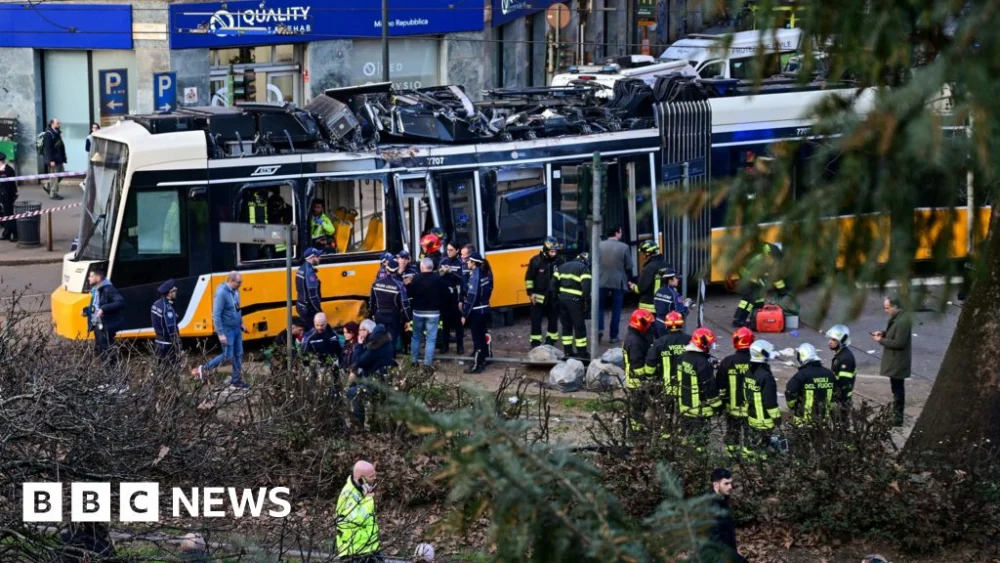
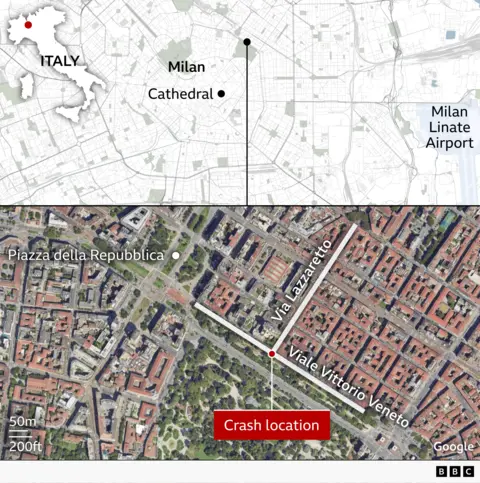
A devastating tram derailment in the heart of Milan has sent shockwaves through the northern Italian metropolis, resulting in the death of at least one pedestrian and leaving 39 others with injuries, some of them critical. The catastrophic incident occurred around 4:00 PM local time (3:00 PM GMT) on Tuesday, as the Route 9 tram, packed with commuters and tourists, veered off its tracks along the tree-lined Viale Vittorio Veneto before violently crashing into the side of a building. The immediate aftermath was one of chaos and devastation, with emergency services rushing to the scene to rescue trapped passengers and tend to the injured.
Eyewitness accounts paint a harrowing picture of the moments leading up to the crash. Passengers on the crowded tram described hearing a sudden, alarming noise emanating from beneath the vehicle. This was followed by a violent lurch as the tram veered sharply off its designated path, accelerating uncontrollably before its catastrophic impact. "I thought it was an earthquake. I was sitting down and I fell on the floor, along with the other passengers," one shaken man recounted to the Ansa news agency, his voice trembling with the recollection of the terrifying ordeal. "It was terrible."
The tram’s uncontrolled trajectory saw it strike a traffic light before smashing through the window of a ground-floor restaurant. Miraculously, a delivery rider who had been waiting at the now-obliterated traffic light and a young man walking on the pavement narrowly escaped serious injury, according to reports from the La Repubblica website. The force of the collision was immense, with the front of the tram becoming embedded in the building, causing significant structural damage.
Among the injured, many were passengers on the tram. One female passenger, who boarded at Piazza della Repubblica, recounted the terrifying experience to Corriere della Sera: "I got on at the first stop, [Piazza della] Repubblica. I was standing next to the driver, and they all crashed into me." This suggests a significant displacement of weight and force within the tram’s carriages as it derailed.
Anna, a 27-year-old who works in an office nearby, described the suddenness of the disaster. "I just heard an enormous bang," she told AFP, her voice still laced with shock. "I saw a bit of the tram had gone into a shop." The sight of a public transportation vehicle, usually a symbol of urban efficiency and safety, mangled and embedded in a building must have been deeply unsettling for those in the vicinity.
Civil protection teams were quickly mobilized, establishing a temporary command post and setting up a tent at the scene to provide immediate medical assistance to the injured. The scene was a hive of activity, with numerous ambulances ferrying the wounded to nearby hospitals, and firefighters working diligently to extricate individuals who remained trapped within the wreckage. The scale of the operation underscored the severity of the incident.
The exact cause of the derailment remains under investigation, but initial media reports suggest that the tram may have been traveling too fast as it attempted to navigate a sharp corner while turning out of Viale Vittorio Veneto. This intersection is a busy thoroughfare, and the speed at which the tram took the bend is a critical factor being examined by investigators. The tram in question is part of a new fleet of three-car bidirectional trams, featuring driver’s cabs at both ends, which were reportedly introduced to the city’s public transport network only a few weeks prior to the incident, according to Corriere della Sera. The novelty of these vehicles, coupled with the tragic outcome, raises questions about their operational safety and the training of their operators.
Milan Mayor Giuseppe Sala, along with other city officials, arrived promptly at the scene to assess the situation and offer support to the affected. The transport company ATM, responsible for Milan’s public transport, issued a statement expressing its profound shock and offering its deepest condolences to the victims and their families. "We are deeply shaken by this incident, and our thoughts are with the victims and their families," the statement read, emphasizing the gravity of the situation for the city’s transit authority.
The timing of this tragic event is particularly unfortunate, as Milan is currently abuzz with activity, hosting the prestigious Milan Fashion Week. The city is teeming with international visitors, celebrities, journalists, and industry professionals, all drawn to the Italian fashion capital. The derailment has cast a somber shadow over these festivities, reminding everyone of the fragility of urban life and the potential for sudden, devastating accidents. The presence of a large international contingent also means that the incident could have implications for international perceptions of Milan’s infrastructure and public safety.
The Viale Vittorio Veneto, a significant artery in Milan’s urban landscape, typically experiences heavy traffic, both vehicular and pedestrian. The derailment has inevitably caused significant disruption to traffic and public transportation in the area, with cordons set up by police and emergency services working to clear the scene. The psychological impact on witnesses and those who experienced the event firsthand is also a significant concern, and support services are likely to be made available to them.
The investigation into the derailment will likely focus on several key areas. These include the mechanical integrity of the tram, particularly the new fleet that was recently introduced. The condition of the tracks and the infrastructure at the site of the derailment will also be scrutinized. Furthermore, the actions and training of the tram driver will be a central focus of the inquiry. Expert analysis of the tram’s speed, braking systems, and the forces involved in the derailment will be crucial in determining the precise sequence of events. The possibility of external factors, such as track defects or unexpected obstructions, will also be considered.
The loss of life, particularly a pedestrian caught in the path of the runaway tram, is a somber reminder of the inherent risks associated with urban transportation systems, even in highly developed cities like Milan. The number of injured, many of whom sustained serious wounds, highlights the violent nature of the impact and the potential for long-term physical and psychological consequences for those affected. The coming days and weeks will see a thorough investigation unfold, aiming to provide answers and ensure that such a tragedy is prevented from happening again. The resilience of Milan will undoubtedly be tested as the city grapples with this profound loss and the process of recovery and reconstruction begins. The focus now shifts to supporting the injured, comforting the bereaved, and understanding the root causes of this devastating incident to enhance the safety of public transportation for all. The incident serves as a stark reminder that even the most routine elements of daily life, such as commuting by tram, carry inherent risks that demand constant vigilance and rigorous safety protocols.