
 By Lina Irawan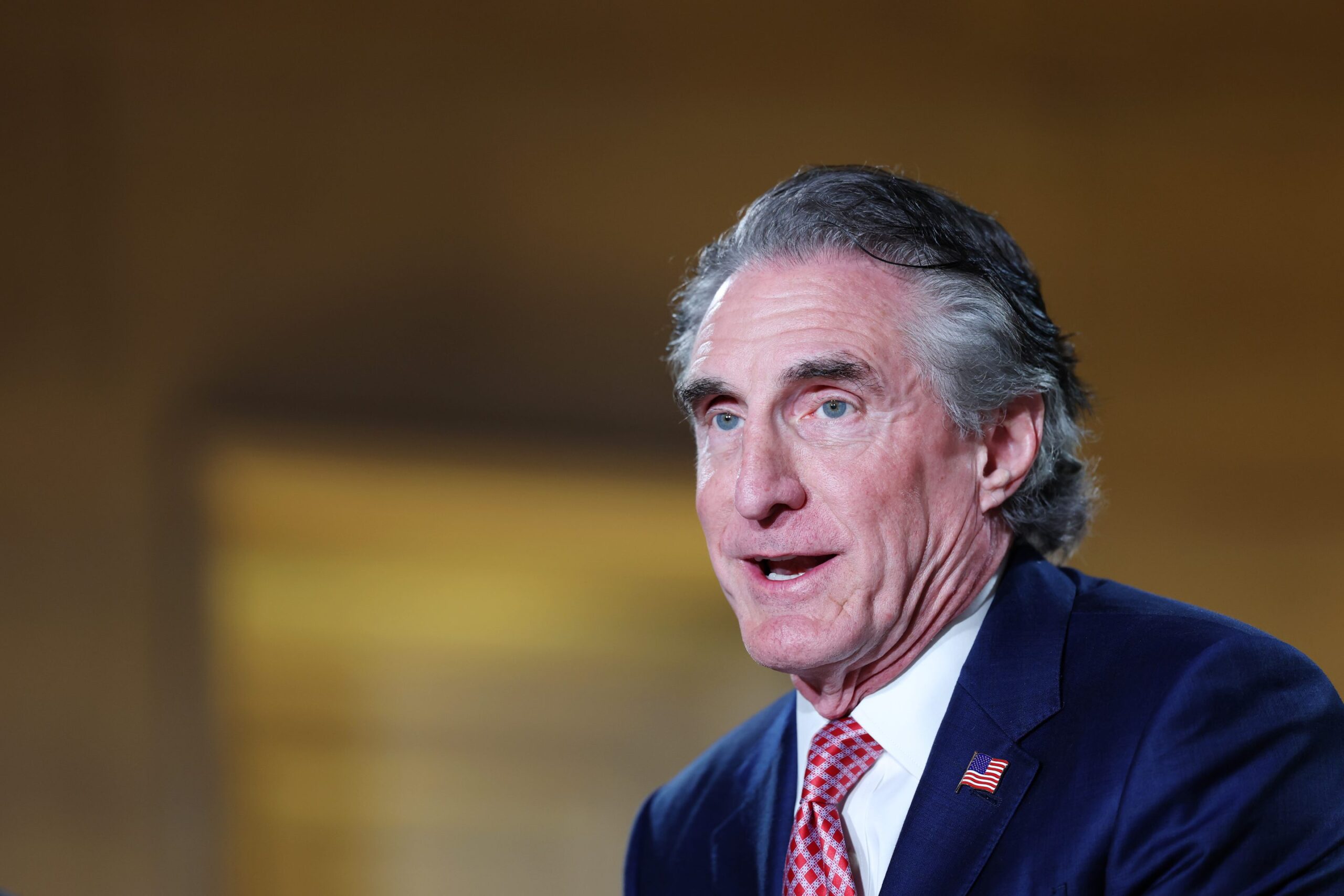
The Trump administration has been actively exploring unconventional strategies to stabilize global energy markets, including the highly speculative prospect of intervening directly in the oil futures market, as confirmed by Interior Secretary Doug Burgum. This revelation comes at a moment of acute geopolitical tension and economic uncertainty, with a protracted conflict in Iran severely disrupting global oil supplies and pushing crude prices to unprecedented highs.
Speaking from Tokyo during a critical diplomatic visit, Secretary Burgum acknowledged that such discussions had indeed taken place within the administration. However, he quickly tempered expectations by stating he was not privy to any actual market interventions by the United States at this juncture. The very notion of the U.S. government directly trading in a volatile commodity market like oil futures underscores the extraordinary pressure the administration faces to mitigate the economic fallout from the escalating conflict.
"I would say there has been a discussion," Burgum told Bloomberg Television in Tokyo on Saturday. "We have a lot of smart people working in this administration — a lot of smart people work in the energy trading market. An intervention to try to manipulate and lower prices would require enormous amounts of capital. That is all I will say on that front." His cautious remarks highlighted the immense financial and logistical hurdles involved in such a bold maneuver, suggesting that while the idea has been floated, its practical implementation remains a subject of intense internal debate and considerable skepticism.
The context for these discussions is grim. The Middle East is embroiled in a severe crisis, with sustained U.S. and Israeli military actions against Iran having profoundly destabilized the region. Crucially, this conflict has led to the effective blockage of the Strait of Hormuz, the narrow waterway through which approximately one-fifth of the world’s total petroleum consumption passes daily. This strategic choke point, vital for oil shipments from the Persian Gulf to global markets, has become impassable, trapping millions of barrels of crude oil and liquefied natural gas in the Gulf and severely constraining global supply.
The market reaction has been immediate and dramatic. Global crude futures, the benchmark for international oil prices, have surged by more than 40% in the less than two weeks since the full-scale conflict erupted. This staggering increase has rapidly translated into tangible pain at the pump for American consumers, with U.S. gasoline prices climbing to their highest levels in 22 months, threatening to derail economic stability and fuel widespread inflationary pressures. The psychological impact of such a rapid price hike, coupled with the uncertainty of future supply, has triggered fears of a global recession.
An intervention in the oil futures market would be an unprecedented move for the U.S. government, typically reserved for central banks managing currency or interest rates. Such an operation would involve the Treasury Department, or a specially designated entity, buying or selling vast quantities of oil futures contracts with the explicit goal of influencing prices. To significantly depress prices in a market of this scale – where daily trading volumes can reach billions of dollars and global supply chains are measured in millions of barrels – would necessitate deploying hundreds of billions, if not trillions, of dollars. The sheer scale of capital required, combined with the inherent risks of market manipulation, makes it a high-stakes gamble with potentially severe unintended consequences.
"The idea of a government directly intervening in a commodity futures market of this magnitude is extraordinary and fraught with risk," commented Dr. Eleanor Vance, a senior economist specializing in energy markets at the Peterson Institute for International Economics. "While theoretically possible to influence prices by becoming a dominant player, the capital outlay would be astronomical, and the government would expose itself to enormous speculative losses if its timing or assessment of market fundamentals were incorrect. It’s a testament to the severity of the current energy crisis that such an option is even being discussed at the highest levels."
Beyond the domestic economic concerns, Secretary Burgum’s presence in Tokyo ahead of Japanese Prime Minister Sanae Takaichi’s scheduled March 19 visit to Washington underscores the broader geopolitical dimensions of the crisis. Burgum is in Japan to attend the inaugural U.S.-sponsored Indo-Pacific Energy Security Ministerial and Business Forum this weekend. This event is a critical component of the White House’s overarching strategy to reduce American economic dependence on China and to diversify global supply chains for essential critical minerals.
The forum’s agenda is particularly salient given the current global instability. The U.S. is aggressively pushing to secure reliable access to a range of critical minerals – including lithium, cobalt, nickel, and rare earth elements – which are indispensable for modern technologies such as mobile phones, electric vehicle batteries, renewable energy infrastructure, and advanced defense systems. China currently dominates the extraction, processing, and refining of many of these minerals, posing a significant vulnerability for the U.S. and its allies.
Diversifying these supply chains away from China is not merely an economic imperative but a national security one. The Trump administration views this as crucial for maintaining technological leadership, bolstering defense capabilities, and ensuring the resilience of key industries against potential geopolitical leverage. The discussions in Tokyo are expected to lay the groundwork for new partnerships and investment frameworks aimed at developing alternative sources and processing capacities within the Indo-Pacific region, fostering a more resilient and geographically distributed supply network.
As part of this broader initiative, there are reports that Asian nations are poised to pledge approximately $30 billion in energy and mineral deals with the U.S. These agreements would likely encompass investments in exploration, mining, processing facilities, and infrastructure development, as well as technology transfer and capacity building. Such collaboration aims to create a robust, diversified ecosystem for critical minerals and clean energy technologies, strengthening economic ties and strategic alliances across the Indo-Pacific.
Meanwhile, regarding the immediate oil crisis, Burgum noted that while a Treasury intervention in the futures market has been discussed, it ranks lower on the administration’s list of potential actions to alleviate the surge in oil prices. He refrained from specifying what other options might be considered higher priority, but analysts speculate these could include a range of more conventional and less financially risky measures.
These "other possibilities" likely encompass releasing oil from the Strategic Petroleum Reserve (SPR), a national stockpile maintained by the U.S. government for emergency situations. While effective for short-term relief, the SPR’s capacity is finite. Other options could involve intensified diplomatic efforts to de-escalate the conflict in Iran, potentially involving international mediators to secure the Strait of Hormuz. Increasing domestic oil and gas production, accelerating permitting for new energy projects, or even exploring temporary waivers or adjustments to environmental regulations to boost supply could also be on the table, though these often face political and environmental opposition. Furthermore, diplomatic pressure on allied nations to increase their own production or release from their strategic reserves could form part of a coordinated global response.
The administration’s reluctance to prioritize direct market intervention likely stems from a combination of the colossal capital requirements, the inherent market volatility, and the potential for public and international criticism regarding government manipulation of free markets. Such a move could also set a dangerous precedent, inviting other nations to similarly interfere in global commodity markets, leading to unpredictable and destabilizing outcomes.
The current situation presents the Trump administration with a multifaceted challenge: navigating an active military conflict, managing a severe global energy crisis, and simultaneously advancing a long-term strategic agenda of economic decoupling and supply chain diversification. The discussions around oil futures intervention, however preliminary, underscore the extraordinary nature of the current global landscape and the lengths to which governments might consider going to protect their economies and strategic interests in an increasingly volatile world. The outcomes of these deliberations and the broader diplomatic efforts in Tokyo will have profound implications for global energy security, economic stability, and the future geopolitical order.