
 By admin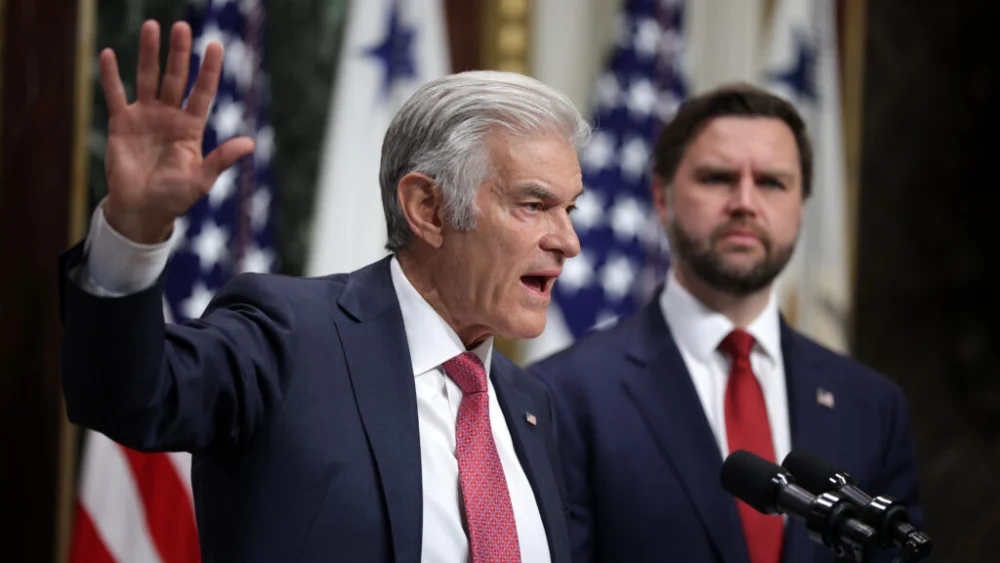
The Trump administration has officially declared a high-stakes offensive against systemic corruption within the federal healthcare apparatus, announcing a sweeping, nationwide moratorium on the enrollment of new suppliers for a wide array of medical equipment. This decisive regulatory maneuver, unveiled during a joint press conference at the Department of Health and Human Services (HHS), signals a fundamental shift in how the federal government intends to police the multi-billion-dollar industry responsible for providing wheelchairs, artificial limbs, oxygen tanks, and other essential medical supplies to the nation’s most vulnerable populations. Led by Centers for Medicare and Medicaid Services (CMS) Administrator Mehmet Oz, alongside Health and Human Services Secretary Robert F. Kennedy Jr. and Vice President JD Vance, the administration framed the move as a necessary "reset" to excise "massive fraud, waste, and abuse" that has plagued the Medicare system for decades.
The moratorium specifically targets suppliers of Durable Medical Equipment, Prosthetics, Orthotics, and Supplies (DMEPOS). While these items are often considered the "nuts and bolts" of healthcare—ranging from simple gauze and urinary catheters to complex breast prostheses for post-mastectomy patients—the industry has long been a focal point for opportunistic criminal enterprises. Administrator Oz, drawing a sharp contrast between the ease of entering the medical supply market and the rigors of the financial sector, noted that the current barriers to entry are alarmingly low. "The amount of fraud is so massive that it’s easier to open one of these suppliers than to open a bank account," Oz stated, emphasizing that the lack of stringent vetting has allowed "bad actors" to siphon billions of taxpayer dollars away from patient care.
The decision to freeze new enrollments was not a sudden impulse but rather the culmination of an intensive analysis of current and historical Medicare enrollment and claims data. According to a Federal Register notice released alongside the announcement, the administration’s data scientists identified alarming patterns of billing irregularities and "shell company" formations that suggested a coordinated exploitation of the DMEPOS category. While the suppliers in question represent a relatively small slice of the broader $1.7 trillion CMS budget, their impact on the integrity of the Medicare Trust Fund is disproportionately large. Historically, federal oversight has struggled to keep pace with the ingenuity of fraudsters. Investigations by the Office of Inspector General (OIG) have repeatedly flagged significant financial leakages; for instance, Medicare was found to have improperly paid suppliers $34 million between 2015 and 2017 for equipment supposedly provided to beneficiaries who were actually in inpatient stays—a period where such costs should have been covered by the hospitals themselves. A more recent OIG report covering 2018 to 2024 revealed an additional $22.7 million in similar improper payments, highlighting a persistent "double-dipping" problem that the new administration appears determined to solve.
The mechanics of the moratorium are grounded in federal law, specifically authorities that allow CMS to temporarily halt the entry of new providers into the Medicare program if a significant risk of fraud is identified in a particular geographic area or industry sector. In this case, the administration has opted for a nationwide scope, reflecting the pervasive nature of the problem. The pause is scheduled to last for an initial six months, though federal regulations permit the administration to issue additional six-month extensions if the "fraud risk" is not deemed sufficiently mitigated. While Oz did not provide specific metrics or "benchmarks" that the agency hopes to reach by the end of the first six-month period, the underlying goal is to implement more rigorous screening processes, including enhanced site visits, background checks, and real-time monitoring of billing patterns.
Critics and industry advocates have raised concerns about the potential for "collateral damage" to patient access, particularly in rural or underserved areas where the number of suppliers may already be limited. However, the administration was quick to clarify that the moratorium is not a cessation of services. Current, legitimate suppliers will continue to operate, and patients will still be able to receive their life-sustaining equipment. The freeze only applies to "new" entities attempting to enter the market. By stopping the influx of new suppliers, CMS officials argue they can focus their investigative resources on auditing existing providers and designing a more "fraud-proof" enrollment system.

Vice President JD Vance emphasized that this crackdown is part of a broader "America First" healthcare agenda, one that prioritizes the financial solvency of Medicare for future generations. "We cannot ask the American taxpayer to continue funding a system that allows billions to disappear into the pockets of criminals while seniors struggle to afford their premiums," Vance remarked. This sentiment was echoed by Secretary Robert F. Kennedy Jr., who has frequently spoken about the need to "clean house" within federal health agencies. Kennedy suggested that the DMEPOS moratorium is just the beginning of a larger effort to scrutinize every dollar flowing through HHS, looking for "institutionalized corruption" that benefits corporate interests at the expense of public health.
The announcement was not limited to the medical equipment sector. In a move that signaled a broader willingness to use federal funding as a lever for state-level accountability, the administration also announced a "temporary halt" on $259.5 million in Medicaid funding for the state of Minnesota. While the specific details regarding the Minnesota funding freeze were linked to separate oversight concerns, the timing of the announcement—packaged with the DMEPOS moratorium—suggests a coordinated strategy to project an image of fiscal discipline and aggressive federal oversight. Furthermore, CMS is launching a new "fraud tipline," encouraging whistleblowers and patients to report suspicious billing practices directly to the agency, effectively deputizing the public in the fight against healthcare waste.
The use of moratoriums is not entirely unprecedented. In previous years, CMS has utilized similar pauses to address high-risk environments in home health agencies and ground ambulance suppliers in specific metropolitan "hotspots" like Miami, Chicago, and Houston. However, the nationwide application of this tool for the entire DMEPOS category marks a significant escalation in regulatory tactics. It reflects a belief within the current administration that the "piecemeal" approach of the past—targeting one city or one sub-sector at a time—has failed to stem the tide of sophisticated, cross-border fraud syndicates.
Industry analysts suggest that the next six months will be a period of intense scrutiny for the medical supply chain. Legitimate businesses may face increased administrative burdens as CMS ramps up its auditing efforts. For patients, the immediate impact remains to be seen. While the administration promises that access will not be compromised, the long-term health of the DMEPOS market will depend on whether CMS can successfully distinguish between innovative, honest new suppliers and the "fraudulent storefronts" that Oz described.
As the Trump administration moves forward with this aggressive agenda, the healthcare industry is bracing for further "disruptions" aimed at fiscal reform. The DMEPOS moratorium serves as a clear warning shot: the era of "easy entry" into the federal healthcare marketplace is over. By aligning the interests of the HHS, CMS, and the Vice President’s office, the administration is attempting to build a unified front against a problem that has bedeviled both Republican and Democratic predecessors. Whether this "shock and awe" approach to healthcare fraud will yield the desired savings—or create new bottlenecks in the delivery of care—remains the central question for policymakers and the millions of Americans who rely on Medicare for their daily survival. For now, the message from the administration is unmistakable: every oxygen tank, every wheelchair, and every prosthetic limb will be accounted for, and those who seek to profit from the system’s vulnerabilities will find the door firmly locked.