
 By admin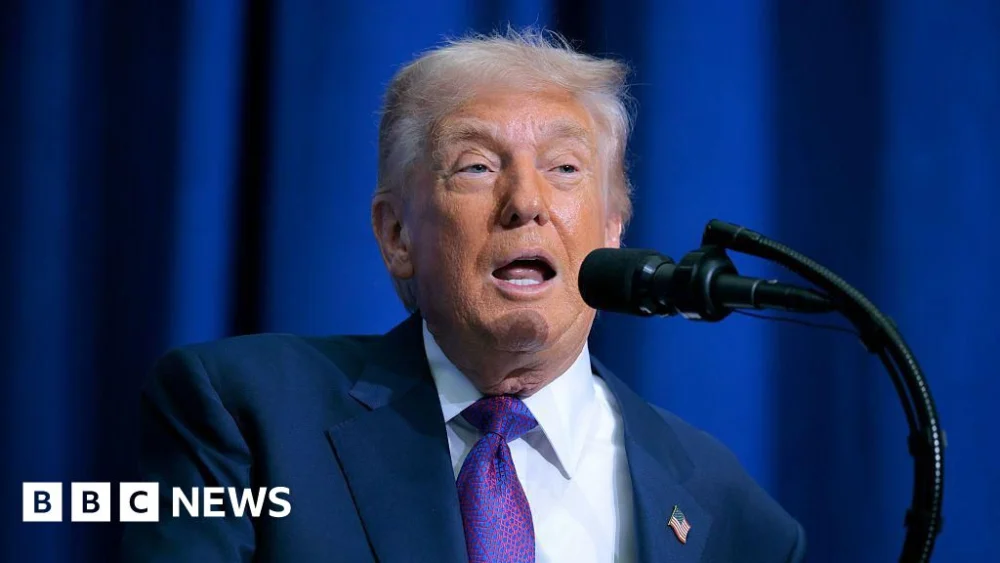
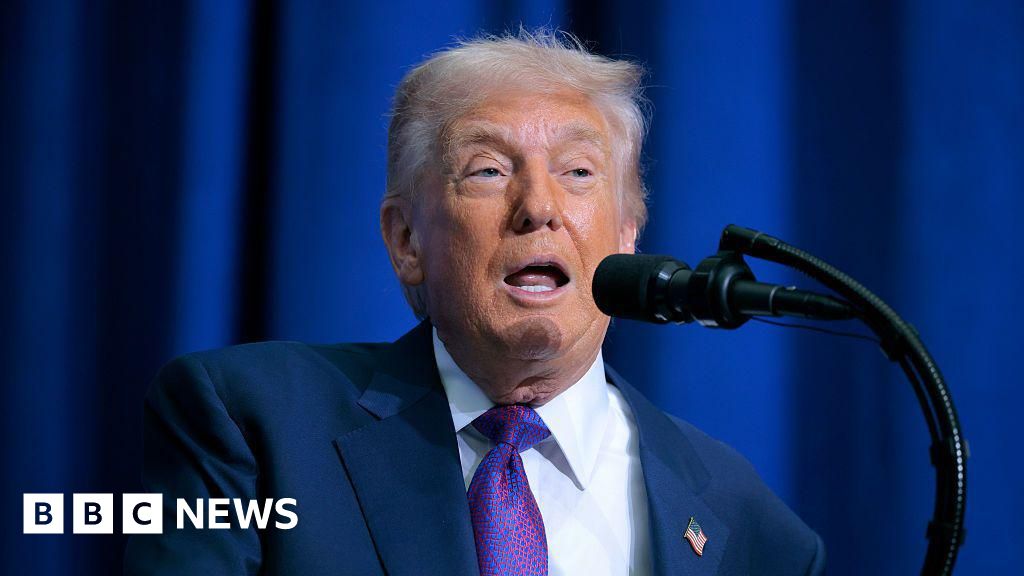
President Donald Trump has issued a stark ultimatum to Iran, declaring that the world will learn within the next ten days whether a diplomatic resolution or military conflict will define the future of US-Iranian relations. This pronouncement came during the inaugural meeting of his newly established Board of Peace in Washington D.C., where Trump emphasized the critical juncture the United States finds itself in regarding Iran’s nuclear ambitions. "We have some work to do," the President stated, acknowledging the complexities of forging an agreement with the Islamic Republic, but also hinting at the possibility of escalation, "and we may have to take it a step further."
The President’s remarks arrive against a backdrop of heightened tensions and intriguing diplomatic maneuvers. In recent days, the United States has significantly increased its military presence in the Middle East, a move interpreted by many as a clear signal of intent. Simultaneously, reports emerged of progress in talks between American and Iranian negotiators held in Switzerland, suggesting that a diplomatic channel, however fragile, remains open. This delicate balance between military posturing and negotiation has drawn significant attention, both domestically and internationally, particularly from lawmakers in Washington.
Democratic lawmakers, along with a segment of the Republican party, have publicly voiced strong opposition to any potential military engagement in Iran without explicit congressional authorization. Their concerns are rooted in the constitutional framework that reserves the power to declare war for Congress, and they have signaled a readiness to challenge any unilateral presidential action. This division within the legislative branch underscores the gravity of the situation and the potential for significant political friction.
During the Board of Peace meeting, President Trump specifically highlighted the involvement of Special Envoys Steve Witkoff and Jared Kushner, the President’s son-in-law, noting that they had engaged in "some very good meetings" with Iranian counterparts. This reference suggests that behind-the-scenes diplomacy has been active, with key figures in the administration actively engaged in trying to de-escalate the crisis. Trump candidly admitted the historical difficulty in achieving a meaningful accord with Iran, stating, "It’s proven to be, over the years, not easy to make a meaningful deal with Iran. Otherwise bad things happen." This admission underscores the deep-seated mistrust and the long, often fraught, history of engagement between the two nations.
The day prior to Trump’s announcement, White House Press Secretary Karoline Leavitt had issued a stern warning, asserting that Iran would be "very wise" to strike a deal with the United States. Leavitt reiterated the administration’s preference for a diplomatic solution to Tehran’s nuclear program, a stance that seems to be in careful calibration with the President’s more assertive public statements. This dual approach, characterized by both strong rhetoric and continued diplomatic outreach, reflects a complex strategy aimed at pressuring Iran while leaving the door open for negotiation.
The Board of Peace, initially conceived as a mechanism to facilitate an end to the two-year conflict between Israel and Hamas in Gaza and to oversee reconstruction efforts in the region, has recently appeared to expand its mandate. Many observers now question whether this multi-national body, chaired by President Trump and reportedly comprising representatives from approximately two dozen countries, is intended to operate as an alternative or even a means to sideline the established authority of the United Nations in regional conflict resolution. The UN’s role in mediating international disputes and maintaining peace has long been a cornerstone of global diplomacy, and any perceived challenge to its authority warrants careful scrutiny.
The escalating military situation is undeniable. In July of last year, US missile and aircraft strikes targeted three Iranian nuclear facilities, an action that significantly raised tensions. Reports this week indicated that the White House was actively discussing new offensive options, signaling a potential shift towards more aggressive measures. This follows a pattern of increasing US military deployment in the region, most notably the deployment of the USS Abraham Lincoln aircraft carrier and its accompanying strike group. This carrier group’s presence signifies a substantial projection of American naval power and a clear message of readiness.
Furthermore, satellite imagery has revealed that Iran has been actively reinforcing its military installations, suggesting a proactive response to the perceived threats. The country’s Supreme Leader, Ayatollah Ali Khamenei, has utilized social media platforms to issue direct threats against US forces. In one post, Khamenei articulated a chilling perspective: "The US President constantly says that the US has sent a warship toward Iran. Of course, a warship is a dangerous piece of military hardware. However, more dangerous than that warship is the weapon that can send that warship to the bottom of the sea." This rhetoric underscores the volatile nature of the situation and the potential for rapid and severe escalation.
The prospect of military action has not gone unchallenged within the United States. Several members of Congress have articulated their opposition, emphasizing the profound risks associated with a conflict with Iran. Representatives Ro Khanna, a Democrat from California, and Thomas Massie, a Republican from Kentucky, have announced their intention to force a vote on a War Powers Resolution next week. Their move is grounded in the 1973 War Powers Act, a piece of legislation designed to limit the president’s ability to commit the United States to armed conflict without congressional consent.
Representative Khanna has been particularly vocal, posting on social media, "A war with Iran would be catastrophic." He elaborated on the formidable nature of Iran’s defenses and its large population, stating, "Iran is a complex society of 90 million people with significant air defences and military capabilities." Khanna also highlighted the precarious position of US troops stationed in the region, warning that "thousands of US troops in the region ‘could be at risk of retaliation’." This highlights the human cost and strategic implications of any military confrontation.
Despite these efforts to curtail presidential authority, the chances of such a resolution passing both chambers of Congress appear slim. The political landscape in Washington is deeply divided, and the administration has demonstrated a capacity to navigate congressional opposition. A precedent for this can be seen in January, when Senate Republicans successfully blocked a similar War Powers resolution. That resolution aimed to compel the Trump administration to seek congressional approval before undertaking further military operations in Venezuela, following the capture of Nicolas Maduro. This past action suggests a potential roadmap for the administration to proceed without explicit legislative backing, even in the face of significant dissent.
The current standoff with Iran is not merely a bilateral issue; it carries profound implications for regional stability and global security. Iran’s nuclear program has been a source of international concern for decades, with the international community striving to prevent the proliferation of nuclear weapons. The Joint Comprehensive Plan of Action (JCPOA), or Iran nuclear deal, negotiated under the Obama administration, was an attempt to achieve this through stringent oversight and limitations on Iran’s nuclear activities. However, President Trump withdrew the US from the JCPOA in 2018, reimposing sanctions and dramatically altering the diplomatic calculus. This withdrawal has been a central point of contention, with proponents arguing it was necessary to address the deal’s perceived shortcomings, while critics contend it has pushed Iran closer to developing nuclear weapons and heightened regional tensions.
The "Board of Peace," as described by the article, is a relatively novel entity in the context of international diplomacy. Its creation and expanded remit suggest a potential shift in how the Trump administration approaches complex geopolitical challenges. The involvement of multiple countries, while potentially offering a broader coalition for action, also raises questions about transparency and accountability, particularly if it operates in parallel to or in competition with established international bodies like the UN Security Council. The effectiveness and legitimacy of such a board will likely be judged by its ability to foster genuine peace and stability, rather than simply serve as a platform for unilateral action or the advancement of a particular nation’s agenda.
The intricate dance between military deterrence and diplomatic negotiation is a high-stakes gamble. The next ten days will be critical in determining whether President Trump’s assertive stance will lead to a breakthrough in denuclearization talks or precipitate a conflict with potentially devastating consequences. The world watches with bated breath as the United States navigates this perilous path, with the future of regional security and the global non-proliferation regime hanging in the balance. The historical context of US-Iranian relations, marked by periods of intense hostility and cautious engagement, provides a sobering backdrop to the current crisis, underscoring the need for careful consideration and a commitment to de-escalation. The actions taken in the coming days will undoubtedly shape the geopolitical landscape for years to come.