
 By Isnaini Azizah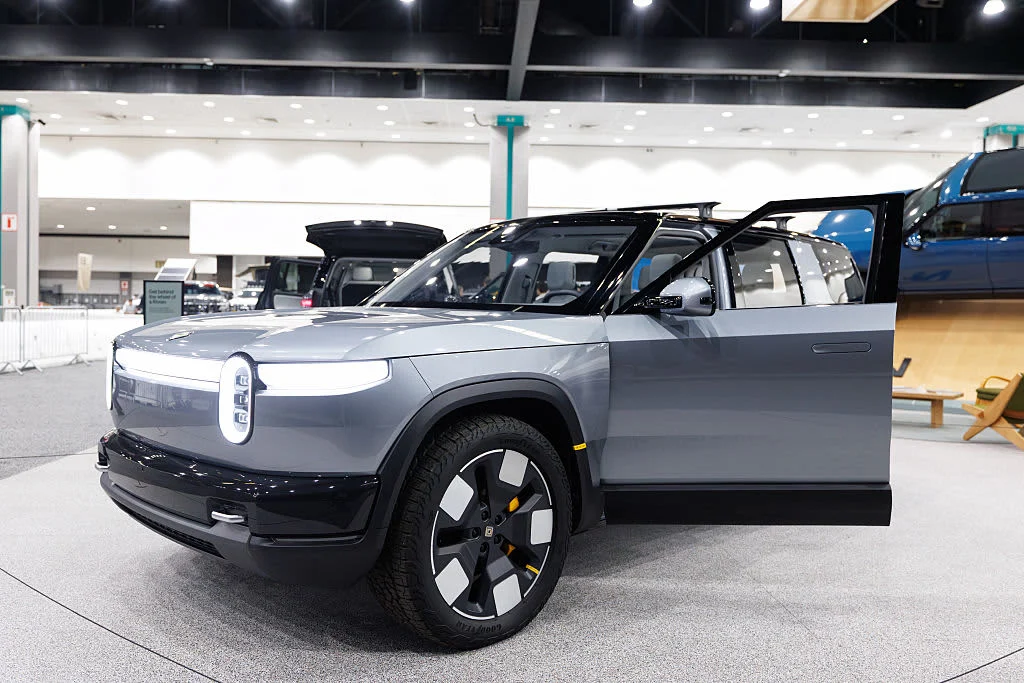
The landscape of urban mobility and autonomous transportation underwent a seismic shift on Thursday as Uber Technologies and Rivian Automotive announced a massive strategic partnership aimed at bringing self-driving electric vehicles to the masses. Under the terms of the multi-year agreement, Uber plans to invest up to $1.25 billion in the California-based electric vehicle maker, a deal that centers on the deployment of up to 50,000 robotaxis across several countries through 2031. This tie-up represents one of the most significant alliances to date between a ride-hailing giant and an emerging EV manufacturer, signaling a shared conviction that the future of transportation lies at the intersection of electrification and autonomy.
The financial and operational structure of the deal is designed to scale alongside technological milestones. The partnership includes an initial commitment for Uber, or its network of fleet partners, to purchase 10,000 autonomous-ready versions of Rivian’s highly anticipated R2 electric vehicle. Furthermore, the agreement provides Uber with the option to acquire an additional 40,000 robotaxis starting in 2030. This phased approach allows both companies to mitigate the risks associated with the capital-intensive nature of autonomous vehicle (AV) development while securing a long-term pipeline for fleet expansion.
Following the announcement, Rivian’s stock experienced a surge in premarket trading, climbing roughly 10% as investors reacted to the news of the capital infusion and the guaranteed demand for the R2 platform. While the stock eventually pared back some of those gains to close the day 3% higher, the market sentiment remained largely positive for the EV startup. Conversely, Uber’s stock saw a modest decline of 1%, perhaps reflecting investor caution regarding the long-term capital expenditure requirements and the competitive pressure of the robotaxi market.
The investment is structured in five distinct tranches. An initial $300 million investment from Uber is expected to close shortly after the deal’s formal signing, pending customary regulatory approvals. This first injection of capital will grant Uber approximately 19.55 million shares of Rivian, as confirmed by a company spokesperson. The remaining four investment tranches are contingent upon Rivian meeting specific technical and production milestones through 2031. Beyond the direct equity investment, Uber will also pay licensing fees to Rivian for the use of its proprietary autonomous driving system software, creating a recurring revenue stream for the automaker as its fleet begins service.
For Rivian, the deal arrives at a critical juncture. The company is currently preparing for the commercial launch of its R2 platform, a midsize SUV designed to be more affordable and produced at a higher volume than its flagship R1T and R1S models. Consumer sales for the R2 are slated to begin this spring, and the Uber partnership provides a massive enterprise-level backstop for the vehicle’s production ramp-up. Rivian CEO RJ Scaringe has been increasingly vocal about the company’s pivot toward autonomy, a strategy that was highlighted during the company’s third-quarter earnings call in November and its inaugural "Autonomy and AI Day" in December 2025.
Scaringe has consistently argued that Rivian’s "clean-sheet" approach to vehicle design gives it a unique advantage in the AV space. Unlike traditional automakers that must integrate autonomous sensors and computers into existing legacy architectures, Rivian has developed its vehicles with vertical integration in mind. This includes the "RAP1" (Rivian Autonomy Processor), an in-house inference platform designed to handle the massive data processing requirements of self-driving software. Scaringe noted in a statement that the company’s "data flywheel," powered by information gathered from its growing base of consumer vehicles and commercial delivery vans, is essential for the rapid advancement of its AI-driven perception systems.
Uber CEO Dara Khosrowshahi echoed this sentiment, emphasizing the importance of Rivian’s end-to-end control over its hardware and software. "We’re big believers in Rivian’s approach—designing the vehicle, compute platform, and software stack together, while maintaining end-to-end control of scaled manufacturing and supply in the U.S.," Khosrowshahi said. He noted that this vertical integration, combined with Rivian’s experience managing large-scale commercial fleets (such as its delivery van partnership with Amazon), gave Uber the "conviction to set these ambitious but achievable targets."

The operational rollout of the R2 robotaxis is expected to be exclusive to the Uber platform, covering both ride-hailing and delivery services. The companies have identified 25 launch cities across the United States, Canada, and Europe. The first vehicles are scheduled to hit the streets of San Francisco and Miami in 2028. These two cities are already hotspots for AV testing and deployment, with San Francisco serving as the primary hub for Alphabet’s Waymo and Miami recently emerging as a key growth market for autonomous services.
The 2028 timeline is telling of the industry’s shift toward a more realistic, albeit aggressive, roadmap. For years, the promise of robotaxis seemed perpetually "two years away," leading to a period of disillusionment among investors. Uber itself famously offloaded its internal self-driving unit, Advanced Technologies Group (ATG), to Aurora in 2020 after years of high costs and regulatory setbacks. However, the industry is currently experiencing a resurgence of interest and capital. Investors now forecast the global robotaxi market as a multitrillion-dollar opportunity, driven by the potential to drastically lower the cost per mile of transportation while improving road safety.
Uber’s strategy has evolved from trying to build the entire autonomous stack itself to becoming the "operating system" for the world’s autonomous fleets. The Rivian deal is the latest in a string of high-profile partnerships Uber has secured to diversify its autonomous offerings. In recent months, Uber has announced collaborations with luxury EV maker Lucid for 20,000 units, Amazon-owned Zoox, Chrysler’s parent company Stellantis, and the AI hardware giant Nvidia. By partnering with multiple hardware providers, Uber ensures that it is not beholden to a single manufacturer’s production delays or technical hurdles.
The competitive landscape remains fierce. Waymo, widely considered the current leader in the U.S. market, has already successfully launched commercial, driverless services in Phoenix, Los Angeles, and San Francisco, and recently expanded into Miami. Meanwhile, Tesla has continued to promote its "Cybercab" vision, though it faces ongoing scrutiny regarding the capabilities of its "Full Self-Driving" (FSD) software and its lack of LiDAR sensors—a technology that both Rivian and Waymo utilize for redundant safety.
Rivian’s ability to compete in this arena is bolstered by its recent $5.8 billion software joint venture with Volkswagen, announced at the end of 2024. That deal provided Rivian with a significant cash cushion and validated its software-defined vehicle architecture. By leveraging the same foundational technology for both Volkswagen’s global fleet and Uber’s robotaxis, Rivian is positioning itself as a premier tier-one provider of autonomous and electric vehicle technology, rather than just a niche manufacturer of rugged outdoor EVs.
As the R2 robotaxis begin their deployment in 2028, they will face a complex web of regulatory and infrastructure challenges. Operating in 25 cities across three different geographic regions requires navigating disparate legal frameworks, from the municipal permits of California to the stringent safety and data privacy regulations of the European Union. However, the inclusion of "delivery" in the partnership suggests that the utility of these vehicles will extend beyond just passenger transport. The R2’s design, which balances interior space with a compact footprint, makes it an ideal candidate for autonomous grocery and meal delivery—a sector where Uber Eats already maintains a dominant market share.
Ultimately, the Uber-Rivian partnership is a bet on the maturity of AI and the scalability of American EV manufacturing. By the time the full 50,000-vehicle option is potentially exercised in 2031, the goal is for autonomous transport to be a normalized, everyday reality for millions of urban residents. For Rivian, the deal provides the scale necessary to survive in a volatile automotive market. For Uber, it secures a future where the company no longer relies solely on human drivers, paving the way for a more efficient, higher-margin business model. As the R2 makes its way from the display floors of the Los Angeles Auto Show to the streets of San Francisco and beyond, the industry will be watching closely to see if this $1.25 billion wager finally brings the robotaxi dream to fruition.