
 By admin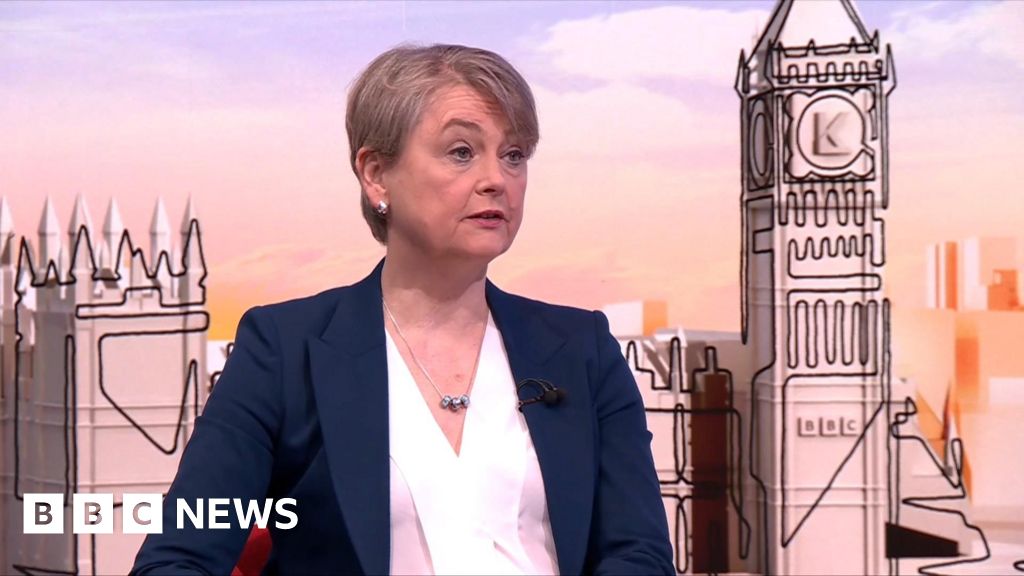
Foreign Secretary Yvette Cooper has forcefully rebuffed President Donald Trump’s pointed criticisms regarding the United Kingdom’s approach to the escalating conflict in Iran, asserting that British foreign policy is unequivocally dictated by the nation’s own strategic interests, not those of any other sovereign state. The sharp exchange, which unfolded during a prominent television interview and via a series of pointed social media pronouncements, underscores a significant divergence in strategic outlook between two key Western allies at a moment of heightened geopolitical tension.
Appearing on the BBC’s flagship political program, Sunday with Laura Kuenssberg, Cooper directly addressed the US President’s remarks, stating with measured but firm conviction, “It won’t surprise you that we don’t agree with President Trump on every issue.” This understated acknowledgment belied the gravity of the situation, highlighting a fundamental disagreement on how to navigate the complex and volatile landscape of the Middle East. Cooper elaborated on this core principle, emphasizing that the ultimate responsibility of the Prime Minister, and by extension the government, is to “take decisions in the UK’s national interest… not in the interest of any other country.” This declaration serves as a clear assertion of British sovereignty and its right to independently formulate and execute foreign policy, irrespective of external pressures or pronouncements.
The genesis of this diplomatic friction lay in a series of social media posts by President Trump himself. In a direct and characteristically blunt intervention, the US President alleged that the UK was contemplating the deployment of aircraft carriers to the strategically vital Middle East region. Trump’s commentary, however, was not merely an observation of potential UK actions; it was infused with a dismissive tone that questioned the efficacy and necessity of such a move, particularly in the context of ongoing international involvement. His pronouncement, “We don’t need people that join Wars after we’ve already won!”, starkly illustrated his perceived strategic doctrine – one that prioritizes decisive action and appears to view the involvement of allies in later stages of conflict as superfluous, or even detrimental. This sentiment suggests a preference for unilateral action and a potential impatience with multilateral diplomatic and military engagements.
To fully appreciate the context of this diplomatic spat, it is crucial to understand the broader geopolitical backdrop against which these statements were made. The situation in Iran has been precarious for a considerable period, marked by a complex interplay of internal political dynamics, regional rivalries, and international sanctions. The Trump administration, in particular, adopted a policy of “maximum pressure” against Iran, withdrawing from the Joint Comprehensive Plan of Action (JCPOA) – the multilateral nuclear deal – and reimposing stringent economic sanctions. This policy aimed to cripple Iran’s economy and compel it to negotiate a new, more comprehensive agreement. However, critics argued that this approach risked escalating tensions and undermining regional stability, potentially pushing Iran towards more provocative actions.
The UK, while maintaining a critical stance on Iran’s nuclear program and its regional activities, has generally favored a more diplomatic and multilateral approach. London has consistently advocated for the preservation of the JCPOA, even after the US withdrawal, believing it to be a vital mechanism for preventing Iran from acquiring nuclear weapons. The UK has also been a staunch supporter of de-escalation and dialogue, often finding itself at odds with the more confrontational posture adopted by Washington under the Trump administration. This divergence in approach stems from differing national interests, historical experiences, and strategic priorities. The UK, with its extensive diplomatic network and historical ties to the region, often prioritizes stability and de-escalation, recognizing the potential for wider regional conflagration.
The potential deployment of UK aircraft carriers, alluded to by President Trump, would represent a significant commitment of military resources to a highly sensitive theater. Such a move, if undertaken, would be driven by a complex assessment of the UK’s own security interests, its commitments to allies, and its desire to contribute to regional stability. The UK’s naval capabilities, including its carrier strike groups, are a cornerstone of its defense posture and its ability to project power globally. Their deployment to the Middle East would signal a serious engagement with the prevailing security challenges, including the protection of vital shipping lanes, the deterrence of aggression, and the support of allied operations.
However, President Trump’s dismissive remark about “joining Wars after we’ve already won” implies a specific interpretation of the conflict’s timeline and the role of international partners. It suggests that, in his view, the critical phase of military engagement had already passed, and any subsequent involvement by allies would be post-facto and therefore less valuable. This perspective could be interpreted as a subtle criticism of the UK’s potential decision to commit forces at a later stage, implying a lack of foresight or strategic initiative. It also hints at a broader transactional view of international alliances, where contributions are assessed primarily on their immediate impact and alignment with US objectives.
Foreign Secretary Cooper’s response, therefore, is not just a defense of a specific policy decision but a broader assertion of Britain’s independent foreign policy framework. Her emphasis on “national interest” is a crucial concept in international relations, signifying that a state’s primary obligation is to its own citizens and its own security. While allies often cooperate and coordinate their actions, the ultimate decision-making authority rests with each sovereign nation. This principle is particularly important for countries like the UK, which maintain global interests and a distinct strategic culture.
The interview on Sunday with Laura Kuenssberg provided a platform for Cooper to articulate this position directly to the British public and to a global audience. Her measured tone, coupled with the clarity of her message, aimed to project an image of a government that is confident in its decision-making and unswayed by external criticism, particularly when it comes to matters of national security. The reference to “not surprising” that the UK and US don’t agree on “every issue” is a diplomatic way of acknowledging that disagreements are inherent in any alliance, especially between nations with diverse interests and historical experiences.
This exchange also highlights the evolving nature of international diplomacy in the digital age. President Trump’s use of social media for direct pronouncements on foreign policy issues bypasses traditional diplomatic channels and can create immediate diplomatic challenges for allies. Cooper’s response, by engaging with these pronouncements on the same public platform, reflects the contemporary reality of diplomatic communication.
To further contextualize this situation, it is worth considering the perspectives of international relations experts. Dr. Evelyn Reed, a senior fellow at the Chatham House think tank, commented on the dynamics at play: “This is a classic example of the perennial tension between alliance solidarity and national sovereignty. While the US and UK are close allies, their strategic interests are not always identical. President Trump’s ‘America First’ approach often prioritizes unilateral action and quick results, which can clash with the more nuanced and multilateral approach favored by European powers like the UK. Foreign Secretary Cooper’s statement is a strong reaffirmation of the UK’s right to set its own foreign policy agenda based on its own assessments of risk and opportunity.”
Dr. Reed also noted the potential implications for broader alliance dynamics. “When a leader of a dominant power criticizes allies so publicly, it can create an atmosphere of uncertainty and mistrust. This can make it harder to build consensus on critical global issues. The UK’s response, while polite, is a clear signal that it will not be dictated to and will act in its own perceived best interests. This is a necessary stance for any sovereign nation, but it does underscore the challenges of maintaining a united front in a complex and multipolar world.”
The economic implications of the Iran conflict are also a significant factor. Iran is a major oil producer, and any instability in the region can have a profound impact on global energy markets. The UK, as a major trading nation, has a vested interest in maintaining stability and ensuring the free flow of international trade. Its naval presence in the region would also serve to protect vital shipping routes, including those through the Strait of Hormuz, a critical chokepoint for global oil supplies.
Furthermore, the UK’s involvement in the region is not solely about military deterrence. It also encompasses diplomatic engagement, intelligence sharing, and humanitarian aid. The UK has been a consistent contributor to international efforts to promote peace and stability in the Middle East, including supporting diplomatic initiatives aimed at resolving conflicts and addressing the root causes of instability. This broader approach, which emphasizes both hard and soft power, is a hallmark of British foreign policy.
The disagreement between the UK and the US, while sharp, is unlikely to fundamentally alter the strategic alliance between the two nations. Both countries share common values and fundamental interests, and their cooperation remains essential on a wide range of global issues. However, this incident serves as a potent reminder of the complexities of alliance management and the importance of clear communication and mutual respect, even in the face of differing strategic perspectives.
In conclusion, Foreign Secretary Yvette Cooper’s robust defense of the UK’s independent foreign policy in the face of President Trump’s criticism signifies a commitment to national sovereignty and a clear articulation of Britain’s strategic priorities. While the specifics of the UK’s response to the Iran conflict remain a matter for its own government to decide, Cooper’s intervention underscores the principle that such decisions will be guided by the UK’s own national interest, a stance that is both a right and a necessity for any sovereign nation operating on the global stage. The exchange, played out on the international diplomatic and media stage, highlights the nuanced and sometimes challenging nature of alliance politics in the 21st century.