
 By Isnaini Azizah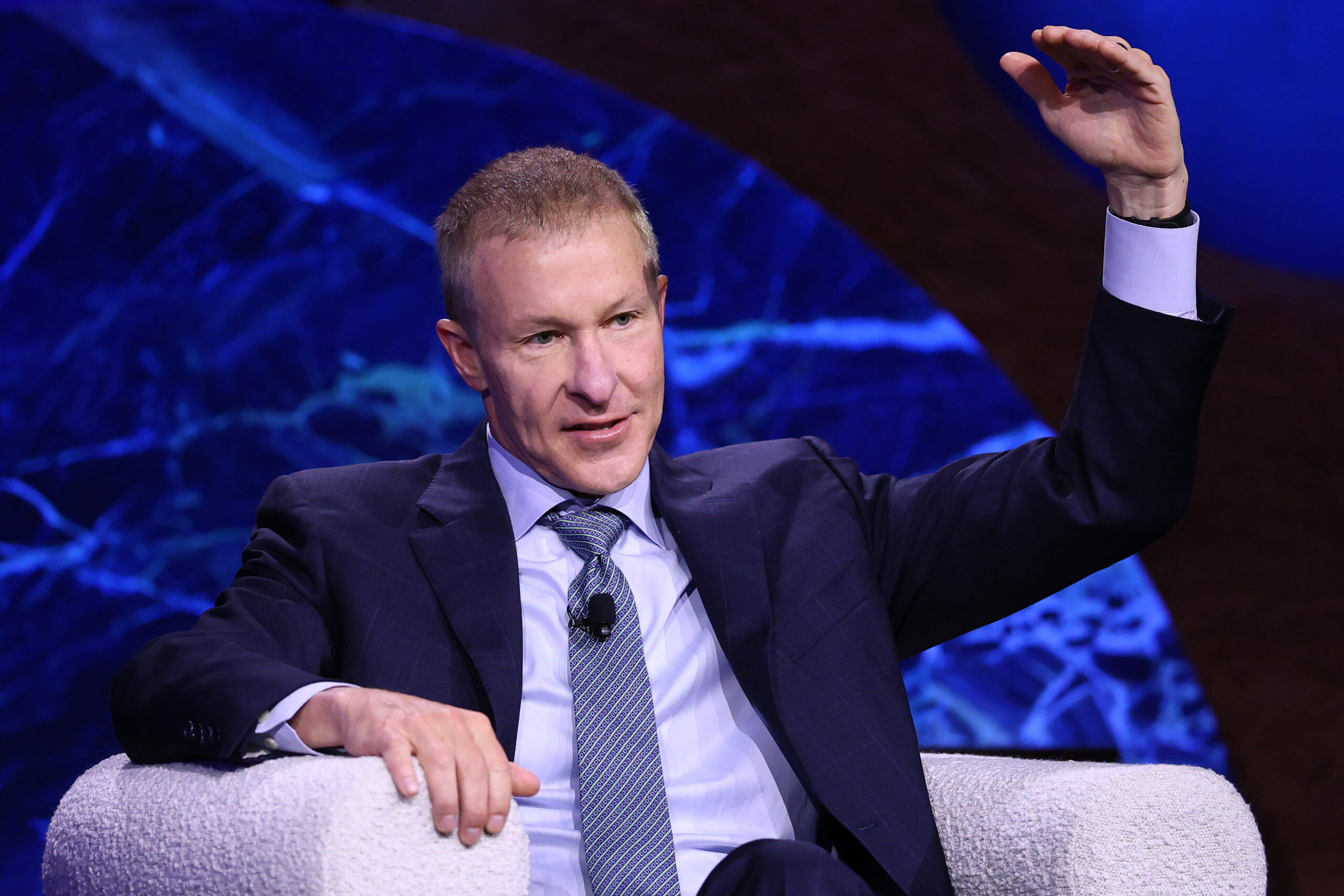
Addressing a crowd at the Harvard John A. Paulson School of Engineering and Applied Sciences on Thursday, United Airlines CEO Scott Kirby provided a sobering yet complex assessment of the aviation industry’s current landscape following the recent escalation of conflict in the Middle East. Kirby’s remarks, delivered less than a week after the U.S. and Israel launched strikes against Iran, highlighted a dual reality for the Chicago-based carrier: a punishing surge in operating costs driven by a 58% spike in jet fuel prices, countered by a surprising and robust resilience in passenger demand that has seen booked revenue climb by 20% compared to the previous year.
The geopolitical instability following the military action on Saturday has sent shockwaves through global energy markets, directly impacting the bottom line of every major airline. Jet fuel, which historically stands as the second-largest expense for carriers behind labor costs, has transitioned from a manageable variable to a critical financial headwind. According to the Argus U.S. Jet Fuel Index, the price per gallon reached $3.95 on Thursday, a staggering increase from the levels seen just seven days prior. Kirby noted that this "meaningful" impact will be felt immediately in the current quarter’s financial results and warned that if the volatility persists, the pain will extend well into the second quarter of the year.
The mechanics of this fuel spike are particularly challenging for United Airlines due to its strategic stance on fuel hedging. Unlike some international counterparts or historical industry norms, United, along with most major U.S. carriers, does not engage in fuel hedging—a financial strategy where airlines purchase futures contracts to lock in prices and protect against sudden market swings. Kirby defended this position at Harvard, suggesting that the complexity of the current market makes traditional hedging less effective than it once was. He specifically pointed to the "crack spread"—the price difference between a barrel of crude oil and the refined products produced from it, such as jet fuel and gasoline. Kirby argued that even for those who attempt to hedge, managing the crack spread in such a volatile environment is "really hard to do," leaving airlines exposed to the raw fluctuations of the energy market.
To put the scale of these costs into perspective, a standard Boeing 737-800, a workhorse of the United domestic and short-haul international fleet, has a fuel capacity of approximately 6,875 gallons. At the current price of $3.95 per gallon, a full tank now costs the airline more than $27,000. When multiplied across a fleet of hundreds of aircraft performing thousands of flights daily, the incremental cost of a 58% price hike becomes a multi-billion-dollar challenge for the industry. Kirby signaled that these costs would inevitably be passed down to the consumer, stating that higher airfares would "probably start quick" as the airline seeks to maintain its margins in the face of soaring input prices.
Despite the looming threat of more expensive tickets, the appetite for air travel appears undiminished. Kirby’s disclosure that booked revenue is up 20% year-over-year suggests a decoupling of travel demand from traditional economic pressures. He emphasized that demand "has not taken even a tiny step back," a sentiment that reflects a broader post-pandemic shift in consumer behavior where experiences and global connectivity are prioritized over other discretionary spending. This resilience is providing a crucial buffer for United as it navigates the turbulence of the Middle East crisis.
The conflict has done more than just raise fuel prices; it has fundamentally redrawn the map of global aviation. The strikes and subsequent airspace closures over Iran and surrounding regions have led to the cancellation of more than 25,000 flights, leaving over a million travelers stranded or forced to seek alternative routes. This "flight chaos" has severely impacted major international hubs like Dubai International Airport (DXB) in the United Arab Emirates and Hamad International Airport (DOH) in Doha, Qatar. These airports serve as the primary gateways for the "Kangaroo Route" and other long-haul corridors connecting Australia, New Zealand, and India with Europe and North America.
With the traditional Middle Eastern "super-connector" hubs compromised by safety concerns and airspace restrictions, United Airlines has seen an unprecedented surge in a new customer segment. Kirby revealed a startling shift in booking patterns: "Each day this week, we have booked over 1,000 people from Australia and New Zealand to Europe. Last year, we booked less than one a day." This massive migration of traffic is flowing through United’s domestic hubs and across the Atlantic, as travelers opt for the safety of trans-Pacific and trans-Atlantic routes over the volatile skies of the Middle East. As a result, Europe has emerged as the strongest region in the world for United’s current bookings, as the airline captures displaced traffic that would otherwise have flown on carriers like Emirates, Qatar Airways, or Etihad.
This shift in traffic flow highlights the strategic advantage of United’s expansive global network. By leveraging its hubs in San Francisco, Los Angeles, and New York/Newark, United is effectively acting as a bypass for the disrupted Middle Eastern corridor. However, this influx of passengers also places immense pressure on the airline’s operational capacity and customer service infrastructure, especially as it manages the fallout from the broader regional instability.
Kirby also touched upon the airline’s role in national interests and humanitarian efforts. He confirmed that United is currently in discussions with the Trump administration regarding the potential for charter flights to assist in the repatriation of citizens from the Middle East. While plans have not yet been finalized, the involvement of major commercial carriers in government-led evacuation efforts is a standard procedure during times of significant geopolitical upheaval. These discussions underscore the critical role that the aviation industry plays in national security and the logistical capabilities required to move large numbers of people out of conflict zones.
The timing of Kirby’s comments is significant, coming less than two weeks before a high-profile industry conference hosted by JPMorgan. This event is traditionally a venue where airline executives provide detailed updates on their financial guidance and strategic outlooks to investors and analysts. Kirby’s early admission of a "meaningful" impact from fuel prices sets the stage for what is likely to be a series of downward revisions or cautious forecasts from across the sector. Investors will be closely watching to see how other major players, such as Delta Air Lines and American Airlines, respond to the same pressures.
Furthermore, the broader economic implications of the U.S.-Israel-Iran conflict cannot be ignored. The 58% jump in jet fuel is a harbinger of wider inflationary pressures that could stem from a sustained energy crisis. While United currently reports 20% revenue growth, the longevity of this "resilient" demand will be tested if the conflict leads to a prolonged period of high oil prices and global economic uncertainty. Kirby’s observation that the "crack spread" is difficult to hedge suggests that the industry is entering a phase where operational efficiency and pricing power will be the primary tools for survival, rather than financial engineering.
As the situation in the Middle East continues to evolve, United Airlines finds itself at a crossroads. It is simultaneously a victim of the soaring costs of war and a beneficiary of the logistical shifts necessitated by that same conflict. The surge in bookings from the Oceania-Europe market represents a temporary windfall, but the underlying volatility of fuel prices remains a persistent threat to the carrier’s quarterly performance.
In the coming weeks, the industry will look for signs of stabilization in the Middle East and a cooling of the energy markets. For now, Kirby’s message is clear: the aviation world is in a state of rapid transformation. The resilience of the traveler remains the industry’s greatest asset, but the rising cost of flight, driven by geopolitical forces far beyond the control of any airline CEO, is an obstacle that will require "meaningful" adjustments to the way the world flies. Whether through higher fares, rerouted global journeys, or strategic partnerships with the government, United Airlines is bracing for a volatile second quarter, anchored by the hope that the current demand surge can outpace the rising tide of fuel expenses.