
 By admin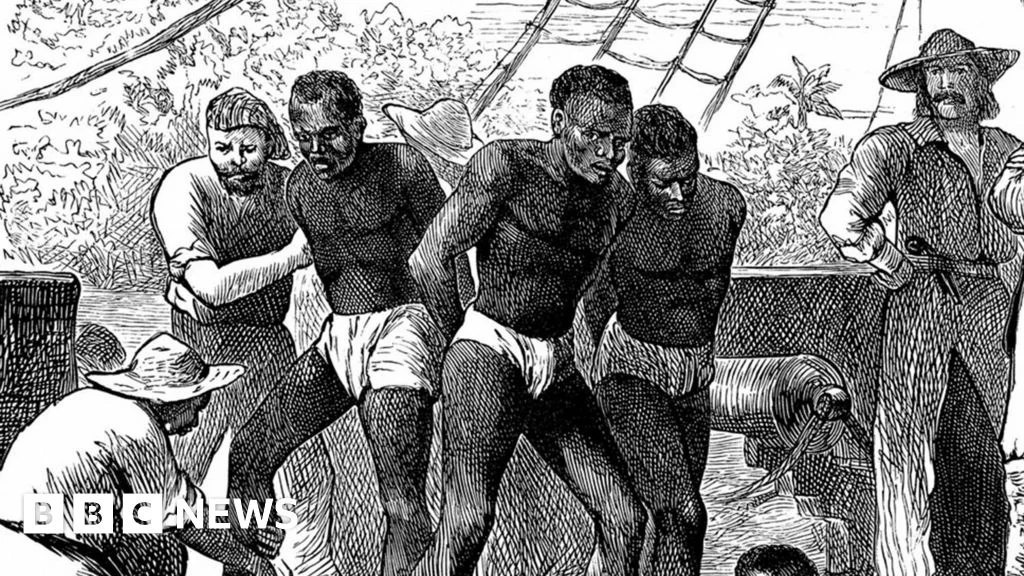
In a landmark decision that resonates across continents and centuries, the United Nations General Assembly has officially recognized the slave trade as "the gravest crime against humanity." This pivotal resolution, spearheaded by Ghana, marks a significant step towards acknowledging the profound and enduring legacy of this brutal system, igniting hopes for reconciliation, justice, and meaningful reparations for its victims and their descendants.
The resolution, adopted with an overwhelming majority of 123 votes in favor, urges UN member states to not only formally apologize for their historical roles in the slave trade but also to actively contribute to a dedicated reparations fund. While the resolution does not stipulate a specific monetary amount for reparations, it lays the crucial groundwork for future negotiations and commitments. The dissenting votes came from the United States, Israel, and Argentina, while a significant bloc of 52 countries, including the United Kingdom and member states of the European Union, abstained from the vote.
Nations like the UK have historically resisted calls for reparations, citing the argument that contemporary institutions cannot be held accountable for the actions of past generations. However, the UN’s endorsement of this resolution challenges such stances, framing the slave trade as a crime whose consequences continue to manifest in the present day.
Samuel Okudzeto Ablakwa, Ghana’s Foreign Minister, articulated the deep-seated motivations behind this initiative in an interview with the BBC’s Newsday program. "We are demanding compensation," he stated emphatically, "and let us be clear, African leaders are not asking for money for themselves." Ablakwa elaborated that the focus of these reparations is not personal enrichment but the pursuit of justice for victims and the establishment of crucial support systems. "We want justice for the victims and causes to be supported, educational and endowment funds, skills training funds," he explained, highlighting the multifaceted nature of the reparations sought.
Ablakwa further emphasized that Ghana’s proposal was not an attempt to diminish the suffering of other groups who have faced historical injustices. Instead, it was about "simply documenting a historical fact" and ensuring that this monumental crime is formally recognized within the international community.
The sheer scale of the transatlantic slave trade is staggering and continues to haunt collective memory. Between the 16th and 19th centuries, an estimated 12 to 15 million Africans were forcibly captured from their homelands, enduring unimaginable brutality and suffering before being transported across the Atlantic to the Americas. These individuals were then subjected to lives of forced labor and extreme dehumanization as chattel slaves. The harrowing journey itself, known as the Middle Passage, claimed the lives of an estimated two million people, a testament to the horrific conditions and inherent violence of the system.
The resolution, which garnered strong backing from the African Union and the Caribbean Community, explicitly acknowledges that the repercussions of slavery are not confined to history. It asserts that the enduring consequences of this era are evident in persistent racial inequalities, systemic discrimination, and economic underdevelopment that continue to disproportionately affect Africans and people of African descent globally.
"Many generations continue to suffer the exclusion, the racism because of the transatlantic slave trade which has left millions separated from the continent and impoverished," Ablakwa lamented, underscoring the intergenerational impact of this historical trauma. The forced displacement and systemic oppression created deep-seated social and economic disadvantages that have been passed down through generations, perpetuating cycles of inequality.
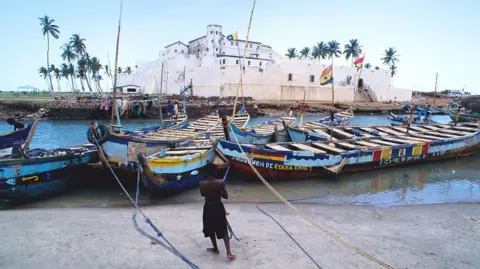
Ghana, holding a particularly poignant position in the history of the slave trade as one of its primary entry points, has long been at the forefront of advocating for reparations. The West African nation’s coastline is dotted with historic slave forts, imposing structures that stand as grim reminders of the tens of thousands of enslaved Africans who were held in appalling conditions before their forced voyages. These forts, such as Elmina Castle, are not just historical sites but powerful symbols of the immense human cost of the transatlantic slave trade.
Beyond financial reparations and support funds, the UN resolution also addresses the critical issue of cultural restitution. It calls for the return of cultural artifacts that were looted during the colonial era to their countries of origin. "We want a return of all those looted artefacts, which represent our heritage, our culture and our spiritual significance," Ablakwa asserted. "All those artefacts looted for many centuries into the colonial era ought to be returned." The repatriation of these artifacts is seen as essential for reclaiming national identity, preserving cultural heritage, and fostering a sense of historical completeness.
Ghana’s President John Dramani Mahama hailed the resolution as "historic" and a vital "safeguard against forgetting." He underscored the importance of such international recognition in preventing the erasure of Black history and the systemic silencing of its narratives. President Mahama also took the opportunity to critically address what he described as the "normalizing of the erasure of black history" by the administration of then-US President Donald Trump.
The Trump administration’s policies had been characterized by a move to re-evaluate and, in some cases, dismantle exhibits and institutions perceived as promoting "anti-American ideology." This approach led to actions such as the reinstatement of Confederate statues and efforts to remove or alter certain historical displays related to slavery. President Mahama warned that these policies risked setting a dangerous precedent, becoming a "template for other governments as well as some private institutions," potentially leading to a broader trend of historical revisionism and the suppression of uncomfortable truths.
The UN’s resolution represents a significant shift in the global discourse surrounding the slave trade and its lasting consequences. It moves beyond mere historical acknowledgment to a call for tangible actions aimed at addressing the ongoing impacts of this crime against humanity. The debate over reparations is complex and multifaceted, involving legal, ethical, and economic considerations. However, this UN resolution provides a powerful international mandate for these discussions to move forward, fostering a more just and equitable future for all. The abstention of several major Western powers highlights the ongoing challenges and debates surrounding accountability for historical injustices, but the overwhelming support for the resolution signals a growing global consensus on the need to confront the painful legacy of the slave trade and work towards meaningful redress.