
 By admin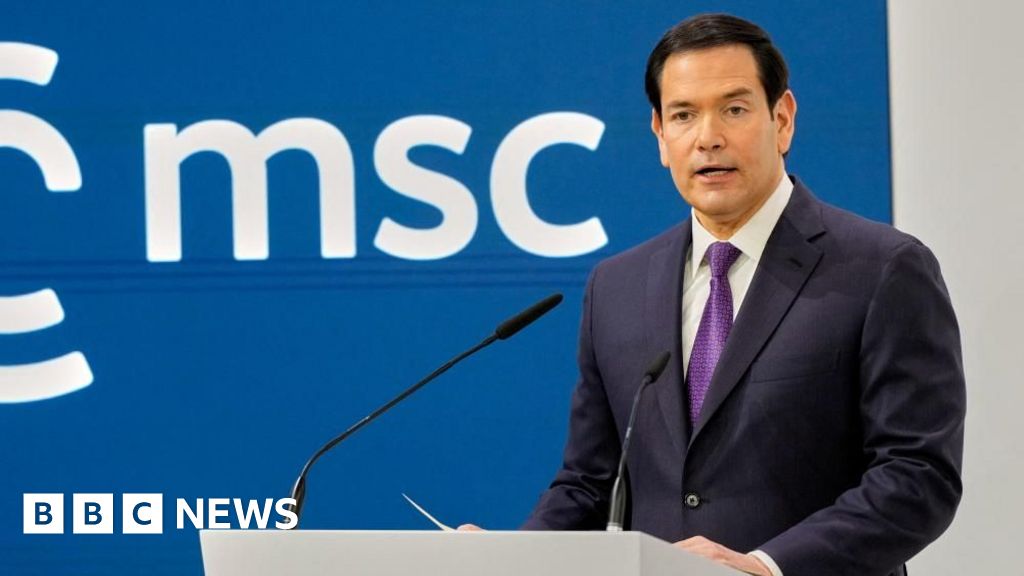
In a significant address at the Munich Security Conference, US Secretary of State Marco Rubio delivered a robust affirmation of the United States’ commitment to the transatlantic alliance, asserting that its destiny "will always be intertwined" with that of Europe. Speaking to a prominent assembly of global leaders and policymakers, Rubio, representing the Trump administration, sought to assuage lingering concerns about potential American isolationism, stating, "We do not seek to separate, but to revitalise an old friendship and renew the greatest civilisation in human history." These pronouncements were met with palpable relief by European counterparts, including European Commission President Ursula von der Leyen, who described herself as "very much reassured" by Rubio’s remarks.
Rubio, the most senior diplomat to represent the current US administration at the conference, emphasized that it was "neither our goal nor our wish" to dismantle the foundational partnership between the US and Europe. He eloquently articulated the enduring connection, stating, "For us Americans, our home may be in the Western Hemisphere, but we will always be a child of Europe. And I am here today to leave it clear that America is charting the path for a new century of prosperity, and that once again we want to do it together with you, our cherished allies and our oldest friends." This sentiment aimed to recalibrate the narrative, emphasizing a renewed era of cooperation rather than divergence.
However, the Secretary’s address was not without its pointed critiques, echoing long-standing grievances voiced by the Trump administration towards European policies. Rubio reiterated concerns about immigration, describing certain policies as a "threat to civilisation," and lamented what he termed a "climate cult" that he believes has unduly influenced economic decision-making. This dual approach—offering reassurance while simultaneously lodging criticisms—underscored the complex and often transactional nature of contemporary international relations.
On the critical issue of trade, Rubio acknowledged past missteps, stating that both Europe and the US had "made mistakes together" by embracing a "dogmatic vision of free and unfettered trade." This veiled critique suggested a potential re-evaluation of trade agreements and a push for more equitable terms, a consistent theme in the administration’s foreign policy agenda. Furthermore, he reiterated familiar calls for increased European defense spending, underscoring the US expectation of allies who can independently safeguard their own security, thereby strengthening the collective defense posture of the North Atlantic Treaty Organization (NATO). "We want allies who can defend themselves so that no adversary will ever be tempted to test our collective strength," he declared, highlighting the principle of shared responsibility in global security.
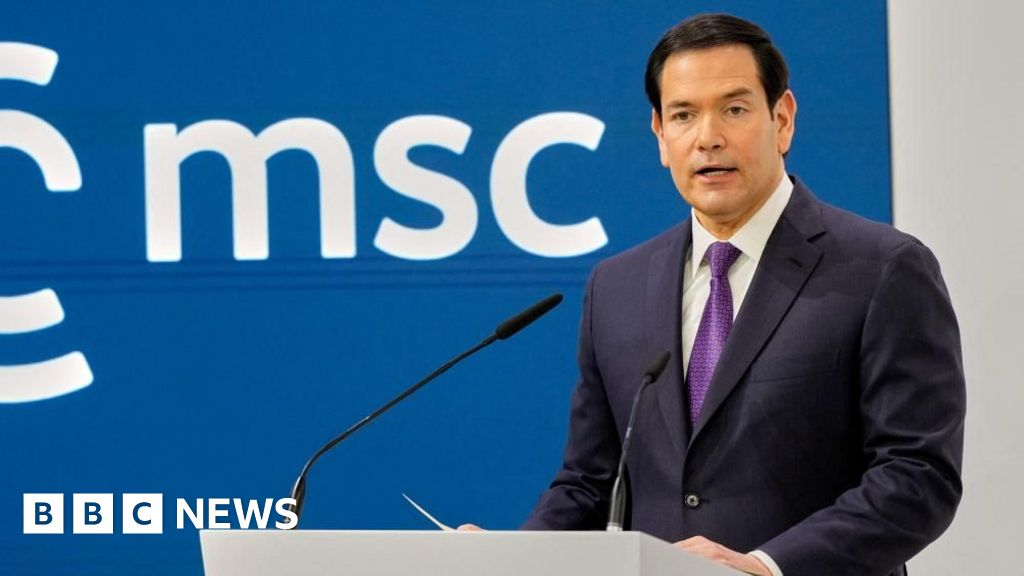
In response to Rubio’s address, Ursula von der Leyen offered a welcoming reception, characterizing him as "a good friend, a strong ally." She reiterated the European perspective, stating, "We want a strong Europe. And this is, I think, the message of today." This exchange underscored the ongoing dialogue and the mutual desire to maintain a robust alliance, even as differing perspectives on specific policy areas persist.
Beyond the immediate transatlantic dialogue, Rubio used his platform to critique the efficacy of international institutions. He argued that the system of international co-operation "must be rebuilt," singling out the United Nations for particular criticism. He contended that the UN had "played virtually no role" in resolving protracted conflicts such as those in Gaza and Ukraine, and lamented its perceived "powerlessness to constrain the nuclear programme" of Iran. This critique reflects a broader skepticism within the current US administration regarding the effectiveness and reform needs of multilateral organizations.
The mention of Iran’s nuclear program resonated with recent developments, as President Donald Trump had previously threatened strikes against the country should negotiations over its nuclear weapons program falter. Against this backdrop, a second round of talks between the US and Iran, hosted by Oman, was scheduled to take place in Geneva the following week, according to the Swiss foreign ministry. The diplomatic efforts underscore the high stakes involved in preventing Iran from acquiring nuclear weapons.
Adding another layer of context to the conference proceedings, local police reported that an estimated 200,000 protesters had gathered outside the venue for a rally against the Iranian government. These demonstrators were denouncing the country’s leadership, particularly in light of the government’s crackdown on protests in January, which reportedly resulted in thousands of fatalities. This external demonstration highlighted the deep-seated discontent and the ongoing human rights concerns within Iran, a topic of significant international scrutiny.
Rubio also addressed the ongoing conflict in Ukraine, expressing uncertainty about Russia’s genuine intentions. He stated that the US did not know if "the Russians are serious about ending the war," but affirmed that "we’re going to continue to test it." This cautious approach reflects the ongoing challenges in de-escalating the conflict and finding a sustainable peace.
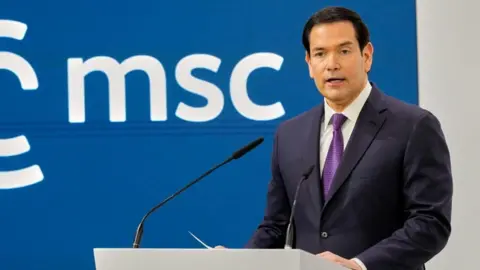
Speaking later at the conference, Ukrainian President Volodymyr Zelensky offered a stark assessment of the situation, asserting that "no one in Ukraine believed his Russian counterpart Vladimir Putin would leave the country alone," describing the Russian leader as a "slave to war." Zelensky’s remarks underscored the deep-seated distrust and the perceived existential threat posed by Russia to Ukraine’s sovereignty and security.
Zelensky also addressed the pressure he has faced from the White House to hold presidential elections, which are currently suspended due to martial law in Ukraine. He dismissed a Financial Times report suggesting his administration was planning for elections as early as May, stating it was "something new to me" and reiterating that "nobody supports elections during the war." He outlined the conditions necessary for such elections to proceed safely, including "two months of ceasefire" and the establishment of "security infrastructure." This highlights the immense logistical and security challenges of conducting democratic processes amidst an active conflict.
In his address, Zelensky emphasized the critical need for enhanced defense capabilities, stating, "We must build our hard power, because that is the currency of the age." This call for increased military strength resonates with the broader discussions at the conference regarding the evolving security landscape in Europe and beyond.
Further underscoring the commitment to collective security, UK Prime Minister Keir Starmer announced a significant joint initiative with the US, Canada, and other NATO allies to deploy a fleet of warships, submarines, and aircraft to the Arctic and High North. This move acknowledges NATO’s recent recognition of a substantial increase in Russian military activity in the strategically important Arctic region. The deployment aims to bolster deterrence and demonstrate allied resolve in this increasingly contested area.
In parallel, Starmer also advocated for deeper collaboration between the UK and the European Union, calling for "closer economic alignment." This signals a potential shift towards a more integrated relationship between the UK and the EU, following the complexities of Brexit.
The theme of a unified European response to external threats was echoed by several other European leaders present at the conference. Spanish Prime Minister Pedro Sánchez stressed the imperative to "stop Putin" and strengthen European defense capabilities, advocating for a "coordinated and targeted" approach. He further insisted on the urgent need for a "true European army, not in 10 years but now," highlighting a desire for greater European strategic autonomy.
Danish Prime Minister Mette Frederiksen echoed this sentiment, asserting that Putin was not interested in peace and that "we have to recognise… that Russia will not change." She emphasized Europe’s understanding of its needs, particularly in relation to Ukraine’s requests for additional air defense systems.
Finland’s President Alexander Stubb, while not perceiving an immediate "direct threat" from Russia to NATO, acknowledged the significance of an upcoming Arctic training exercise involving 20,000 NATO soldiers. This exercise, he indicated, would serve to outline potential defense scenarios and further prepare allied forces for a range of contingencies. The collective pronouncements from European leaders at the Munich Security Conference painted a picture of a continent grappling with renewed geopolitical challenges, seeking to reaffirm its alliances while simultaneously advocating for greater self-reliance and a more robust collective defense. The US commitment, as articulated by Secretary Rubio, while offering reassurance, also set the stage for continued dialogue and negotiation on a range of critical international issues.