
 By Isnaini Azizah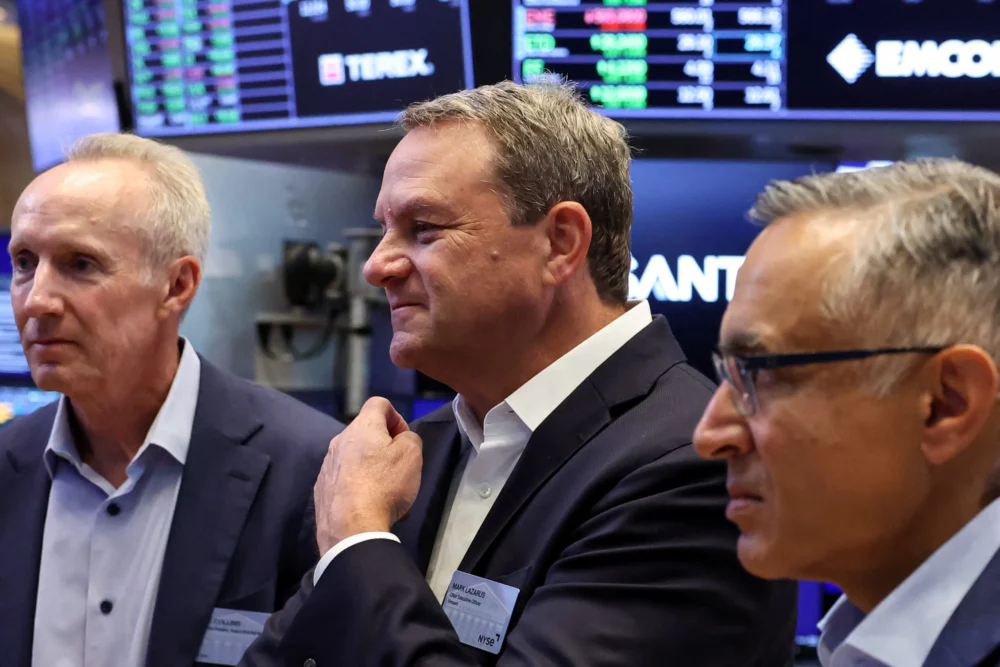
The eyes of the media and financial worlds are fixed on Tuesday’s opening bell as Versant Media Group prepares to unveil its inaugural quarterly earnings report since spinning off from Comcast. This financial disclosure marks a pivotal moment for the newly independent entity, offering investors their first comprehensive look into the operational health of a company built almost entirely around a portfolio of traditional pay-TV networks and specialized digital properties. As the media landscape undergoes a seismic shift from linear broadcasting to streaming-first models, Versant stands as a unique, and some would say risky, experiment in the viability of "pure-play" cable assets in an era of relentless cord-cutting.
The creation of Versant Media Group was one of the most significant structural maneuvers in recent media history, a strategic "de-risking" move by Comcast to insulate its core high-growth businesses—broadband, wireless, and its flagship Peacock streaming service—from the secular declines of the cable television industry. Formally debuting on the Nasdaq in January 2026, Versant inherited a storied collection of assets that were once the backbone of NBCUniversal’s television empire. The portfolio includes household names such as CNBC, the global leader in business news; MS Now, a modern evolution of cable news; and general entertainment powerhouses like USA Network, Syfy, E!, and Oxygen. Additionally, the company controls the Golf Channel and a suite of high-traffic digital platforms, including movie-ticketing giant Fandango, the review aggregator Rotten Tomatoes, and sports-tech mainstays like GolfNow and Sports Engine.
For years, these assets were tucked within the broader financial reporting of Comcast’s NBCUniversal segment, their individual struggles or successes often masked by the immense scale of the parent company. Now, as a standalone entity with a market capitalization of approximately $4.8 billion, Versant must face the scrutiny of the public markets on its own merits. The stakes are high; since its January debut, Versant’s stock has weathered a 25% decline. Analysts attribute this initial volatility to a combination of technical selling—as former Comcast shareholders rebalance their portfolios—and a deeper skepticism regarding the long-term growth prospects of the cable bundle.
The financial data released leading up to the IPO painted a picture of a business in a state of controlled contraction. According to filings with the Securities and Exchange Commission (SEC), Versant’s portfolio generated $7.1 billion in revenue in 2024, a notable drop from the $7.4 billion recorded in 2023 and the $7.8 billion seen in 2022. This downward trajectory reflects the broader industry reality: as millions of American households cancel their cable subscriptions in favor of Netflix, Disney+, and YouTube TV, the affiliate fees and advertising dollars that once flowed freely into cable networks are tightening.
Despite these headwinds, Versant’s leadership, led by CEO Mark Lazarus, is betting on a "live-first" strategy to maintain relevance. During the company’s investor day in December, Lazarus emphasized that 62% of Versant’s total audience is drawn to live programming, specifically sports and news. This is a critical distinction in the current media environment. While scripted dramas and comedies have largely migrated to on-demand streaming services, live content remains the "glue" holding the traditional television bundle together. CNBC’s real-time market coverage and the company’s sports rights—which include significant golf tournaments, WWE’s Monday Night Raw (under existing agreements), and NASCAR—provide a level of "appointment viewing" that is difficult for pure streaming platforms to replicate without massive capital expenditure.
Analysts at Raymond James have noted that Versant’s focus on news and sports is a strategic advantage. While the company lacks the "Tier One" rights of the NFL or NBA, its niche dominance in golf and professional wrestling provides a loyal, demographic-specific audience that remains highly attractive to advertisers and cable distributors alike. This "must-have" status is the leverage Versant needs when it heads to the negotiating table with distributors like Charter Communications, Comcast, and Google’s YouTube TV.
The stability of Versant’s distribution revenue is a key pillar of the company’s current valuation. Before the spin-off, NBCUniversal secured long-term carriage agreements with most major providers, ensuring that Versant’s networks would remain in millions of homes through at least 2028. Anand Kini, Versant’s COO and CFO, has pointed to these agreements as a "cushion" that provides the company with predictable cash flow while it navigates its transition. However, the first true test of Versant’s independent bargaining power is fast approaching. Two major distribution renewals are reportedly on the horizon this year. These negotiations will be a bellwether for the company; if Versant can secure favorable terms without the "package deal" leverage of NBC’s local stations or the Olympics, it will go a long way in silencing critics.
The broader industry context adds another layer of complexity to Versant’s story. The media sector has seen a flurry of consolidation and restructuring as companies grapple with the decline of linear TV. Warner Bros. Discovery recently contemplated a similar split of its assets before exploring a full-scale merger with Paramount-Skydance. In contrast, Versant is doubling down on its identity as a lean, cash-flow-positive operator of legacy assets. The company is not merely managing a decline, however; it is attempting what Kini calls a "business model transition."
The long-term goal for Versant is to reach a 50/50 revenue split between its traditional pay-TV business and its digital and transactional platforms. This pivot relies heavily on the growth of Fandango and Rotten Tomatoes, as well as new acquisitions. Recently, Versant completed the purchase of Free TV Networks, a move into the growing "FAST" (free ad-supported streaming television) space, and Indy Cinema Group, which bolsters Fandango’s cloud-based operating capabilities for theaters. By integrating these digital properties, Versant hopes to capture consumer spending at multiple points in the entertainment lifecycle—from checking a movie’s "Tomatometer" score to buying a ticket and eventually watching related content on its networks.
There are signs that the traditional TV landscape might be finding a floor. Charter Communications, the nation’s largest cable provider, recently reported a surprising uptick in cable subscribers, the first such gain in years. This suggests that for a certain segment of the population, the value proposition of a bundled service—especially when integrated with streaming apps—remains intact. If the rate of cord-cutting continues to slow, Versant’s high-margin cable business could provide a much longer "tail" of profitability than the market currently anticipates.
However, Wall Street remains cautious. Goldman Sachs analysts initiated coverage with a "Neutral" rating, citing the "secular challenges" of the linear network business. The skepticism is rooted in the fear that Versant may be a "melting ice cube"—a company with strong cash flow today that lacks a viable path to growth tomorrow. The comparison to Newsmax, which saw its stock price crater after an initial post-IPO surge, serves as a cautionary tale for pure-play media stocks.
Tuesday’s earnings report will be more than just a summary of profits and losses; it will be a narrative-setting event. Investors will be looking for specific metrics: the rate of decline in advertising revenue, the growth trajectory of the digital properties, and any updates on the upcoming distribution renewals. Most importantly, they will be looking for a sign that Mark Lazarus and his team can manage the delicate balance of milking the "cash cow" of cable while planting the seeds for a digital future.
As the first major media company to be born out of the "great separation" of legacy and digital assets, Versant Media Group is a case study for the entire industry. If it succeeds, it could provide a blueprint for other conglomerates—like Disney or Paramount—to eventually spin off their own declining linear networks. If it struggles, it may accelerate the trend of total consolidation, where legacy networks are sold off for parts or absorbed into larger tech-heavy ecosystems. For now, Versant stands alone on the Nasdaq, a $4.8 billion bet that there is still life, and profit, to be found in the old guard of television.