
 By admin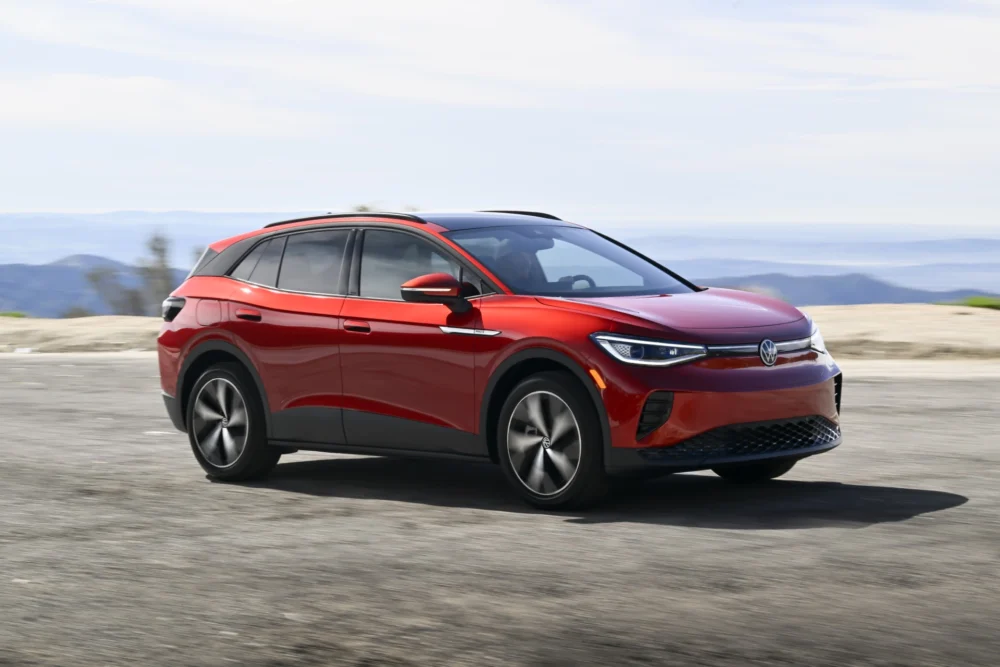
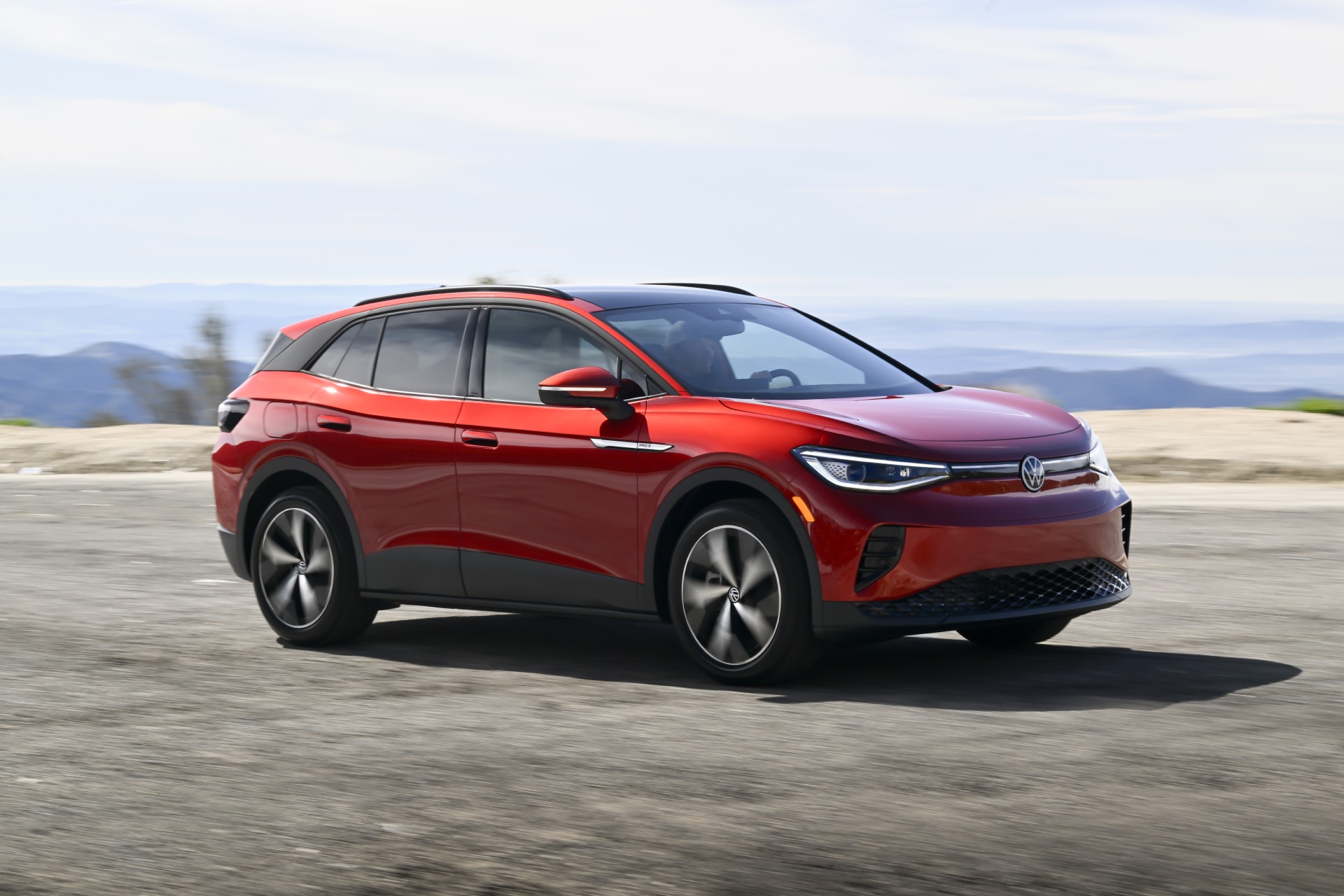
Volkswagen Group of America has initiated a significant safety recall affecting 13,769 electric vehicles across its Volkswagen and Audi brands, specifically targeting the 2024 Volkswagen ID.4 and 2024-2025 Audi Q4 E-Tron and Q4 E-Tron Sportback models. This latest action, announced on March 18, 2025, addresses a critical issue with the 12-volt battery charging system, which, if left unaddressed, could lead to a sudden loss of critical vehicle functions and even complete immobility. Crucially, this recall does not pertain to the high-voltage battery packs that power these electric vehicles but rather to the auxiliary 12-volt system essential for the operation of numerous electronic components.
The core of the problem lies with the onboard charger responsible for maintaining the 12-volt battery. According to documents filed with the National Highway Traffic Safety Administration (NHTSA), this component may have an insufficient protective coating on a critical printed circuit board. This deficiency can allow condensation to penetrate the circuit board, leading to a malfunction of the charging system. When the 12-volt battery fails to recharge, even when the main high-voltage battery is fully charged, it can trigger a cascade of issues. Drivers may experience a sudden loss of power to essential electronic systems, various electronic malfunctions, or the inability to restart the vehicle once it has been turned off.
To fully understand the gravity of this recall, it’s vital to grasp the often-overlooked role of the 12-volt battery in electric vehicles. While the high-voltage battery is the powerhouse for propulsion, the humble 12-volt battery remains indispensable. It powers nearly all of an EV’s auxiliary systems: the vehicle’s computer systems, infotainment, lights, power windows, wipers, airbags, anti-lock brakes, power steering, and crucial safety features. In essence, it acts as the "brain’s" power supply, initiating the entire vehicle’s electrical system, including "waking up" the high-voltage battery pack and its associated components. Without a properly functioning 12-volt system, an EV, despite having a fully charged main battery, can be rendered inoperable, unable to even engage the drive system or activate safety features. This can manifest as a "loss of drive power," not because the primary propulsion system fails, but because the control systems governing it become unresponsive.
The NHTSA highlighted that if such a malfunction occurs, drivers will receive "several, major warnings" from the vehicle, accompanied by "reduced driving functions." These warnings are typically visual alerts on the dashboard, audible chimes, and potentially a reduction in available power or activation of a "limp home" mode designed to minimize further damage and allow the driver to pull over safely. However, in severe cases, the complete failure of the 12-volt system could lead to a sudden and unexpected shutdown of essential functions, posing a significant safety risk, particularly at higher speeds or in challenging traffic conditions.
Volkswagen and Audi have outlined a clear remedy for affected owners: a free replacement of the faulty onboard charger. Authorized dealerships for both brands will perform this service without charge to the customer. Given that all involved vehicles are recent models (2024 VW ID.4 and 2024-2025 Audi Q4 E-Tron/Sportback), they are still well within their factory warranty periods. Consequently, Volkswagen and Audi do not anticipate having to reimburse customers for any related costs, as the repair will be covered entirely by the manufacturer. This proactive approach aims to minimize inconvenience and restore customer confidence quickly.
Owner notification letters are slated to be mailed on April 29, providing detailed instructions on how to proceed. In the interim, and following the notification, owners are encouraged to contact their respective brand’s customer service departments for more information. Volkswagen owners can reach out at 1-800-893-5298 or visit the dedicated recall section on their official website. Audi owners have access to similar support via their customer service line at 1-800-253-2834 and their recall website. To help streamline inquiries, Volkswagen has assigned the recall reference number 93CJ, while Audi’s corresponding number is 93FR. These specific identifiers allow service centers and customer support to quickly identify the relevant recall and provide accurate information.
This particular recall is the second significant safety action affecting both the Volkswagen ID.4 and Audi Q4 E-Tron in recent memory, underscoring potential challenges in the rapid rollout and scaling of new electric vehicle platforms. Both models are closely related, sharing Volkswagen Group’s highly versatile MEB (Modular Electric Drive Matrix) platform, which forms the architectural backbone for a wide array of VW Group’s current and future electric vehicles.
Earlier this month, a much larger recall was announced, impacting 60,490 vehicles from both brands, again including the ID.4 and Q4 E-Tron. That recall addressed a software error that could prevent mandatory gear indicators from displaying correctly. While seemingly minor, a malfunctioning gear indicator can pose a serious safety hazard, as drivers rely on this visual cue to confirm their vehicle’s drive state (Park, Reverse, Neutral, Drive), preventing unintended movement or improper operation. The sheer volume of vehicles involved in that software-related recall further highlighted the complexities inherent in integrating sophisticated software systems into modern automobiles.
Adding to Volkswagen’s recent quality control challenges, the ID.4 had only just resumed sales following a prior recall for faulty door handles. This earlier issue, which led to a temporary stop-sale order and production halt, concerned door handles that could fail, potentially preventing occupants from opening doors from either the inside or outside, thereby creating a dangerous entrapment risk in emergency situations. The cumulative effect of these multiple recalls within a relatively short period raises questions about initial quality control and the pressures of accelerating EV production.
Automotive industry experts often point to such recalls as a common, albeit concerning, aspect of the transition to new technologies, especially for legacy automakers scaling up EV production. Dr. Eleanor Vance, an automotive analyst at Global Auto Trends, suggests, "These successive recalls, while undoubtedly frustrating for consumers and costly for manufacturers, are often symptomatic of the immense complexity involved in scaling new EV platforms and integrating advanced software and electronic architectures. Manufacturers are learning on the fly, and initial production batches frequently reveal issues that even the most rigorous pre-production testing might miss in diverse real-world conditions." She added, "The transition from internal combustion engines, a technology perfected over a century, to highly networked electric vehicles involves entirely new skill sets, supply chains, and engineering challenges. It’s a steep learning curve, and recalls, while undesirable, are part of that iterative process of refinement."
The MEB platform, designed to be flexible and cost-effective, allows for extensive commonality across different brands and models. While this approach offers significant manufacturing efficiencies, it also means that a single design or manufacturing flaw in a shared component can trigger widespread recalls across multiple product lines. The current 12-volt charging system issue, affecting both VW and Audi models built on this platform, exemplifies this interconnectedness.
For consumers, the repeated recalls, particularly those impacting fundamental safety and operational aspects, can erode confidence in new electric vehicle technologies and specific brands. However, it is also a testament to the robust regulatory oversight provided by organizations like the NHTSA, which mandates manufacturers to identify and rectify potential safety defects promptly. The transparency and swift action taken by Volkswagen Group, albeit under regulatory obligation, are crucial for maintaining public trust.
Looking ahead, as electric vehicle adoption continues to accelerate globally, the focus on manufacturing quality, software integrity, and robust component design will only intensify. Automakers are under immense pressure to deliver innovative, reliable, and safe EVs to meet growing demand and stringent environmental regulations. The lessons learned from these recalls, particularly concerning critical auxiliary systems like the 12-volt battery charger, will undoubtedly inform future design and production processes across the industry.
In conclusion, owners of the affected 2024 Volkswagen ID.4 and 2024-2025 Audi Q4 E-Tron and Q4 E-Tron Sportback models are strongly advised to heed the forthcoming recall notifications. Promptly scheduling the free replacement of the onboard 12-volt battery charger is essential to ensure the continued safe and reliable operation of their electric vehicles. Volkswagen Group’s commitment to addressing these issues underscores the ongoing effort to ensure the safety and satisfaction of its growing EV customer base, even as it navigates the inherent complexities of this transformative automotive era.