
 By Isnaini Azizah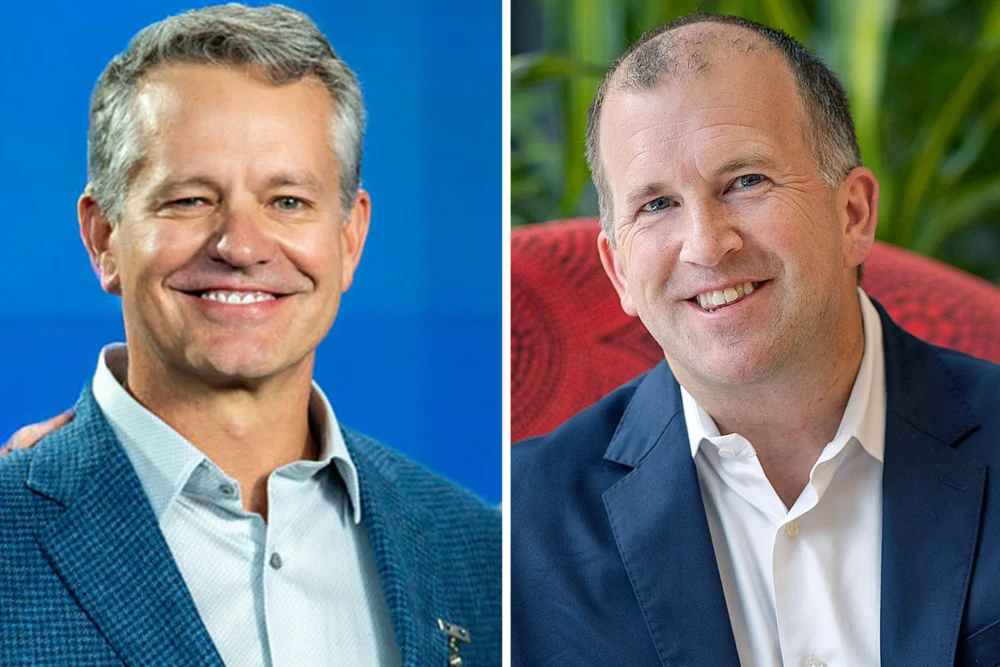
As the retail industry pivots from the frenetic holiday season toward the strategic planning of a new fiscal year, the eyes of the global financial community are fixed on two behemoths: Walmart and Target. When these big-box giants report their holiday earnings this quarter, the raw numbers of the fourth quarter may ironically take a backseat. Investors are signaling that they are ready to brush off historical data in favor of a forward-looking analysis centered on a monumental transition of power. On February 1, both companies officially entered a new era, with Walmart’s John Furner and Target’s Michael Fiddelke assuming the mantle of Chief Executive Officer. These leadership changes, involving two seasoned company insiders, come at a precarious time for the American consumer, as the retail landscape for 2026 is being shaped by the dual pressures of persistent inflation and the looming threat of new tariffs.
The backdrop for this leadership handoff is an economic environment characterized by a "selective" consumer. While U.S. spending remains resilient in aggregate, the composition of that spending has shifted dramatically. High prices for groceries and essential household goods have forced shoppers to reconsider discretionary purchases—items like electronics, home decor, and apparel that historically carry higher profit margins. Despite these shared headwinds, the trajectories of Walmart and Target have diverged so sharply that they now appear to be operating in different economic realities.
Walmart enters this new chapter from a position of unprecedented strength. As of the market close on Tuesday, the company’s stock hit a 52-week high, capping a five-year run that has seen shares skyrocket by approximately 163%. Over the last year alone, Walmart’s stock has climbed 24%, reflecting investor confidence in a business model that has successfully courted high-income households while maintaining its dominance in the value segment. Conversely, Target has struggled to find its footing. Its shares have tumbled nearly 40% over the last five years and are down 9% over the past 12 months. This divergence is not merely a quirk of the stock market; it is a reflection of fundamental sales performance. Walmart is forecasting full-year net sales growth between 4.8% and 5.1%, whereas Target is currently on track to report a full-year sales decline.
John Furner, who spent more than three decades rising through the ranks at Walmart, inherits a machine that many analysts describe as "fundamentally sound." Neil Saunders, managing director and retail analyst at GlobalData, notes that Furner’s primary objective is to maintain the current momentum while finding ways to "add to the speed." Furner’s predecessor, Doug McMillon, left a legacy of digital transformation, having successfully integrated Walmart’s massive physical footprint with a sophisticated e-commerce operation. In a symbolic and strategic move in January, Walmart switched its stock listing from the New York Stock Exchange to the Nasdaq 100. This transition was a clear signal to the market: Walmart no longer views itself as a traditional brick-and-mortar retailer, but as a tech-enabled ecosystem capable of competing directly with Amazon.
A central pillar of Furner’s strategy involves the aggressive adoption of artificial intelligence. Under his leadership, Walmart has already cemented partnerships with OpenAI and Google to integrate ChatGPT and Gemini-powered tools into its shopping interface. These AI initiatives are designed to reduce the "friction" of shopping, allowing customers to use natural language to find products and manage their households. Internally, Furner is leveraging AI to optimize inventory flow and simplify complex decision-making processes for employees. This "people-led, tech-powered" vision was the centerpiece of a memo Furner sent to employees on his second day as CEO, in which he emphasized that the company is well-positioned to lead the "next era of retail."
Furthermore, Walmart’s e-commerce business has reached a critical milestone, posting its first profitable quarter in the U.S. and globally last May. This profitability is driven by the growth of high-margin side businesses, such as its third-party marketplace and Walmart Connect, the company’s burgeoning advertising arm. By leveraging its data on millions of weekly shoppers, Walmart is transforming from a place that sells goods into a powerful media platform. Analysts like Corey Tarlowe of Jefferies suggest that investors are essentially looking for "more of the same" from Furner—continued grocery dominance, further gains in market share among affluent shoppers, and a relentless expansion of the digital marketplace.

While Walmart focuses on extension, Target is desperately chasing a comeback. For Michael Fiddelke, the challenge is far more complex. Target has endured four years of roughly flat annual sales, a stagnation that has led to declining store traffic and website visits. Fiddelke, who previously served as Target’s Chief Operating Officer and Chief Financial Officer, must now "sell the Target of the future," according to Saunders. The company’s brand, once synonymous with "cheap chic," has been tarnished by a combination of inventory mismanagement, store condition complaints, and social controversies that have alienated portions of its customer base.
Fiddelke has wasted no time in signaling a structural overhaul. Just one week into his tenure, he announced a significant leadership shakeup. In a bid to revitalize the company’s merchandising prowess, Target brought back the role of Chief Merchant, appointing Cara Sylvester to the position. Sylvester, formerly the Chief Guest Experience Officer, is now tasked with rediscovering the "magic" that once made Target a trendsetter in fashion and home goods. Meanwhile, Lisa Roath has stepped into the COO role, and several long-term executives, including Chief Commercial Officer Rick Gomez and merchandising veteran Jill Sando, have departed or announced retirement.
Target’s turnaround strategy also involves a delicate balancing act with its workforce. While the company cut 1,800 corporate roles last year—its first major layoff in a decade—Fiddelke recently informed employees that Target would increase investment in store staffing hours. This move is a direct response to customer feedback regarding understaffed aisles and poor service. Simultaneously, the company is trimming 500 roles at distribution centers and regional offices, suggesting a shift in resources away from back-end logistics and toward the front-end customer experience.
The competitive landscape for both retailers is becoming increasingly crowded. While Walmart and Amazon battle for the title of the world’s largest retailer by revenue, new threats are emerging on the periphery. Aldi, the privately held German discounter, is in the midst of a massive U.S. expansion, threatening Walmart’s price-sensitive grocery base. Meanwhile, supermarket giant Kroger recently hired Greg Foran, a former high-ranking Walmart executive, as its new CEO, signaling a more aggressive stance in the grocery wars. Amazon itself is recalibrating its physical strategy, recently announcing the closure of several Amazon Fresh and Go locations to focus on its Whole Foods brand.
For Target, the upcoming investor meeting on March 3 in Minneapolis will be a make-or-break moment for Fiddelke. Investors are looking for a clear roadmap that addresses how Target will compete in an "omnichannel" world where Walmart and Amazon have a significant head start in automation and digital marketplaces. Goldman Sachs analyst Kate McShane points out that while Target doesn’t need to become an exact clone of its larger rivals, it must "figure out who they want to be." The recent opening of a fashion-focused concept store in New York’s SoHo neighborhood suggests that Target may be leaning back into its strengths in apparel and design to differentiate itself from the more utilitarian experience of Walmart.
As the retail sector enters 2026, the contrast between the two giants could not be more vivid. Walmart is a trillion-dollar juggernaut looking to solidify its tech credentials and maintain its winning streak under a CEO who plans to "keep the ship steady." Target is a legacy brand in search of a new identity, led by a CEO who must convince a skeptical Wall Street that the company can return to its former glory. For both Furner and Fiddelke, the holiday earnings will provide the data, but their subsequent strategic guidance will provide the destiny. In the high-stakes world of American retail, the "next era" has officially begun, and the divergence between these two titans will likely define the consumer economy for years to come.