
 By Lina Irawan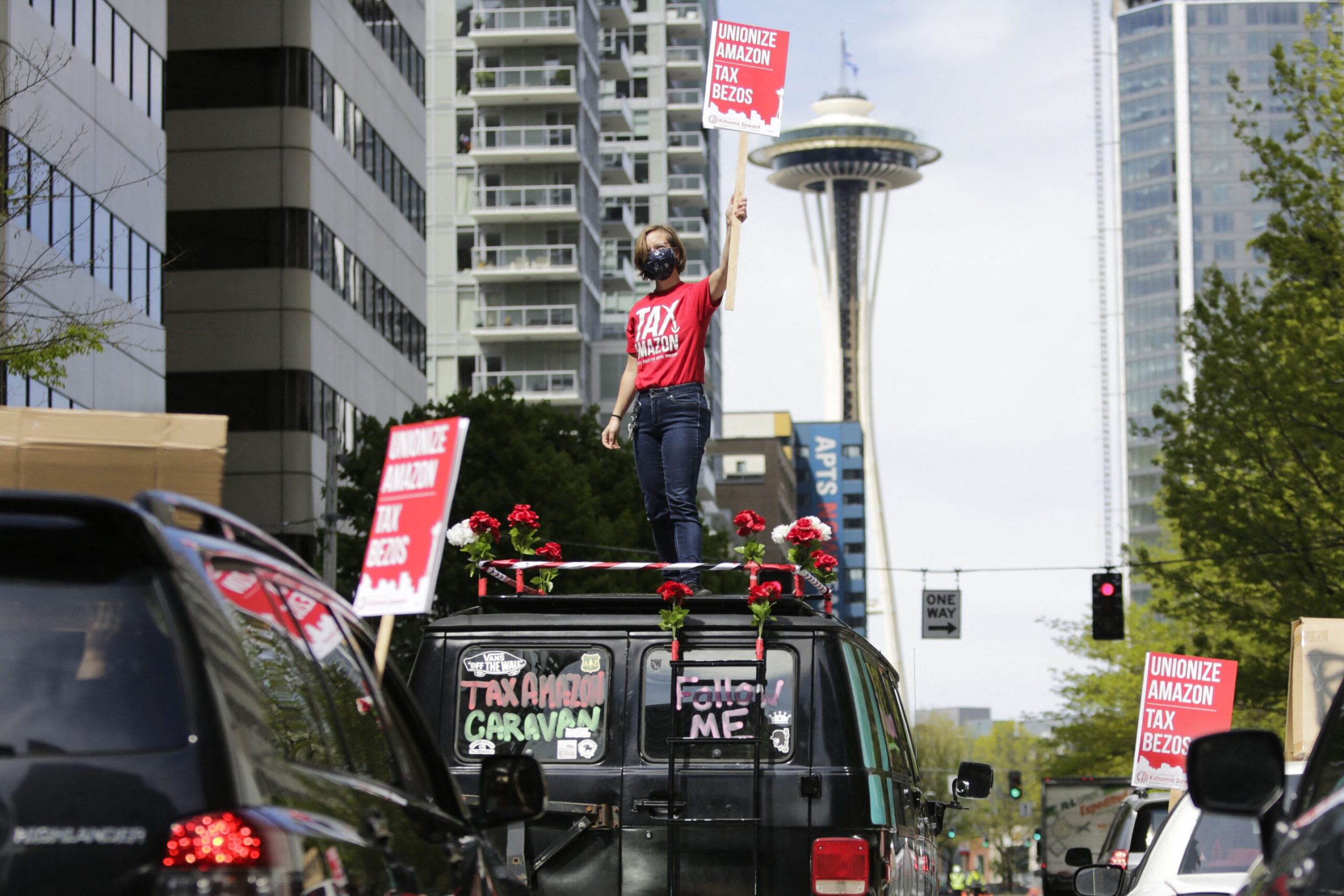
After an unprecedented 25-hour legislative marathon on the House floor, marked by a determined Republican effort involving more than 81 amendments to impede its progress, Washington State has officially made history. Lawmakers successfully passed a groundbreaking millionaires tax bill, which is set to introduce the first income tax in the state’s 135-year existence, fundamentally altering its long-standing fiscal approach.
On March 9, a pivotal vote of 52-46 in the House of Representatives saw the passage of a bill that imposes a 9.9% tax on personal income exceeding $1 million annually. This legislative victory was not easily won, culminating in the longest floor debate in Washington history, far surpassing the previous record of nine hours. The intensity of the debate underscored the deep ideological divisions surrounding taxation and wealth within the state. Republicans, staunchly opposed to the measure, utilized procedural tactics, including the introduction of numerous amendments, to prolong discussion and attempt to derail the bill, effectively staging an "almost show-stopping filibuster effort." Their arguments centered on concerns about economic competitiveness, potential capital flight, and the principle of avoiding an income tax that has been a hallmark of Washington’s economic identity.
Representative Brianna Thomas, a Democrat and a vocal proponent of the measure, reflected on the monumental nature of the undertaking. "We knew it was going to be a pretty major endeavor," Thomas told Fortune, acknowledging the weight of historical precedent. "We’ve got 93 years of precedent in front of us, behind us, around us at all times on the conversation around an income tax." Her words highlight the deeply entrenched opposition and the significant political capital expended to achieve this legislative breakthrough.
For decades, Washington has stood as one of only nine states in the nation without a personal income tax, a distinction it has maintained since its inception. Its fiscal framework has historically relied almost exclusively on sales and business taxes, a system forged in the early 20th century when the state’s economy was predominantly agrarian, timber-based, and centered on shipping. This tax structure, while seemingly simple, has faced increasing scrutiny as the state’s economy diversified and expanded dramatically.
The historical resistance to an income tax in Washington is deeply rooted. The state last voted on an income tax in 1932, during the depths of the Great Depression. That initiative passed overwhelmingly with 70% support, reflecting the economic desperation of the era. However, it was swiftly struck down by the state Supreme Court a year later. The court ruled that income, under the state constitution, is classified as property, thus requiring a "uniform taxation scheme." This legal interpretation effectively meant that all property, regardless of its form or the income derived from it, had to be taxed at the same rate, making a progressive income tax—which taxes higher incomes at a higher rate—constitutionally problematic. This precedent has loomed large over all subsequent attempts to introduce an income tax. In 2010, another attempt by state legislators to introduce an income tax failed to gain significant traction, underscoring the enduring challenge.
Rep. Thomas and other proponents argue that the state’s economy has simply outgrown its outdated tax code. Washington has transformed into a global economic powerhouse, home to multinational behemoths like Amazon, Microsoft, and Boeing, all generating trillions of dollars in wealth and attracting highly compensated individuals. Yet, its tax system remained largely unchanged, reminiscent of an era dominated by "apples and cherries," as Thomas aptly put it. "We still have a tax code based on apples and cherries while building some global-leading technology every which way you throw a rock." This disconnect between a 21st-century economy and a 20th-century tax system has contributed to a looming projected budget deficit of $10 billion to $12 billion over the next four years, threatening essential public services and infrastructure projects.
Economists and tax policy experts have consistently highlighted the regressive nature of Washington’s traditional tax structure. The Institute on Taxation and Economic Policy (ITEP), a non-profit, non-partisan research organization, has frequently ranked Washington’s tax system as one of the most regressive in the country. This means that lower-income households pay a significantly larger proportion of their income in state and local taxes compared to wealthier households. According to ITEP data, the top 1% of earners in Washington pay an effective state and local tax rate of just 4.1% of their income. In stark contrast, the bottom 20% of earners bear a burden of 13.8% of their income. Middle-income households also pay a higher percentage than the wealthiest, with the next 20% to 40% income bracket paying around 10.6% and the middle 20% paying approximately 11.2%.
"We’ve got more millionaires and billionaires than we’ve ever had, and they’re paying, effectively, a 4% tax rate," Thomas asserted. "Meanwhile, you got working folks paying 11% of their income, and the lowest-income people paying 14%. Isn’t it unfair for those who have the most, to pay the least, and those who have the least to pay, the most, proportionally?" This argument for tax fairness and equity formed the core of the bill’s advocacy, positioning it as a necessary correction to an imbalanced system that exacerbates wealth disparities.
The newly passed bill targets an estimated 21,000 filers, representing less than 1% of Washington’s total population. The 9.9% tax on personal income above $1 million is projected to generate a substantial $3.5 billion to $4 billion per year once it takes effect in 2029. The delayed implementation is likely intended to provide time for legal challenges to play out and for the state to establish the necessary administrative infrastructure. Crucially, the bill also includes significant tax relief measures designed to benefit lower and middle-income families and offset some of the state’s existing regressive taxes. These measures include sales tax exemptions on essential goods such as diapers, over-the-counter medications, and personal hygiene products, alongside an expanded Working Families Tax Credit, which provides rebates to low-income families.
Despite its passage in the House, the journey for the millionaires tax is far from over. The bill then moved to the Senate, which passed a concurrence vote 27-21. Rep. Thomas, speaking with Fortune prior to the Senate’s vote, had humorously predicted a smoother path in the upper chamber: "The Senate will concur, because they don’t want to do a 25-hour floor battle. That’s just not how the Senate rolls." Her prediction proved accurate, reflecting a desire to avoid a similar prolonged legislative standoff. The bill now heads to Governor Bob Ferguson, who has publicly signaled his intention to sign it into law, marking another symbolic step forward.
However, Thomas remained cautious about declaring outright victory, emphasizing the formidable hurdles that still lie ahead. "We’ve got to let it sit," she stated. "We have to get through our own Supreme Court review again, and it still has to go to a vote of the people. There are many miles to go before this is actually the law of the land." The anticipated legal challenge will once again test the 1933 Supreme Court precedent, requiring the current court to re-evaluate whether income can be treated differently from other forms of property under the state constitution. Furthermore, opponents are likely to launch a referendum effort, allowing voters to directly approve or reject the tax at the ballot box, adding another layer of uncertainty to its ultimate implementation.
Washington gets a millionaires tax, others push one for billionaires
Washington’s bold move is not an isolated incident but rather the most concrete step yet in a broader national push to reform tax codes and address extreme wealth concentration. Across the country, lawmakers and activists are advocating for measures that would require the wealthiest individuals to contribute more to public coffers.
At the federal level, Senator Bernie Sanders (I-Vt.) and Representative Ro Khanna (D-Calif.) have introduced the "Make Billionaires Pay Their Fair Share Act." This ambitious proposal calls for a 5% annual wealth tax on the roughly 938 Americans with a net worth exceeding $1 billion. This elite group collectively holds an estimated $8.2 trillion in wealth. Sanders projects that this bill could generate a staggering $4.4 trillion over its first decade. The revenue, in its first year, would fund a one-time $3,000 check for households earning $150,000 or less, subsequently targeting critical areas such as Medicaid, teacher salaries, and childcare costs.
Similarly, in California, a powerful labor union has put forward the 2026 Billionaire Tax Act, a ballot initiative designed to impose a one-time 5% tax on residents with a net worth above $1 billion. If passed by voters, this initiative could generate approximately $100 billion in one-time revenue, earmarked for essential services like healthcare and food assistance. These federal and state-level initiatives reflect a growing sentiment that the current economic system has created unsustainable levels of inequality, as Rep. Thomas articulated: "The haves have more than they’ve ever had. The have nots have less than they’ve ever had. That’s just not going to be sustainable for everyday folks."
However, the passage of such wealth-targeting taxes often sparks immediate reactions from those affected, particularly the super-rich. Almost immediately after the Washington bill passed, billionaire Starbucks founder Howard Schultz announced his relocation from Seattle to Miami, Florida, where he recently acquired a $44 million penthouse. While Schultz did not explicitly confirm the tax as his sole reason for leaving, he penned a LinkedIn post expressing his hope that Washington would "remain a place for business and entrepreneurship to thrive," a statement widely interpreted as a veiled critique of the new tax policy.
Schultz is not the first high-profile figure to depart Washington, potentially influenced by tax considerations. Amazon founder Jeff Bezos similarly moved to Miami in 2023, a move that is estimated to have cost Washington State approximately $954 million in tax revenue in 2024 alone. When Bezos sold 50 million Amazon shares that year from his new Florida residence, he reportedly saved an estimated $610 million in state taxes by no longer being a Washington resident, highlighting the significant financial implications of such departures for state coffers.
Despite the concerns about "tax flight," Rep. Thomas remained resolute. "I certainly hope Washington is more than a spreadsheet or a tally sheet to someone," she countered, dismissing the notion that the state’s value should be solely calculated by tax rates. "This isn’t a math problem to me. This is a policy problem rooted in the fact that I care about my community." Her statement underscores a fundamental philosophical divide: for proponents, the tax is a moral imperative and a tool for societal investment, while for opponents, it represents an economic disincentive that could drive away wealth and job creators.
The passage of Washington’s millionaires tax is a landmark event, not just for the Evergreen State, but for the national discourse on economic inequality and taxation. It represents a bold attempt to modernize a century-old tax code and address perceived injustices in wealth distribution. Yet, its ultimate fate remains uncertain, entangled in legal battles and the will of the voters. As Washington navigates this uncharted territory, its experience will undoubtedly serve as a critical case study for other states and the nation as a whole, all grappling with how to fund public services and foster a more equitable society in an era of unprecedented wealth concentration.