
 By admin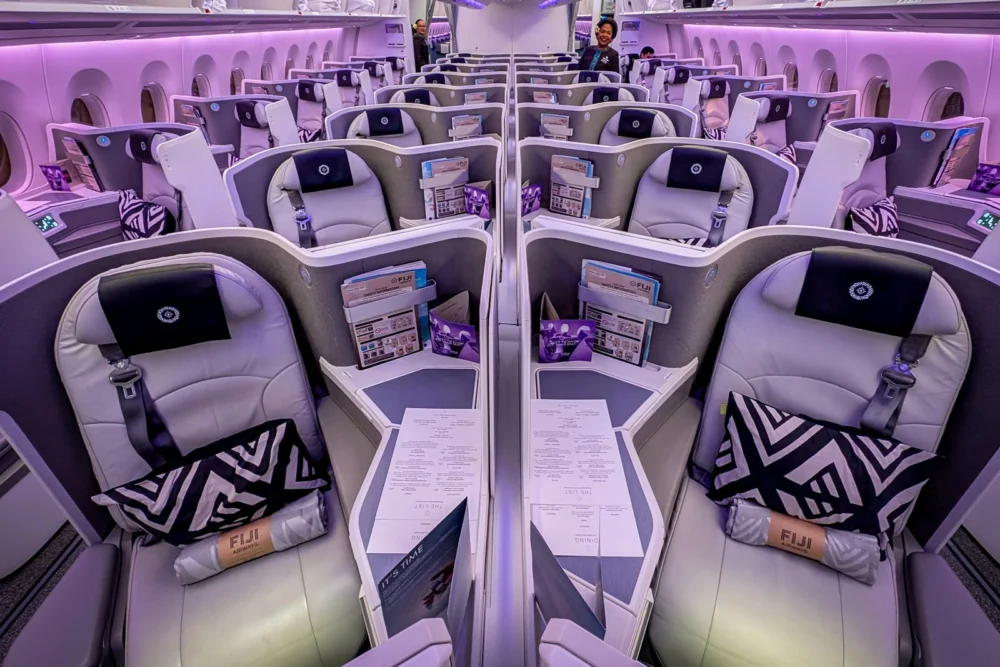
Navigating the competitive landscape of transpacific aviation often feels like a zero-sum game for luxury travelers. Between the high demand for lie-flat seats to Australia and New Zealand and the notoriously stingy award release patterns of major carriers like Qantas or United Airlines, finding a premium cabin redemption can feel nearly impossible. However, a strategic alternative exists in the heart of the South Pacific. Fiji Airways, the national flag carrier of a tropical archipelago with a population of fewer than one million, has quietly transformed itself into a global contender. By leveraging its flagship Airbus A350-900 fleet and a uniquely polished approach to hospitality, Fiji Airways is no longer just a regional player; it is a premier gateway for those seeking to cross the Pacific in world-class comfort.
The airline’s recent expansion, specifically its new long-haul service to Dallas/Fort Worth International Airport (DFW), marks a pivotal moment in its growth strategy. For years, Fiji Airways operated primarily out of West Coast gateways like Los Angeles (LAX) and San Francisco (SFO). The addition of Dallas—a massive hub for its Oneworld partner American Airlines—opens up the South Pacific to travelers across the Central and Eastern United States. This route, spanning over 6,600 miles, is the ultimate test of an airline’s long-haul product, and Fiji Airways has met the challenge with a business class offering that rivals the most decorated airlines in the industry.
One of the most compelling reasons to choose Fiji Airways is the relative ease of booking business class seats using points and miles. While legacy carriers often restrict "saver" level award space to a handful of dates per year, Fiji Airways has historically been more generous. The airline typically loads its schedule 330 to 350 days in advance, but unlike many of its peers, it frequently releases additional business class inventory in waves as the departure date approaches. For savvy travelers, using tools like Seats.aero to set alerts can yield "pleasant surprises," allowing them to snag a lie-flat seat even when initial searches come up empty.
The value proposition becomes even clearer when examining the specific loyalty programs that partner with the carrier. As a member of the Oneworld alliance, Fiji Airways is accessible via several high-value currencies. For those with American Airlines AAdvantage miles, a one-way business class seat from North America to Fiji costs a flat 80,000 miles. Perhaps the most significant "sweet spot" in the entire award travel world is found through Alaska Airlines. Under the newly rebranded Atmos Rewards program (formerly Mileage Plan), travelers can book this same journey for just 75,000 points. The real magic, however, lies in the "add-on" potential: because Fiji serves as a natural hub between North America and the "Down Under" markets, travelers can often continue their journey to Sydney, Melbourne, or Auckland for the same number of American Airlines miles or a nominal 10,000-point increase via Atmos Rewards, provided there is connecting saver availability.
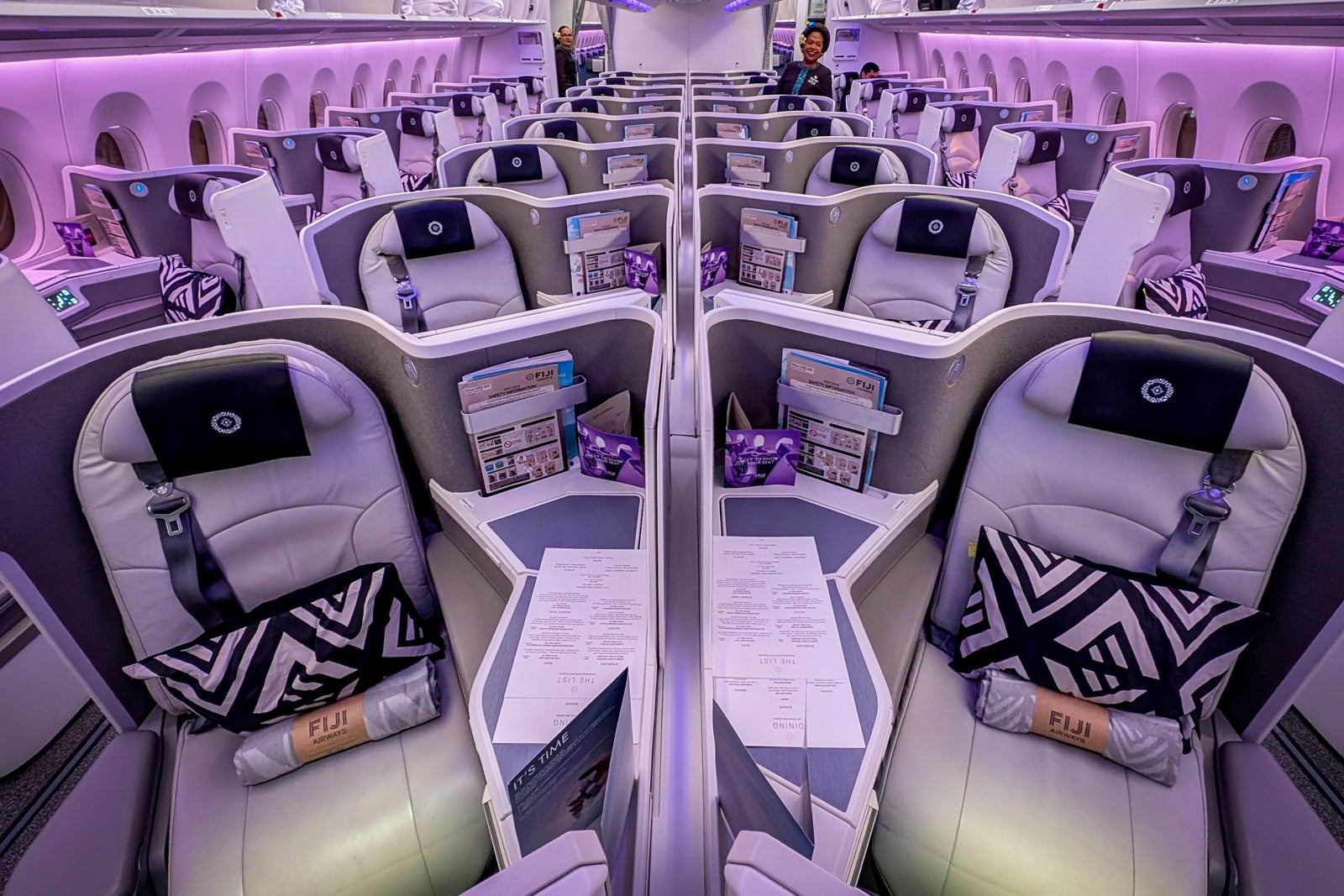
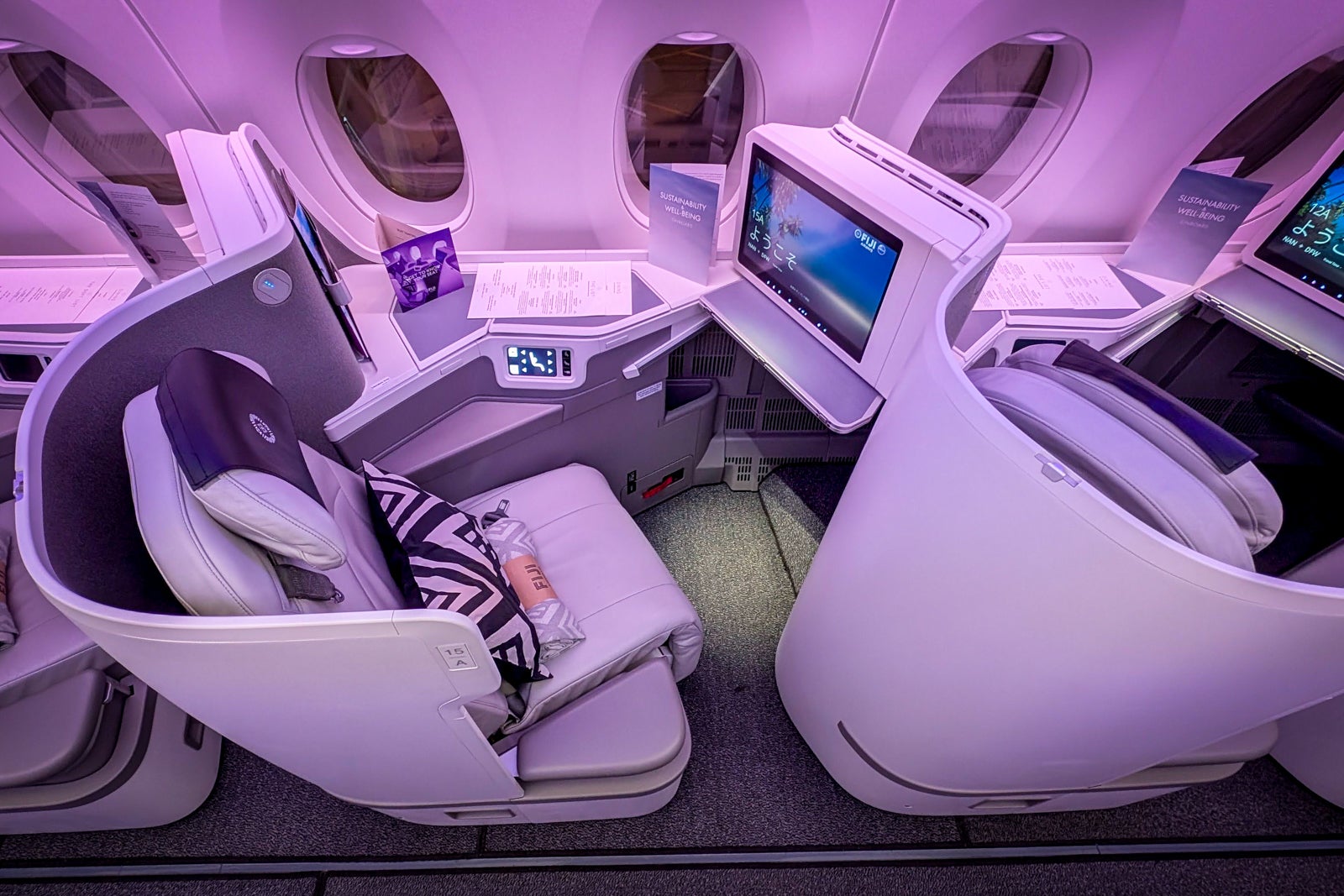
Beyond the logistics of booking, the onboard experience is where Fiji Airways truly distinguishes itself. The airline’s Airbus A350-900 features the Collins Aerospace Super Diamond business class seat, configured in a 1-2-1 reverse herringbone layout. This ensures that every passenger has direct aisle access and a significant degree of privacy. The seat itself is a marvel of ergonomics, transitioning into a fully flat bed that accommodates travelers of almost any height. But while the hardware is industry-standard for top-tier carriers, the "soft product"—the service, dining, and atmosphere—is uniquely Fijian.
The concept of "Bula" hospitality is not merely a marketing slogan; it is a tangible element of the flight. From the moment passengers board, the environment is designed to induce a state of relaxation. The cabin branding features intricate barkcloth (Masi) artwork created by local artist Makereta Matemosi, paired with a custom "Bula" typeface. These aesthetic choices, combined with the scent of pineapple-infused hot towels and the offer of a signature cocktail made with locally distilled gin, create an immediate "holiday mode" sensation. The gin itself is a reflection of the islands, featuring botanical notes of sun-dried kava and curry leaf, providing a literal taste of the destination before the plane even leaves the tarmac.
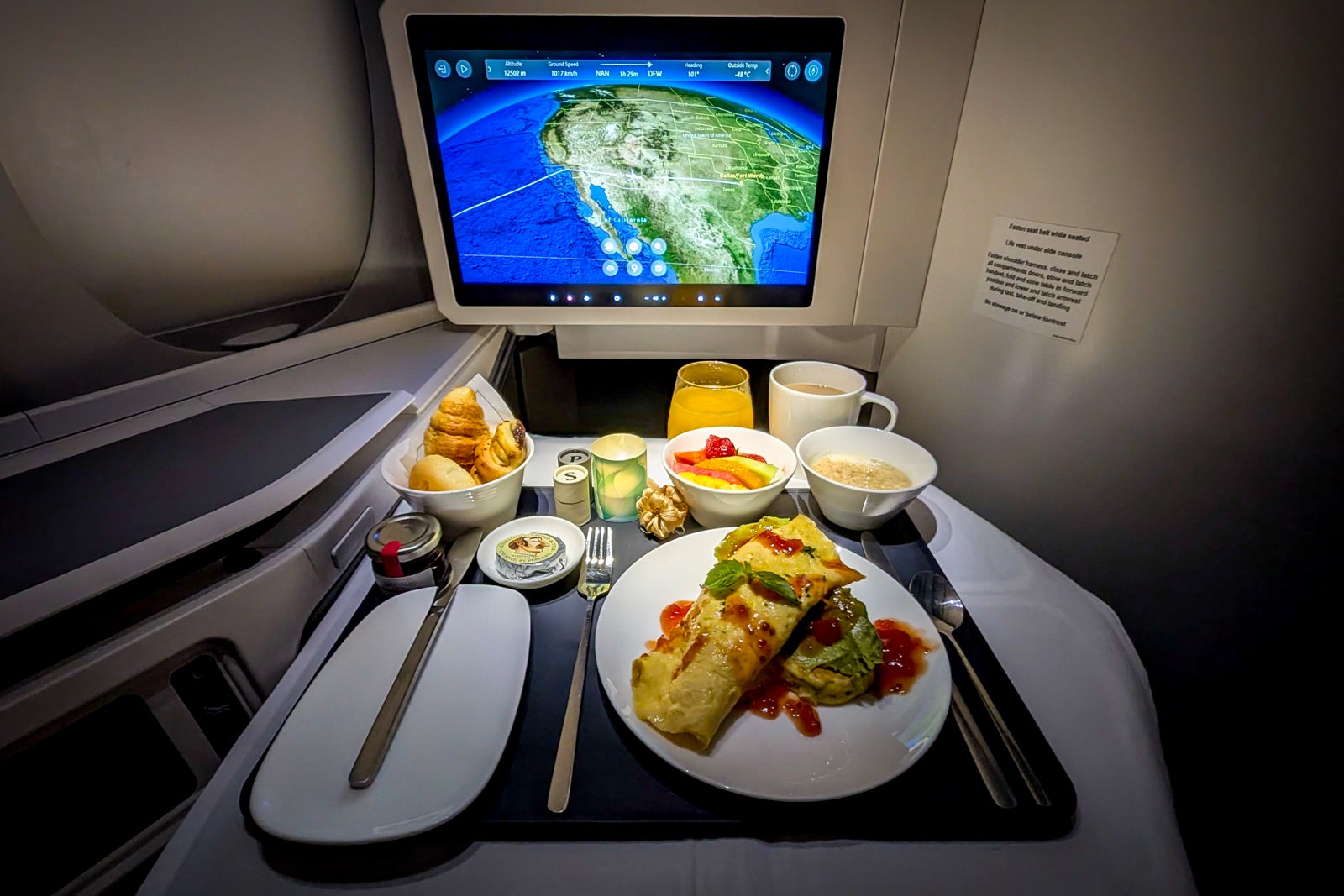
The dining experience on Fiji Airways has moved away from the traditional airline "trolley service" in favor of a more sophisticated, restaurant-style approach. The airline utilizes a "dine-on-demand" concept, allowing passengers to dictate when they would like to eat rather than following a rigid galley schedule. This is particularly beneficial on ultra-long-haul flights like the Nadi to Dallas route, where managing jet lag is a priority. The quality of the cuisine is exceptional, focusing on fresh, regional ingredients. A typical menu might begin with a smoked tomato tartare enhanced with avocado cream and basil oil, followed by a main course of grilled mahi-mahi served with steamed ota (a crisp, local fern-like green). Dessert often features tropical highlights, such as a mango ginger cheesecake with a crystallized ginger almond crust.
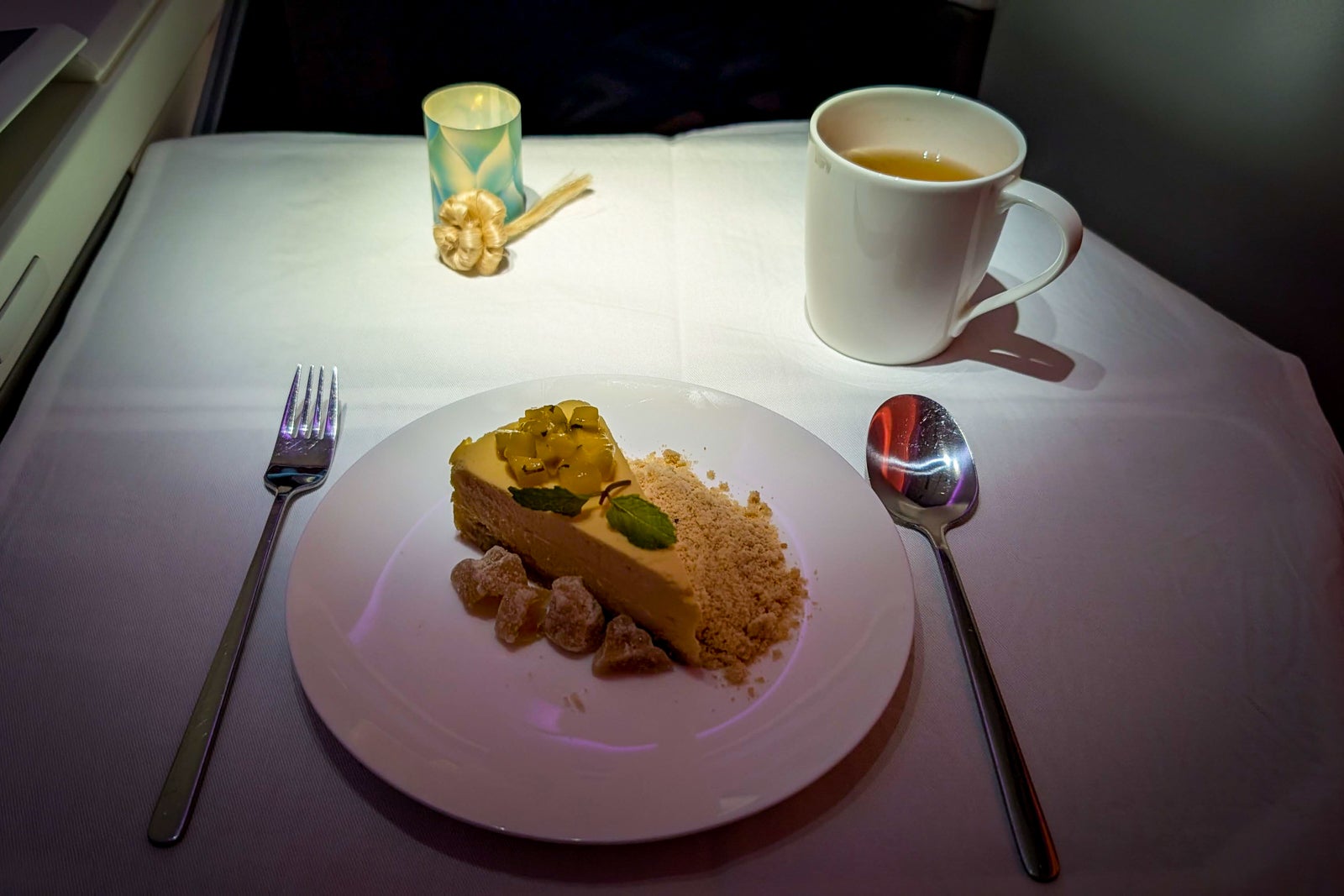
The attention to detail extends to the presentation. In a move that mimics high-end land-based restaurants, flight attendants set the tray table with individual linens and place settings rather than using a standard plastic tray. The inclusion of edible flowers on plates and even imitation candles to create a "moody" dining effect shows a level of care that is often lost on larger, more transactional airlines. This level of service is reminiscent of Qatar Airways’ famed Qsuite service, yet it maintains a warmth and sincerity that feels distinctly less scripted.
For many travelers, the ultimate luxury of flying Fiji Airways is the opportunity for a "Bula Stopover." Because the airline’s hub at Nadi International Airport (NAN) is situated perfectly between the Americas and Oceania, it serves as an ideal breaking point for the grueling transpacific trek. Instead of enduring a 15-hour flight followed immediately by a 3-hour connection, travelers can spend a few days decompressing on the white sand beaches of the Mamanuca or Yasawa Islands. The transition from the high-pressure environment of North American cities to the "island time" of Fiji is seamless, largely because the airline’s staff and the local population share a genuine, welcoming spirit. Stories of locals stopping to help tourists with flat tires or offering directions with a warm smile are common, reinforcing the country’s reputation as one of the friendliest nations on earth.
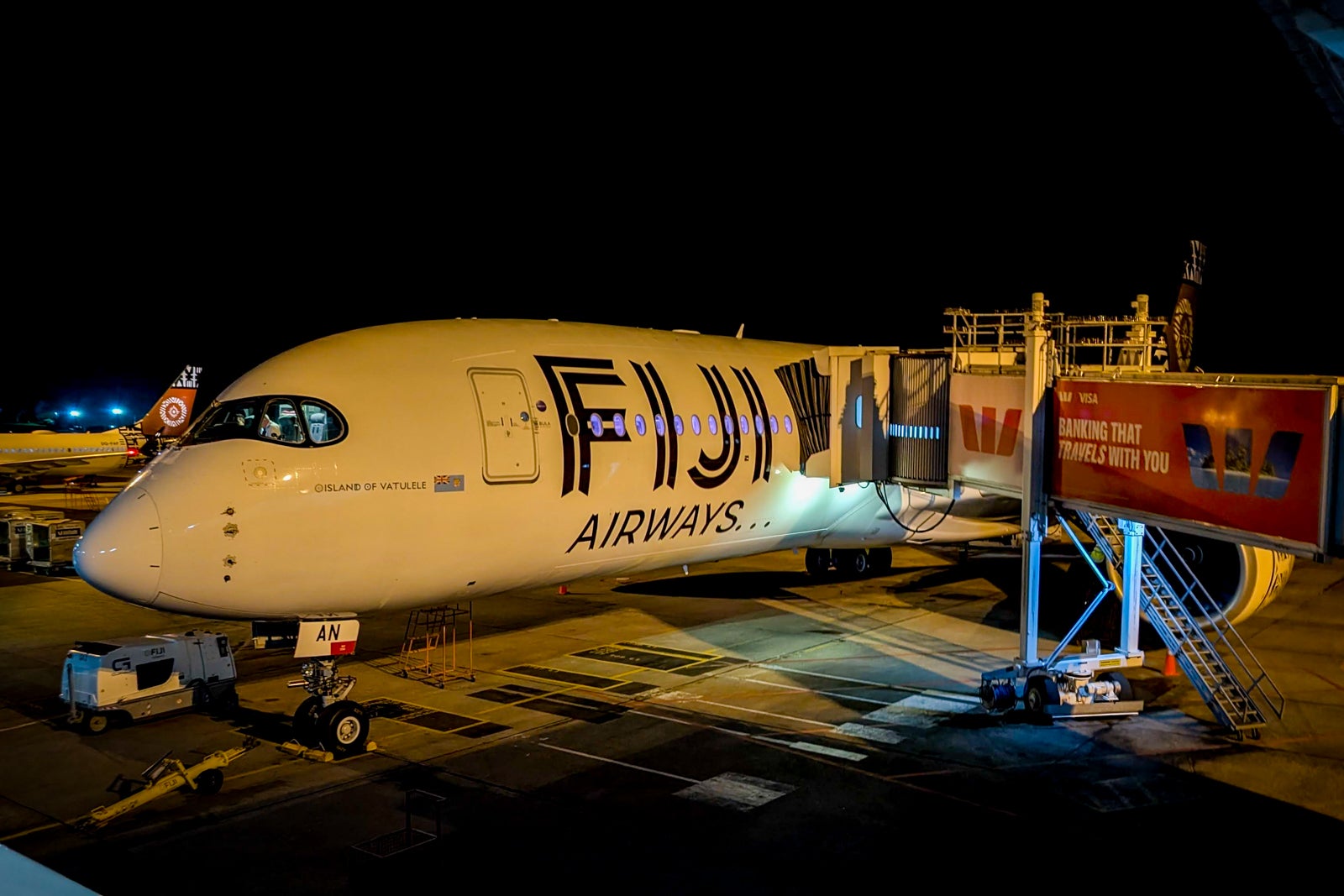
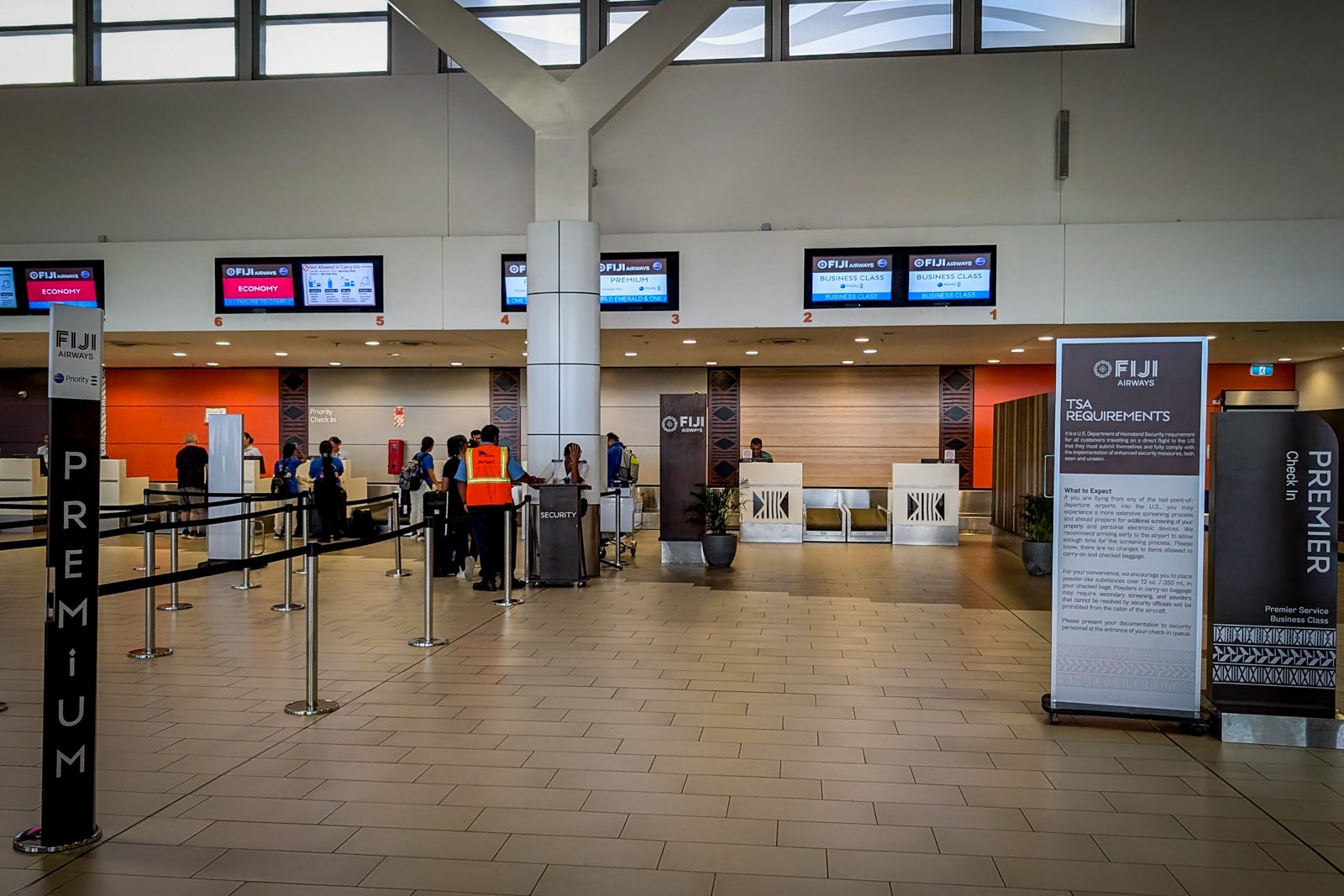
From a technical and strategic perspective, Fiji Airways’ integration into the Oneworld alliance is a game-changer. Recently transitioning from a "Oneworld Connect" partner to a full alliance member, the airline now offers even deeper benefits for frequent flyers. This includes reciprocal lounge access, priority check-in, and enhanced baggage allowances for Emerald and Sapphire members across the alliance. For a business traveler based in a city like Dallas, the ability to earn and redeem AAdvantage miles while enjoying a superior product to Fiji is a powerful incentive to bypass traditional hub-and-spoke routes through Los Angeles.
The airline’s fleet strategy also deserves analysis. By choosing the Airbus A350-900, Fiji Airways has invested in one of the most fuel-efficient and passenger-friendly aircraft in the sky. The A350’s lower cabin altitude, advanced humidity control, and reduced noise levels significantly mitigate the physical toll of long-distance travel. When combined with Fiji Airways’ premium bedding and amenity kits, which often feature sustainable, locally sourced products, the "arrival experience" is markedly better than that of older aircraft types like the Boeing 777 or 787 operated by some competitors.
To maximize the opportunity to fly this world-class product, travelers should look toward strategic credit card acquisitions. Earning Atmos Rewards points is most efficient through Alaska Airlines’ co-branded credit cards or by transferring points from partners like Bilt Rewards. Similarly, American Airlines AAdvantage miles can be amassed through a variety of Citi and Barclays co-branded cards, or by transferring from Citi ThankYou Rewards. Given the 1:1 transfer ratios often available, a single sign-up bonus can frequently cover the majority of a one-way business class ticket to the South Pacific.
In conclusion, Fiji Airways has successfully positioned itself as a "boutique" alternative to the giants of the aviation world. It offers a rare combination of high-end hardware, exceptional culinary standards, and a service culture that feels authentic rather than manufactured. For the points and miles enthusiast, it represents one of the most reliable and high-value ways to cross the Pacific in a lie-flat seat. Whether you are heading to a business meeting in Sydney or a honeymoon in Queenstown, the detour through Nadi is no longer a compromise—it is the highlight of the journey. Fiji Airways has not just entered the top tier of international airlines; it has redefined what it means to travel with soul.