
 By Isnaini Azizah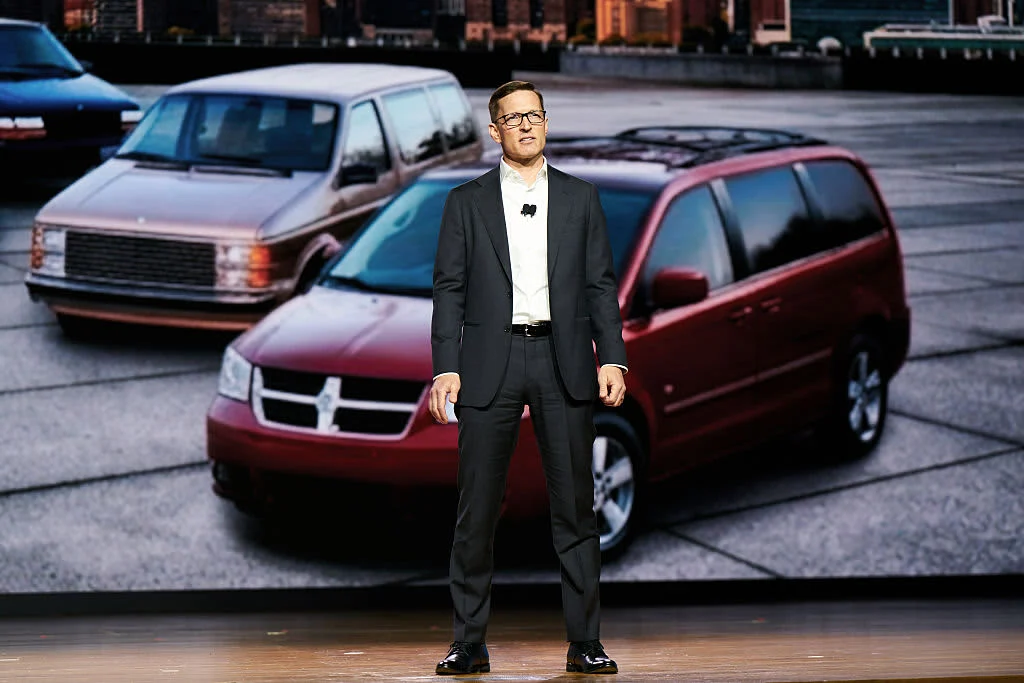
At the 2026 New York International Auto Show, a venue typically dominated by the roar of high-performance sports cars and the imposing silhouettes of rugged off-roaders, the spotlight unexpectedly shifted toward a segment long dismissed as a relic of the suburban past. Matt McAlear, the Chief Executive Officer of Chrysler and Dodge, stood before a crowd of industry analysts and journalists to deliver a defiant message: the minivan is not only alive but is poised for a significant cultural and commercial comeback. As he unveiled the latest iteration of the Chrysler Pacifica Pinnacle—the ultra-premium flagship of the brand’s sole remaining product line—McAlear signaled that Chrysler is doubling down on the vehicle it pioneered four decades ago, betting that a combination of economic utility and high-end luxury will secure the brand’s future.
For the Chrysler brand, once a cornerstone of American industrial might, the stakes could not be higher. Currently, the brand’s entire North American presence rests on the shoulders of the Pacifica and its more affordable sibling, the Voyager (recently rebranded as the Pacifica LX). To critics, this singular focus on a shrinking segment has been viewed as a harbinger of the brand’s eventual dissolution. However, McAlear and the leadership at parent company Stellantis view the situation through a different lens. While Chrysler has been promising a product offensive for several years, the company is finally preparing to pull back the curtain on its long-term roadmap. During his presentation, McAlear confirmed that Stellantis would provide a comprehensive update on Chrysler’s future during its upcoming investor day on May 21 in Auburn Hills, Michigan. "We absolutely see the minivan market growing, and we believe there’s an opportunity for Chrysler to continue its growth year over year," McAlear stated, reinforcing Chrysler’s position as the market leader in the segment.
The narrative of the minivan’s "resurgence" is supported by shifting market dynamics that have begun to favor practicality over the "adventure" branding of the SUV. In the late 1990s and throughout the 2000s, the minivan suffered a steady decline in market share as consumers flocked to Sport Utility Vehicles (SUVs) and Crossovers (CUVs), which offered a more rugged image. According to data from Edmunds, minivan market share hit a nadir of just 1.7% in 2017. However, the tide has begun to turn. By 2025, that figure climbed to 2.4%. While this may seem like a modest gain, in the high-volume world of automotive sales, a nearly 50% increase in market share represents hundreds of thousands of units and billions of dollars in revenue.
The primary catalyst for this shift is a stark economic reality: the soaring cost of new vehicles. The average transaction price for a large SUV has ballooned to a staggering $77,215, driven by a combination of high-tech features, luxury interior packages, and the inherent costs of building massive, body-on-frame vehicles. In contrast, the average price of a minivan stands at $48,269. This figure sits almost perfectly in line with the overall industry average for a new vehicle, which was $48,402 in early 2026. For a growing family, the choice between an $80,000 SUV and a $48,000 minivan—which often offers superior interior volume and easier access—is becoming an easy financial decision.
Chrysler’s strategy for the Pacifica Pinnacle is to bridge the gap between these two worlds. By offering a high-end trim that rivals luxury SUVs in terms of materials and technology, the company is targeting affluent buyers who want the convenience of a "multi-purpose vehicle" (MPV) without sacrificing status. The Pinnacle features quilted Nappa leather seats, integrated rear-seat entertainment screens for streaming movies on long road trips, and advanced driver-assistance systems. Yet, it retains the unique utility that defines the segment, such as the "Stow ‘n Go" seating system, which allows the second and third rows to fold completely flat into the floor, transforming the luxury family hauler into a cargo van in seconds.
Beyond luxury, Chrysler is also experimenting with "ruggedized" concepts to challenge the minivan’s "soccer mom" stigma. At the New York show, the brand showcased the "Grizzly Peak" concept, a modified Pacifica featuring knobby all-terrain tires, a roof rack for outdoor gear, and a more aggressive stance. This move aligns with the "van life" trend that has exploded on social media, where younger, more adventurous consumers are repurposing vans for camping and cross-country travel. "We’re looking at it," McAlear said regarding the possibility of a production rugged minivan. "We’re trying to figure out if there’s a way to do it because people love it. It is unlike anything you’ve ever seen from a minivan brand before."
McAlear emphasized that the utility of the minivan extends far beyond hauling children. He shared anecdotes of users who utilize the Pacifica’s cavernous interior for specialized hobbies that would be difficult to accommodate in an SUV. One example included a racecar driver who uses the van to transport a shifter kart internally, keeping the expensive equipment secure and protected from the elements without the need for a trailer. Another mentioned a kiteboarder who prefers storing long boards inside the cabin rather than struggling with roof racks. This "enclosed utility" is a selling point that Chrysler hopes will attract a broader demographic of active adults and hobbyists.

The sales data from 2025 and the first quarter of 2026 paint a complex but optimistic picture for the segment. While Pacifica sales saw only modest growth for the full year of 2025, the brand reported a massive 84% surge in March 2026 compared to the previous year. Meanwhile, the more affordable Pacifica LX (the former Voyager) has seen a significant jump in volume as budget-conscious families and fleet buyers look for value.
Chrysler is not alone in its quest to revitalize the segment. The competitive landscape is small but fierce, consisting of only five major model lines in the United States. Toyota’s Sienna, which transitioned to an all-hybrid powertrain in 2021, saw its sales jump by 35% in 2025. Toyota has successfully marketed the Sienna’s fuel efficiency—a critical factor as gasoline prices remain volatile. Honda, another stalwart of the segment, saw a 10% increase in Odyssey sales last year, though it experienced a slight dip in the first quarter of 2026 as it awaits a potential redesign.
One of the most notable success stories in the segment is the Kia Carnival. Kia has cleverly marketed the Carnival as a "Life Utility Vehicle," utilizing a squared-off hood and body panels that mimic the silhouette of a rugged SUV while retaining the essential power-sliding rear doors of a minivan. Eric Watson, Vice President of Sales Operations for Kia America, noted that this design strategy has been key to the vehicle’s success. "I think that attracts a lot of people and lowers that stigma of being a minivan family," Watson explained. The Carnival’s sales have grown consistently, now rivaling Kia’s own three-row Sorento SUV in volume.
The segment is also seeing an infusion of "cool" from the electric vehicle sector. Volkswagen’s ID. Buzz, a modern electric reimagining of the iconic Microbus, has entered the market with a "lifestyle" branding that avoids the "minivan" label entirely. By tapping into nostalgia and the EV transition, VW is attracting a demographic that might never have considered a traditional Chrysler or Honda.
As Chrysler prepares for its May 21 investor update, the industry is watching to see how the brand will evolve. Speculation suggests that Chrysler will finally announce a fully electric successor or companion to the Pacifica, leveraging Stellantis’s STLA Large platform. Such a move would be essential to maintaining the brand’s relevance in a market increasingly focused on sustainability.
Ultimately, the "resurgence" Matt McAlear speaks of is rooted in a return to common sense. As SUVs become larger, more expensive, and more difficult to maneuver in urban environments, the minivan stands as a testament to efficient design. With sliding doors that prevent parking lot dings, low step-in heights for children and elderly passengers, and fuel-efficient hybrid options, the minivan offers a level of daily usability that most SUVs cannot match.
"At the end of the day, these things make life easier," McAlear concluded. His mission at the New York International Auto Show was to remind the public that while an SUV might be a statement of who you want to be, a minivan is a tool for how you actually live. If Chrysler can successfully blend that inherent utility with modern luxury and perhaps a touch of ruggedness, the brand’s single-product strategy might not be a sign of an ending, but rather the beginning of a specialized, highly profitable new chapter. The upcoming May presentation in Auburn Hills will likely determine if this "resurgence" is a fleeting trend or the foundation of a Chrysler rebirth.