
 By admin
The philosophy of maximizing travel rewards often centers on a single, golden rule: flexibility is king. For years, the cornerstone of any sophisticated points and miles strategy has been the accumulation of transferable currencies. Programs like Chase Ultimate Rewards, American Express Membership Rewards, Capital One Miles, and Citi ThankYou Rewards represent the pinnacle of this strategy because they allow travelers to remain "free agents." By holding onto these flexible points, a consumer can wait until the moment of booking to decide which airline or hotel partner offers the best value, often taking advantage of lucrative transfer bonuses that can increase the value of their points by 20% to 40% overnight.
However, even the most dedicated "free agent" must occasionally acknowledge when a co-branded airline credit card offers a deal too good to ignore. For many travelers who do not live near a major United Airlines hub—such as Newark Liberty International Airport (EWR), Chicago O’Hare (ORD), or San Francisco International (SFO)—the United MileagePlus program has often been a secondary consideration. Without the convenience of a hub, the incentive to lock oneself into a specific airline’s ecosystem is naturally lower. Yet, the current landscape of travel rewards is shifting, and the United Quest Card has emerged as a compelling disruptor to the "transferable-only" mindset. Even for those who have historically preferred Air Canada’s Aeroplan or other Star Alliance partners, the sheer mathematical value of the Quest Card’s latest offer demands a closer look.
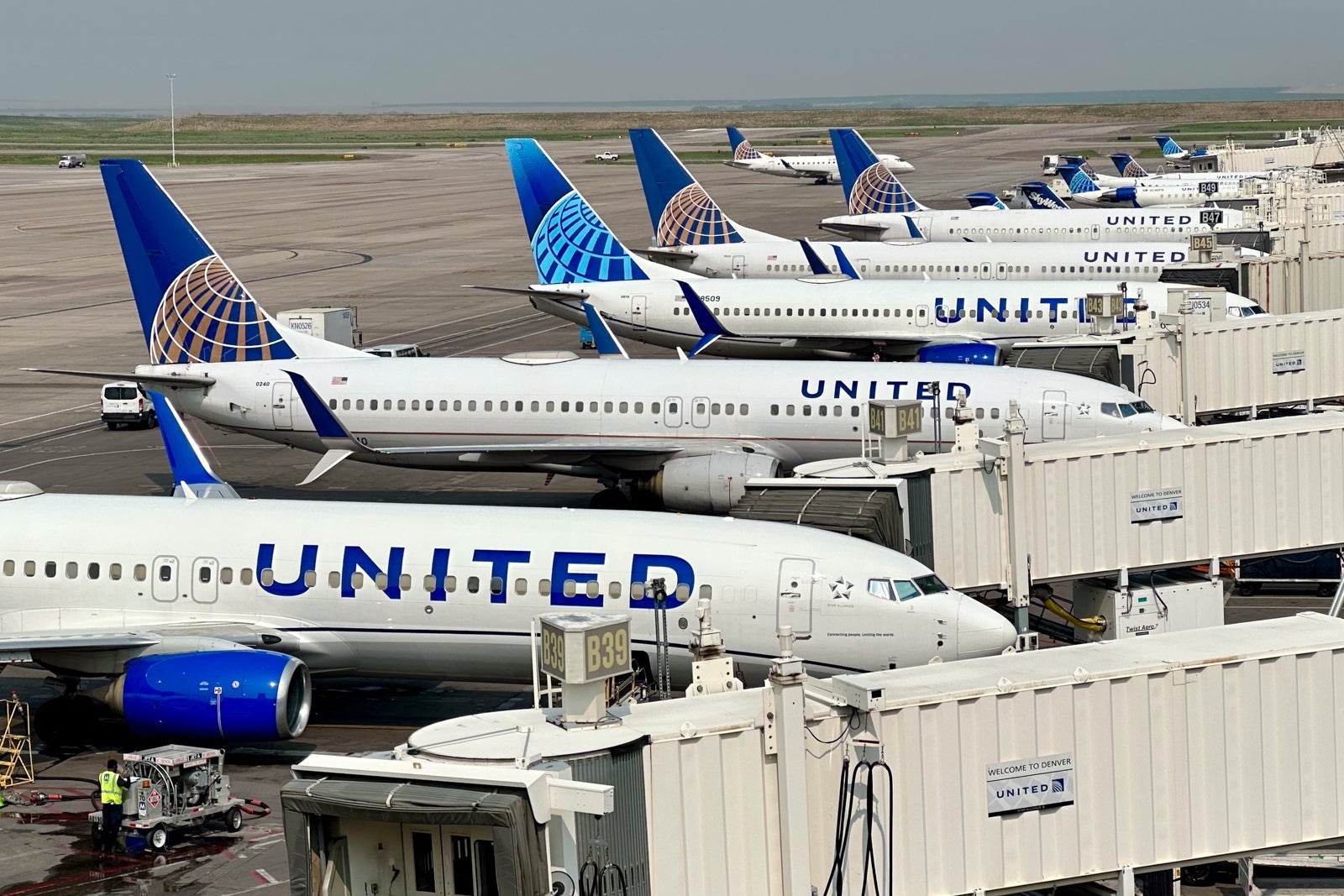
The primary catalyst for this change in perspective is the current welcome bonus. New applicants for the United Quest Card can earn a staggering 80,000 bonus miles along with 3,000 Premier qualifying points (PQPs) after spending $4,000 on purchases within the first three months of account opening. To put this in perspective, industry valuations—such as those from The Points Guy as of February 2026—place the value of United miles at approximately 1.5 cents each. This makes the 80,000-mile bonus alone worth $1,200 in travel. When combined with the PQPs, which act as a fast track toward elite status, the total "get" for a new cardmember is among the highest in the mid-tier premium card market.
The inclusion of 3,000 PQPs is particularly noteworthy for those who have ever toyed with the idea of chasing airline elite status. United’s MileagePlus program is structured around two main metrics: Premier qualifying points (based on spend) and Premier qualifying flights (PQFs). To reach the entry-level Premier Silver status, a flyer typically needs 5,000 PQPs and 12 PQFs, or a straight 6,000 PQPs. By granting 3,000 PQPs upfront, the Quest Card effectively does half the heavy lifting for the cardholder. For a traveler who only flies United a few times a year, this head start makes the perks of Silver status—such as complimentary access to Economy Plus at check-in, a free checked bag, and a 7x mileage multiplier on fares—suddenly attainable.
Furthermore, the card serves as a long-term engine for status maintenance. It allows cardholders to earn 1 PQP for every $20 spent on the card, up to a maximum of 18,000 PQPs per calendar year. While the average consumer may not spend enough to reach the top-tier Premier 1K level solely through credit card spend, this feature provides a vital "top-off" for those who find themselves just a few hundred points short of the next elite tier at the end of the year. For those aiming for Premier Gold, the rewards become even more significant. Gold status confers Star Alliance Gold membership, which unlocks a network of over 1,000 airport lounges globally when flying on any Star Alliance partner, including heavyweights like Lufthansa, ANA, and Singapore Airlines.
Beyond the initial bonus, the United Quest Card is designed to appeal to the "player two" strategy common in the rewards community. In many households, one partner manages the complex web of redemptions while the other simply wants a reliable card to use for daily expenses. The Quest Card incentivizes this by offering 10,000 bonus miles for adding an authorized user within the first three months. This is a low-effort way to boost the total haul to 90,000 miles, providing enough capital for a round-trip business-class seat to Europe or several domestic excursions.
Critics of co-branded cards often point to high annual fees as a deterrent. The United Quest Card carries a $350 annual fee, which places it in the "mid-range premium" category, competing with the likes of the Capital One Venture X or the American Express Gold Card. However, a closer audit of the card’s recurring benefits reveals that the "effective" annual fee is much lower for even a semi-regular traveler. The card provides an automatic $125 United credit each year, which is applied as a statement credit for United purchases. For anyone who spends at least $125 on United tickets, flight upgrades, or in-flight snacks, the fee is immediately offset to $225.
Additionally, the Quest Card offers a unique "anniversary reward" that is rare in the industry: starting with the first anniversary of card ownership, members receive two 5,000-mile flight credits. These are applied as a rebate after the cardholder books a United-operated award flight. If a traveler books at least two award flights a year, they effectively claw back 10,000 miles. At a 1.5-cent valuation, that is another $150 in value, potentially bringing the net cost of the card down to a mere $75.

This financial logic is bolstered by the card’s protection against the rising costs of air travel. In early 2024, United joined other major carriers in raising checked bag fees. Currently, passengers can expect to pay up to $40 for a first checked bag and $50 for a second. The United Quest Card covers the first and second checked bags for the cardholder and one companion on the same reservation. On a single round-trip flight for two people, this perk can save up to $360 in fees—more than the cost of the annual fee itself. This makes the card a "math-winner" for families or couples who refuse to travel light.
The skepticism regarding United’s "dynamic pricing" model is a valid concern for many points enthusiasts. In 2019, United followed Delta’s lead by removing fixed award charts, meaning the mileage cost of a seat now fluctuates based on demand, much like cash prices. This move led many to fear the "devaluation" of MileagePlus miles. However, empirical data and consistent award searching suggest that the "death" of United miles was greatly exaggerated. For domestic travel, United frequently offers "Short-Haul" awards starting as low as 5,000 miles. For international travelers, the "Excursionist Perk"—which allows for a free one-way flight within a single multi-city itinerary—remains one of the most powerful tools in the travel hacker’s arsenal.
Moreover, the availability of United’s highly-rated Polaris business class for 88,000 miles to Europe remains a benchmark for transatlantic value. While these seats can be elusive, the Quest Card (and other United co-branded cards) offers an "invisible" benefit: expanded award availability. United cardholders and elite status members have access to more "Saver" level award seats than the general public. This means that a flight showing no award space to a Chase Sapphire holder might actually be bookable for someone with a Quest Card in their wallet.
Despite these strengths, the card is not without its flaws. For a $350 fee, the absence of United Club lounge passes is a noticeable omission. The lower-tier United Explorer Card, which has a $95 fee (waived the first year), provides two annual lounge passes, making the Quest Card’s lack of passes feel like a missed opportunity for a premium product. Furthermore, the high-spend "milestone" rewards are somewhat underwhelming. Earning two Economy Plus upgrade certificates after spending $40,000 on the card is a poor return on investment compared to what that same $40,000 could earn on a card with higher category multipliers. For instance, spending $40,000 on dining with a card that earns 4x points would yield 160,000 transferable points, a value far exceeding the cost of a few extra inches of legroom.
Prospective applicants must also navigate the "Chase 5/24 Rule," an unofficial but strictly enforced policy where Chase will deny any credit card application if the user has opened five or more personal credit cards from any issuer in the past 24 months. For those who are "under 5/24," the Quest Card represents a strategic use of a valuable slot, especially given the current elevated bonus.
In conclusion, the United Quest Card represents a shift in the value proposition of airline co-branded cards. It is no longer just a tool for the "loyalist" who lives in a hub city; it has become a high-yield investment for the tactical traveler. By combining a massive upfront mileage bonus with a significant status boost and recurring credits that effectively neutralize the annual fee, the card makes a compelling case for itself. While transferable points will always be the foundation of a great travel strategy, the Quest Card proves that sometimes, the right co-branded card can offer a shortcut to luxury that flexible points simply cannot match. For those ready to book their next summer getaway to Europe or simply looking to dodge the ever-increasing cost of checked luggage, the time to reconsider United has arrived.