
 By Titik Puspa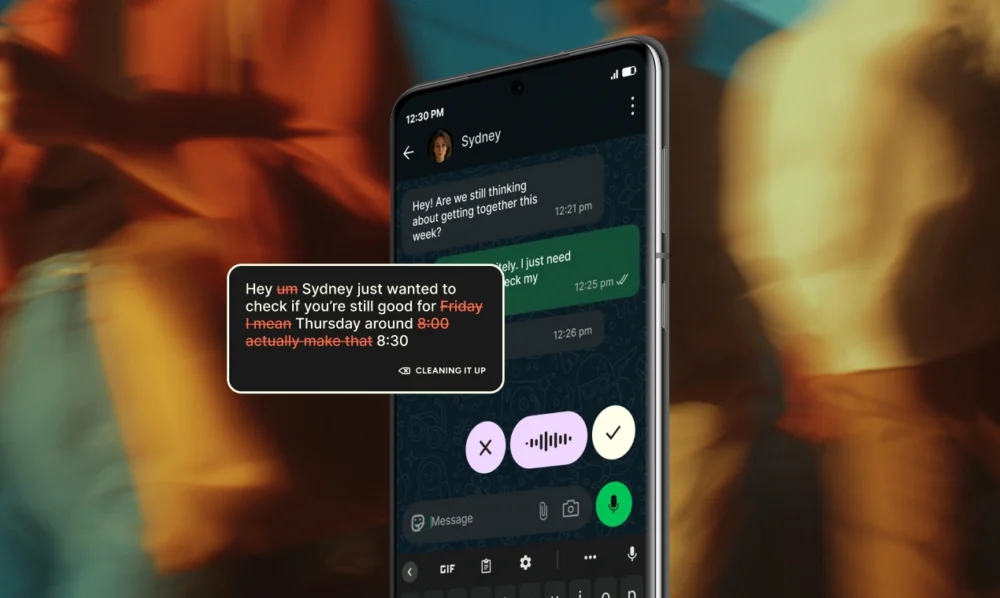
Boston, MA – June 9, 2026 – AI-powered dictation startup Wispr Flow has officially launched its highly anticipated Android application today, marking a significant expansion of its user base and a bold stride towards making voice input the dominant mobile interaction method. This release follows the company’s initial success with its desktop applications for Mac and Windows, and its subsequent debut on iOS in June 2025, which was met with considerable acclaim for its innovative approach to effortless dictation.
While the iOS version of Wispr Flow integrated seamlessly through a dedicated keyboard, the Android experience has been meticulously crafted to leverage the platform’s unique capabilities. Users can now access Wispr Flow’s powerful dictation engine via a distinctive floating bubble interface. This intuitive design allows for a fluid user experience: a simple press-and-hold gesture initiates dictation, while a single tap starts and the closure of the bubble signals the end of the recording. Mirroring the functionality available on other platforms, the Android app excels at not only capturing spoken words but also intelligently cleaning up filler words and contextually formatting the transcribed text, ensuring accuracy and readability across diverse applications.
"Android finally gave us the freedom to build the voice experience we always wanted. Only when the platform gets out of the way can we truly expect voice to replace typing on mobile," declared Tanay Kothari, co-founder and CEO of Wispr Flow. This statement underscores the company’s vision to transcend the limitations of traditional input methods and usher in an era where voice is as natural and efficient as typing, if not more so. The Android platform’s flexibility, particularly its ability to overlay interfaces and integrate with system-level functions, has been instrumental in realizing this ambition.
The newly released Android app boasts impressive multilingual capabilities, supporting translation in over 100 languages. This global reach ensures that users worldwide can benefit from Wispr Flow’s advanced dictation technology, regardless of their preferred language. Furthermore, the app’s deep integration allows it to function seamlessly across other applications, transforming how users communicate, create content, and manage tasks on their mobile devices. Accompanying this pivotal Android launch, Wispr Flow has also announced a significant infrastructure rewrite, resulting in dictation speeds that are an astonishing 30% faster than previous iterations. This performance enhancement is a direct result of ongoing research and development aimed at optimizing the AI models and backend processing, ensuring that users experience near-instantaneous transcription.
In a market increasingly populated by AI-powered dictation solutions, Wispr Flow’s entry onto Android is particularly noteworthy. While the desktop and iOS landscapes are relatively crowded with sophisticated options, the Android ecosystem has seen fewer dedicated, high-performance dictation applications. Wispr Flow joins a select few, with Typeless being another recent entrant, having launched its own Android app just last month. This scarcity highlights the technical challenges and market opportunities that Wispr Flow is poised to capitalize on.

Adding another layer of innovation to its product suite, Wispr Flow has also introduced a groundbreaking new model specifically designed for Hinglish, the prevalent blend of Hindi and English spoken by millions in India. This development directly addresses the linguistic nuances of a significant user demographic, offering a transcription solution that accurately reflects their natural communication patterns.
"If you’re someone like me, English and Hindi weave together when I’m chatting with family and colleagues back home. This is one of those times when I just had to build something for me: the first voice model to actually support transcription in Hinglish instead of traditional Hindi script," Kothari explained, personalizing the motivation behind this specialized feature. This user-centric approach, driven by the need for practical and inclusive technology, has been a recurring theme in Wispr Flow’s development. The ability to transcribe code-switched speech accurately is a significant leap forward, moving beyond generic language models to cater to the sophisticated linguistic realities of diverse global communities.
The company’s commitment to pushing the boundaries of AI-powered communication is further evidenced by its impressive traction. Even during the early rollout to select users, the platform has seen remarkable engagement. In the past few days alone, users have dictated over 1.3 million words in English, demonstrating the immediate and widespread adoption of the technology. This rapid uptake is a testament to the app’s efficacy and the growing demand for seamless voice-to-text solutions.
Wispr Flow has rapidly emerged as a prominent player in the AI dictation arena, attracting substantial venture capital interest. In June 2025, the startup secured a significant $30 million in funding, spearheaded by Menlo Ventures. This investment provided the resources necessary to accelerate product development and expand market reach. Demonstrating continued investor confidence, Wispr Flow further bolstered its financial standing by securing an additional $25 million in November of the same year, in a round led by Notable Capital. To date, Wispr Flow has raised a total of $81 million, with its latest funding round valuing the company at an impressive $700 million, according to industry sources. This substantial financial backing positions Wispr Flow for aggressive growth and continued innovation in the competitive AI landscape.
The implications of Wispr Flow’s advancements extend beyond mere convenience. By making dictation faster, more accurate, and more linguistically adaptable, the company is empowering individuals to communicate more effectively and efficiently. For professionals, this translates to increased productivity, allowing them to capture ideas, dictate emails, and draft documents with unprecedented ease. For students, it offers a powerful tool for note-taking and essay writing. And for individuals with disabilities that may make traditional typing challenging, Wispr Flow provides a vital pathway to enhanced digital engagement and independence. The focus on Hinglish also highlights a growing trend in AI development: the need for hyper-localization and the recognition of diverse linguistic practices that go beyond mainstream language models. As AI continues to permeate our daily lives, the ability of these technologies to understand and adapt to the rich tapestry of human language will be a key differentiator. Wispr Flow’s strategic moves suggest a deep understanding of this evolving landscape, positioning them not just as a dictation app provider, but as a facilitator of more inclusive and accessible digital communication. The company’s trajectory, marked by rapid product evolution, substantial funding, and a keen understanding of user needs, indicates that Wispr Flow is set to redefine the boundaries of voice-enabled interaction on mobile devices and beyond.