
 By admin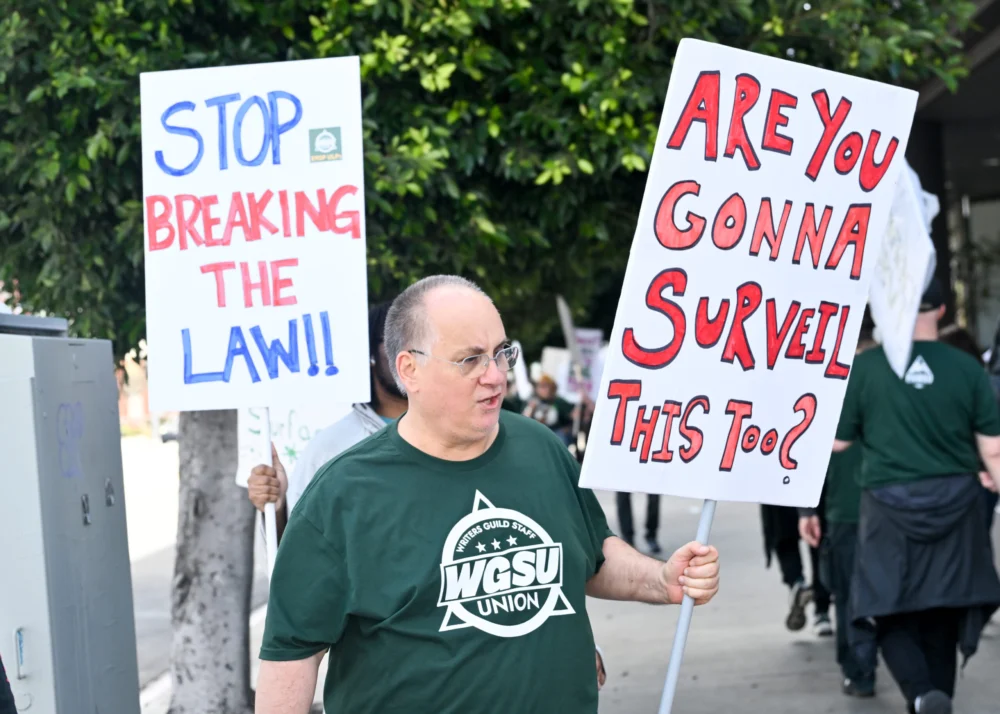
The prestigious annual Writers Guild of America West (WGAW) Awards Los Angeles ceremony, a highlight of the industry calendar, has been unceremoniously canceled for 2026. The decision stems directly from the ongoing labor dispute involving the Writers Guild Staff Union (WGSU), which commenced its strike on February 17th, citing allegations of management’s failure to bargain in good faith. This unprecedented cancellation casts a shadow over the recognition of screenwriting talent and underscores the deep-seated tensions within the WGAW organization itself.
In a somber letter addressed to awards presenters and participants on Sunday morning, WGA West President Michele Mulroney formally announced the cancellation. "I am writing to share the news that the 2026 Writers Guild Awards Los Angeles ceremony will be cancelled," Mulroney stated. "An alternative celebration for this year’s Los Angeles-based nominees will be scheduled at a later date." While the WGA West ceremony in downtown Los Angeles, slated to be held at the JW Marriott hotel, will not proceed as planned, the Writers Guild of America East (WGAE) has confirmed that its awards show will still take place in New York on March 8th. This means that while the West Coast nominees will not have their moment in the spotlight at a dedicated gala, the winners will still be publicly acknowledged through the East Coast ceremony.
The root of this disruption lies in the labor action undertaken by the WGSU, which represents approximately 110 employees of the WGA. The staff union officially went on strike after accusing WGAW management of a lack of good-faith negotiations. Their primary demands revolve around securing higher wages and implementing "just cause" protections within the employee discipline process. The WGSU, having organized last April, has been engaged in daily picketing outside the WGA headquarters located at Fairfax Avenue and 3rd Street, a visible and persistent demonstration of their grievances.
The situation escalated dramatically when the WGSU took to Instagram on Tuesday to reveal that WGAW management had allegedly issued an ultimatum: accept the latest offer by Friday, or the award show would be canceled. The staff union vehemently condemned this tactic, asserting in their post, "Make no mistake: This is an attempt by WGAW management to drive a wedge between union staff and WGA membership when we should be building unity ahead of (studio negotiations)." This statement highlights a strategic concern from the WGSU, suggesting that management’s actions are aimed at fracturing solidarity at a crucial juncture, particularly with broader negotiations with major studios looming.
The logistical and ethical dilemma presented by the picketing staff union would have been significant had the L.A. awards ceremony proceeded. The WGSU would likely have continued their picketing efforts outside the JW Marriott, forcing WGA members and unionized hotel staff to cross picket lines to attend or work at the event. This scenario would have created an untenable situation, pitting union members against their own union’s staff and potentially jeopardizing the labor relations of the venue itself. The WGAW’s decision to cancel the event effectively preempts this conflict, though it does so at the cost of a significant industry event.
For context, the Writers Guild of America is structured into two distinct locals, the WGA West and the WGA East, which traditionally hold their respective award shows concurrently each year. The nominations and voting for these awards are a collective effort, drawing input from the entirety of both guilds, emphasizing a shared interest in recognizing the craft of writing. The cancellation of the Los Angeles ceremony, therefore, impacts a broad swath of the WGA membership.
The absence of the WGAW Awards in Los Angeles means that several prominent figures will not be celebrated at the originally scheduled event. Comedian and actress Atsuko Okatsuka was slated to host the L.A. show, bringing her unique comedic voice to the proceedings. Additionally, acclaimed filmmaker James Cameron was set to be honored with the WGAW Laurel Award, a significant accolade recognizing his contributions to the writing profession. These recognitions, while still possible in an alternative format, lose some of their immediate impact and public visibility due to the cancellation.
Meanwhile, the WGA East ceremony in New York remains on track to celebrate screenwriters. Roy Wood, Jr., a respected comedian and writer, is confirmed to host the New York show at the elegant Edison Ballroom. Esteemed television host and comedian Stephen Colbert is also slated to receive the Walter Bernstein Award at the East Coast event, ensuring that at least one significant WGA awards ceremony will proceed as planned, offering a platform for public acknowledgment of writers’ achievements.
The conflict between the WGAW management and its staff union is not an isolated incident in the broader landscape of Hollywood labor relations. The past few years have seen a surge in labor activism across various entertainment unions, including the Directors Guild of America (DGA) and SAG-AFTRA, as workers across different sectors of the industry have sought to address concerns regarding compensation, working conditions, and the evolving nature of content creation in the digital age. The WGA itself was at the forefront of a major strike in 2023, which significantly disrupted film and television production for months. This internal dispute within the WGAW, therefore, occurs against a backdrop of heightened labor consciousness and a willingness by workers to engage in industrial action to achieve their goals.
The demands of the WGSU – higher wages and "just cause" protections – are common threads in many labor disputes. "Just cause" provisions are crucial for unionized employees as they ensure that disciplinary actions, including termination, are based on legitimate and demonstrable reasons, preventing arbitrary or discriminatory treatment by management. In the context of a union representing its own administrative and operational staff, these demands reflect a commitment to the very principles of fair labor practices that the WGA champions in its broader negotiations with studios and production companies. The irony of the WGAW management being accused of failing to bargain in good faith with its own employees is not lost on observers of labor relations.
The WGAW, as a union, is fundamentally built on the principle of collective bargaining and the protection of its members’ rights. The current situation raises questions about how effectively the organization is embodying these principles internally. The WGSU’s accusation that management is attempting to "drive a wedge" suggests a perceived strategy to weaken the staff union’s position by isolating them from the broader WGA membership, potentially to avoid setting precedents or to gain leverage in their own negotiations with studios. This internal power struggle highlights the complexities of union management and the challenges of balancing organizational needs with the rights and expectations of employee unions.
The cancellation of the awards ceremony, while a significant event in itself, is symptomatic of a larger organizational struggle. The WGAW, like many large organizations, faces the inherent tension between management and labor within its own structure. The WGSU’s strike and the subsequent cancellation of the awards underscore the importance of internal solidarity and the potential consequences when labor disputes are not resolved equitably. As the WGAW navigates this challenging period, the industry will be watching closely to see how these internal conflicts are resolved and what impact they may have on the guild’s ability to advocate effectively for its screenwriter members in future negotiations. The postponed "alternative celebration" for the L.A. nominees will undoubtedly be viewed through the lens of this ongoing labor dispute, and its eventual form and timing may offer further insights into the state of internal relations within the WGA West.