
 By admin
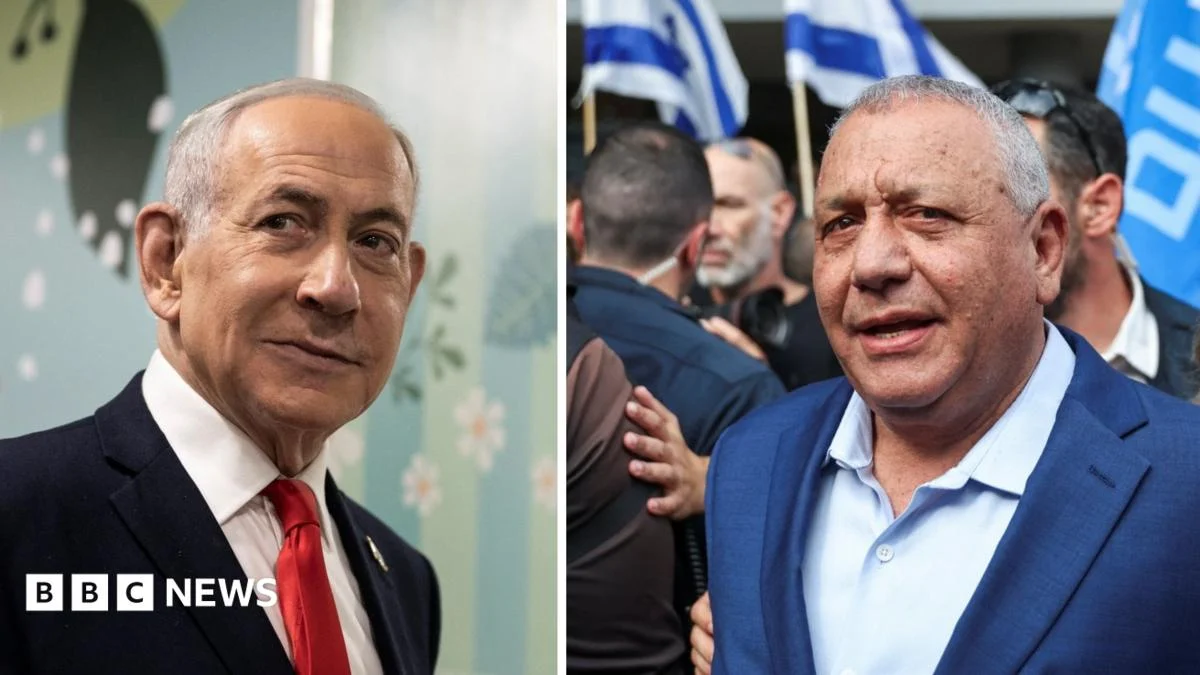
Polls have closed in the Israeli election and votes are being counted, ushering in a period of intense political maneuvering and uncertainty as the nation awaits definitive results. Early exit polls, while offering a preliminary glimpse into the electorate’s will, paint a picture of a deeply divided political landscape, with no single bloc or party securing a decisive majority needed to form a stable government. This outcome signals a likely continuation of protracted coalition negotiations, a hallmark of recent Israeli electoral cycles, and raises questions about the future direction of the country both domestically and on the international stage.
The preliminary data from exit polls suggests that the bloc aligned with Gadi Eisenkot, a prominent figure and former Chief of Staff of the Israel Defense Forces (IDF), has emerged as the largest grouping of seats in the Knesset, Israel’s parliament. However, this projected victory, if it holds, falls short of the 61-seat threshold required for an outright majority. This means that even with the largest number of seats, Eisenkot’s potential allies will need to forge a complex and potentially fragile coalition with smaller parties, each likely to demand significant concessions in exchange for their support. The significance of this outcome lies in its potential to shift the political center of gravity, but it simultaneously underscores the persistent fragmentation of Israeli politics, where ideological divides and personality clashes often hinder the formation of unified governing coalitions.
Concurrently, the exit polls indicate that Prime Minister Benjamin Netanyahu’s Likud party is poised to retain its status as the largest single party within the Knesset. This outcome, while not guaranteeing Netanyahu a path to forming a government, represents a significant achievement for the veteran leader, who has navigated numerous political storms throughout his long career. The resilience of Likud, even amidst ongoing legal challenges and widespread public debate, speaks to the enduring appeal of Netanyahu’s nationalist and security-focused platform for a substantial segment of the Israeli electorate. However, the fact that Likud, despite being the largest single party, is unlikely to command a majority on its own further emphasizes the challenge of building a stable governing coalition. The dynamics between Likud and its potential right-wing and religious allies, as well as the opposition’s efforts to coalesce, will be crucial in determining the next government.
The BBC’s Hugo Bachega, a seasoned correspondent with extensive experience covering Israeli politics, is now looking at what might happen next. His analysis will undoubtedly delve into the intricate dance of coalition building, the potential for compromise and conflict between the various parties, and the broader implications of the election results for Israeli society and its regional relationships. Bachega’s expertise will be invaluable in dissecting the complex scenarios that could unfold in the coming days and weeks, from the possibility of a unity government to prolonged political deadlock.
To understand the context of these exit poll results, it is essential to consider the recent history of Israeli elections. The country has held multiple elections in recent years, often resulting in similarly inconclusive outcomes and leading to a period of political instability. This electoral fatigue among the populace, coupled with deep-seated ideological divisions, has made it increasingly difficult to form a cohesive and enduring government. Key issues that have dominated the campaign discourse include the ongoing conflict with Palestinian territories, the perceived threat from Iran, the rising cost of living, and the deeply polarizing judicial reforms proposed by Netanyahu’s previous governments. The results of this election will undoubtedly reflect the electorate’s anxieties and aspirations on these fronts.
Gadi Eisenkot, a former IDF Chief of Staff, represents a more centrist and security-oriented alternative to Netanyahu. His bloc, often comprising parties that emphasize national security while also advocating for a more pragmatic approach to the Israeli-Palestinian conflict, has seen growing support in recent years. His potential to lead a coalition would signal a shift in priorities, potentially leading to a more moderate foreign policy and a renewed focus on internal social and economic issues. However, the challenge for Eisenkot and his allies lies in bridging the ideological gaps that exist within their own potential coalition partners, who may hold differing views on critical issues such as religious pluralism and the future of settlements in the West Bank.
Benjamin Netanyahu, on the other hand, has consistently campaigned on a platform of strong national security, economic liberalism, and a staunch defense of Israeli sovereignty. His Likud party, along with its traditional right-wing and religious allies, forms a significant political force in Israel. His supporters often credit him with maintaining Israel’s security in a volatile region and fostering economic growth. However, his leadership has also been characterized by deep polarization, with critics pointing to his divisive rhetoric and the ongoing legal battles he faces over corruption charges. The extent to which Netanyahu can rally enough support to form a government will depend on his ability to appease the demands of his potential coalition partners, some of whom may be highly ideological and seek to push for policies that could further alienate segments of the Israeli public and the international community.
The role of smaller parties in forming a coalition cannot be overstated. In Israel’s proportional representation system, even parties with a relatively small number of seats can hold significant leverage if they become kingmakers. These parties, often representing specific ideological or demographic groups, will likely demand ministerial portfolios, legislative priorities, and policy concessions in exchange for their crucial support. This can lead to governments that are ideologically diverse but potentially unstable, as competing interests and demands can quickly create rifts. The rise of smaller parties on both the right and the left, reflecting the fragmentation of the political spectrum, adds another layer of complexity to the coalition-building process.
The implications of the election results extend beyond domestic politics. Israel’s foreign policy, particularly its relationship with the Palestinian Authority, the United States, and its Arab neighbors, could be significantly shaped by the composition of the next government. A government led by Eisenkot’s bloc might pursue a more diplomatic approach to the Israeli-Palestinian conflict, potentially seeking to revive stalled peace talks. Conversely, a Netanyahu-led government, likely to be more reliant on right-wing and religious parties, might adopt a more hardline stance, potentially leading to increased tensions in the region. The evolving Abraham Accords, normalizing relations with several Arab nations, will also be a key area to watch, as different coalition dynamics could impact the pace and scope of further normalization.
The legal challenges facing Benjamin Netanyahu remain a significant undercurrent in Israeli politics. The ongoing corruption trial has fueled debates about the integrity of public officials and the rule of law. While his supporters argue that he is the victim of a political witch hunt, his opponents believe that his legal troubles disqualify him from leading the country. The election results will likely not resolve these issues but will influence the political environment in which they are adjudicated.
Furthermore, the economic landscape of Israel is another critical factor that the incoming government will have to address. The rising cost of living, inflation, and the need for sustained economic growth are pressing concerns for many Israelis. The policies proposed by different parties regarding taxation, social welfare, and technological innovation will have a tangible impact on the daily lives of citizens.
The analysis provided by the BBC’s Hugo Bachega will likely explore these multifaceted dimensions. He will likely examine the potential candidates for key ministerial positions, the specific policy planks that each potential coalition partner will champion, and the diplomatic maneuvering that will occur behind the scenes. The possibility of a unity government, bringing together disparate political forces to address national challenges, will also be a subject of scrutiny. However, given the deep ideological divides, such a scenario often proves difficult to sustain in the long term.
The counting of votes is a meticulous process, and final results can take time to be officially declared. Until then, the political landscape will remain in a state of flux, with parties engaging in intense lobbying and negotiation. The public will be closely watching, hoping for a government that can provide stability and address the pressing issues facing the nation. The outcome of this election is not merely about forming a government; it is about charting the future course of Israel, its society, its economy, and its role in a complex and often turbulent region. The coming days and weeks will be critical in determining which path the country will take.
