
 By admin
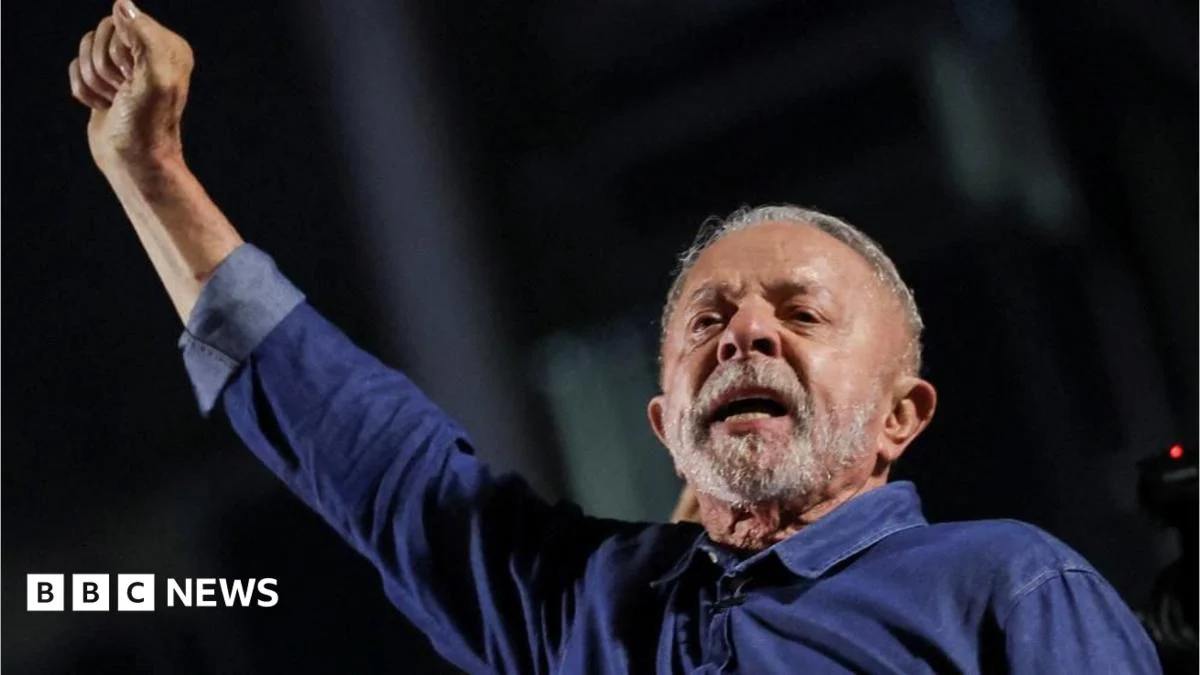
In a closely watched and intensely polarized election, Luiz Inácio Lula da Silva, the charismatic former metalworker and union leader, has secured a historic fourth term as President of Brazil. The victory marks a remarkable comeback for the left-wing icon, who triumphed over his right-wing challenger, Flávio Bolsonaro, by a margin of 51.79% of the votes. This pivotal win positions Lula as the first president since Brazil’s return to civilian rule in 1985 to be elected after having lost the first round of voting, underscoring the dramatic shift in the nation’s political landscape.
Addressing jubilant crowds that spilled into the streets of São Paulo, Lula declared his victory a "loss for negativity, lies," and a resounding affirmation of "long live democracy." His supporters, a diverse coalition united by a desire for change and a rejection of the previous administration’s policies, celebrated late into the night, their cheers echoing Lula’s promise to lead a Brazil that prioritizes inclusivity and social justice.
However, the path to this hard-won victory was far from smooth. Flávio Bolsonaro, the son of the convicted former president Jair Bolsonaro, has, as anticipated by many observers, refused to formally recognize the election result and has called for it to be annulled. This echoes the actions of his father, who also challenged the legitimacy of his electoral defeat in 2022. While a legal challenge appears unlikely to succeed given the substantial margin of victory and the established electoral process, Bolsonaro’s stance signals a continued period of political tension and potential obstruction.
The core of Bolsonaro’s challenge seems to be centered on the Supreme Court Justice Cristiano Zanin’s decision to extend voting nationwide by two hours. This unprecedented move, while officially attributed to logistical issues and voter access concerns, has been seized upon by some Bolsonaro supporters who allege bias, citing Zanin’s past role as Lula’s lawyer. However, a closer examination of the events reveals that both campaigns had actively requested an extension to voting times. Lula’s team argued that voters in key states like São Paulo and Bahia faced difficulties reaching polling stations due to a lack of public transportation, a critical issue for mobilizing lower-income voters. Simultaneously, Bolsonaro’s campaign cited heavy rainfall in certain southern regions and in São Paulo as a reason for potential disenfranchisement. Both sides, acutely aware of the razor-thin margins that often define Brazilian elections, sought to ensure that no potential vote for their candidate was lost.
Crucially, the president of the Supreme Electoral Court, Kássio Nunes Marques, who was appointed by Jair Bolsonaro himself, has officially confirmed Lula’s victory. Marques explicitly stated that the extended voting period did not alter the outcome of the race. The sheer numerical difference in votes – a substantial 4.4 million – further solidifies the election’s legitimacy and makes any attempt to overturn it exceedingly difficult, if not impossible.

The election’s outcome was a surprise to many, especially after Flávio Bolsonaro had secured a lead in the first round on October 4th with 47% of the votes, ahead of Lula’s 45%. This initial result had fueled expectations of a Bolsonaro victory and sent ripples of concern through Lula’s supporters. However, Lula’s campaign team demonstrated remarkable agility and strategic acumen in the period leading up to the second round. They focused intensely on boosting voter turnout, a critical factor given that a staggering 33 million eligible voters abstained in the first round. Their efforts paid off handsomely, as Sunday’s election saw the largest drop in abstention between the two rounds of a presidential election since 1989, a testament to the efficacy of their mobilization strategies.
As the results solidified, a visibly disappointed Flávio Bolsonaro, who had reportedly been preparing a victory speech, was seen leaving his residence in Brasília, his claims of an "inexplicable" and potentially rigged result falling on deaf ears for many. His supporters, their faces etched with dejection, dispersed from the viewing party, their hopes dashed. In stark contrast, Lula, ever the man of the people, took to the streets of São Paulo, his energy infectious, to bask in the adoration of his supporters.
"This, my fourth term, will be the best of any president in the history of this country," Lula proclaimed to the roaring crowd, his voice resonating with conviction. "It will be the one in which I listen most to the Brazilian people." This statement, delivered with characteristic humility and a commitment to popular governance, signaled his intention to lead a more inclusive and responsive administration.
Despite this momentous victory, Lula faces a daunting set of challenges as he prepares to assume office on January 5th. He inherits a nation deeply divided by years of acrimonious political discourse, an opponent who refuses to concede, and a Congress heavily populated by allies of his predecessor, many of whom are likely to oppose his legislative agenda. This hostile environment will test his ability to forge consensus and implement his ambitious social and economic programs.
The financial markets reacted swiftly and negatively to the unexpected outcome. The São Paulo stock exchange, B3, experienced a sharp decline, opening 15% down and triggering a brief suspension before recovering some ground. Investors, wary of Lula’s proposed fiscal policies and potential shifts in economic strategy, have begun to scrutinize his plans with a heightened sense of caution. This market volatility underscores the economic uncertainties that loom over Brazil and the pressure Lula will face to reassure both domestic and international investors.
The international reaction to Lula’s victory has been largely positive, though notably, former U.S. President Donald Trump has once again cast doubt on the electoral process. Speaking to reporters on Monday, Trump suggested the election had been stolen, stating, "I didn’t take sides, but it looked like another rigged election. It looked very bad to me," without offering any substantiating evidence. This echoes his consistent rhetoric regarding election integrity and highlights a potential point of friction with the incoming Biden administration, which has congratulated Lula.

In contrast, a broad spectrum of world leaders has extended their congratulations to President-elect Lula, signaling a desire for renewed international cooperation and a commitment to democratic principles. Mexico’s left-wing President Claudia Sheinbaum celebrated, stating, "The people of Brazil won." Peru’s right-wing President Keiko Fujimori praised Brazil’s "democratic day," and similar sentiments were echoed by the presidents of Chile and Ecuador. Canadian Prime Minister Mark Carney emphasized the existing strong partnership between their nations. European Commission President Ursula von der Leyen declared that "democracy and multilateralism" had triumphed, while Spanish Prime Minister Pedro Sánchez hailed it as a "great victory." French President Emmanuel Macron expressed his eagerness for the two nations to work together "in service of a more just world." South African President Cyril Ramaphosa framed Lula’s victory as a triumph for the "global south and progressive forces throughout the world," underscoring the significance of this political shift for developing nations.
In a video posted on Instagram, Flávio Bolsonaro revealed that he had been informed by police that he was to surrender his passports and was banned from leaving the country, a move that suggests the legal ramifications of his refusal to concede may be escalating. Trump’s past support for Jair Bolsonaro, who is currently serving a significant prison sentence following his conviction for a coup attempt after losing the 2022 elections, adds another layer of complexity to the U.S.-Brazil relationship. Flávio Bolsonaro’s visit to the White House earlier this year to seek Trump’s endorsement further highlights the ideological alignment between the two figures.
Lula, who will celebrate his 81st birthday on Tuesday, has already served as president for three non-consecutive terms, from January 2003 to December 2010. His current term, which will commence on January 5th, will extend until 2030, making him the longest-serving president in Brazilian history. This unprecedented electoral achievement comes at a critical juncture for Brazil, a nation grappling with internal divisions and a complex global political landscape.
The "Donroe Doctrine," a term coined by Trump to describe a supposed U.S. policy of dominance in the Western Hemisphere, was implicitly challenged by Lula during his victory speech. He asserted, with unwavering resolve, that Brazil "will not accept being anyone’s backyard." This statement reflects a broader geopolitical shift and Brazil’s assertion of its sovereignty and independent foreign policy.
Lula’s victory also stands in contrast to a prevailing trend in Latin America, where voters in several countries, including Argentina, Chile, and Colombia, have recently elected right-wing candidates and parties. This regional swing to the right makes Lula’s triumph a significant counterpoint and a potential catalyst for a re-evaluation of political ideologies across the continent. His administration’s success will be closely watched, not only within Brazil but across the hemisphere, as it navigates the intricate challenges of economic recovery, social inequality, and the preservation of democratic institutions in a rapidly changing world. The road ahead for Lula is fraught with obstacles, but his return to power signifies a profound moment of hope and a determined push towards a more equitable and inclusive Brazil.
