
 By admin
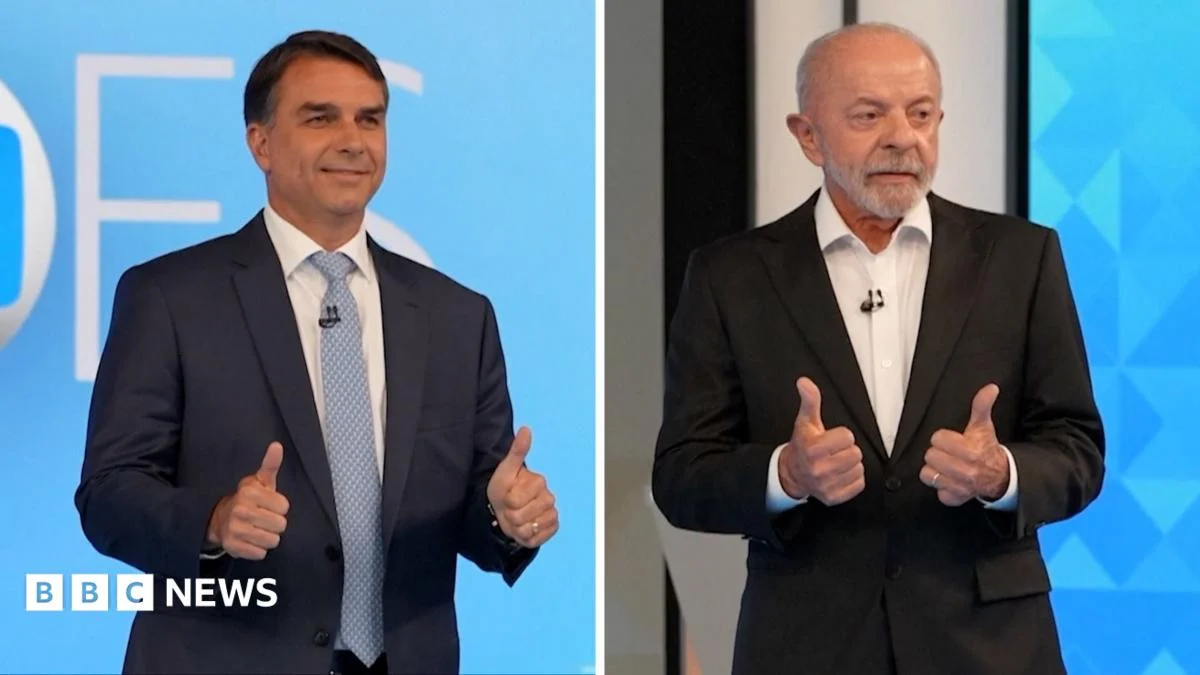
Brazil, a nation of continental proportions and vibrant democracy, stands at a critical juncture this Sunday as its citizens prepare to cast their ballots in a presidential election that has polarized the country and captured international attention. The choice before voters is stark, a definitive fork in the road between two diametrically opposed visions for Brazil’s future, embodied by the incumbent left-wing President Luiz Inácio Lula da Silva and the right-wing Senator Flávio Bolsonaro. This election is not merely a contest of personalities; it is a profound referendum on the nation’s trajectory, its economic policies, its social fabric, and its place on the global stage.
The specter of the first round, held on October 4th, looms large. In a result that underscored the deep divisions within the electorate, Flávio Bolsonaro, son of the imprisoned former president Jair Bolsonaro, narrowly edged out President Lula da Silva. This slim victory for Bolsonaro in the initial phase of voting signaled that the race would be a hard-fought, nail-biting affair, with neither candidate able to secure an outright majority. The outcome of that first round sent ripples of anticipation and anxiety across Brazil, a nation keenly aware of the profound implications of its presidential mandate.
As Americas correspondent Ione Wells reports from the bustling metropolis of Rio de Janeiro, the essence of this election lies in the profound ideological chasm separating the two leading contenders. This is a choice between two fundamentally different Brazils, each championed by a candidate offering a distinct path forward. Lula da Silva, a figure of immense historical significance and a champion of the working class, represents a return to the social democratic principles that characterized his previous administrations, emphasizing poverty reduction, social programs, and a more equitable distribution of wealth. His supporters see him as a beacon of hope, a leader capable of restoring Brazil’s social safety nets and rekindling its economic dynamism through inclusive policies. They point to his legacy of lifting millions out of poverty during his prior terms and his commitment to environmental protection and international cooperation.
Conversely, Flávio Bolsonaro embodies a conservative, nationalist agenda. His platform often centers on law and order, economic liberalization with a focus on free markets and reduced state intervention, and a strong emphasis on traditional values. His supporters are drawn to his promises of fiscal responsibility, a tougher stance on crime, and a more assertive foreign policy. They view his father’s presidency, despite its controversies and the eventual legal repercussions, as a period of strong leadership and national pride, and see in Flávio a continuation of that legacy, albeit with his own distinct political identity.
The background of Flávio Bolsonaro is inextricably linked to his father, Jair Bolsonaro, a deeply polarizing figure whose presidency (2019-2022) was marked by environmental deregulation, a controversial approach to the COVID-19 pandemic, and a rhetoric that often challenged democratic institutions. Jair Bolsonaro’s imprisonment following accusations of attempting to undermine democratic processes and his alleged involvement in a coup plot has cast a long shadow over his son’s political aspirations. Flávio, himself a senator, has navigated this complex inheritance, seeking to build his own political base while often drawing upon the fervent loyalty of his father’s core supporters. This familial connection is a significant factor in the election, activating a passionate, albeit divided, segment of the electorate.
The economic context of this election is paramount. Brazil, a global economic powerhouse with vast natural resources, has experienced a tumultuous economic period. Inflation has been a persistent concern, impacting the cost of living for ordinary Brazilians. Lula da Silva’s economic proposals generally lean towards increased government spending on social programs, investment in infrastructure, and a more robust role for state-owned enterprises. His camp argues that such measures are essential to stimulate growth from the bottom up and address widening inequality. They often cite the success of his previous administrations in managing economic growth and reducing poverty through targeted social welfare programs like Bolsa Família.
Flávio Bolsonaro, on the other hand, advocates for a more orthodox free-market approach. His proposals typically include tax reforms aimed at attracting investment, privatization of state-owned companies, and a reduction in bureaucracy. His supporters believe that these policies will foster greater economic efficiency, create jobs, and restore investor confidence. They often criticize what they perceive as excessive government spending and intervention under Lula’s past governments, arguing that it stifles private sector initiative. The debate over the optimal economic model for Brazil – whether interventionist or laissez-faire – is a central theme of the electoral discourse.
Beyond economics, the social and environmental dimensions of this election are equally significant. Brazil is a nation of immense biodiversity, home to the Amazon rainforest, a critical global resource. President Lula da Silva has pledged to revive environmental protection efforts, combat deforestation, and reassert Brazil’s leadership in international climate negotiations. His administration has historically emphasized sustainable development and the preservation of natural resources, a stance that resonates with a significant portion of the Brazilian population and the international community concerned about climate change.
Flávio Bolsonaro, in contrast, has often expressed skepticism about the extent of environmental concerns and has supported policies that prioritize economic development, including agriculture and mining, often with less stringent environmental regulations. His supporters argue that prioritizing economic growth is essential for national prosperity and that environmental concerns should not unduly hinder development. This divergence on environmental policy highlights a fundamental difference in their understanding of Brazil’s role in the world and its responsibility to future generations.
The political landscape is also shaped by the legacy of the previous administration and the ongoing legal challenges faced by figures associated with it. Jair Bolsonaro’s legal troubles, including his recent imprisonment, have added a layer of complexity to the election. While Flávio Bolsonaro seeks to distance himself from some of the more extreme aspects of his father’s rhetoric and policies, he remains deeply connected to his father’s political base. The outcome of the election will undoubtedly have repercussions for the ongoing legal processes and the broader political future of the Bolsonaro family.
Expert perspectives on the election offer a nuanced understanding of the forces at play. Political analysts point to the deep-seated social and economic inequalities that continue to plague Brazil as a primary driver of voter sentiment. They highlight the effectiveness of Lula da Silva’s appeal to the working class and marginalized communities, tapping into a desire for social justice and economic security. Simultaneously, they acknowledge the resonance of Flávio Bolsonaro’s message of order, economic pragmatism, and a perceived return to traditional values, which appeals to a segment of the population feeling left behind by globalization or concerned about rising crime rates.
Sociologists and economists emphasize that the election is a reflection of Brazil’s ongoing struggle to reconcile its aspirations for modernity and progress with its persistent challenges of poverty, inequality, and corruption. The candidates’ proposals, while distinct, are ultimately responses to these enduring issues, offering different visions of how to achieve a more prosperous and equitable society. The outcome will not only determine the immediate direction of Brazil’s governance but will also shape its long-term development trajectory and its standing in the international arena.
The international community is closely monitoring this election, given Brazil’s significant economic and geopolitical influence. A Lula da Silva victory would likely signal a return to more multilateralist foreign policies, with a renewed emphasis on regional cooperation and environmental diplomacy. A Flávio Bolsonaro victory might suggest a more nationalistic approach, potentially with shifts in trade relations and a less interventionist stance on global environmental issues.
As the polling stations open on Sunday, Brazilians are not just choosing a president; they are making a profound decision about their nation’s identity and its future. The choice between Luiz Inácio Lula da Silva and Flávio Bolsonaro represents a pivotal moment, a culmination of years of political evolution and societal debate. The weight of this decision, carried by millions of voters, will shape the destiny of one of the world’s largest and most dynamic democracies. The world watches, eager to see which path Brazil will ultimately choose.
