
 By Lina Irawan
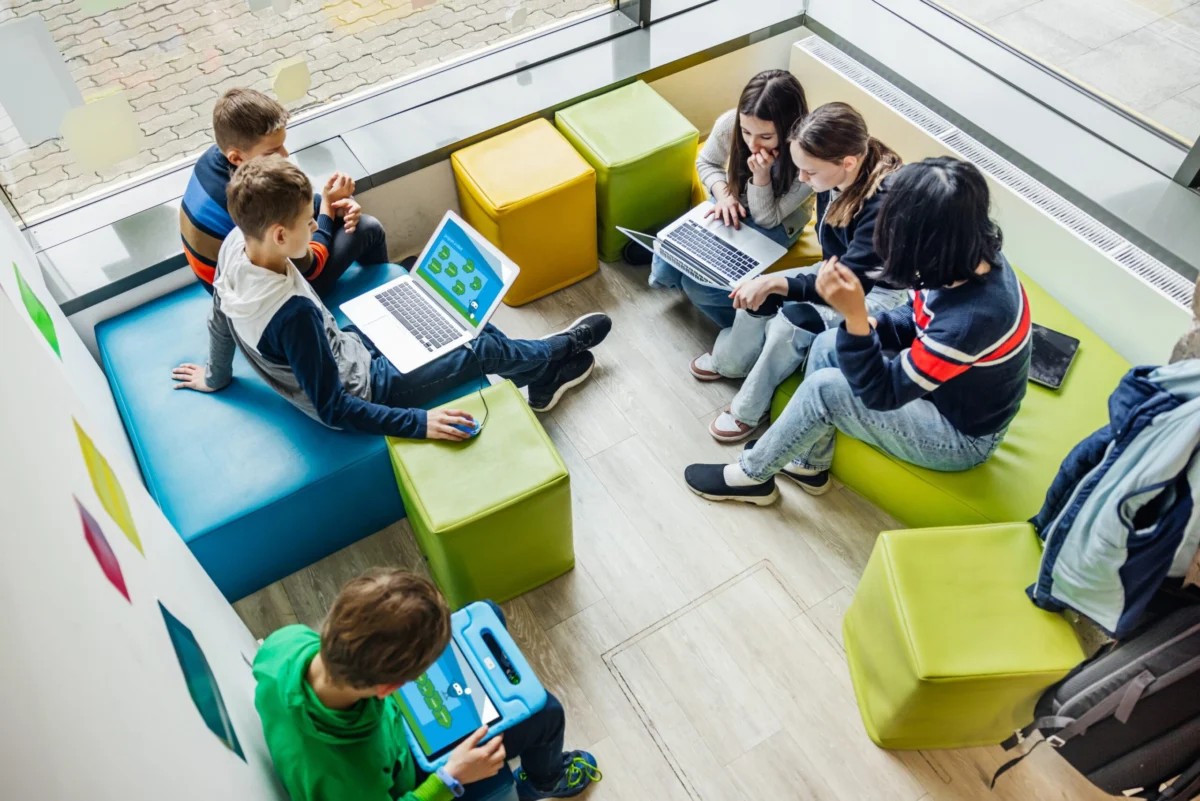
Today, you hear concerns that AI tools will be a privilege reserved for wealthy children. But I think that in the near future, we’ll be sounding the alarm for the opposite reason: every child will have an AI tutor, while only those whose parents can afford it will have a human teacher. This isn’t a distant dystopian fantasy but a rapidly approaching reality, driven by economic pressures, technological advancements, and a nuanced understanding of what truly constitutes effective education. The seeds of this paradox are already evident in how different socio-economic groups interact with artificial intelligence in learning environments, setting the stage for a profound redefinition of educational equity.
The initial apprehension regarding AI in education centered on a digital divide, where access to advanced tools would disproportionately benefit affluent students, deepening existing inequalities. However, emerging data suggests a counter-intuitive trend. According to the Pew Research Center’s illuminating findings from February 2026, a significant demographic shift is underway: children from low-income families are already leaning on AI tools more frequently than their wealthier counterparts. The data is stark: one in five teenagers from families with an annual income of less than $30,000 reports completing all or almost all of their homework using chatbots. In stark contrast, among teenagers from families earning $75,000 or more annually, this figure plummets to a mere 7%. This disparity isn’t necessarily a sign of technological empowerment for the less privileged; rather, it often reflects a lack of alternative support systems—fewer human tutors, less parental availability for academic help, and overburdened school resources. For these students, AI chatbots become a readily available, albeit potentially unguided, crutch, filling a void that human intervention traditionally occupied.
The proliferation of AI presents a double-edged sword for learning. On one hand, AI tools offer unprecedented access to information, personalized practice, and immediate feedback, potentially allowing a child to learn more efficiently and at their own pace. On the other hand, an over-reliance on AI, especially without proper guidance, risks atrophying a child’s ability to think critically, solve problems independently, and engage in the deep cognitive processes essential for true understanding. The outcome, whether enhanced learning or intellectual dependency, hinges entirely on the presence—or absence—of a guiding adult. This critical human element acts as a mediator, helping students leverage AI effectively rather than becoming subservient to it.
The Irreplaceable Value of a Human Educator
The limitations of AI become vividly clear when considering the profound impact a human teacher can have. About 15 years ago, a young man, whose appearance suggested he was experiencing homelessness, walked into a branch of my IT school. We initially assumed he sought shelter or financial aid. Instead, he declared, "I’m willing to do any job; I’ll raise the money – just let me study here." His determination was palpable, and true to his word, he raised the necessary funds, completed the course, taught at our school for a period, and ultimately, turned his life around.
When I encounter pronouncements from figures like former First Lady Melania Trump, who suggests AI could "improve teaching and help deliver world-class education," or read reports from organizations like the Gates Foundation’s Goalkeepers initiative predicting AI will "become a tutor for every child" and help "bridge the achievement gap," I invariably recall this young man’s story. Would an AI tutor have provided him with the opportunity to access knowledge? Absolutely. But would he have actually acquired that knowledge and transformed his life? He himself credited his teachers—individuals who believed in him, saw his potential, and provided the unwavering motivation he needed not to drop out. This human connection, the empathy, the belief, and the personal investment, are qualities that no algorithm, however advanced, can replicate. They are the bedrock of resilience and intrinsic motivation.
The mere availability of knowledge is not synonymous with its acquisition. Even Sal Khan, founder of Khan Academy and a prominent advocate for educational AI, who once championed the vision of "a personal AI tutor for every student on the planet," admitted this year, as reported by Chalkbeat in April 2026, that most students weren’t consistently utilizing their AI tutor, Khanmigo. This highlights a crucial distinction: access without engagement is meaningless. Students need more than just a tool; they need a reason to use it, guidance on how to use it effectively, and the accountability that often comes from interacting with a human mentor.
Furthermore, empirical evidence suggests that unguided AI use can actively hinder learning. A compelling experiment conducted by the Wharton School and published in PNAS revealed the potential pitfalls. Approximately one thousand Turkish high school students were divided into groups to solve math problems: one group used regular ChatGPT, another used a specialized tutoring version of the bot, and a control group worked without any AI. During the practice phase, both AI-assisted groups showed improved results. However, when tested on an exam without the bots, the group that had used regular ChatGPT performed 17% worse than the control group. The conclusion was alarming: these students had become overly reliant on the AI’s hints and prompts, failing to develop the independent problem-solving skills necessary for true mastery. This phenomenon, often described as "cognitive offloading," means students outsource the hard work of thinking, thereby undermining their own learning processes.
It’s an observation mirrored in children’s behavior: they readily offload cognitively demanding tasks, such as writing an essay—which requires significant effort, critical thinking, and synthesis—onto AI. Yet, they don’t ask AI to play their video games or eat their dessert. This reveals a fundamental aspect of human nature: we seek to avoid effort when possible, especially for tasks perceived as arduous, unless there’s an intrinsic motivation or external accountability pushing us to engage.
As someone who comes from a long line of educators and holds a Ph.D. in education, I can assert that for centuries, despite monumental societal development and technological progress, one of a teacher’s primary tasks has remained immutable. A teacher must cultivate enough intrinsic motivation so that children learn not merely out of obligation, but because they are genuinely interested and curious. This nuanced task—understanding a student’s unique personality, adapting to their learning style, identifying their passions, and fostering a love for learning—is best accomplished by a real person. An algorithm, however sophisticated, lacks the emotional intelligence, the capacity for genuine connection, and the intuitive understanding of individual human psychology required to inspire in this profound way. Yet, increasingly, the prevailing educational strategy seems to place its bet squarely on the algorithm.
This shift is evident in policy. This year, the U.S. Department of Education, as detailed in the Federal Register in April 2026, officially included AI development among the priorities for the allocation of federal grants to schools. The document specifically highlights AI tutors and assistance for students falling behind in the curriculum. While the stated aim is to enhance learning and personalize education, during the public discussion phase, numerous commentators raised critical concerns that integrating AI extensively into the classroom would inevitably reduce the invaluable time children spend interacting directly with their teachers. Despite acknowledging the importance of preserving the human element of learning, the Department chose not to alter the final text of the priority, signaling a clear direction towards greater AI integration, with the human teacher’s role potentially diminished.
The Looming Crisis: Who Will Truly Educate Our Children?
For the moment, most educational systems integrating AI still retain a human teacher in the classroom. But for how long can this dual model persist? The adoption rate of AI is staggering; research from NBER in October 2023 indicates that AI is spreading faster than the internet and personal computers did in their nascent stages. Its capabilities are evolving at an unprecedented pace, with the 2025 AI Index Report from Stanford’s HAI noting that AI performance is already outgrowing the benchmarks designed to measure it. Furthermore, the economic incentive is undeniable: the cost of running an AI model of the same capability can become tens of times cheaper within a single year, according to Epoch AI’s data insights on LLM inference price trends.
Concurrently, the human teacher, once the cornerstone of education, is becoming an increasingly scarce and expensive resource. UNESCO predicts a global shortage of an additional 44 million teachers by 2030, with 4.8 million needed in Europe and North America alone. The United States faces its own acute crisis, with over 56,000 unfilled teaching positions, as reported by Teachershortages.com. This deficit is exacerbated by factors such as stagnant wages, burnout, and a decline in the perceived value and respect for the profession.
Against the backdrop of a severe teacher shortage and the looming threat of significant budget cuts (as forecast by Education Week in August 2026), AI presents itself as a deceptively simple and cost-effective solution. Teachers constitute the largest single expense for American public schools, with nearly 30% of all costs dedicated to teacher salaries, according to Census Bureau data from 2026. Many financially constrained school districts are already actively seeking cheaper alternatives to human teachers, a trend observed by Chalkbeat in June 2026, even acknowledging the engagement challenges with AI tutoring.
I perceive a profound danger in the confluence of rapid AI development and the chronic shortage of educational resources. This synergy inexorably pushes us toward a critical juncture: what if we redefine the teacher’s role, reducing it to that of a "platform operator" who primarily monitors metrics, analyzes data generated by AI systems, and intervenes only when an algorithm flags a problem? Such a shift would fundamentally alter the pedagogical landscape, transforming the teacher from an active facilitator of learning and emotional development into a passive supervisor of technology. The rich, dynamic, and often spontaneous interactions that foster curiosity, critical thinking, and socio-emotional growth would be replaced by data-driven oversight.
During the global pandemic, many parents experienced firsthand that distance learning, despite its necessity, demonstrably falls short of in-person instruction, a conclusion supported by research from the American Economic Association in 2022. Yet, society has, to a considerable extent, come to terms with this compromise. Online schools have even seen a surge in popularity since the pandemic, as new federal data shows, reported by Chalkbeat in August 2026. This normalization of a potentially less effective educational model should serve as a cautionary tale. Just as imperceptibly, society may also gradually acclimatize to the idea that not every child will have the privilege of a live, dedicated teacher.
Schools are now at a pivotal crossroads, facing a stark choice: will AI be leveraged to free up teachers’ time, allowing them to focus on deeper, more impactful human-centric teaching and individualized support? Or will it be deployed as a cost-cutting measure, enabling districts to get by with fewer teachers, thereby expanding the reach of education at the expense of its quality and human essence? This fundamental decision will determine whether every child continues to have a person by their side—someone who believes in them, challenges them, and inspires them, just as the teachers at my IT school once believed in that young man. Or whether AI, which purports to level the playing field for students, will instead inadvertently entrench a new form of inequality, where the most valuable educational resource—a human teacher—becomes an exclusive luxury, reserved only for those who can afford it.
The opinions expressed in Fortune.com commentary pieces are solely the views of their authors and do not necessarily reflect the opinions and beliefs of Fortune.
