
 By Lina Irawan
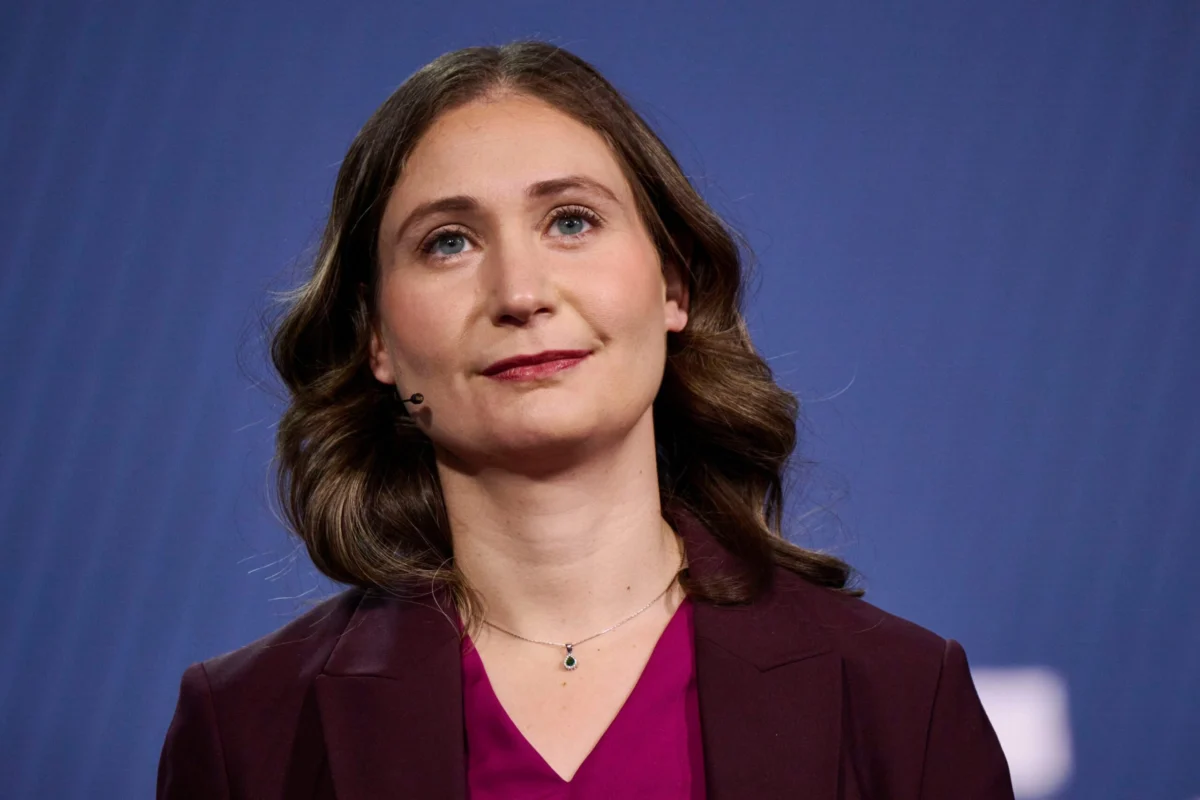
Each of Anthropic’s seven cofounders, a group that includes the prominent siblings Dario and Daniela Amodei, is set to hold a remarkably similar stake in the artificial intelligence frontier lab. Their individual holdings are estimated to fall within a narrow range of 231 million to 244 million shares. Should Anthropic’s IPO achieve the lofty valuation targets whispered in media reports – an ambitious $1.5 trillion to $2 trillion – these individual stakes would translate into personal fortunes of approximately $21 billion to $30 billion apiece. This collective wealth, projected to reach a colossal $200 billion on paper, underscores not only the explosive growth and market confidence in advanced AI but also Anthropic’s unique approach to internal equity distribution.
The founders’ equity packages are meticulously structured, reflecting both immediate liquidity and long-term commitment. Each cofounder’s stake includes precisely 2,185,400 stock options that are currently exercisable, offering a pathway to immediate realization of value. Additionally, 639,500 restricted stock units (RSUs) are set to vest after the company’s public debut, aligning the founders’ interests with the post-IPO performance and longevity of Anthropic. Based on detailed financial analyses, these shareholdings grant each cofounder an ownership percentage of between 1.4% and 1.5% of the company. Collectively, these individual portions coalesce into the impressive $200 billion wealth projection for the group. It is, of course, crucial to preface these figures with a significant caveat: Anthropic has yet to officially price its shares, and the precise details of the IPO, including final valuations and share allocations, remain subject to change.
The truly groundbreaking aspect of Anthropic’s approach lies in its deliberate flattening of the traditional corporate hierarchy, particularly concerning executive compensation and founder equity. In most major public companies, a clear pay pyramid exists, with the CEO or lead founder typically commanding a disproportionately larger share of cash compensation and equity. At Anthropic, however, this conventional model is conspicuously absent. Despite Dario Amodei serving as the Chief Executive Officer and Daniela Amodei holding the dual roles of President and Board Chairperson, there is no discernible pay disparity among the core septet. The seven founders appear to hold virtually identical stakes, a decision that extends beyond mere financial parity to governance. Each cofounder is granted one vote in the entity specifically designed to control the company’s shareholder vote, further cementing their collective stewardship. This entity operates alongside a separate trust established to elect the majority of the board, an innovative mechanism intended to safeguard Anthropic’s long-term mission and ethical AI development principles.
Industry experts have quickly taken note of Anthropic’s highly unusual compensation strategy. Robin Ferracone, founder of the prominent compensation consulting firm Farient Advisors, described Anthropic’s "egalitarian approach" to its founder group as distinctly uncommon. She also pointed out that a group of seven founders is "relatively large" for a major tech company, making the uniform distribution even more striking. "It’s unusual to give all the founders the same thing," Ferracone observed, explaining that in most companies, equity and compensation structures tend to evolve over time, with awards becoming increasingly linked to an individual’s specific position, responsibilities, and performance metrics as they vest. Anthropic’s steadfast commitment to parity, even at the highest executive levels, represents a deliberate philosophical choice.
Anthropic itself has articulated its rationale for this collective leadership and equity model in its registration statement filed with the SEC. The company describes the group as "distinctly equipped to be stewards of our mission," emphasizing their shared vision and commitment to responsible AI development. While the filing acknowledges that Dario and Daniela Amodei are "critical to setting our strategic direction" and would be "difficult to replace," this recognition of their leadership roles does not translate into a greater share of the company’s equity or cash compensation. This highlights a nuanced understanding of leadership within Anthropic: recognizing individual contributions while maintaining collective ownership and responsibility.
The absence of sibling rivalry, at least in financial terms, is another fascinating facet of the Amodei siblings’ leadership. Dario and Daniela, despite their distinct executive titles and responsibilities, receive equal compensation. Last year, both brother and sister each earned an annual salary of $654,167. In addition to their cash salaries, they received identical stock and options, which the filing initially valued at approximately $13 million combined. At the speculated $2 trillion IPO valuation, these grants would be worth roughly $330 million each. Demonstrating a continuous commitment to this parity, both Amodeis received raises in July, bringing their annual salaries to $1.4 million apiece. Further reinforcing the equal distribution, in February, Anthropic granted each of them approximately 1.4 million stock options and an additional 2.4 million RSUs, followed by another 537,000 RSUs in July. At a $2 trillion valuation, these recent grants alone are estimated to be worth about $505 million for each sibling. These RSUs are structured to begin paying out in quarterly installments once Anthropic goes public, provided the Amodeis remain with the company for several years.
Anthropic’s newly filed registration statement explicitly codifies this commitment to internal equity: "We take internal parity into account when determining executive compensation. Each co-founder is paid equal compensation." This clear statement in a public filing underscores the intentionality behind their unique compensation philosophy.
While the SEC filing primarily details the pay of the Amodeis, as they are the only two cofounders classified as executive officers, the spirit of parity extends to the other five members of the initial septet: Tom Brown, Jared Kaplan, Sam McCandlish, Jack Clark, and Chris Olah. These individuals hold significant C-level titles within the company, such as chief compute officer and chief science officer, yet their compensation details do not appear in the company’s executive pay tables. However, a closer look reveals that all seven founders hold identical numbers of options and RSUs that are scheduled to vest by late November. These holdings align, within a few shares, with the disclosed grants to the Amodeis, strongly implying that the other five cofounders received the same awards. This consistent distribution across the entire founder group solidifies the "seven nearly identical piles" narrative, making Anthropic a rare case study in collective wealth creation.
This radical approach to wealth distribution stands in stark contrast to the models adopted by other tech giants, particularly those preparing for or having recently undergone massive public offerings. A compelling comparison can be drawn with SpaceX, which conducted its own monumental IPO in June 2026. In the months leading up to its public debut, SpaceX famously awarded its CEO, Elon Musk, a colossal compensation package totaling 1.3 billion restricted shares across two distinct awards. These awards were intricately tied to ambitious market-value milestones, with one linked to the establishment of a human colony on Mars and the other to the creation of data centers in space. Should Musk achieve these extraordinary goals, including the Mars colony, these awards alone could be worth an astronomical $650 billion to $700 billion. The sheer scale of this individual award is unparalleled, and no other employee or executive at SpaceX even remotely approaches this level of compensation or equity. The contrast with Anthropic’s distributed wealth could not be more pronounced, illustrating two fundamentally different philosophies of corporate leadership and value creation at the highest echelons of the tech industry.
Beyond the immediate financial implications, Anthropic’s founders have also distinguished themselves through their commitment to philanthropy. Unlike Musk’s SpaceX awards, each Anthropic founder has publicly pledged to donate 80% of their stock to charitable causes. This collective philanthropic commitment could amount to a staggering total gift of $80 billion to $165 billion, depending on the final IPO valuation. While these pledges are not legally binding, they reflect a deep-seated mission-driven ethos that extends beyond the company’s public benefit corporation status. Interestingly, the founders’ awards are meticulously structured to allow them to maintain significant control over Anthropic, even as they commit to donating a substantial portion of their personal wealth. This innovative mechanism ensures that their philanthropic endeavors do not undermine their ability to guide the company’s future and uphold its ethical AI mission. In a similar vein, though with a much broader and less defined scope, Elon Musk, in a post on X (formerly Twitter) last week, pledged to give every child in America a share of his SpaceX stock, highlighting a different scale and approach to corporate philanthropy.
The path to liquidity for Anthropic’s founders will follow standard IPO procedures. While all seven cofounders are listed as selling stockholders in the IPO, they won’t be able to immediately cash in on their entire holdings. Under the IPO’s lockup terms, the "magnificent seven" can begin selling a portion of their stock approximately six months after the offering, with the remainder becoming available after about a year. However, some have already initiated the process of monetizing a small part of their holdings. The Amodei siblings, for instance, participated in a tender offer in April, selling shares at $25.91 apiece, as detailed in the S-1 filing.
The governance structure overseeing executive compensation at Anthropic post-IPO also reveals interesting dynamics. The two board members tasked with this crucial responsibility are both investors in the AI frontier lab, potentially aligning their interests closely with the company’s financial performance. Vas Narasimhan, the CEO of pharmaceutical giant Novartis, chairs Anthropic’s compensation committee. Notably, Narasimhan personally invested approximately $10 million in Anthropic stock in May through a company he owns with his wife, just a few weeks after joining the board. The other member of the compensation committee, Yasmin Razavi, is a general partner at Spark Capital, a venture capital firm whose funds have collectively invested $777 million in Anthropic since 2023. The presence of significant investors on the compensation committee is not uncommon but underscores the intertwining of governance and investment interests as Anthropic transitions to a public entity.
As Anthropic prepares for its monumental public debut, its unconventional approach to founder wealth and corporate governance presents a compelling case study. The potential for $200 billion in wealth distributed equally among seven cofounders challenges traditional capitalist norms and highlights a commitment to shared stewardship, even as the company navigates the pressures of public markets. Whether this "egalitarian approach" can be sustained in the long term, particularly as the company matures and market dynamics shift, remains to be seen. However, for now, Anthropic stands as a beacon for a potentially new paradigm in tech entrepreneurship, where collective mission and equitable distribution of success are as central as groundbreaking innovation.
