
 By Lina Irawan
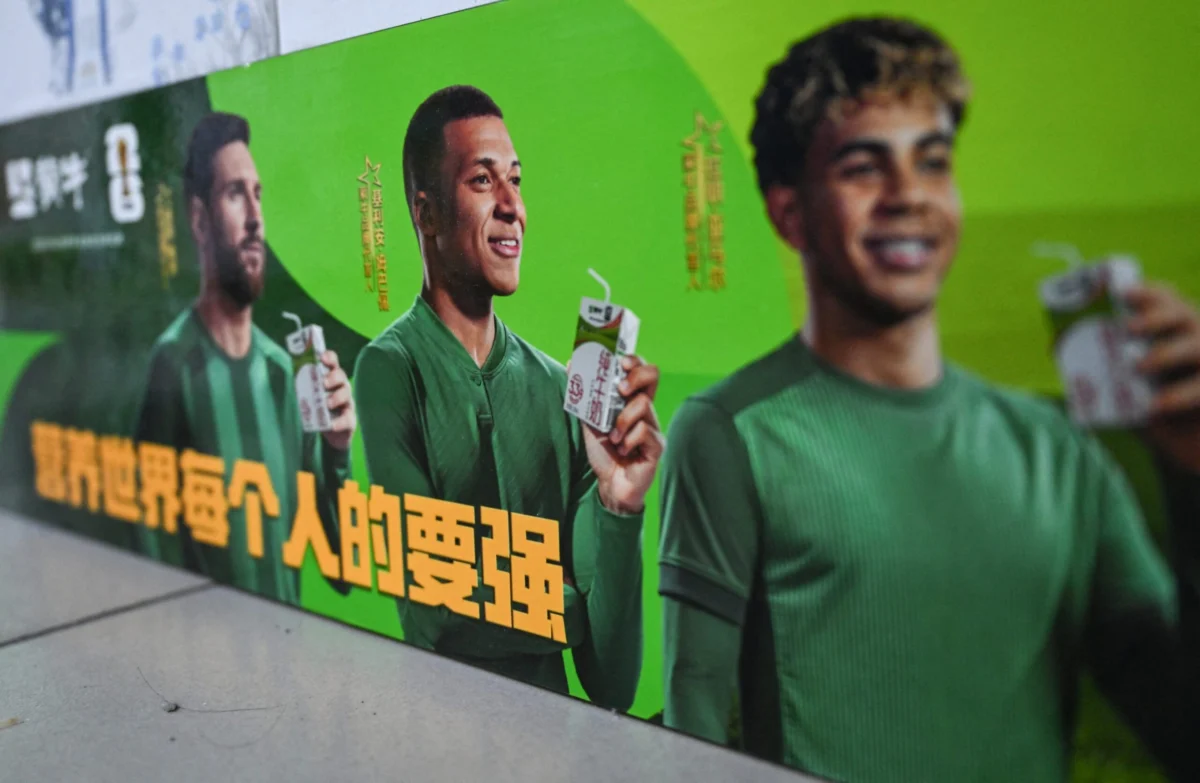
Kylian Mbappé, one of the world’s most recognizable and highly paid athletes, found himself at the center of this geopolitical maelstrom following an appearance on a popular French online talk show. During the broadcast, Mbappé reportedly described a meme figure as "a Chinese dictator," a comment that was widely and immediately perceived as a direct reference to Mao Zedong, the founding father of the People’s Republic of China. For many within China, any disparaging remark or perceived insult directed at Mao Zedong, who remains a revered figure and a symbol of national unity and revolutionary struggle, is an affront of the highest order. The sensitivity surrounding Mao is deeply ingrained in China’s political and social fabric, making such comments profoundly provocative.
The fallout for Mbappé was swift and severe. Within days of his ill-judged comment, three major Chinese sponsors—Dongpeng, a prominent beverage maker; Mengniu, a dairy giant with extensive market reach; and Milkground, a leading cheese maker—announced they were cutting ties with the soccer star. These companies, eager to avoid any association with perceived anti-China sentiment and to protect their brand image within the domestic market, acted decisively. Simultaneously, China Media Group (CMG), the country’s powerful state broadcaster, declared it would suspend broadcasts of LaLiga, Spain’s top professional soccer league, as well as other games involving Mbappé. This move, echoing past boycotts, effectively cuts off millions of Chinese fans from watching one of the world’s most popular football leagues and its brightest star, signaling the gravity of the offense. The financial implications for LaLiga, which has invested heavily in expanding its presence in the lucrative Chinese market, and for Mbappé himself, are substantial, highlighting the immense economic leverage China wields.
This is not an isolated incident but rather a recurring pattern where global celebrities and companies have faced similar, often crippling, backlash in China. The triggers range from comments, imagery, and jokes deemed politically or culturally insensitive to perceived slights against China’s sovereignty or historical narratives. The rapid amplification of these incidents through Chinese social media platforms often fuels nationalist sentiment, transforming a single comment or action into a widespread public outcry and boycott movement.
Recognizing the severity of the situation and the potential for long-term damage to his career and brand in one of the world’s largest markets, Mbappé quickly issued an apology. "My comment was ill-judged, and I now understand that it hurt many people in China and in Chinese communities around the world," he wrote on X (formerly Twitter). "I apologize to everyone my words have upset. This was absolutely not my intention. I have deep respect for the Chinese people and their history, and I am sincerely sorry." While such apologies are often a standard part of the crisis management playbook for Western figures caught in similar predicaments, their effectiveness in genuinely mollifying Chinese public opinion and state entities remains debatable. Often, they are seen as performative rather than truly contrite, particularly when the perceived offense touches on core nationalistic sentiments.
The companies that ended their relationships with Mbappé, while not explicitly stating the reason, were clearly responding to the intense public and governmental pressure generated by the controversy. Their decisions reflect a pragmatic assessment of commercial risk in a market where political alignment and national pride often trump other considerations. In an effort to contain the extensive fallout and protect LaLiga’s significant investments in the region, LaLiga president Javier Tebas swiftly met with the Chinese ambassador to Spain. Tebas’s stated goal was to "seek solutions that allow us to overcome this episode," emphasizing LaLiga’s commitment. "Our commitment is to keep working together so that an individual episode does not harm the important advances achieved nor affect the millions of Chinese fans who follow our competitions," he said in a public statement. This diplomatic intervention underscores the economic stakes involved and the lengths to which international organizations are willing to go to preserve access to the Chinese market.
Mbappé’s club, Real Madrid, a global powerhouse with a massive fanbase in China, also issued an apology on Wednesday, October 28, 2026, as per the original reporting. "Our club maintains a deep respect for China, its history, its culture and its citizens, as well as for the millions of Chinese fans who feel affection and admiration for Real Madrid," the club said in a statement. Such statements are critical for maintaining brand loyalty and commercial viability in China, as clubs like Real Madrid derive significant revenue from merchandise sales, sponsorship deals, and broadcasting rights within the country. The club’s quick action demonstrates an understanding of the delicate balance required to operate successfully in the Chinese market.
The Mbappé incident is merely the latest in a long line of high-profile clashes between global entities and Chinese sensibilities, illustrating a consistent pattern of severe consequences for perceived offenses.
Past Incidents and Their Echoes:
- The NBA’s Hard Foul (2019): Daryl Morey, then the general manager of the Houston Rockets, posted a tweet in support of pro-democracy protests in Hong Kong. The tweet, a simple "Fight for Freedom. Stand with Hong Kong," ignited a firestorm. Chinese state broadcaster CCTV immediately pulled NBA games off the air, and numerous Chinese sponsors severed ties with the league and its teams. The blackout lasted for three years, until 2022, costing the NBA hundreds of millions of dollars in lost revenue. The incident highlighted the stark contrast between Western notions of free speech and China’s insistence on political conformity from those who wish to profit from its market.
- H&M’s Cotton Conundrum (2021): Swedish fashion giant H&M faced a devastating consumer boycott after its decision in early 2021 to stop using cotton from Xinjiang, following widespread international concerns over alleged human rights abuses against Uyghur Muslims in the region. The company’s statement, based on reports of forced labor, was interpreted by Chinese authorities and netizens as an attack on China’s sovereignty and an unfounded accusation. H&M products vanished from online platforms, its stores were removed from mapping apps, and its sales in China plummeted, demonstrating the power of organized consumer action and state-backed media campaigns.
- Lululemon’s Cultural Misstep (June 2026): The activewear brand Lululemon, aiming to celebrate its presence in China, organized a promotional event on the iconic Great Wall of China. However, the event quickly turned into a public relations disaster when images posted online mistakenly featured a Japanese taiko drum instead of a traditional Chinese dagu drum. Chinese netizens swiftly pointed out the cultural inaccuracy, accusing the brand of insensitivity and ignorance, especially given the historical tensions between China and Japan. Lululemon was forced to apologize and remove all images related to the drum event from its social media channels, illustrating the acute need for cultural diligence in marketing campaigns.
- Louis Vuitton’s Pyrrhic Victory (October 2026): Luxury brand Louis Vuitton faced an unusual backlash after winning a trademark infringement case against Chinese milk tea chain Molly Tea. A Chinese court ruled that Molly Tea’s four-petaled logo infringed on a Louis Vuitton trademark and ordered the tea chain to pay 10.3 million yuan ($1.5 million) in damages. While a legal victory, the ruling divided Chinese social media. Many users criticized Louis Vuitton as a "bully" and accused it of stifling local businesses, leading to calls for a boycott of the luxury brand. LVMH, Louis Vuitton’s parent company, later acknowledged that the controversy had weighed on its China sales, with revenue in its fashion and leather goods division falling 5% on an organic basis. This case showed that even legal wins could turn into public relations nightmares if they clash with nationalist sentiment or perceptions of fairness.
- Nongfu Spring: Even Domestic Brands Aren’t Safe (2024): The phenomenon of nationalist backlash isn’t limited to foreign brands. In 2024, Chinese bottled-water brand Nongfu Spring, owned by China’s richest person, Zhong Shanshan, faced a severe public boycott and online backlash. Some social media users accused Nongfu of using Japanese-style imagery on its packaging, specifically referencing packaging for its Oriental Leaf Tea product, which featured architectural elements reminiscent of Japanese temples. The accusations, fueled by deep-seated anti-Japanese sentiment, led to extreme measures, with some 7-Eleven stores in China reportedly stopping sales of Nongfu products. This incident underscored that even Chinese companies are vulnerable to the capricious and often aggressive waves of hyper-nationalism.
The Broader Implications: Navigating China’s Complex Market
These repeated incidents highlight a fundamental dilemma for global brands and celebrities: how to engage with the immense economic opportunities of the Chinese market without compromising on global values or falling afoul of increasingly stringent political and cultural sensitivities. China’s market, representing billions in potential revenue, is simply too large to ignore for most multinational corporations. However, the price of entry often includes adherence to an unwritten code of conduct that prioritizes Chinese national interests and sensitivities above all else.
The "Woke" vs. "Red" dilemma poses a particular challenge for Western brands, many of whom face pressure from their home markets to uphold human rights, environmental standards, and free speech, while simultaneously needing to avoid any actions that could be construed as critical of the Chinese government or culture. Social media in China acts as a powerful amplifier for nationalist sentiment, where "netizens" actively police online content and quickly mobilize boycotts against perceived offenders. The economic and reputational costs of these missteps are enormous, potentially erasing years of brand building and investment.
Experts in geopolitics and international marketing often advise a strategy of extreme caution and deep cultural immersion for brands operating in China. This includes meticulous vetting of all marketing materials, celebrity endorsements, and public statements for any potential points of friction. However, even with the best intentions, the landscape is constantly shifting, and what might be acceptable one day could become a trigger for outrage the next. The line between harmless oversight and unforgivable offense is often thin and ill-defined, making long-term strategic planning incredibly challenging.
The Kylian Mbappé incident, alongside the myriad cases preceding it, serves as a stark reminder of the high stakes involved. It reinforces the notion that in the Chinese market, political correctness, as defined by Beijing and its populace, is paramount. For global brands and celebrities, the pursuit of commercial success in China will continue to be a tightrope walk, demanding not only business acumen but also an acute, unwavering awareness of China’s unique political sensitivities, historical narratives, and nationalist fervor. The ability to navigate this intricate web will increasingly define who thrives and who falters in the world’s most dynamic and demanding consumer market.
