
 By Lina Irawan
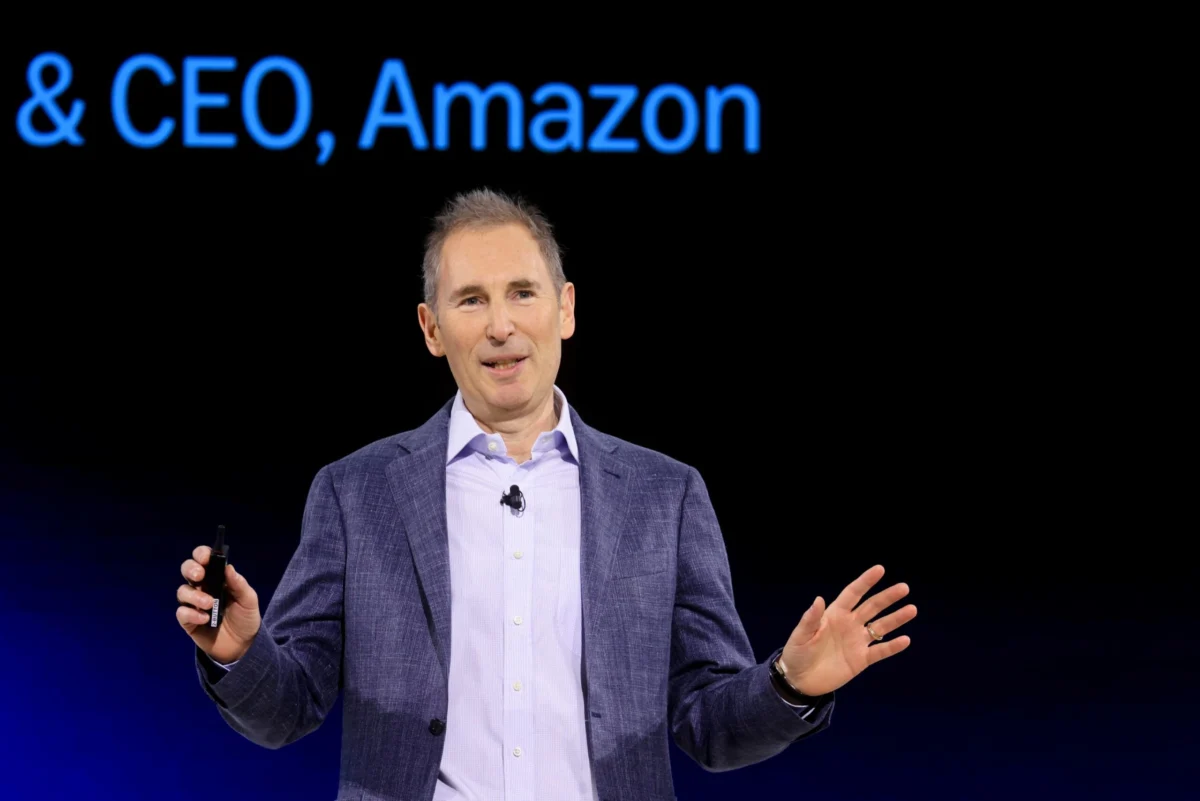
On Thursday, Amazon reported third-quarter revenue of $201.9 billion, a figure that slightly missed analysts’ expectations. More concerning was its reported profit of $20.7 billion, which also fell short of forecasts and represented a decline from the same period a year ago. The company attributed this profit contraction primarily to gains it had recorded a year earlier from its strategic investment in the burgeoning AI company Anthropic, suggesting that underlying operational profitability faced headwinds. This miss on both top and bottom lines immediately signaled to investors that despite some areas of strength, the company’s overall financial health was under pressure.
At the heart of Amazon’s growth story remains Amazon Web Services (AWS), its pioneering cloud computing unit. For the third quarter, AWS sales surged by an impressive 39.3% year-over-year, reaching $45.98 billion. This robust performance comfortably topped Wall Street targets, underscoring the enduring strength and critical importance of AWS to Amazon’s overall business. The figures vividly demonstrate that demand for Amazon’s cloud services, particularly those specifically tailored to support and power artificial intelligence workloads, remains exceptionally high. AWS, having essentially invented the concept of public cloud computing, continues to demonstrate its market leadership and agility in adapting to the latest technological shifts. This sustained growth is crucial, especially as the AI boom intensifies, placing AWS at the forefront of providing the computational backbone for countless enterprises and AI innovators. The segment’s consistent outperformance is a testament to its extensive global infrastructure, diverse service offerings, and continuous innovation, including specialized AI services like Amazon Bedrock and custom AI chips such as Trainium and Inferentia, designed to optimize machine learning training and inference.
However, this impressive cloud momentum comes with a significant caveat: the Seattle-based tech giant is continuing to spend at unprecedented rates to maintain its competitive edge and keep pace with the exploding demand for AI infrastructure. Amazon reiterated its staggering capital expenditure forecast, expecting to spend approximately $220 billion by 2026. This colossal investment is primarily directed towards building out massive data centers, acquiring cutting-edge graphics processing units (GPUs), and enhancing its global network infrastructure—all essential components for supporting the compute-intensive demands of modern AI models. This level of spending is not unique to Amazon; the report highlighted that collectively, Amazon, Microsoft, Alphabet, and Meta Platforms are projected to spend more than $700 billion on capital expenditures in 2026, predominantly on data centers. This illustrates an industry-wide "arms race" to secure dominance in the AI era, with hyperscalers pouring vast sums into foundational infrastructure.
The financial ramifications of this heavy AI infrastructure spending are profound and immediately visible in Amazon’s cash flow. The company reported a dramatic swing in its free cash flow, plummeting from a positive $14.8 billion a year ago to a deeply negative $42.4 billion over the past year. Free cash flow, a critical indicator of a company’s financial health, measures the cash generated after accounting for capital expenditures. A significant negative swing like this raises serious concerns among investors about the sustainability of such intense investment and the potential long-term returns on this capital. Analysts are scrutinizing whether these investments will translate into commensurate future profits or if the current spending spree risks overextending the company, potentially leading to a diluted return on invested capital. This delicate balance, often referred to as a "tightrope walk" for hyperscalers, is precisely what worries investors, with any sign of a slowdown or inefficiency sparking fears of a potential market "bubble popping."
Beyond the cloud, Amazon’s non-cloud businesses presented a less optimistic picture. The company’s advertising business, a high-margin segment that has become increasingly important to its profitability, grew by 12% year-over-year in Q3, falling short of analyst expectations. This underperformance in advertising, coupled with its projected holiday-quarter operating profit falling below Wall Street estimates, further fueled investor unease. The advertising segment, benefiting from Amazon’s vast customer data and direct access to purchasing intent, has historically been a significant growth driver. A slowdown here could indicate broader economic headwinds affecting consumer spending or increased competition in the digital advertising space.
The holiday quarter, which Amazon has now entered, is traditionally its most crucial period, generating the bulk of its yearly revenue. For this current quarter, the company projected sales between $240 billion and $247 billion, with operating income expected to range from $28.5 billion to $33.5 billion. Notably, this operating income range is lower than what analysts had predicted, signaling potential caution from management regarding profitability in the critical shopping season. Furthermore, the timing of Amazon’s annual Prime Day, which was held in the second quarter this year rather than the third, also had an impact on the third-quarter retail results, potentially shifting some revenue recognition.
Amazon’s earnings report arrived on the heels of similar disclosures from its tech giant peers. Microsoft and Google parent Alphabet also reported robust growth in their respective cloud units (Azure and Google Cloud Platform), mirroring AWS’s success and underscoring the industry-wide surge in cloud adoption and AI demand. However, these companies too revealed soaring AI infrastructure costs, confirming that the need for AI compute remains as high as ever, and so does the corresponding capital expenditure. Alphabet, in particular, also reported weaker-than-expected advertising growth, suggesting a broader trend affecting the digital ad market. These parallel results emphasize that the challenges Amazon faces—balancing growth, investment, and profitability—are systemic across the tech sector’s "hyperscalers."
A recent development highlighting the immense financial commitments in the AI space is Anthropic’s prospectus for its upcoming initial public offering. Made public earlier this week, the filing revealed just how heavily the AI lab relies on Amazon and other major cloud providers for its compute needs. Anthropic has committed to spending at least $110 billion on Amazon cloud services from May of this year through April 2036, regardless of actual usage. This staggering commitment is part of Anthropic’s larger pledge of at least $389.9 billion in compute spending with companies including Microsoft, Alphabet, and SpaceXAI. According to the IPO filing, Amazon has already invested approximately $18 billion in Anthropic and committed to invest up to another $15 billion. These figures underscore the symbiotic relationship between AI developers and cloud providers, where cloud infrastructure is the lifeblood of AI innovation, and AI companies, in turn, become anchor tenants for cloud giants.
Amazon’s unique position as a pioneer in cloud computing means its growth rates, while impressive, might not always match the hyper-growth seen in newer entrants or smaller competitors. However, the current AI boom has intensified pressure on Amazon to demonstrate that its cloud unit is capturing as much of this new demand as its peers, especially given its exceptionally high capital expenditure. The market is keenly watching to see if AWS can translate its foundational strength and significant investments into sustained, high-margin AI-driven growth that justifies the spending.
In preparation for the critical holiday quarter, Amazon has announced plans to hire 300,000 workers, a customary move to staff up its vast e-commerce warehouses as consumer demand peaks. Simultaneously, the company has been making a significant hardware push, introducing new devices like updated Alexa tablets, the Bee AI wearable, and refreshed Echo products, all likely to feature enhanced AI capabilities. This dual strategy reflects Amazon’s diversified approach, leveraging its e-commerce strength while continuing to innovate in consumer electronics, increasingly with an AI focus.
Yet, even as it hires extensively for its warehouses, Amazon is undergoing significant workforce reductions elsewhere. This week, it cut 250 jobs in its devices and services division, following earlier layoffs of approximately 1,000 people in its retail department. These recent cuts come after a broader restructuring phase between late 2022 and early this year, during which the company shed about 30,000 workers. These strategic layoffs indicate a broader re-prioritization and efficiency drive across various segments of the company, likely aimed at optimizing resources amidst high investment in AI and macroeconomic uncertainties.
Amazon is also strategically evolving its approach to AI. In a notable move in September, it blocked Meta’s popular new AI assistant, Muse, from accessing its online store. This action highlights Amazon’s defensive strategy against AI tools that could bypass its traditional e-commerce interface, where advertisements serve as a key profit driver. Muse, by potentially offering direct product recommendations without users browsing the Amazon site or app, poses a threat to the company’s advertising revenue model, prompting Amazon to protect its valuable digital storefront.
Internally, Amazon is also guiding its software engineers on how to embrace AI responsibly. In an internal memo, which was also published as a blog post this week, the company emphasized that engineers should integrate AI tools into their workflows but would ultimately be judged on outcomes, not merely on the quantity of AI tokens consumed or lines of code generated. The memo explicitly stated, "If your work does not benefit from current AI tooling, that is a finding, not a failing," encouraging engineers to document their reasoning and seek solutions. This internal directive underscores Amazon’s nuanced approach to AI integration, fostering innovation while prioritizing practical benefits and critical judgment over indiscriminate adoption.
In conclusion, Amazon’s latest earnings report presents a narrative of dichotomy: robust, AI-driven growth in its core AWS cloud business, which continues to exceed expectations, contrasted with significant financial pressures stemming from massive AI infrastructure investments and softer performance in its advertising and overall profitability. While the company is making necessary, albeit costly, investments to secure its future in the AI-dominated tech landscape, investors are clearly expressing concern about the immediate impact on free cash flow and the long-term return on this capital. As Amazon enters its crucial holiday quarter, all eyes will be on its ability to navigate these complex challenges, demonstrating that its aggressive AI bets will ultimately yield sustainable growth and profitability, rather than merely escalating an industry-wide spending arms race.
