
 By Lina Irawan
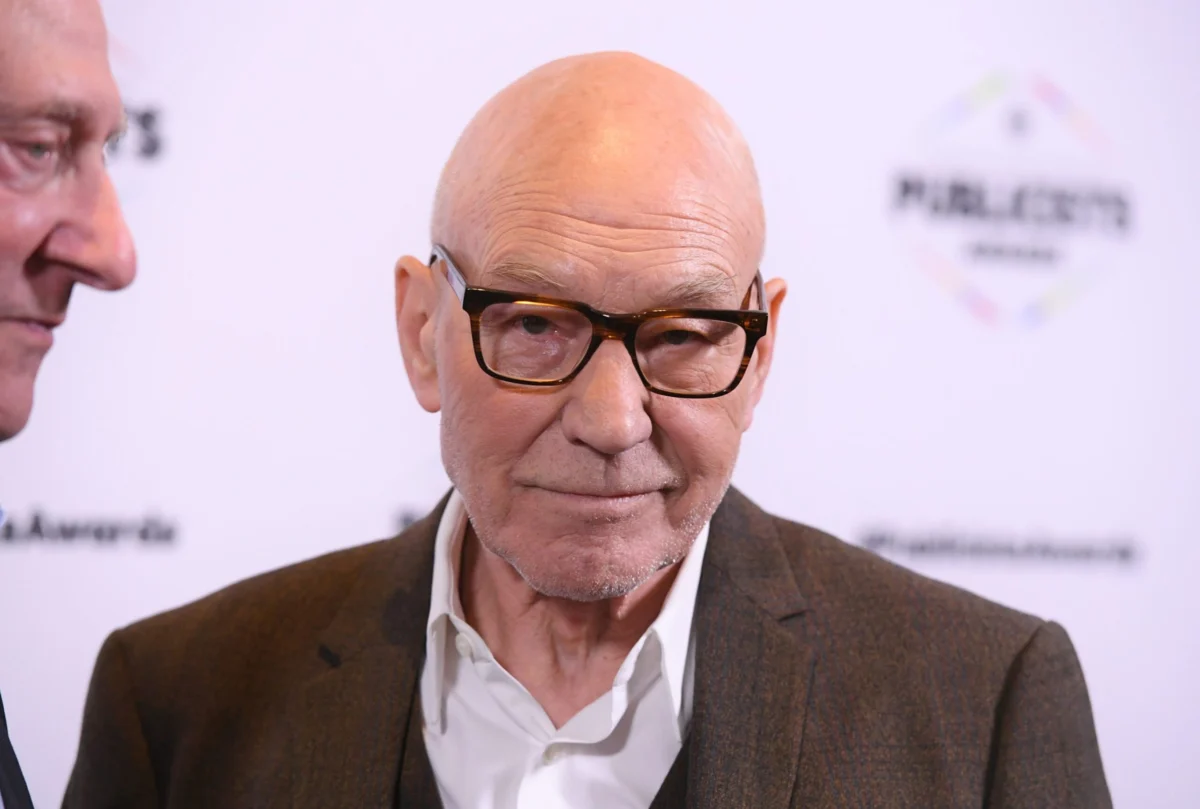
The beloved British actor, a towering figure of both stage and screen, passed away on Wednesday in Los Angeles at the age of 86. His spokesperson, Kelly Bush Novak, confirmed his death, revealing that Stewart had embarked on "a brief and poignant journey" with Alzheimer’s disease and Lewy Body Dementia. These diagnoses, previously undisclosed to the public, add a somber note to the loss of a man whose intellect and commanding presence defined many of his iconic roles. The revelation of his health struggles has prompted a wider conversation about neurodegenerative diseases, with medical experts often emphasizing the importance of early diagnosis and support for affected families.
Tributes immediately began pouring in from across the entertainment industry and beyond, reflecting the immense impact Stewart had on colleagues and fans alike. Hugh Jackman, who frequently shared the screen with Stewart in the "X-Men" universe as Wolverine to Stewart’s Professor Charles Xavier, expressed profound grief on social media. "We lost one of the greats of stage and screen today," Jackman wrote, "And, in my book, a tremendous friend and man. I learned so much from him. I will miss you, Patrick Stewart, all of my days." The sentiment was echoed by William Shatner, the original Captain James T. Kirk, who posted on Instagram, "What a heartbreaking week it has been. Sir Patrick Stewart was a friend, a colleague, and a magnificent actor. From the stage to the bridge of the Enterprise, he brought intelligence, grace, and a deep sense of humanity to everything he did." The outpouring of affection underscored Stewart’s rare ability to bridge the worlds of high-brow theatre and popular culture, earning him admiration from classical enthusiasts and sci-fi devotees alike. Cultural critics often point to Stewart’s unique blend of intellectual rigor and genuine warmth as the secret to his broad appeal.
While he became a global household name as Captain Jean-Luc Picard of "Star Trek: The Next Generation" and Professor Charles Xavier in the "X-Men" film series, Stewart’s professional heart belonged to the theatre. Indeed, he spent far more of his illustrious career treading the boards than navigating the X-Mansion or the deck of the USS Enterprise. His dedication to classical performance was the bedrock of his artistry, endowing his later screen roles with a depth and gravitas rarely seen.
Stewart’s foundational years were spent with the Royal Shakespeare Company (RSC), a tenure spanning 14 years that forged him into one of the most respected classical actors of his generation. Within the hallowed halls of Stratford-upon-Avon, he embodied a vast array of Shakespearean titans, from the tragic Mark Antony to the regal Henry IV, the complex Shylock, and the ethereal Oberon. This period was characterized by rigorous training, an unwavering commitment to textual fidelity, and an exploration of the human condition through the Bard’s timeless words. It was an environment he cherished, as he once told The Associated Press, "People who were not in the company would say to me, ‘Give it a break. Why don’t you go somewhere else?’ And I would say, ‘To do what?’ ‘Telly?’" This wry comment highlighted the prevailing disdain for television work among serious theatre actors of the era, a prejudice Stewart would ultimately help dismantle.
Beyond Shakespeare, Stewart’s stage career was marked by extraordinary versatility. He captivated audiences with his acclaimed one-man rendition of Charles Dickens’ "A Christmas Carol," a performance he honed over decades, bringing to life dozens of characters with astounding vocal and physical dexterity. This beloved tradition became a testament to his storytelling prowess and his ability to command a stage single-handedly. He also enjoyed celebrated runs in the West End and on Broadway, notably starring in Harold Pinter’s "No Man’s Land" and Samuel Beckett’s "Waiting for Godot" in repertory with his dear friend and frequent collaborator, Ian McKellen. Their partnership on stage was a masterclass in comedic timing and profound human connection, earning them critical accolades and delighting audiences with their palpable chemistry.
His theatrical excellence was recognized with three Olivier Awards, including one for his portrayal of Claudius in a memorable production of "Hamlet" opposite David Tennant. Yet, it was his long-awaited tackle of "Macbeth" that garnered some of the most glowing reviews of his career. The Rupert Goold-directed production debuted in May 2007 at England’s Chichester Festival Theatre, subsequently transferring to London’s West End, then to the Brooklyn Academy of Music, before its triumphant Broadway debut in 2008. Stewart’s performance as the Scottish king, a role he had dreamt of playing since adolescence, earned him his sole Tony Award nomination. Critics were effusive: The Times of London hailed his Macbeth as "an enthralling creation of frailty, appetite, egotism and grim humor," while The Daily Telegraph declared it "a truly great performance," and The New York Times deemed it "a must-see." Reflecting on this monumental achievement, Stewart told The Associated Press in 2008, "Nearly 50 years I’ve waited. I learned it when I was 14. I memorized all the soliloquies just because I thought they were great. And they stuck, so I didn’t have to learn those bits of the play, which is a blessing, because learning lines has now become the one curse of this job." This anecdote perfectly encapsulated his lifelong passion for theatre and his deep, innate connection to Shakespeare.
Stewart’s journey to global stardom was anything but conventional. Born and raised in Mirfield, a working-class corner of northern England, he grew up in a home without basic amenities like an indoor bathroom. His early life was marked by hardship, but also by an early awakening to the power of performance. He joined an amateur drama group at the age of 12 and, remarkably, began memorizing Shakespearean soliloquies for enjoyment as a teenager. His talent earned him a scholarship to the prestigious Bristol Old Vic Theatre School, laying the groundwork for a career dedicated to the craft. He embraced his distinctive baldness, which began at 19 due to alopecia running in his family, transforming it into a signature element of his commanding presence.
A significant, and painful, aspect of Stewart’s personal history was the domestic violence he witnessed as a child. His father, a former regimental sergeant major in the British Army, was prone to violent outbursts against his mother. In a poignant newspaper piece, Stewart wrote, "Violence is always a choice a man makes and he alone is responsible for it." His memoir, "Making It So," further detailed the harrowing experiences, recounting how he and his older brother Trevor would brace themselves for nights when their drunken father would attack their mother, "Sometimes it was with an open hand, other times a closed fist. Always he aimed for her head." This profound personal experience later fueled his passionate advocacy as a patron for Refuge, an organization dedicated to providing shelter and support for victims of domestic abuse. He often spoke movingly about how the stage provided a crucial escape: "The stage would prove to be a safe space, a refuge from real life in which I could inhabit another person, living in another place and time," he wrote. This vulnerability and commitment to social justice endeared him to countless admirers beyond his artistic achievements.
It was in 1987, after leaving the RSC for more varied work that included roles like Leondegrance in John Boorman’s 1981 film "Excalibur," that an unexpected offer arrived. Having just completed a production of "Who’s Afraid of Virginia Woolf?", Stewart found himself in Hollywood, embarking on a syndicated science fiction series that, he was assured, "would fail." That series was "Star Trek: The Next Generation," and it not only defied expectations but became a cultural phenomenon, launching Stewart into an entirely new stratosphere of fame.
Thanks to Stewart’s resonant baritone, noble bearing, and profound intelligence, Captain Jean-Luc Picard became an iconic figure of integrity, diplomacy, and moral authority. The series ran for seven highly successful years, encompassing 178 episodes, and spawned four feature films, cementing its place in science fiction history. Picard’s catchphrase, "Make it so," became synonymous with decisive, principled leadership. Stewart often drew parallels between his Shakespearean training and his portrayal of Picard, noting in his memoir, "There is a formality to the way they speak and comport themselves that remind me of numerous Shakespearean situations I’d been in onstage. I should play Jean Luc, I realized, as if he were a character in ‘Henry IV,’ which is about brave men." This deep understanding of character and command, honed on classical stages, imbued Picard with a rare gravitas that transcended typical genre fare. Even amidst the futuristic challenges of the Borg and Klingons, Stewart ensured Shakespeare remained a part of his "Star Trek" journey, establishing the Paramount Shakespeare Company, a workshop held on Saturday and Sunday mornings for any interested actor from the cast and crew. Years later, he would reprise his beloved role in the critically acclaimed television series "Star Trek: Picard," proving the enduring appeal of the character and his own timeless talent.
His passing came just days after that of Walter Koenig, who played Ensign Pavel Chekov on the original "Star Trek" series, marking a heartbreaking week for the franchise’s global community.
"Star Trek: The Next Generation" significantly raised Stewart’s profile, opening doors to a wider array of projects. These included film roles in "Conspiracy Theory" and "L.A. Story," as well as a return to Broadway in productions like "The Tempest," "The Caretaker," and David Mamet’s "A Life in the Theater." In a delightful testament to his versatility, he also won a Grammy Award in 1996 for Best Spoken Word Album for his enchanting recording of "Peter and the Wolf." His contributions to the arts and his philanthropic efforts were formally recognized when he was knighted by Queen Elizabeth II in June 2010. Beyond acting, Stewart was also a dedicated ambassador for the International Rescue Committee, advocating for refugees and displaced persons globally.
Despite his brave and commanding persona on screen, Stewart often found humor in his unexpected sex symbol status. In July 1992, he famously graced the cover of TV Guide’s "Top Turn-Ons" issue alongside supermodel Cindy Crawford, based on a readers’ poll. In his memoir, he simply remarked on the experience: "Absurd."
His other major iconic screen role came with Professor Charles Xavier in the "X-Men" film franchise. Stewart was introduced as the telepathic mutant leader in the original trilogy, appearing in three films from 2000 to 2006. He later reprised the role in four additional movies, delivering a particularly poignant performance in the critically acclaimed 2017 film "Logan," which depicted the character’s death. His enduring connection to the character saw him return in a surprise cameo in "Doctor Strange in the Multiverse of Madness" in 2022, and he had completed work on the upcoming "Avengers: Doomsday," ensuring his presence in the Marvel Cinematic Universe for years to come.
Stewart also showcased his comedic range in various projects, including a two-season run on Seth MacFarlane’s Starz show "Blunt Talk" and lending his distinctive voice to characters like Poop in "The Emoji Movie." He made memorable guest appearances on animated shows such as "Robot Chicken," "Futurama," and "The Simpsons," where, in one notable episode, he humorously advised Homer on the joys of being bald. One of his final credits was alongside Hugh Jackman in the 2026 animated feature, "The Sheep Detectives."
In his later years, Stewart embraced internet culture with a delightful self-awareness, earning new generations of fans through his humor and playful social media presence. Memorable moments included posing in a bath in a lobster suit and sparking countless memes with a photo of him picking apples. When a British newspaper mistakenly outed him as gay, he responded with characteristic wit, tweeting, "At least I didn’t wake up to the internet telling me I was dead again."
He married Brooklyn songwriter and singer Sunny Ozell in 2013, with his "X-Men" co-star and lifelong friend Ian McKellen officiating the ceremony. Stewart charmingly shared a photo of the newlyweds celebrating in a ball pit, a snapshot that perfectly captured his joyful spirit. He is survived by his wife, Sunny Ozell, and his two children, a daughter, Sophia, and a son, Daniel.
Patrick Stewart’s legacy is that of an actor who seamlessly navigated the grand stages of classical theatre and the expansive canvases of cinematic blockbusters. He brought intellect, integrity, and an unparalleled dramatic presence to every role, leaving an indelible mark on popular culture and the performing arts. His life story, from humble beginnings and personal adversity to global adoration, serves as an inspiration, reminding us of the transformative power of art and the enduring impact of a truly great human being.
