
 By Lina Irawan
In 1978, amidst a nationwide "tax revolt" fueled by escalating inflation, rapidly rising property values, and a growing sentiment of government overreach, California voters overwhelmingly approved Proposition 13. This pivotal measure capped property taxes at a mere 1% of the assessed value at the time of purchase, limited subsequent annual increases to a paltry 2%, and allowed reassessments to market value only upon a change of ownership or substantial new construction. The initiative, championed by anti-tax crusaders Howard Jarvis and Paul Gann, was a direct response to homeowners facing astronomical property tax bills that threatened to displace them, especially seniors on fixed incomes. Its passage sent shockwaves across the nation, becoming a symbol of the burgeoning conservative movement that would soon sweep Ronald Reagan into the White House and usher in an era of fiscal conservatism across America.
The immediate impact of Prop 13 was a dramatic reduction in local government revenue, forcing the state to find alternative ways to fund essential services. This led to a significant shift in California’s fiscal architecture, with the state increasingly relying on income taxes, including capital gains, to fill the void left by diminished property tax collections. Over the decades, this reliance has intensified, making California’s state budget particularly susceptible to the boom-and-bust cycles of the stock market and the tech industry. When the market soars, state coffers overflow; when it tumbles, the state faces immediate budget crises. This inherent volatility has been a recurring challenge for state policymakers, complicating long-term planning and funding for critical public infrastructure, education, and social programs.
Today, California boasts arguably the most progressive income-tax structure in the country, featuring a top marginal rate of 13.3%. For high-income earners, this, when combined with federal income tax rates, can send the total tax burden on ordinary income soaring to more than 50%. This structure means that the state’s fiscal health is heavily dependent on a relatively small number of high-income earners. Data indicates that the top 1% of earners can account for as much as half of the state’s total revenue, making California’s budget exceptionally sensitive to the economic fortunes and residency decisions of its wealthiest citizens.
This reliance, while ensuring a progressive tax system, also exposes a fundamental challenge: the ultra-wealthy often structure their finances in ways that minimize traditional taxable income. Instead of drawing large salaries, many leverage their substantial assets – such as company stock, real estate, and other investments – to finance their lavish lifestyles through loans or by strategically managing capital gains realizations. This allows them to avoid some of the high income taxes borne by wage earners, creating a perception of an unfair system where immense wealth exists largely untaxed, or at least taxed at significantly lower effective rates. This perceived loophole is precisely what Proposition 40 aims to address.
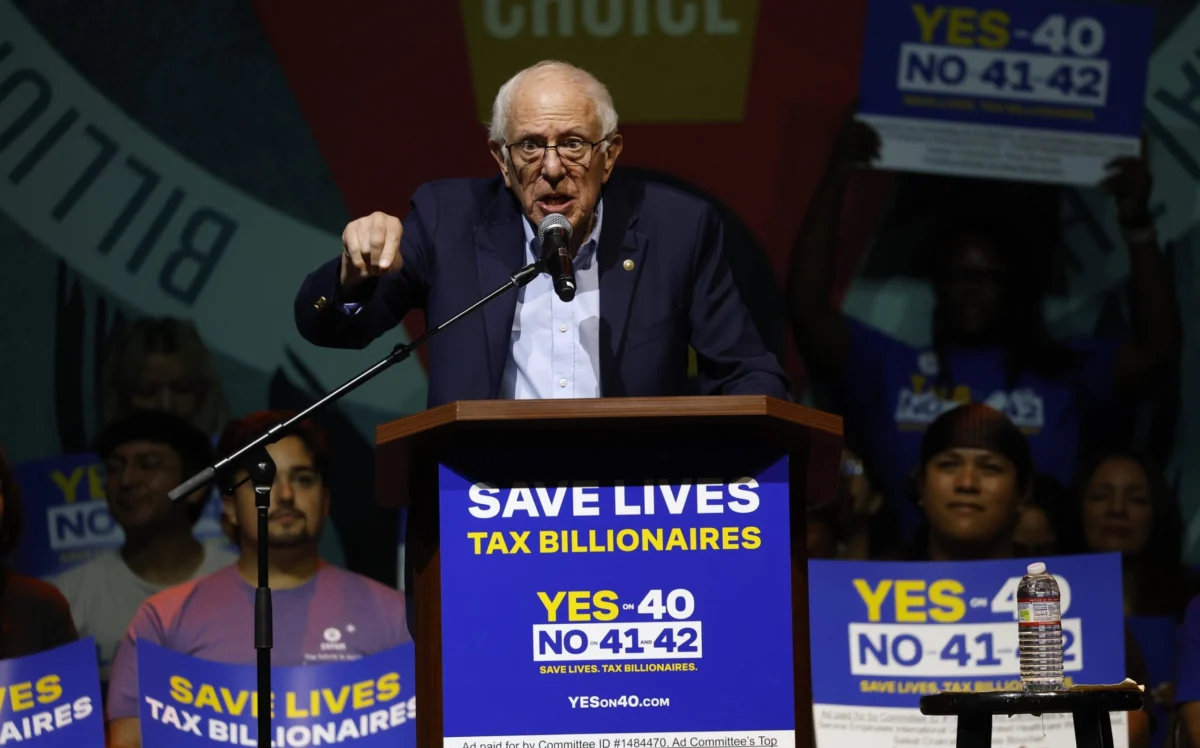
Enter Proposition 40, the proposed billionaire wealth tax. This ambitious ballot measure calls for California residents with a net worth exceeding $1 billion to pay a one-time tax equivalent to 5% of their total assets. The union actively pushing Prop 40, along with its coalition of supporters, asserts that this wealth tax could generate an astounding $100 billion in revenue, providing a much-needed financial injection that could help offset potential federal cuts to health spending and address a myriad of state-level needs, from housing shortages to climate change initiatives.
Proponents of Prop 40 argue that California’s booming tech sector and the "AI revolution" have created unprecedented wealth for a select few, and that even after paying this tax, the state’s ultra-rich would still remain among the wealthiest individuals globally. They frame the measure as a matter of fundamental fairness and an essential step towards addressing the state’s widening wealth gap. They contend that the economic dynamism of California, which has fostered such immense fortunes, should also benefit all its residents, and that those who have prospered most should contribute a greater share to the common good.
However, the opposition to Prop 40 is equally fervent and well-organized, raising significant concerns about its potential adverse effects. Opponents warn that such a tax could severely impact California’s economic growth and stifle its vibrant startup ecosystem. They argue that it would force founders and entrepreneurs to sell off substantial portions of their companies – potentially illiquid assets – simply to pay the tax, undermining innovation and investment. More critically, they predict that the tax would trigger an exodus of wealthy individuals and their capital to states with more favorable tax climates. A Stanford University study, often cited by opponents, estimated that this "wealth flight" could result in a net loss of revenue over time, potentially as much as $39 billion, as the economic activity and tax contributions associated with these individuals depart the state.
This looming battle over Prop 40 has inevitably drawn attention back to Prop 13, with some economists arguing that the "original sin" of California’s current tax structure lies not with the ultra-rich avoiding income taxes, but with the deeply entrenched property tax limitations. Princeton economist Owen Zidar and University of Chicago Booth School of Business economist Eric Zwick, authors of the insightful book The Everywhere Millionaire, are prominent voices in this camp. In a recent New York Times op-ed, they argued, "The original sin underlying California’s tax structure is Prop 13, the 1978 law that rewrote the rules of property ownership. Getting rid of it would be a more efficient and durable way to make the rich pay their fair share."
Zidar and Zwick’s analysis highlights how Prop 13 has contributed to rapidly increasing home values while simultaneously suppressing property tax revenues. They estimate that California homeowners, on average, pay just 0.8% tax on their property, a figure significantly lower than in many other states. This generated approximately $100 billion in revenue in fiscal year 2025. By stark contrast, homeowners in Texas, a state often cited for its low income tax burden, pay an average of 2% in property taxes. Zidar and Zwick calculate that if California were to match Texas’s property tax rate, overall residential property tax revenue could more than double. Furthermore, they suggest that such a change could also ease home prices by around 13%, making housing more affordable for a broader segment of the population. The distortion created by Prop 13 means that two identical homes next door to each other could have vastly different property tax bills if one has been owned for decades and the other recently sold, creating inequities and disincentives for mobility.
To be sure, the concept of higher property taxes, even as a potential solution, carries its own political baggage. Property taxes in Texas, for example, have stirred their own voter revolt during recent election seasons. While Texas prides itself on having no state income tax, Texans frequently complain that the overall tax burden remains onerous due to the significant reliance on property taxes levied by local governments for schools and services. This illustrates the inherent difficulty in any significant tax reform: someone always bears the cost, and public sentiment can turn quickly.
And indeed, getting rid of Prop 13 in California would undoubtedly face monumental opposition. Millions of long-term homeowners, many of whom have seen their property values skyrocket while their tax bills remained relatively flat, would suffer massive increases in their annual property taxes. This would be a politically unpalatable and potentially economically destabilizing move for many families. However, the current situation presents its own challenges. California’s tax base is already considered narrow, heavily reliant on a volatile income stream from a small segment of the population. Prop 40, critics argue, would only exacerbate this top-heavy structure, making the state’s fiscal health even more precarious. Meanwhile, the state plans to spend an astronomical $540 billion this fiscal year, an amount that requires a robust and reliable revenue stream.
As Zidar and Zwick emphatically argue, "It is simply not possible to fund the state’s needs by leaning on a few hundred people, as politically appealing as that may be." They suggest that for California to truly tax wealth in a progressive and meaningful fashion, and to substantially improve its fiscal position, it needs to "broaden the aperture beyond billionaires to the hundreds of thousands of other very wealthy people who could easily afford to contribute more by paying a real estate tax that finally works." This perspective shifts the focus from a narrow tax on a handful of billionaires to a broader reform that addresses a more significant and widely distributed source of wealth: real estate.
Further complicating the debate are the warnings from seasoned economic advisers. Laura Tyson, a former White House economic adviser, and Lenny Mendonca, a former chief economic adviser to California Governor Gavin Newsom, have expressed serious reservations about Prop 40. In a Project Syndicate column, they highlighted that billionaires, in particular, tend to respond strongly to wealth and estate taxes when deciding where to establish residency. They pointed out that even before the proposed effective date of the wealth tax, at least six billionaires who would have collectively owed about one-quarter of Prop 40’s expected revenues had already left the state, underscoring the real threat of capital flight.
Tyson and Mendonca also raised concerns about the practical implementation of Prop 40. They argue that because it proposes an entirely new, untested method of taxation based on all assets – many of which are illiquid and difficult to value (e.g., private company stakes, art collections) – it would inevitably fuel a "tidal wave of litigation, rendering the promised funding both speculative and unreliable." The administrative burden and legal battles associated with accurately assessing and collecting such a tax could easily consume much of its intended revenue, turning a potentially beneficial measure into a costly quagmire.
Instead of a direct tax on billionaires, Tyson and Mendonca advocate for a more systemic approach to raising taxes on the capital income that fuels wealth accumulation. They propose several alternative strategies: increasing corporate tax rates; implementing taxes on both realized and unrealized capital gains (a more controversial but potentially more effective measure to capture wealth growth); closing egregious loopholes like carried interest, which allows hedge fund managers to pay lower capital gains rates on their fees; and significantly increasing inheritance taxes. Their argument is that these measures, by targeting the mechanisms of wealth creation and transfer, would be more efficient, less prone to legal challenges, and less likely to trigger capital flight than a direct wealth tax.
As California voters prepare to cast their ballots on Proposition 40, they are confronted with a multifaceted challenge. The state’s fiscal stability, its commitment to addressing inequality, and its capacity to fund essential services all hang in the balance. The debate forces a reckoning with the legacy of Proposition 13 and the unintended consequences of past tax reforms. While the allure of having the ultra-wealthy contribute more is politically potent, the practicalities of implementation, the potential for economic repercussions, and the search for sustainable, equitable solutions remain paramount. The choice is not simply about taxing billionaires, but about charting a coherent and robust fiscal future for a state that continues to lead the nation in both innovation and social consciousness.
