
 By Lina Irawan
While China has been steadily pursuing the internationalization of the yuan, also known as the renminbi, its ultimate objective is not to shoulder the immense obligations and constraints that come with being the global reserve currency. Zongyuan Zoe Liu, a senior fellow for China studies at the Council on Foreign Relations, articulated this perspective in a recent Foreign Affairs article, highlighting the intricate balance Beijing seeks to strike between global financial influence and domestic political control. The aspiration is not to replace the dollar but to dilute its unchallenged monopoly and carve out a significant, albeit secondary, role for the yuan in the global financial architecture.
The core reasons underpinning China’s reluctance to seize the dollar’s throne are multifaceted and deeply rooted in its political and economic governance model. To truly ascend to the dollar’s preeminent position, the yuan would necessitate fully open capital markets – a fundamental prerequisite for any truly global reserve currency. Such openness, however, poses an existential threat to the Communist Party’s stringent control over who accesses capital and how it is allocated within the economy. This centralized control is a cornerstone of China’s state-led economic model, allowing Beijing to direct investment towards strategic industries and maintain financial stability according to its own priorities. Unrestricted capital flows could lead to volatility, capital flight, and a loss of monetary policy autonomy, all of which the Party views as unacceptable risks.
Furthermore, Liu points out a compelling internal dynamic: many Chinese elites rely heavily on offshore dollar holdings. These assets serve as a crucial form of financial insurance, safeguarding their wealth against potential domestic political persecution or unpredictable policy shifts. An open capital account for the yuan, while ostensibly beneficial for internationalization, could paradoxically erode this existing safety net, potentially destabilizing internal power dynamics and elite loyalty.
Given these significant internal hurdles, China actually prefers the dollar to remain on top, albeit with its influence tempered. The real impetus behind Beijing’s aggressive promotion of the yuan abroad is not to supplant the greenback but to construct a robust financial alternative. This strategic diversification aims to prevent the United States from "weaponizing" the global financial system against China, a concern dramatically underscored by the comprehensive sanctions imposed on Russia following its 2022 invasion of Ukraine. The swift exclusion of Russian banks from SWIFT, the freezing of central bank assets, and the broader financial isolation demonstrated the formidable power of dollar dominance and the vulnerability of nations heavily reliant on it. For China, a similar scenario, particularly in the context of potential geopolitical flashpoints like Taiwan, represents an unacceptable risk.
A sufficiently internationalized yuan network, even without achieving outright dominance, could provide a vital bypass around any dollar-based sanctions the U.S. might impose in the future. This parallel system would offer a lifeline for Chinese trade and finance, allowing it to continue essential economic activities even under punitive measures. As Liu aptly summarizes, "Placing a respectable second, or even a consequential third, would suffice to break the dollar’s effective monopoly and constrain the United States’ ability to impose financial sanctions unilaterally, while saving China the effort and cost of sustaining currency supremacy." This statement encapsulates China’s pragmatic strategy: maximum impact with minimum burden.
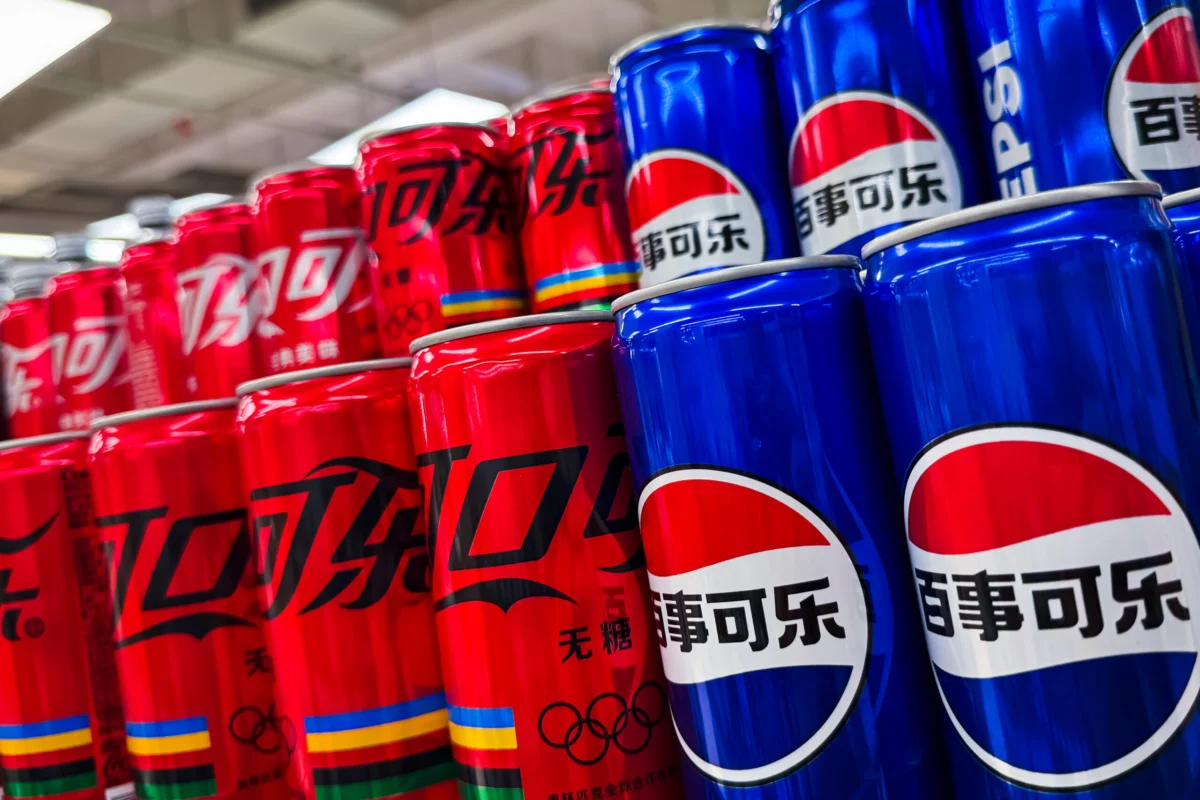
To illustrate this concept, Liu employs a vivid analogy: "From Beijing’s perspective, the mission is to establish the renminbi as the Pepsi to the dollar’s Coca-Cola: never the market leader, but serviceable in a pinch and more than capable of keeping the dominant incumbent honest." While Fortune notes that Pepsi has indeed fallen further behind Coke in recent "cola wars," and faced a symbolic defeat when KFC opted for Coca-Cola products, the analogy’s strategic intent remains potent. It underscores the ambition to be a strong, globally recognized alternative, not necessarily to outperform the market leader, but to offer a credible choice that ensures competition and prevents unchecked monopolistic power. This approach seeks to introduce a genuine contestability into the global financial arena, thereby diluting the U.S.’s unilateral financial leverage.
China’s efforts to internationalize the yuan have already made tangible progress, albeit on a scale still dwarfed by the dollar. The country actively facilitates renminbi use among firms in over a hundred countries and across an expanding array of commodity markets. Its Cross-Border Interbank Payment System (CIPS), established as an alternative to the Western-dominated SWIFT system, has seen growing participation. As of June, CIPS boasted 1,829 direct and indirect participants, capable of sending payments to more than 5,200 banks across 191 countries. While this represents a significant expansion, it remains a fraction of the immense volume and reach of the U.S.-dominated financial infrastructure, which processes trillions of dollars daily through systems like CHIPS and Fedwire.
Liu emphasizes that a truly global currency must fulfill several critical functions beyond mere payment processing: pricing, financing, risk transfer, and reinvestment.
In terms of pricing, Chinese exporters still predominantly invoice in dollars, converting them to yuan only upon repatriation to China. However, Beijing is vigorously promoting "China prices"—yuan benchmarks on domestic commodity exchanges. This strategy has seen notable success in sectors like lithium, where yuan-denominated contracts are gaining traction. By establishing yuan benchmarks for key commodities, China aims to exert greater influence over global pricing and reduce its exposure to dollar-denominated volatility.
The financing stage is also gaining momentum. Chinese banks have more than doubled their yuan lending to overseas borrowers between 2023 and mid-2026, signaling a growing appetite for yuan-denominated credit. Moreover, the People’s Bank of China (PBOC) has strategically forged currency swap agreements with 32 foreign central banks and monetary authorities, providing bilateral liquidity lines that can be activated in times of market stress or to facilitate yuan trade. These swaps act as a safety net, encouraging the use of the yuan by assuring liquidity for its partners.
More modest steps have been observed in increasing the yuan’s presence in risk transfer markets, with state-owned enterprises beginning to settle cargo insurance in yuan. This is a nascent but important development, as it gradually builds out the ecosystem required for comprehensive yuan-denominated financial services.
However, reinvestment remains perhaps the weakest link in China’s internationalization chain. A truly robust yuan ecosystem necessitates that recipients of yuan payments hold and reinvest their balances within the yuan system rather than immediately converting them back into other currencies, particularly the dollar. While China has expanded overseas access to its domestic stock and bond markets, Beijing’s unpredictable capital controls continue to be a significant deterrent for foreign investors. The stark disparity in foreign holdings underscores this challenge: in March, foreign investors held a mere 1.6% of the Chinese bond market, compared to a substantial 27% in the U.S. bond market. "Without a far larger pool of renminbi assets that foreigners can freely buy and sell, the renminbi cannot come close to replacing the dollar," Liu firmly states. The lack of full convertibility and the opaque nature of capital restrictions severely limit the yuan’s attractiveness as a store of value and a reserve asset.
Despite these challenges, China envisions a strategic pathway for the yuan to gain significant international traction, drawing parallels to the "petrodollar" which anchors the greenback’s role in global trade. Just as oil trade solidified dollar dominance, the yuan could establish a similar foothold by dominating trade in an essential good that China largely controls. Liu posits that this could manifest as a "green yuan," anchored in critical minerals, clean energy equipment, and electrical infrastructure—sectors where China has already established overwhelming global supremacy.
China’s strategic foresight has positioned it as the dominant player across much of the green energy supply chain, from raw material processing to the manufacturing of solar panels, wind turbines, and electric vehicle batteries. By leveraging its immense scale and cost advantages, Beijing is actively promoting standards built around technologies developed by Chinese-owned firms. If China successfully consolidates its dominance over this industrial ecosystem, effectively preventing competitors from catching up, it could gain sufficient leverage to price these essential, hard-to-substitute exports in renminbi. This would create the foundational demand for a "green yuan" that might eventually rival or even partially replace the petrodollar’s influence.
Concurrently, recent geopolitical events, particularly the ongoing conflict and instability in the Middle East, have raised significant doubts about the long-term viability of the petrodollar system. The petrodollar’s origins trace back to a pivotal agreement struck in 1974 between the United States and Saudi Arabia. In exchange for Saudi Arabia agreeing to price its vast oil exports in dollars and recycle its surpluses into U.S. assets (primarily Treasuries), Washington guaranteed the kingdom’s security. This involved stationing troops in the region, providing advanced weaponry, and ensuring free navigation in crucial waterways like the Strait of Hormuz. This arrangement proved mutually beneficial, providing the U.S. with geopolitical influence and stable demand for its currency, while securing the House of Saud.
However, America’s role and perceived reliability in the Middle East have evolved dramatically. Despite intensive U.S. military efforts, including punitive bombardments and round-the-clock protection of commercial ships, the U.S. has struggled to fully restore unfettered traffic in the Strait of Hormuz amidst regional tensions. Moreover, Iran’s increasingly sophisticated missile and drone capabilities have inflicted significant damage on U.S. aircraft, radars, and bases, while American air-defense systems have not completely shielded Gulf allies’ critical energy infrastructure from attacks. This perceived erosion of the U.S. security guarantee has prompted Gulf states to reconsider their strategic alliances and financial exposures.
Deutsche Bank warned in March that "Damage to Gulf economies could encourage an unwind in their foreign asset savings." The bank added, "In this context, reports that the passage for ships through the Strait of Hormuz may be granted in exchange for oil payments in yuan should be closely followed. The conflict could be remembered as a key catalyst for erosion in petrodollar dominance, and the beginnings of the petroyuan." While still nascent, the concept of a "petroyuan"—oil priced and settled in yuan—is gaining traction, particularly as China deepens its economic ties with major oil producers like Saudi Arabia and the UAE, and as nations like Iran and Russia increasingly turn to non-dollar trade to circumvent sanctions.
In essence, China’s strategy is not to usurp the dollar’s global throne, a position that comes with prohibitive costs and fundamental ideological conflicts with its governance model. Instead, Beijing is meticulously building a parallel financial universe—a robust "second choice" or "consequential third"—designed to protect its economy from the coercive power of the dollar-centric system. Through the strategic internationalization of the yuan in trade, finance, and increasingly in critical commodity pricing, particularly in the burgeoning green energy sector, China aims to forge a path towards greater financial autonomy and resilience, ensuring that while the dollar may still wear the crown, it no longer reigns supreme without a formidable contender. The long-term implications of this strategy could profoundly reshape the global financial landscape, moving towards a more multipolar currency system where the yuan, rather than being a sole king, becomes an indispensable duke in the global economic court.
