
 By Rifan Muazin
For decades, the American consumer’s relationship with sun protection has been defined by a compromise between health and aesthetics. Anyone who has ever meticulously applied a high-SPF lotion only to be left with a ghostly, chalky white cast or a heavy, suffocatingly greasy finish knows that American sun care has long been a frustrating and antiquated experience. While the rest of the world moved toward elegant, serum-like formulations that disappear into the skin, the United States remained tethered to technology that hasn’t fundamentally changed since the late 20th century. The US is essentially decades behind its European and Asian counterparts, regions that have long been blessed with sunscreens that are lighter, more luxurious, and far easier to incorporate into a daily grooming routine. For skincare obsessives and dermatologists alike, trips to pharmacies in Paris or skincare boutiques in Seoul have become essential opportunities to stock up on superior sunscreens that are legally unavailable on American shelves.
The fundamental root of this technological stagnation is not a lack of American corporate interest, but rather a rigid regulatory framework. In the United States, the Food and Drug Administration (FDA) classifies sunscreen as an over-the-counter (OTC) drug rather than a cosmetic product. This distinction is critical; because sunscreens are intended to prevent a disease—skin cancer—they are subjected to the same rigorous safety and efficacy standards as medications. While this ensures a high level of consumer safety, it also means that the path to market for new active ingredients is incredibly long and prohibitively expensive. More time and intensive testing are required to get new UV filters onto the shelves, a process that has dramatically stifled innovation in American sun protection for over thirty years.
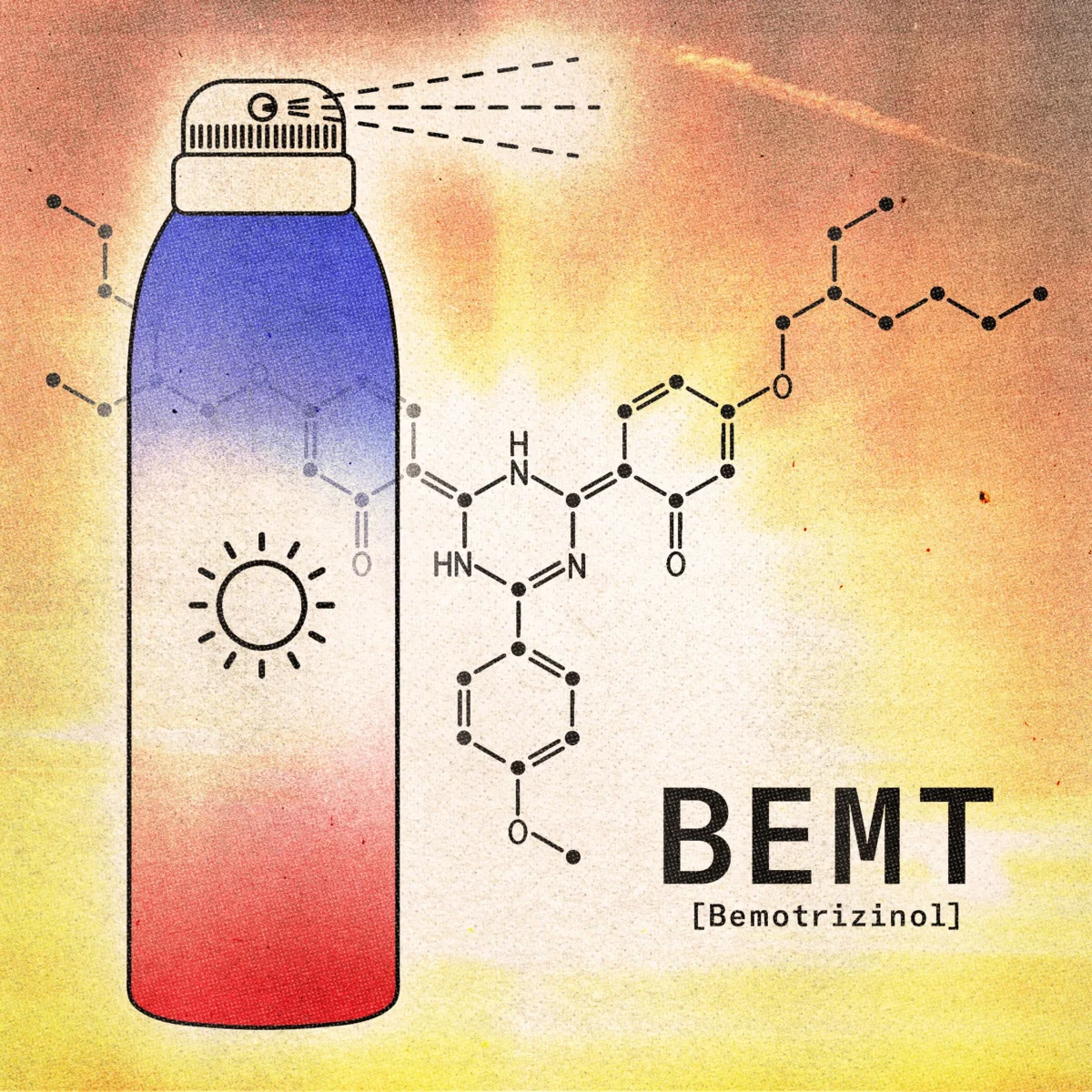
However, for the first time since the 1990s, the needle has finally moved. In June of this year, the FDA granted approval for a revolutionary new sunscreen filter called bemotrizinol—known colloquially in the industry as Tinosorb S or BEMT. This landmark decision follows years of intense lobbying by a coalition of dermatologists, skincare brands, and members of Congress who argued that the lack of modern filters was actually a public health risk. If people find sunscreen unpleasant to wear, they simply won’t use it, leaving them vulnerable to the very skin cancers the FDA seeks to prevent. The approval of bemotrizinol is a monumental step toward closing the gap between the US and the rest of the world, though the industry remains acutely aware that we are still lagging behind.
Bemotrizinol is widely considered the "holy grail" of modern sun filters. It is prized by chemists for its remarkable "broad-spectrum" capabilities, meaning it provides robust protection against both UVA and UVB radiation. UVB rays are primarily responsible for the immediate redness of sunburns, while UVA rays penetrate deeper into the dermis, causing long-term photoaging, wrinkles, and deep-seated DNA damage that leads to melanoma. Unlike many existing US-approved chemical filters, such as avobenzone, which is notoriously unstable and can degrade quickly when exposed to sunlight, bemotrizinol remains incredibly stable. It doesn’t break down easily, meaning it maintains its protective power for much longer periods.
Beyond its efficacy, BEMT has the potential to revolutionize how sunscreen feels on the face. Dr. Joel Spitz, a board-certified dermatologist and the co-founder and chief medical officer at the virtual dermatology platform Honeydew, explains that the molecule’s physical structure is its greatest asset. "Because it’s a large, oil-loving molecule, it mostly stays on the surface of your skin instead of soaking in," Dr. Spitz notes. This lack of absorption is a double win: it addresses the FDA’s concerns regarding systemic absorption into the bloodstream, and it allows the ingredient to blend into lightweight, non-greasy formulas that leave absolutely no white cast. For people with darker skin tones, who have long struggled with the purple or ashy hue left by mineral sunscreens like zinc oxide and titanium dioxide, bemotrizinol represents a long-awaited solution.
While bemotrizinol is a "novel" ingredient for the US market, it is far from an experimental chemical. It has been used in sunscreen formulations across Europe, Australia, and Asia for over 20 years. This extensive track record of safety and performance helps explain why American consumers have spent years looking longingly at the "cosmetically elegant" formulas available in countries like South Korea and France. Social media platforms like TikTok and Instagram have only exacerbated this "SPF envy," as influencers showcase the watery, essence-like textures of K-beauty favorites. While most consumers would love it if global giants like Neutrogena or La Roche-Posay, or cult-favorite brands like Beauty of Joseon, simply imported their existing international formulations to the US, the reality is more complex. Those international SPFs often contain a cocktail of several filters that the FDA still hasn’t approved. Consequently, brands cannot simply "copy and paste" their global successes; they must develop entirely new, BEMT-centric formulas specifically for the American market.
The race to bring these products to consumers is already underway. The Australian label Ultra Violette, a brand that built its reputation on "skinscreens" that feel like high-end moisturizers, was among the first to navigate the new regulatory landscape, releasing its Unblock Screen SPF 50 in the US in August. Not far behind, the American mainstay Neutrogena debuted its Ultra Sheer Daily Face Sunscreen SPF 70 in September, signaling that the "big players" are eager to capitalize on the new technology. More recently, the French drugstore titan La Roche-Posay—a brand synonymous with dermatological trust—made its Anthelios UVDefense Sunscreen SPF 50 available for sale online.
Despite the relatively rapid appearance of these products following the FDA’s green light, the development process is anything but easy. Emanuella Louis, the public relations manager for La Roche-Posay, reveals that the brand had been working on its BEMT-centric formula for more than two years prior to the official approval. This proactive approach is common among major manufacturers; brands often research and test formulas in anticipation of regulatory shifts, essentially keeping a product in the "testing pipeline" so it can be moved forward the moment a filter is sanctioned. Louis notes that La Roche-Posay stays closely aligned with the FDA’s considerations, "actively working, playing, and testing" various formulations to ensure they are ready for the American consumer.
However, not every brand is ready to launch just yet. Round Lab, currently one of South Korea’s most popular sunscreen manufacturers, has been selling a version of its SPF in the US since 2024, but it is still refining its new BEMT-enhanced formulas. Koochul Kwon, the chief technology officer at Round Lab, emphasizes that bringing a product to the US is a grueling technical challenge. "Bemotrizinol’s approval in the US is a meaningful change, but it does not mean a Korean formula can simply be brought to the US market as is," Kwon explains. The chemistry involved is delicate; brands must ensure the new filter remains stably dissolved while interacting with other components like moisturizing agents and preservatives. Furthermore, the final product must undergo a battery of US-specific tests for SPF rating, broad-spectrum efficacy, product stability, and strict labeling requirements. Given these hurdles, Kwon anticipates that Round Lab’s dedicated bemotrizinol sunscreen won’t hit the US market until sometime in 2027.
The ultimate goal of this technological leap is not just luxury, but compliance. A sunscreen is only as useful as a person’s willingness to wear it consistently and in the correct amounts. In the world of dermatology, the best sunscreen is the one you actually use. Bemotrizinol’s ability to prevent UV damage is scientifically vital, but its potential to make formulas lighter, more comfortable, and less aesthetically intrusive is what will actually change public health outcomes. "One of the strengths of Korean sun care is how naturally it has built sun protection into the everyday skincare experience," Kwon says. "For people to apply enough sunscreen and reapply it when needed, the way it feels matters as much as how well it protects."
Charlotte Palermino, the co-founder and chief brand officer of the skincare brand Dieux, has been a vocal advocate for regulatory reform in the sun care space. Her journey began a decade ago when she first tried Japanese sunscreens like Biore UV and realized that sun protection didn’t have to be a chore. Palermino’s advocacy is rooted in personal experience; she discovered that her persistent hyperpigmentation was a direct result of failing to use adequate sun protection, a failure driven by the unpleasantness of available American products. Since then, she has used her platform to push for faster filter approvals, even gaining the attention of political figures. While Dieux is working on its own BEMT-centric sunscreen, Palermino is cautious about setting a release date. For her, the stakes of sunscreen stability are incredibly high. "If my sunscreen separates or if it’s not at that stated SPF 50… I would be mortified," she says, emphasizing that the integrity of the formula is paramount.
The American hunger for better sun care is evidenced by the massive success of brands like Korea’s Beauty of Joseon, which, ironically, has found more popularity in the US via the "gray market" and international shipping than in its home country. This consumer-led demand has forced the FDA’s hand, but the journey is far from over. Board-certified dermatologist Jane Yoo, who has been lobbying Congress to modernize sun care regulations, points out that there are still seven other modern filters—including bisoctrizole, octyl triazone, and ecamsule—currently stuck in the FDA’s Time and Extent Application (TEA) pipeline. These filters were supposed to be fast-tracked by the 2014 Sunscreen Innovation Act, a piece of legislation intended to determine if ingredients are "Generally Recognized as Safe and Effective" (GRASE). Twelve years later, the industry is still waiting for the majority of these filters to be cleared.
As the US enters this new era of sun care, the mood among experts is one of cautious optimism. The approval of bemotrizinol has broken a decades-long stalemate, but the industry remains hampered by its "drug" classification compared to the "cosmetic" classification used in the EU. Charlotte Palermino sums up the current state of the industry with a poignant analogy: "A good analogy is we’ve been making sunscreens with both of our hands tied behind our backs. We’ve now had one hand released. I would like both hands released." Until that happens, the US will continue to play catch-up, but for the first time in a generation, the future of American skin protection looks a little brighter—and a lot less chalky.
